Visa
About Akwa Ibom State College of Education, Afaha Nsit
Teacher education at Afaha Nsit
Akwa Ibom State College of Education was established at Afaha Nsit to address the educational needs of the newly created Akwa Ibom State. Its original emphasis was a science-based institution preparing the middle-level teaching workforce needed by schools. The state government announced that lectures should begin in January 1991, and the college formally came into existence on 10 January that year.
The institution began in facilities previously used by the Teachers Training College at Afaha Nsit. These premises were renovated for the new college, which opened with 179 students. A governing council was inaugurated on 14 January 1991, and the first matriculation followed on 18 March. Its history therefore connects the establishment of a state tertiary institution with an earlier local site of teacher preparation and with the development of Akwa Ibom’s education system.
Sources: College history ↗
The university transition
The Afaha Nsit institution has entered a further period of change. In October 2025, the state government approved upgrading the College of Education to Akwa Ibom State University of Education. Legislation establishing the University of Education, Afaha Nsit, was among the laws signed by the governor on 28 July 2026.
The college name identifies the institution’s established history and the educational organisation described on its website. The university development concerns the same Afaha Nsit setting, rather than Akwa Ibom State University at Ikot Akpaden. Its legal transition forms an important part of understanding the institution alongside its longer record of teacher education.
Sources: July 2026 institutional reforms legislation ↗ · State government October 2025 university upgrade approval ↗
Educational purpose
The college’s stated mission places teacher formation at the centre of its work. It seeks to develop teachers who can put educational policies into practice and contribute to the broader goals of education. Its description combines intellectual preparation with character, practical effectiveness and attention to professional standards.
The accompanying vision emphasises opportunities for students to learn well within a college of education. This institutional purpose helps explain why subject departments sit alongside educational foundations, curriculum studies, teaching practice and a demonstration school. The educational focus is the preparation of people to teach, supported by both subject knowledge and the study of how learning takes place.
Sources: Mission and vision ↗
Schools and subject areas
The published college directory groups its academic work into several schools. Sciences encompasses biology, chemistry, computer science, mathematics, physics, integrated science, and physical and health education. Languages includes English, French and Ibibio. Arts and Social Studies covers political science, social studies and economics, while Vocational and Technical Education includes agriculture, technical education, business and home economics.
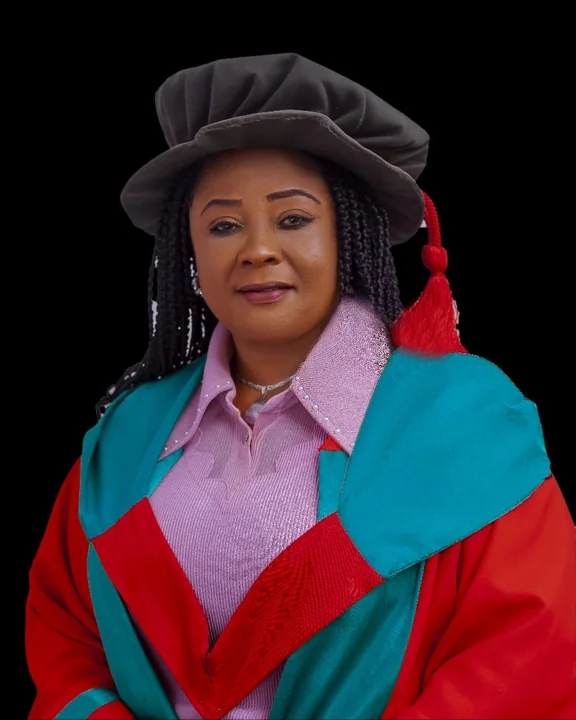
Early Childhood Care and Primary Education and the School of Education add further teaching-oriented areas. The directory identifies curriculum and teaching and educational foundations within Education. It lists Dr Catherine U. Akpan as Dean of Education and Dr Esther Andrews in Career Development. These organisational details illustrate the breadth of the college’s subject teaching and professional support.
Sources: College staff and schools directory ↗

A demonstration school on campus
The college operates a Demonstration School providing primary and secondary education at Afaha Nsit. Its purpose combines schooling for local children with a setting in which education students can practise teaching under supervision. The institution dates the nursery and primary section to 1998 and the secondary section to 2016.
The school’s on-campus location connects children’s education with the college’s education faculty and its teacher-preparation role. It serves families in Afaha Nsit and the surrounding community, and its published description emphasises accessibility and the relationship with trained educators. As a school within a teacher-training institution, it represents a practical educational setting alongside the college’s subject departments and its units concerned with teaching practice and educational technology.
Sources: Demonstration School ↗
Academic and student support organisation
The college identifies dedicated units for teaching practice, educational technology and the Students Industrial Work Experience Scheme. Its administrative structure also includes Academic Planning, Internal Quality Assurance, Academic Affairs and Research and Publication. These are distinct named areas in the institution’s organisation, rather than a single undifferentiated administrative office.
Other listed directorates cover information and communication technology, general studies, continuing education, career development, entrepreneurship and remedial and summer programmes. Works, human resources and medical services are also represented. Together, the published structure shows that the college’s educational activity is supported by functions concerned with academic coordination, practical learning, staff administration and campus operations. The directory gives each of these responsibilities an identifiable place within the institution.
Staff scholarship
The staff publications catalogue includes journal articles, conference papers and book chapters. Educational subjects feature prominently. Listed work examines inclusive education, the use of computer animation in primary science and technology, virtual learning in English studies, and different approaches to teaching chemistry. Another entry considers soft skills and the work of early childhood teachers.
The catalogue also extends into environmental and technical research. Topics include water-quality pollution indices, heavy metals in coastal materials and marine organisms, and the modelling of electricity load profiles. Artificial intelligence appears in work on business educators’ content creation, science education and entrepreneurial activity.
Sources: Staff publications ↗
A dated example of professional learning
From 20 to 22 July 2026, the college hosted a conference, seminar and practical training event on artificial intelligence and machine learning. The college organised it with the National Board for Technical Education, the National Commission for Colleges of Education and MOC-LLC, USA. The programme brought together academics, researchers, policymakers, technology specialists and students for lectures, technical sessions and hands-on work.
The resulting communiqué addressed digital technologies in teaching, research and institutional administration. It recommended continuing professional development for educators, investment in infrastructure and ethical frameworks covering academic integrity, privacy, transparency and responsible innovation. Participants also proposed stronger collaboration across educational institutions, government and industry. The event is a specific example of the college’s engagement with technological change and staff learning during its 2026 institutional transition.
Sources: July 2026 AI conference ↗