Visa
About Akhtar Saeed Medical and Dental College
Medical and dental education in Lahore
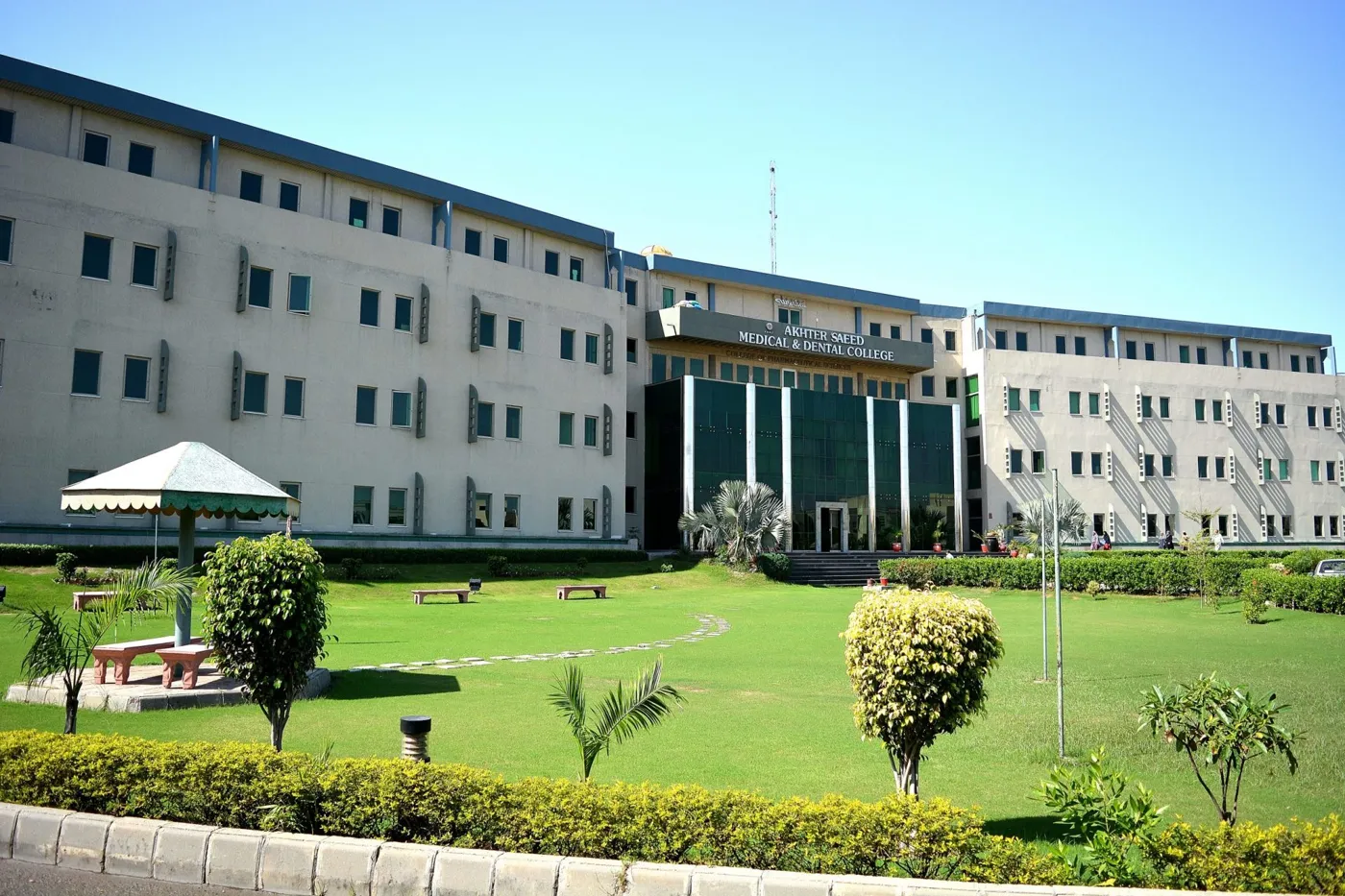
Akhtar Saeed Medical and Dental College, known as AMDC, is a medical and health-sciences institution in Lahore, Punjab, Pakistan. Its official contact address is Tulip Block, Sector C, Bahria Town, Lahore. The college’s introduction attributes its conception to Dr Farooq Saeed Khan of the Farooq Group of Companies.
Its educational aims combine academic knowledge with practical skills, empathy and service. The introduction emphasises integrated, problem-based learning and keeping students informed about developments in medicine. It also identifies research among both students and teachers as part of the institution’s intended academic culture. This Lahore college has its own identity within a wider educational network whose website also links to separate locations and institutions.
Sources: College introduction ↗ · Official Lahore campus contact ↗
The academic range
Medicine and dentistry form the core of the college’s academic presentation. The medical directory includes basic-science subjects such as anatomy, physiology, biochemistry, pathology and pharmacology, alongside community medicine, forensic medicine and medical education. Clinical disciplines listed include medicine, surgery, paediatrics, obstetrics and gynaecology, ophthalmology, psychiatry and several specialist fields.
The dental directory combines foundational sciences with oral biology, dental materials, oral pathology, oral medicine, operative dentistry, periodontology, prosthodontics and orthodontics. It also identifies community and preventive dentistry, paediatric dentistry, radiology, and dental education and research. These departmental listings show the breadth of the college’s academic organisation, bringing foundational scientific learning together with specialised medical and dental subjects.
Sources: Medical academic departments ↗ · Dental academic departments ↗
Learning anatomy
The Anatomy Department gives a detailed account of how one foundational subject is taught. It describes interactive lectures, tutorials, small-group discussion, case-based learning, team-based learning, problem-based learning and computer-aided learning. Its emphasis is on understanding anatomical knowledge and considering its relevance in a clinical context.
The department also describes integration with parallel basic sciences and with clinical disciplines. Teaching resources include a dissection hall, a cadaveric museum, gross-anatomy and embryology models, and a histology laboratory. The latter is equipped with binocular microscopes, image-analysis systems and multimedia projection facilities. Its learning-resource centre includes recorded dissection and skills material and online learning resources. These facilities support different scales of study, from anatomical structures and organ systems to microscopic material, within a subject that underpins the wider medical curriculum.
Sources: Anatomy teaching and facilities ↗
Research support and scholarly development
The Research Advisory Committee is presented as a source of strategic direction, mentoring and institutional support for research across the college. Its rationale links research education with critical thinking, problem-solving and continuing professional learning.
The committee’s stated activities include developing research capacity through training and mentorship, encouraging interdisciplinary collaboration, and supporting dissemination through conferences and publications. It also places ethical principles and research governance at the centre of this work. Faculty members, students and external collaborators are identified as participants in the research environment it seeks to develop. These are the committee’s educational and organisational aims, connecting scholarly work with the college’s teaching responsibilities and providing a framework through which research ideas can receive guidance and support.
Undergraduate research organisation
The committee’s terms of reference focus specifically on undergraduate research within the modular curriculum associated with the University of Health Sciences. They describe research as a progressive component running from the first through final years of MBBS and BDS education.
The published objectives include aligning research activity with the curriculum, facilitating ethical research, establishing structured mentoring and supporting presentations, conferences and publications. The organisational plan refers to subcommittees arranged by academic years and disciplines, including groups for the first and second MBBS years and for the third and fourth years. This structure places responsibility for research development within defined parts of the undergraduate learning sequence, rather than treating student research solely as an activity outside formal education.
Committee working responsibilities
The college also publishes working responsibilities for its research committee. The chair prepares agendas, ensures that supporting materials reach members, explains the purpose of meetings and encourages broad participation in discussion. Meetings conclude with decisions and assignments summarised for members.
A co-chair carries responsibility when the chair cannot attend. Members are expected to understand the committee’s goals and intended outcomes and take an active interest in project progress. These practical arrangements concern the organisation of research support and the coordination needed to turn committee discussion into assigned work.
Elective learning in 2026
For its June and July 2026 elective periods, the college published instructions covering attendance, departmental records, logbooks and professional conduct. The stated rotation periods were 15–30 June and 1–15 July 2026.
The instructions required students to maintain confidentiality of patient information, observe institutional rules and professional dress, and submit a completed logbook to the relevant department. Attendance records were to be maintained by departments in coordination with Medical Education. Completion documentation depended on attendance, satisfactory performance and verification of the logbook. The notice provides a dated example of the college’s arrangements for supervised elective participation and the responsibilities attached to it.
Digital learning facilities
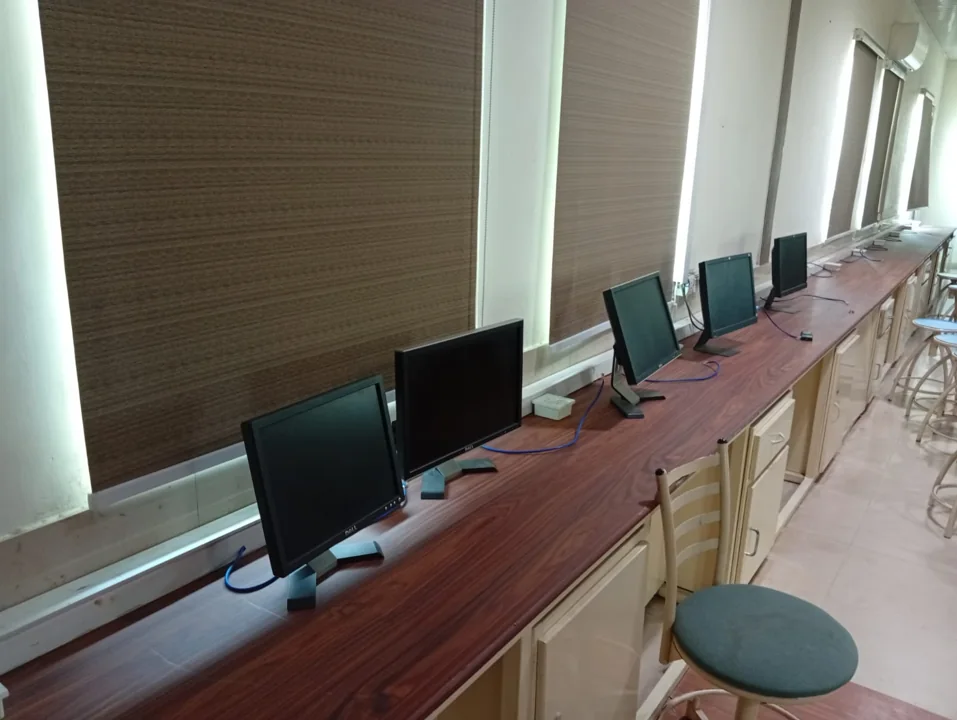
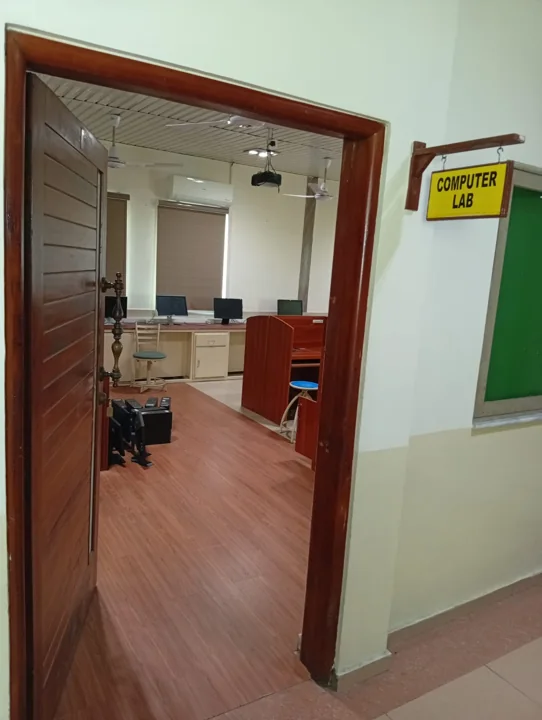
The college’s official gallery includes a computer laboratory with desktop workstations, seating and projection equipment. It also documents academic and student activities, including dental activities, sports, poster competitions and orientation ceremonies. These shared facilities and activities sit alongside the college’s departmental teaching resources.
Sources: Official computer-laboratory and activity gallery ↗