Visa

About Akademie Reformatoriese Opleiding en Studies
Teacher education in Pretoria
Akademie Reformatoriese Opleiding en Studies, generally known as Aros, is a private Christian higher-education institution in South Africa. Its campus is in Montana Park, Pretoria. The institution centres its educational work on preparing students for the teaching profession, combining academic study with an explicitly Christian understanding of educational responsibility.
Aros uses a distance-learning model across its curricula. Its institutional overview describes prerecorded lectures and lecture materials made available through e-Klas, supported by interactive online sessions. This gives the academy an identity that combines a physical Pretoria campus with organised online teaching. The overview emphasises vocational preparation and the application of what students learn to classroom situations, connecting the study of education with experience in schools.
Sources: Institutional overview ↗
Christian and Afrikaans educational foundations
The institution’s stated foundation is the Bible as confessed in the Three Forms of Unity: the Belgic Confession, Heidelberg Catechism and Canons of Dordt. Its mission connects education, research, faith and practical life rather than treating these as separate activities.
Afrikaans is described as the academy’s anchor language for teaching and institutional work, with research in Afrikaans encouraged. The mission also recognises a wider educational role beyond the Afrikaans-speaking community. It describes Aros as independent of direct authority from the state, a church, a political grouping or a cultural organisation. Service to communities, practical application of knowledge, integrity and responsible conduct are recurring themes in its account of the educational environment it seeks to create.
Foundation Phase education
The BEd Foundation Phase programme concerns teaching from Grade R to Grade 3. Its published structure gives a minimum duration of four years, with an extended six-year route also identified. Learning combines educational knowledge, subject teaching, assessment and practical experience in schools.
The programme description explains that lectures are released weekly on e-Klas and supplemented by recorded interactive sessions. Lecturers and assistants can be consulted by email, online or on campus. Teaching practice takes place during specified periods in South Africa, with placements arranged in cooperation with Aros. The academy maintains a list of approved schools and can consider schools proposed by students. Practice begins in the third school term of the first year, then develops through later placements in different Foundation Phase classes. Classroom leadership, evaluating learning and professional ethics are among the programme’s stated educational aims.
Sources: BEd Foundation Phase programme ↗
Intermediate Phase study
The Intermediate Phase BEd focuses on Grades 4 to 6, with Grade 7 also included in the programme’s description. It addresses subject knowledge, teaching methods, learner development, assessment, classroom management and practical teaching experience.
The published curriculum routes distinguish Mathematics and Natural Sciences from Life Skills and Social Sciences. Its module lists also include languages, educational psychology, didactics and the foundations of mathematics teaching. Like the Foundation Phase programme, it connects academic preparation with periods of school experience. This makes the Intermediate Phase route a separate preparation for a particular stage of schooling, with its own subject combinations and classroom contexts.
Sources: BEd Intermediate Phase programme ↗
Higher Certificate in Education
The Higher Certificate in Education is presented at National Qualifications Framework Level 5, with a minimum duration of one year. Its published curriculum totals 120 credits. The programme includes teaching and learning theory, Afrikaans and English language development, introductory mathematics and logical, critical and analytical thinking.
Other components include Bible studies and philosophy, an introduction to an African language, and the ethical use of artificial intelligence. Its educational aims include understanding professional educational theory and practice, managing one’s own learning in a distance-learning environment, and recognising diversity and inclusive education in African and South African settings. The certificate therefore addresses academic foundations and educational understanding through a structured set of subjects.
Sources: Higher Certificate in Education ↗
Library and learning resources
Aros’s library provides printed and electronic resources alongside study support. Its lending collections include open-stack books, children’s books, nonacademic reading and audiovisual material, while reference works, dictionaries, theses and specified prescribed or recommended books remain available under more restricted arrangements.
Library staff offer research assistance, guidance on using electronic databases and help with references for assignments. Interlibrary borrowing from other South African institutions is available subject to review and approval. Facilities include a children’s corner, discussion space, quiet study space, internet access and printing-related services. Through e-Klas, students can access library announcements, recordings of training sessions, training videos, curriculum documents, a referencing guide and library guides. These services connect independent study with assistance in locating and using educational resources.
Sources: Library services ↗
Developments reported in 2026
The academy’s report on its academic opening of 23 January 2026 identifies service as its theme for the year. It also describes the introduction of a compulsory artificial-intelligence module for first-year students, addressing the history and forms of AI, how it works, and its ethical and social implications.
The report places particular emphasis on responsible and creative use within academic contexts. Senior students were given a shorter orientation module, while academic and professional staff participated in continuing development concerning generative AI. The same report records the introduction of a BA Honours in Christian Philosophy in 2026, extending the academy’s offering beyond teacher education. That programme concerns philosophical ideas and research examined through a Christian perspective.
Sources: 2026 academic opening and artificial-intelligence education ↗
Leadership and student community
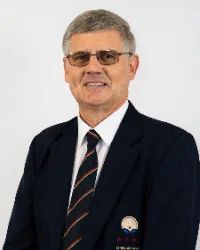
The official rectorate directory identifies Professor Kobus Mentz as rector and Professor Michael Heyns as vice-rector for academic matters. The rectorate also includes strategic, administrative, operational and language-support roles, reflecting the work required to support the institution’s teaching activities.
Sources: Rectorate ↗
Student life alongside online learning
Aros describes student voice, community, formation and support as priorities within its online teaching model. Its student-life page illustrates this dimension with a photograph from a formal social gathering. Student affairs provides a point of contact for this part of institutional life.
Sources: Student life ↗