Visa
About Akadémia Umení v Banskej Bystrici
An arts academy in central Slovakia
Akadémia umení v Banskej Bystrici, the Academy of Arts in Banská Bystrica, developed around the complementary disciplines of music, visual art and dramatic art. Slovakia's National Council established the academy through legislation effective on 1 July 1997. Its faculties for performing arts and fine arts began that year, while the Faculty of Dramatic Arts followed on 7 October 1998. The first graduates completed their studies in 2002, the year the institution changed from a state higher education institution to a public one and introduced an ECTS credit system. Its physical development included the reconstruction of the Kollárova 22 building between 2002 and 2005 and work on the dramatic arts building at Horná 95 between 2006 and 2011. These developments accompanied the establishment of a permanent higher education institution devoted to artistic practice.
Sources: History of the academy ↗
Education, creativity and public engagement
The academy's educational mission encompasses first, second and third cycles of higher education in the arts, with particular attention to visual, musical, theatrical and film work. Teaching sits alongside the institution's own artistic, research and publishing activities. Its mission connects individual creativity with critical thinking and identifies a relationship between education and professional practice as a central responsibility. Continuing education and cooperation in educating exceptionally talented pupils also form part of that remit. Beyond its classrooms, the academy describes participation in discussion about social and ethical questions as an institutional task. Cooperation with municipalities, regional authorities, cultural organizations and economic institutions extends this public role. International projects and the movement of students and employees provide another channel through which the academy exchanges artistic and educational knowledge.
Sources: Mission of the academy ↗
ART3 and collaborative production
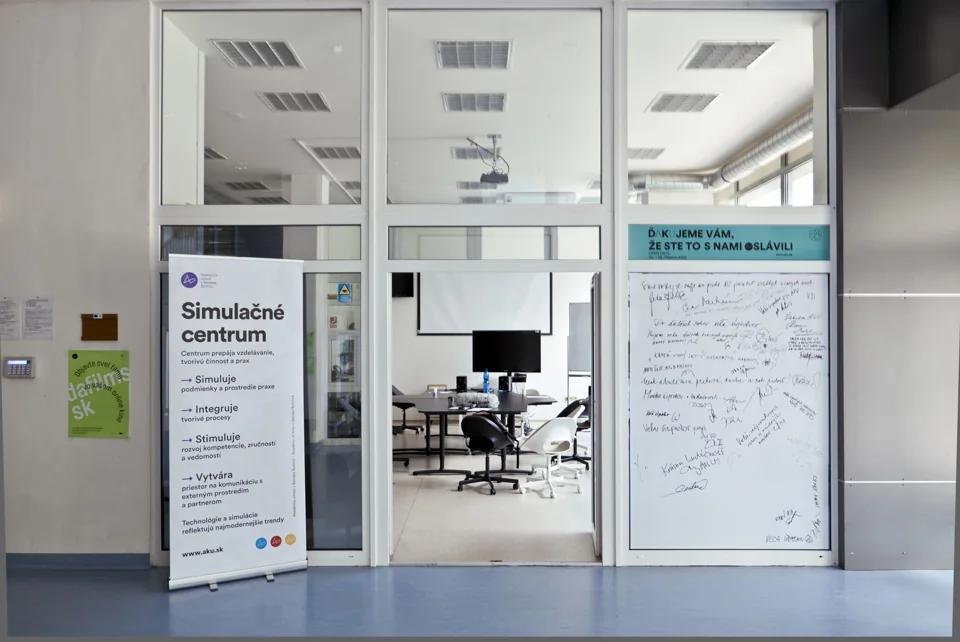
Established in 2020, the ART3 multimedia simulation centre connects audiovisual production with teaching across the academy's faculties. Students participate in television, film and more broadly conceived artistic projects under academic supervision, with external lecturers and professional partners contributing to the process. Its work spans the development of ideas, production, finishing, postproduction and presentation. Streaming and digital archiving are part of the same framework, allowing completed work to reach audiences beyond an individual class. The centre emphasizes collaboration between faculties: a project can bring together the perspectives of visual artists, performers and dramatic arts students. Activities include academy-wide initiatives such as open days and summer academy projects, alongside faculty-led collaborations. External partners can contribute creative guidance, technical support or platforms through which artistic work is presented.
Sources: ART3 multimedia simulation centre ↗
Support for doctoral work
The Centre for Support of Doctoral Studies provides an academy-wide framework for developing advanced artistic and research work. Its remit includes doctoral students from all the academy's study programmes, bringing support across disciplinary boundaries. The centre aims to create opportunities for participation in innovative research activities and for gaining international experience. It also serves as a platform for periodically assessing doctoral students' artistic, research and scientific activity. This combination links the development of individual projects with discussion of the quality of doctoral education as a whole. The centre's stated priorities include interdisciplinary competence and preparation for participation in academic, artistic, educational and cultural institutions. Its establishment is connected to the academy's 2021–2026 development strategy and the performance-contract framework introduced in Slovakia in 2024.
International exchange through Erasmus+
International mobility is organized through Erasmus+, which provides routes for students to study or undertake traineeships abroad and for employees to teach or receive training. The European Commission awarded the academy an Erasmus Charter for Higher Education in February 2021 for the 2021–2027 programme period. Its Erasmus identifier is SK BANSKA02. The academy's programme information sets these exchanges within four wider priorities: inclusion and diversity, digital transformation, environmental sustainability and active participation. Inclusion includes attention to health, social and economic disadvantages, while active participation concerns social and intercultural competence and democratic citizenship. The exchange framework therefore involves more than travel between institutions. It links artistic study with opportunities to encounter other teaching environments, share methods and develop cooperation between staff, students and partner organizations.
Sources: Erasmus+ basic information ↗
A specialist arts library
The academic library supports teachers, researchers, doctoral candidates and students across different study levels and forms, as well as members of the professional public. Its collections specialize in dramatic, musical and visual arts while also covering related social disciplines. Books, proceedings and periodicals sit alongside musical scores, audiovisual documents and bachelor's, master's and doctoral work defended at the academy. Publications donated from the estate of composer Svetozár Stračina form a distinctive part of the holdings. Readers can search an online catalogue and use both borrowing and on-site consultation services. The library also provides bibliographic assistance and information advice. Its described facilities include audiovisual playback and projection equipment, networked computer workstations and specially adapted workstations for readers with visual disabilities, connecting printed research materials with listening and viewing resources.
Sources: About the academic library ↗
Residence and everyday student life
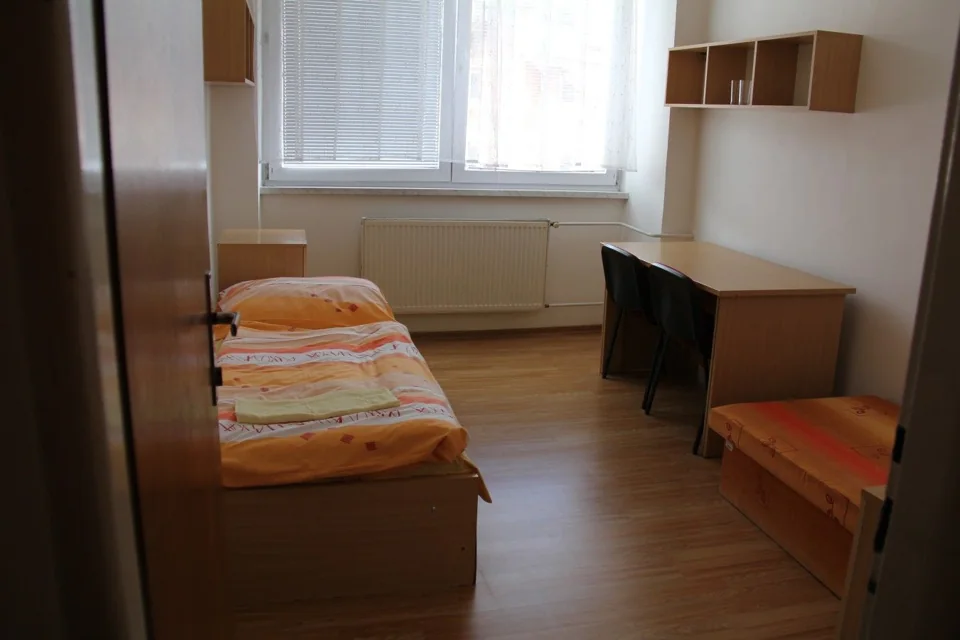
The academy's student residence is at Kollárova 20 in Banská Bystrica. Its accommodation uses units in which two twin rooms share bathroom facilities. Furnishings include beds, desks, chairs, cupboards and shelving, while shared kitchens provide space for preparing food. A common room and wireless internet support everyday study and social life, and the reception operates around the clock. Accommodation applications are handled through the AiS2 academic information system. Places are distributed between the three faculties according to their student populations, and individual allocation considers social circumstances, travel time by public transport, health and academic performance. The residence publishes an appeal procedure for students who are not allocated a place. These arrangements make housing an organized student service with its own application and assessment process.
Sources: Student residence ↗