Visa
About Academy of the Police Force in Bratislava
A state university for security education
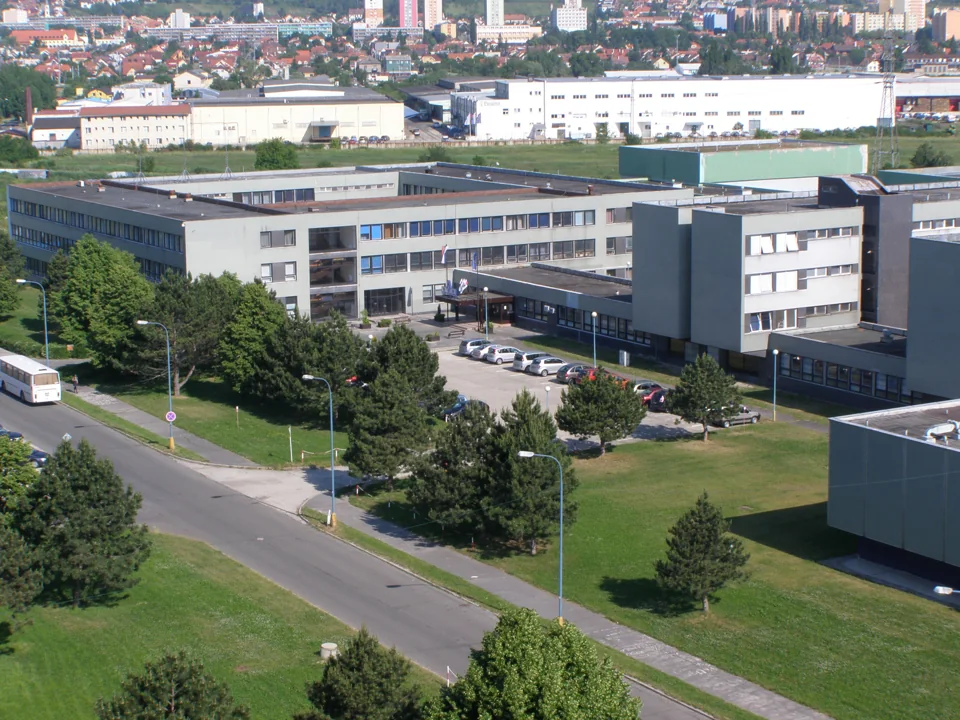
The Academy of the Police Force in Bratislava is a Slovak state higher education institution of university type. It began operating on 1 October 1992, at the opening of the 1992–93 academic year. Its establishment followed preparation of a higher education institution for the Police Force and other security services during the period of social transformation after 1990. The academy’s founding legislative measure was adopted in 1992.
The academy’s mission combines professional preparation with the development of scientific knowledge. It educates specialists for the Police Force, professional departments of Slovakia’s Ministry of the Interior, other state and non-state security services, and public administration. Its institutional history describes an initial bachelor’s programme, followed by the extension of academic activity to higher levels of study. Today it identifies security sciences as its study field and provides education across bachelor’s, master’s and doctoral levels.
Sources: General information and history ↗
Two principal programme directions
The academy identifies two central study programmes: security-law protection of persons and property, and security-law services in public administration. The first concerns preparation for work in the Police Force and other security services. The second addresses professional roles in public administration. The general institutional account states that both programme directions extend across all three levels of higher education.
Its applicant information distinguishes study routes for serving members of the Police Force and other security services from routes for civilian applicants. It lists both full-time and external forms within the public-administration programme, while the protection-of-persons-and-property routes have their own service-related arrangements. The programme structure therefore serves more than one participant group, linking higher education with different kinds of security and administrative work.
Sources: General information and history ↗ · Applicant programme information ↗
Credits, assessment and study organization
The academy organizes study through a credit system that measures the workload associated with successfully completing subjects. Its published explanation sets a standard full-time workload of sixty credits for an academic year and thirty for a semester. It lists at least 180 credits for bachelor’s study, 120 for the regular master’s route and 180 for doctoral study, with a separately specified conversion master’s route. Credits accumulate as students complete the requirements of their programme.
The final thesis and its defence form a credited subject, and state examinations also carry programme-defined credits. Where prescribed, professional practice is part of full-time bachelor’s and master’s education and earns credits. Recommended study plans combine compulsory, compulsory-elective and elective subjects. Credit transfer supports study at another institution through a learning agreement made before departure and recognition based on the receiving institution’s transcript. This connects programme planning and assessment with opportunities to complete part of an education elsewhere.
Sources: Credit system ↗
Research and scholarly publishing
The academy’s research agenda is connected with the needs of police practice and developments in science and technology. Its published priorities include the theory and methodology of police sciences, the Police Force as an organization and its place in civil society, and the distinctive characteristics of police work. Other themes concern the causes, forms, prediction and prevention of crime, alongside the methods used to prepare police officers and other public employees through higher education.
Legal questions in policing, crisis management in public administration, and the structure and functions of public administration also fall within the research remit. Conferences, seminars, symposia and workshops accompany this activity. The academy publishes study literature, scientific and qualification works and other professional publications. Its peer-reviewed journal Policajná teória a prax addresses theoretical questions with attention to practical application. Doctoral study and student scientific and professional activity provide further routes through which research becomes part of academic life.
Sources: Scientific and research orientation ↗
International professional networks
The foreign department coordinates international cooperation. Its National CEPOL Unit serves as a liaison within the European network of law-enforcement training institutions and organizes courses, seminars, conferences and exchanges. The academy also describes nationwide online education for Police Force members through this work from 2022. Cooperation through the Central European Police Academy, MEPA, includes training activities, study visits and exchanges concerned with research and security-service practice.
An agreement with Frontex supports international conferences, training and mobility at the academy. Membership in the Association of European Police Colleges, AEPC, provides another setting for exchanging experience, research and training practices. The international account also identifies the OSCE’s online police-training network and bilateral agreements with partner educational and research institutions. These relationships connect the Bratislava academy with wider professional and academic discussions of law enforcement and security education.
Library and information support
The academy library supports teaching, research and professional work through materials in security sciences and related subjects. It processes, preserves and makes available primary and secondary information sources connected with the academy’s fields of study. Its remit includes documentary, literature-search, analytical and study-support services, together with electronic processing and storage of scientific information.
Consultation, lectures and publications help users work with the collections and information services. The library serves students and academic, scientific, professional and other academy employees, as well as Ministry staff and users from other institutions where compatible with the academy’s interests. Its role consequently extends from access to study literature to support for the identification and use of information in research and professional activity.
Sources: Academy library ↗