Visa
About Academy of Arts in Banská Bystrica
An arts university in central Slovakia
The Academy of Arts in Banská Bystrica, known in Slovak as Akadémia umení v Banskej Bystrici, brings together higher education in music, fine arts and dramatic arts. It was established on 1 July 1997, initially with faculties of music and fine arts. Its institutional history records the formation of a specialist arts university within Slovakia’s higher education system. The Academy’s main contact address is Kollárova 22 in Banská Bystrica.
The Academy’s different faculties connect artistic practice with research, reflection and public presentation. Its wider services include an academic library, a student residence, international mobility arrangements and a database for archiving creative work. The archive is intended for students, teachers and graduates and includes final works, semester projects and other artistic outputs. This gives the institution a means of recording creative production alongside its teaching, exhibitions, concerts and performances.
Sources: Academy history ↗ · Academy creative archive and services ↗
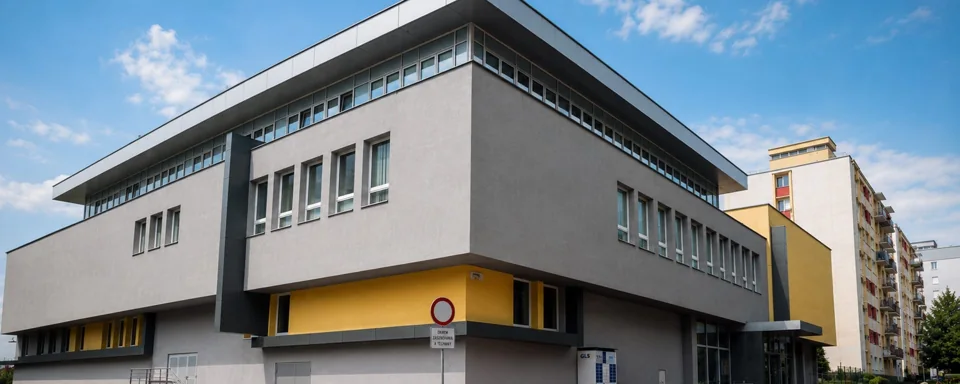
Music through individual and ensemble practice
The Faculty of Music provides bachelor’s, master’s and doctoral education. Its departments cover instrumental performance, vocal interpretation, composition and choral conducting, supported by music-theoretical and philosophical-aesthetic study. The faculty’s programme listings distinguish performance and composition at bachelor’s and master’s levels, with music art at doctoral level. The educational approach prepares students for artistic activity as well as teaching.
Ensemble participation is part of the study process. Students work in chamber groups, a chamber orchestra, an opera studio and a mixed choir, complementing individual preparation with collective performance. The faculty describes contributions to exhibition openings, literary evenings and other cultural events, placing musical work in contact with the city’s wider artistic life. Its published activities also include concerts, festivals, competitions, conferences, courses, scores and other publications. Such settings bring performance, interpretation and professional exchange into the faculty’s regular activity.
Sources: Faculty of Music introduction ↗
Fine arts and studio-based learning
The Faculty of Fine Arts was established with the Academy in July 1997 and is located at Kollárova 28. Its work combines artistic education with research, publication, exhibitions and cooperation with universities and art institutions in Slovakia and abroad. The faculty’s departments include graphics, intermedia and digital media, painting, sculpture, and theory and history of fine arts. Its educational provision extends across three levels of higher education.
The faculty places particular emphasis on students’ independent activity and inventive thinking. Studio teaching is described as a dialogue in which a teacher guides each student to ask relevant questions, examine a problem from different perspectives and develop an analytical and critical position. Interim presentations and the assessment of students’ work are important parts of this process. The approach connects the development of visual literacy with artistic identity and reflection on the student’s own creative choices.
Sources: Faculty of Fine Arts introduction ↗
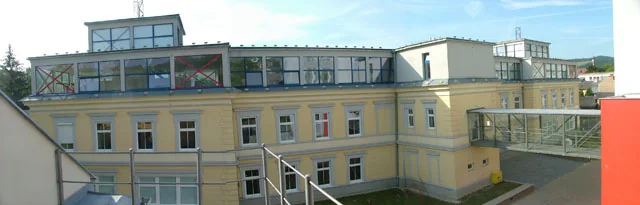
Art history, theory and interpretation
The Department of Theory and History of Fine Arts supports the faculty’s practical disciplines with historical, theoretical and aesthetic study. At bachelor’s level, its teaching includes the history and theory of visual arts, aesthetics, language preparation and anatomy for visual artists. These subjects provide context and specialised knowledge alongside studio work in graphics, painting, sculpture and audiovisual media.
At master’s level, the department emphasises Slovak and international visual art from the second half of the twentieth century, including contemporary tendencies and their social, political, philosophical and cultural contexts. Doctoral teaching develops interpretation and communication through twentieth- and twenty-first-century art, aesthetics, philosophy and artistic methodology. Staff research, publications, exhibition curation and conference participation are linked with this educational work. The department thus contributes critical tools for explaining and examining the ideas behind visual production.
Sources: Theory and History of Fine Arts ↗
Theatre, film and emerging forms
The Faculty of Dramatic Arts was established in October 1998 and began operating independently on 1 January 1999. Its current introduction describes a setting where theatre, film, screenwriting, production and new media meet. Students create theatre productions, make films, write scripts, work in postproduction and organise cultural projects. Collaboration across specialisms mirrors the collective nature of professional screen and stage work.
The faculty uses theatre stages, film and sound facilities, projection spaces and production and postproduction technologies. The Academy’s ART3 Simulation Centre, created in 2020, links camera work, sound, lighting, directing, streaming and presentation. The faculty timeline also identifies the opening of the interdisciplinary Art and Artificial Intelligence bachelor’s programme in 2025 and an Artistic Production bachelor’s programme in 2026. Public performances, screenings, workshops, festivals and international exchanges provide further contexts for presenting and developing student work.
Library resources and a record of artistic activity
The Academic Library provides an online catalogue, electronic-information resources and access to information about academic publications. Its published services include book-sales information and library rules alongside reading and borrowing arrangements. A dated announcement offers an Academy-wide trial of EBSCO Art Source Ultimate and Film & Television Literature Index with Full Text from 19 October to 20 November 2026, connecting library support with the institution’s art and screen disciplines.
ART3 magazine records the activities of teachers and students across the Academy. It reports on concerts, exhibitions, conferences, festivals and other events, providing a published account of the institution’s creative life. Its online archive includes issues from earlier years as well as a 2026 issue. The magazine and the Academy’s creative-work database serve different but complementary purposes: one documents events and discussion, while the other preserves artistic outputs associated with its community.
Sources: Academic Library ↗ · ART3 magazine ↗ · Academy creative archive and services ↗