Visa

About Akademia Techniczno-Artystyczna Nauk Stosowanych w Warszawie
Technology, art and business in Warsaw
Akademia Techniczno-Artystyczna Nauk Stosowanych w Warszawie, commonly known as ATA, is a private higher-education institution with roots in Warsaw’s Wyższa Szkoła Ekologii i Zarządzania. The earlier school was founded in 1995, and the academy adopted its current name in 2024. Its educational identity brings technology, art and business together within a practice-oriented academic setting.
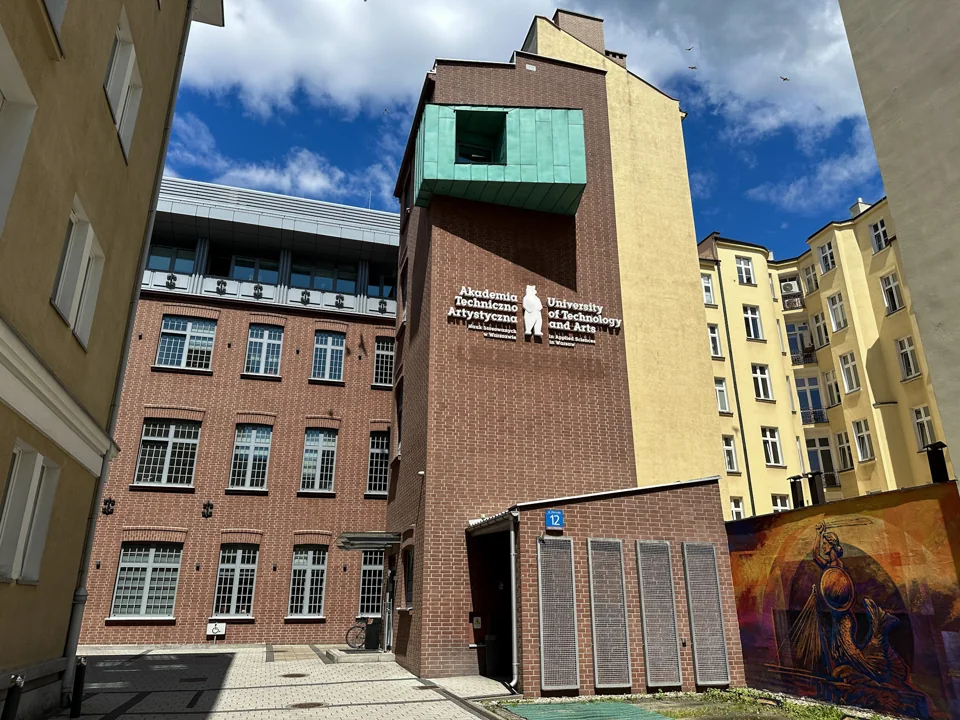
The institution expanded in 2025 through the incorporation of Wrocławska Akademia Biznesu, which now operates as ATA’s Wrocław branch. The current organisation includes the Faculty of Architecture and Faculty of Engineering and Management in Warsaw, alongside the Wrocław business faculty. Warsaw’s administrative headquarters is at Olszewska Street 12. This institutional history explains why older academic publications and library records use the WSEiZ name while current materials use ATA.
Sources: Institutional history and campus infrastructure ↗
Architecture and the built environment
The Warsaw first-cycle Architecture programme combines artistic development with the technical study of buildings and urban space. Its published subjects include architectural history and theory, drawing, painting, sculpture and modelling, alongside mathematics, engineering graphics, structural mechanics, building physics and construction materials. Architectural and urban design projects run through the programme, bringing these areas together in work on buildings, housing and public space. The curriculum additionally includes environmental protection, environmental sociology and psychology, heritage conservation, building installations and the economics of investment projects, extending design work into its social, historical and organisational context.
The programme describes architectural-design and virtual-design studios equipped with digital tools, including graphics tablets and three-dimensional controllers. It also identifies a simulation laboratory addressing the experiences of people with functional limitations, using equipment such as a wheelchair, an age-simulation suit and virtual-reality glasses. Professional practice in architectural offices forms another component. The overall educational emphasis is on connecting aesthetic judgement, functional requirements, technical understanding and consideration of the people who use designed spaces.
Mechanical engineering and manufacturing
Mechanical Engineering at ATA addresses machine design, manufacturing, assembly and the operation of equipment. The published curriculum covers materials science, mechanics, physics, strength of materials, fluid mechanics, thermodynamics and metrology. Engineering design, quality engineering, electrical and electronic subjects, automation and robotics extend this technical foundation into production settings.
Computer-aided design and manufacturing tools are an explicit part of the programme’s approach. Its listed specialisms include computer-based design and control, vehicle construction and servicing, printing-equipment construction and servicing, and drone design and production. Business-related subjects such as cost calculations, management and logistics sit alongside technical study. Professional practice and an engineering final project provide opportunities to bring together analytical knowledge, design decisions and the practical requirements of machinery and industrial processes. Other named subjects include workplace safety and ergonomics, environmental management, production information systems and engineering graphics, showing the relationship between technical design and the organisation of manufacturing work.
Sources: Mechanical Engineering programme ↗
Design as a practical creative discipline
The Design programme focuses on the development of products and interactions. Its published account includes everyday objects, furniture, packaging, visual identity and communication. Students examine how a product’s form relates to functional, technical and economic requirements, while developing methods for working through a design problem.
The subject list brings drawing, painting, sculpture and model-making together with ergonomics, design history, industrial technologies, computer work and visual-information design. Design ethics and intellectual-property protection are included alongside marketing and presentation techniques. The programme also identifies a social-design studio, photography and professional practice. This mix places artistic experimentation within a wider process of understanding users, communicating ideas and developing workable objects or visual systems. Product design and interaction design are separately identified specialisms, while typography and lettering appear among the published subjects.
Sources: Design programme ↗
Library resources and study support
The academy library supports study across its technical, artistic, environmental and management fields. Its collection description includes architecture and art history, urban planning, design, engineering, environmental protection, economics and computing. It also collects graduates’ undergraduate, engineering, master’s and postgraduate final works.
An online catalogue allows users to check availability and reserve items for borrowing. The library website brings together links to specialist bibliographic services such as BazHum, BazTech and BazEkon, alongside broader research resources. It also describes EBSCO access for students and staff through the reading-room computers at Rejtana Street. The library’s own history begins with the institution’s 1995 statute and traces the development of automated cataloguing and lending.
Sources: Academy library and information resources ↗
International exchange and scholarly activity
ATA participates in Erasmus mobility for students, academic teachers and administrative staff. Its international office describes study exchanges, placements and staff development with partner institutions. Faculty coordinators support the programme, and the public mobility pages include reports from study and internship experiences in several European countries. This gives international cooperation a practical role within the institution’s educational activity.
The academy’s research pages document conferences and institutional publishing. Listed events include the ARCHBUD scientific and technical conference series, KRAJart artistic and scientific conferences, and meetings concerning electromobility. Its publishing catalogue includes work on architecture, urban development and the relationship between social, economic and environmental questions in planning. Downloadable publications and author guidance support the dissemination of academic work alongside teaching. The continued presence of WSEiZ-era publications within this catalogue also records the institution’s longer scholarly history. The research website also provides laboratory exercises in fluid mechanics and hydraulics and materials addressing technical aspects of sustainable urban development.
Sources: Erasmus mobility ↗ · Research conferences and publishing ↗