Visa

About Agrupamento de Escolas de Briteiros
A public school cluster in Guimarães
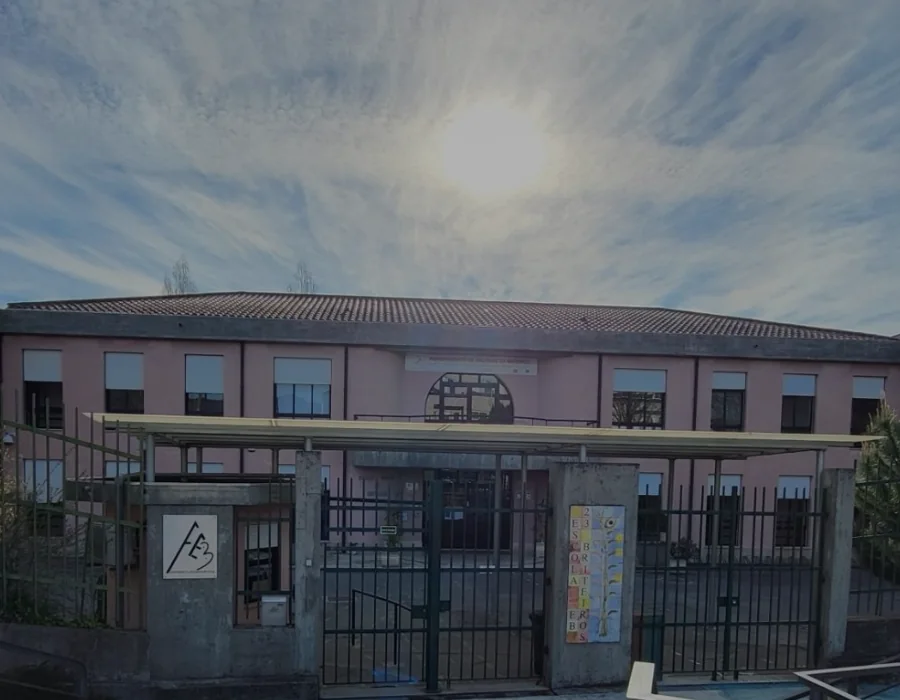
Agrupamento de Escolas de Briteiros is a public school cluster in the municipality of Guimarães, in Portugal’s Braga district. Its headquarters are at Escola Básica de Briteiros in São Salvador. The organisation brings several local schools together as one educational unit, providing a path from preschool through the third cycle of basic education. It is a school network serving children and young people, with coordination across different establishments and stages of learning.
The cluster was formally created on 13 June 2003. Its history describes earlier cooperation among educational communities in Barco, Briteiros, Donim, Gondomar, and Souto. A proposal for a Briteiros grouping was first presented in 1997, seeking closer educational coordination between primary schools and the existing second- and third-cycle school. The formal cluster subsequently joined the headquarters school with preschool and first-cycle establishments in its area.
Sources: History of the school cluster ↗ · Educational provision ↗ · Schools of the cluster ↗
Schools and educational purpose
The headquarters school provides the second and third cycles of basic education. Barco, Donim, Igreja, Fafião, Serrado, and Souto Santa Maria offer preschool and first-cycle education, while a separate kindergarten in Souto Santa Maria provides preschool education. This arrangement allows the organisation to serve different local communities while coordinating the transition between earlier schooling and the later years taught at Briteiros.
The cluster’s mission centres on pupils’ overall development and an equitable, inclusive public educational service. Its stated values include freedom, responsibility, integrity, citizenship, participation, curiosity, reflection, and innovation. The educational vision places attention on pupils’ different needs and on the well-being of the wider school community. Democratic participation, the common good, and sustainable development provide the ethical context for those aims.
Sources: Mission, vision and values ↗ · Educational provision ↗
Computational thinking as part of the curriculum
Computational Thinking is a complementary curricular offer for pupils in the fifth and sixth years. It began in the fifth year during 2022–2023 and was subsequently extended to the sixth. The subject develops ways of analysing problems, identifying patterns, dividing complicated tasks into smaller parts, creating algorithms, testing possible solutions, and improving a method after evaluating its results.
Activities combine work without digital technology with work using Scratch and micro:bit. The cluster emphasises active and collaborative learning, with pupils creating, testing, and refining responses to challenges. Participation in the international Bebras computational-thinking challenge gives another setting for applying those skills. The programme also involves cooperation with the University of Minho’s ALGORITMI/LASI centre in the development and study of computational-thinking education.
Sources: Computational thinking ↗
Digital learning and practical experimentation
The Digital Education Laboratory, known as LED, provides equipment for interdisciplinary teaching and practical projects. Its arts and multimedia resources include photographic and video equipment, microphones, streaming tools, a teleprompter, a digital recorder, and graphics tablets. These resources support creating and communicating content as well as learning to use digital tools.
The laboratory’s science, technology, engineering, and mathematics resources include educational robots, TI-Innovator Rover kits, LaunchPad boards, sensors, a digital microscope, and renewable-energy equipment. A modular 3D printer supports modelling and prototyping. Teachers and pupils can use the laboratory for curricular activities, interdisciplinary projects, clubs, and digital-skills development. A laboratory team manages equipment, maintenance, updating, and appropriate use under the laboratory’s own regulations, linking the facility with the cluster’s wider digital-development plan.
Sources: Digital Education Laboratory ↗
Robotics and creative expression
Educational robotics is developed within Clube Ciência+, joining science, technology, engineering, and computational thinking. Activities encourage pupils to imagine, construct, programme, test, and improve their own projects. The published resources include mBot2 robots and micro:bit devices, allowing work with programming, physical computing, and sensors. The school presents mistakes and revision as parts of the learning process rather than simply judging a project by its first result.
Creative work provides another route into practical learning. The Creative Writing and Illustration Club combines words and images through writing challenges, drawing, and illustration. Its objectives include developing written and visual communication, encouraging imagination, and bringing different subjects together. Collaboration and cultural participation also form part of the club’s purpose, giving pupils a space to create stories and explore different forms of expression.
Sources: Educational robotics ↗ · Creative Writing and Illustration Club ↗
Inclusion and community communication
The Learning Support Centre brings together human and material resources to support inclusion. Its work has two connected strands: helping teachers implement inclusive teaching practices and providing additional support alongside classroom activity. Published responses include personalised educational support, tutoring, language and communication development, reading support, psychological and educational guidance, and work on personal and social skills.
The centre works with municipal, health, inclusion, child-protection, and community organisations. Named partners include Guimarães municipality, local parish councils, CERCIGUI, the Guimarães Cerebral Palsy Association, the information and communication technology resource centre, and the local health service. Pupils receiving additional learning and inclusion measures can also access specialised activities that complement their classroom work. Communication and community participation also appear in the school’s cultural activity. Entre Nós, reported in October 2026, links Rádio Onda Celta with the school library through conversations involving pupils, families, and other community members. Its opening episode explored digital life and the balance between being connected and engaging with everyday experience, illustrating how library and radio work can bring educational questions into discussion across generations.
Sources: Learning Support Centre ↗ · Entre Nós school-library and radio project ↗