Visa

About Agricultural University of Poznan
The historical agricultural university and today’s PULS
The Agricultural University of Poznan is the historical name of the institution now known as Poznań University of Life Sciences, or PULS, in Poland. Based in Poznań, it brings together agricultural and natural sciences with engineering, food studies, animal sciences, and economics. The university’s present name was adopted in 2008, following an earlier Agricultural University period that began in 1972.
Its academic heritage reaches further back. The university traces a connection to the Agricultural Halina School established in Żabikowo near Poznań in 1870 through the efforts of August Cieszkowski. A Faculty of Agriculture and Forestry formed part of Poznań University in 1919. In 1951, an independent Higher School of Agriculture was established. These successive stages explain how the current university combines a regional agricultural tradition with a broader life-sciences identity.
Sources: About Poznań University of Life Sciences ↗ · Official English university brochure, 2025 ↗
Academic scope and routes of study
PULS provides education through undergraduate or engineering degrees, master’s study, and doctoral education. Its faculties cover Agriculture, Horticulture and Biotechnology; Forestry and Wood Technology; Veterinary Medicine and Animal Science; Food Science and Nutrition; Environmental and Mechanical Engineering; and Economics. These groupings connect the study of living systems with the materials, technologies, landscapes, and organisations associated with their use.
The official English-language master’s study descriptions include agronomy, animal production management, biotechnology, forestry, wood science, horticultural seed science and technology, food science and nutrition, environmental engineering and protection, agri-food economics and trade, and geoinformation and spatial management. The range includes both production-oriented subjects and disciplines concerned with environmental resources and their management. The university also provides doctoral education, postgraduate study, and opportunities for study or traineeship exchanges through Erasmus+.
Sources: About Poznań University of Life Sciences ↗ · Current faculties ↗
Research across agriculture, food, and the environment
The university’s research agenda spans agricultural biotechnology, plant responses to environmental stress, breeding, food production, and environmental protection. Its published directions include plant genomics, animal genetics, biological products for agriculture, and biotechnology used in food quality assessment. These are complemented by research on sustainable vegetable and horticultural production, biodiversity, ecosystem restoration, and the development of landscapes and urban greenery. Food research includes product authenticity, storage changes, processing methods, quality-management systems, and the environmental effects of the agri-food industry. Published topics encompass both animal-derived foods and plant-based products.
Engineering and materials research adds work on renewable energy, biomass, wood-based materials, furniture design, and the conservation of wooden cultural heritage. Geomatic methods, including terrestrial, aerial, and satellite observations, support spatial analysis. Economics research examines agribusiness organisation, competitiveness, markets, and rural development. The university also describes commissioned work conducted through laboratories, greenhouses, and experimental stations. Its strategy links research and teaching with regional and national social and economic needs, alongside international cooperation.
Sources: Research areas ↗ · University strategy ↗
Learning resources and the university’s historical collections
The University Museum provides a learning resource built around a chronological record of the institution’s development. Its permanent exhibition draws on material donated by staff and graduates, preserving academic traditions alongside evidence of teaching and scientific work. Every item has its own catalogue record, allowing individual documents and objects to form part of an organised historical collection.
The museum’s origins lie in collecting begun by library director Wacław Sokołowski, who promoted the idea from the late 1970s. The Alumni Association later helped develop the collection and exhibition space. Its holdings include documents, photographs, medals, herbaria, lecture notes, course programmes, biographies, and academic identity cards. Particularly significant examples include records of the interwar horticultural school, account books of the agriculture and forestry faculty, and material relating to the school at Żabikowo. These collections preserve evidence of agricultural and forestry education across the institution’s changing names.
Sources: University Museum ↗
International study and support in Poznań
International activity includes study and traineeship exchanges through Erasmus+, cooperation with overseas institutions, and English-language degree provision. A more recent addition is Welcome Point, described in the university’s October 2026 reporting as a support space for international students, researchers, and visitors. It provides practical information about settling into university and city life, including public transport, administrative matters, healthcare services, and residence procedures.
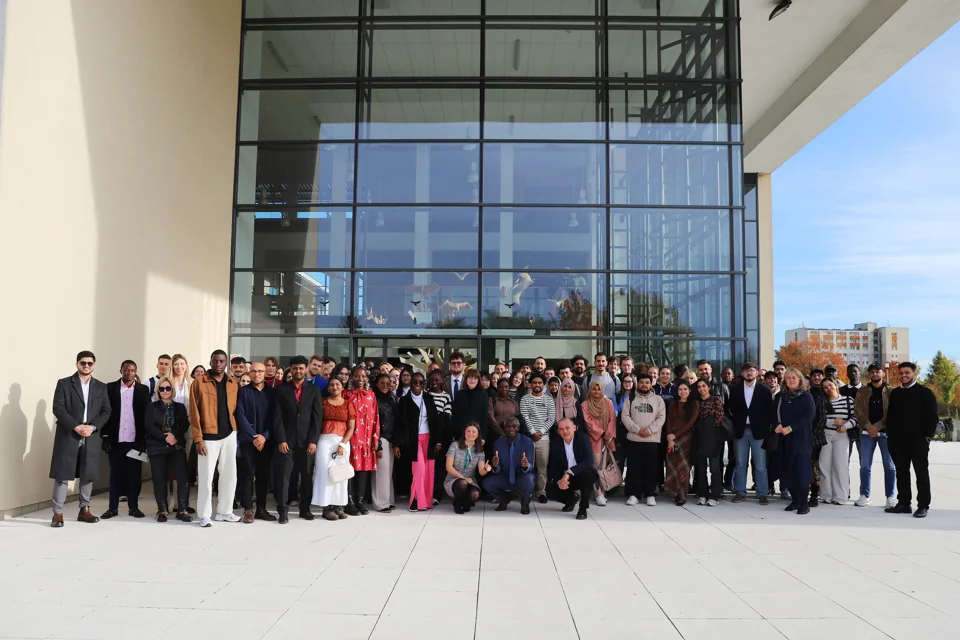
On 23 October 2026, the university held a Welcome and Integration Meeting at Biocentrum for new international bachelor’s and master’s students and Erasmus+ participants. University representatives, city and regional institutions, and student organisations introduced study arrangements and available support. The event also presented the International Student Association and the PULS BUDDY Programme, through which local students help international peers become familiar with the university and Poznań. These activities combine practical orientation with opportunities to build relationships across the student community.
Sources: About Poznań University of Life Sciences ↗ · Welcome Point opening, October 2026 ↗ · Welcome and Integration Meeting, October 2026 ↗
Student culture and continuing education
The Student Cultural Centre supports artistic activity in music, theatre, and dance. Its published organisational structure includes the Łany Folk Song and Dance Ensemble, the Wielkopolska Polish Dance Club, the Venator trumpet ensemble, Coro da Camera academic choir, the university orchestra, and Teatr PULS. Based at Kolegium Rungego, the centre provides a setting for students to develop artistic interests alongside their academic studies.
The Centre for Lifelong Learning coordinates activities that share university knowledge and develop skills across the local community. Its stated objectives include improving general and specialist knowledge, strengthening professional qualifications, and encouraging educational and cultural activity among children and young people. It also seeks to support older people’s intellectual activity and prevent social exclusion. This community-facing work connects the university’s expertise with learners beyond its degree programmes and encourages relationships between the academic institution and its surroundings.
Sources: Student Cultural Centre ↗ · Centre for Lifelong Learning: mission ↗