Visa
About Agricultural University of Lublin
The historical agricultural institution and its current name
The Agricultural University of Lublin is the historical English name associated with the institution now known as the University of Life Sciences in Lublin, Poland. Its Polish name is Uniwersytet Przyrodniczy w Lublinie. The present university combines agriculture with biological, veterinary, technical, food, environmental, and socioeconomic sciences. Its current name reflects a broader academic scope developed from its agricultural and animal-science foundations.
Those foundations reach back to 1944, when agricultural and veterinary faculties were established within the newly created Maria Curie-Skłodowska University in Lublin. An animal husbandry faculty followed in 1953. On 1 September 1955, the three faculties became a separate institution, the Higher School of Agriculture. Professor Bohdan Dobrzański served as its first rector. The new institution included a library, experimental farms, language teaching, and physical education alongside its faculties.
Sources: University roots, 1944–1954 ↗ · Independent institution, 1955–1971 ↗ · Agricultural Academy period, 1972–2007 ↗ · University of Life Sciences, 2008 onwards ↗
Academic development and campus growth
In 1972, the institution adopted the Polish title Akademia Rolnicza, or Agricultural Academy. It continued under that name until the change to University of Life Sciences in 2008, formally celebrated on 17 April. Horticulture and agricultural technology had already become separate faculties in 1970. Later development included food science and biotechnology, with a faculty established in 2005, and environmental biology, which gained its own faculty in 2019.
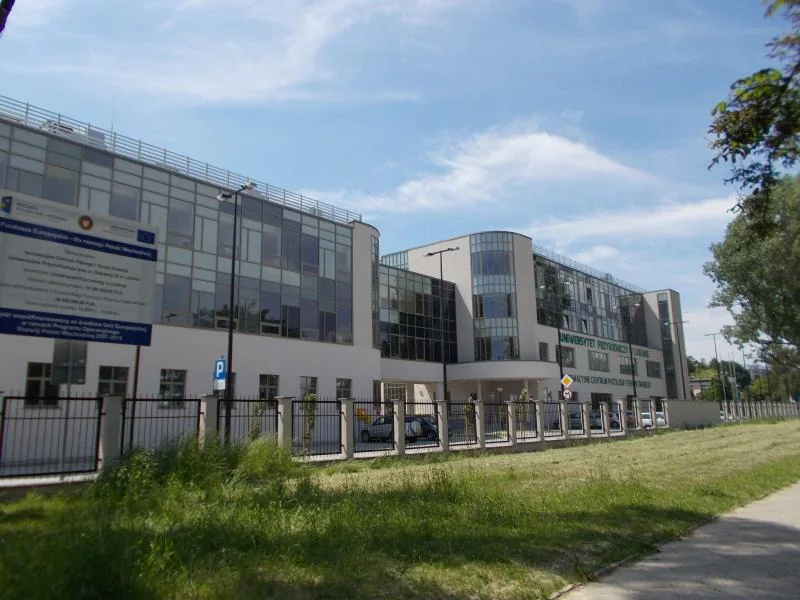
The principal campus developed around Akademicka and Głęboka streets, while the university also expanded elsewhere in Lublin. A new food science and biotechnology building was completed on Skromna Street in 2005. The university’s history records the opening of the Regional Centre for Agricultural Scientific Information and Main Library in 2012, an agricultural engineering innovation centre in 2013, and the Animal Pathology and Therapy Innovation Centre in 2015. These facilities added teaching rooms, laboratories, research workshops, and specialist infrastructure to the institution’s agricultural base. In November 2022, the Veterinary Medicine faculty opened a Clinical Skills Laboratory equipped with animal models for students to practise professional skills. The same year also saw the opening of an equestrian teaching and research centre at Felin, with an indoor riding arena and associated facilities.
Sources: Independent institution, 1955–1971 ↗ · Agricultural Academy period, 1972–2007 ↗ · University of Life Sciences, 2008 onwards ↗
Research in agriculture and environmental management
The Faculty of Agrobioengineering’s published research directions show how agricultural production is connected with environmental and economic questions. Work includes improving soil properties, reclaiming degraded land, studying the circulation of elements through ecosystems, and investigating the relationships between soil, fertilisation, plants, and animals. The faculty also identifies the use of microorganisms in agriculture and environmental protection as a research subject.
Plant research includes cultivation technologies, genetics, biotechnology, and the assessment of agricultural raw materials. Grass communities are studied for their persistence, usefulness, and contribution to nature and landscape. The faculty’s scope also reaches into agribusiness competitiveness, enterprise development, and rural tourism. These directions place the biological study of farming alongside the economic and organisational conditions in which agricultural businesses operate.
Field stations as places for learning and investigation
The university’s research stations support work beyond the classroom and laboratory. The Laura Kaufman Didactic and Research Station maintains poultry, including Green-legged Partridge and Polbar chickens associated with genetic-resource conservation. Students from different subjects attend classes there, while the birds support university research and collaboration with other poultry researchers.
The Alfred Lityński Hydrobiological Didactic and Research Station is located by Lake Piaseczno in the Łęczna-Włodawa lake district. Its facilities support biological and chemical investigation of water and sediments, field activities, and student thesis work. The station also contributes to research and restoration involving protected willow species. At Sosnowica, grassland, a weather station, and a lysimeter installation provide another setting for studying agricultural and environmental processes. Small-ruminant research adds teaching and investigation involving sheep and goats.
Sources: Scientific and research stations ↗
Experimental farms and practical agricultural work
Experimental farms form a further part of the university’s teaching and research infrastructure. Their stated tasks include supporting exercises, seminars, placements, and scientific experiments. Their different locations and production systems allow work across agronomy, animal sciences, processing, and veterinary subjects. At Uhrusk, crop production is combined with cattle, sheep, and goose husbandry, including conservation work involving native livestock.
Czesławice combines field crops with pig breeding and maintains the native Puławska pig breed. Felin, situated in a suburban setting, provides land for horticultural and agrobioengineering experiments. Its facilities include teaching buildings, an orchard, greenhouses, storage, and drying space. Students use the farm for placements and experiments connected with their theses, linking academic projects to the conditions of agricultural production.
Sources: Experimental farms ↗
Library resources and student surroundings
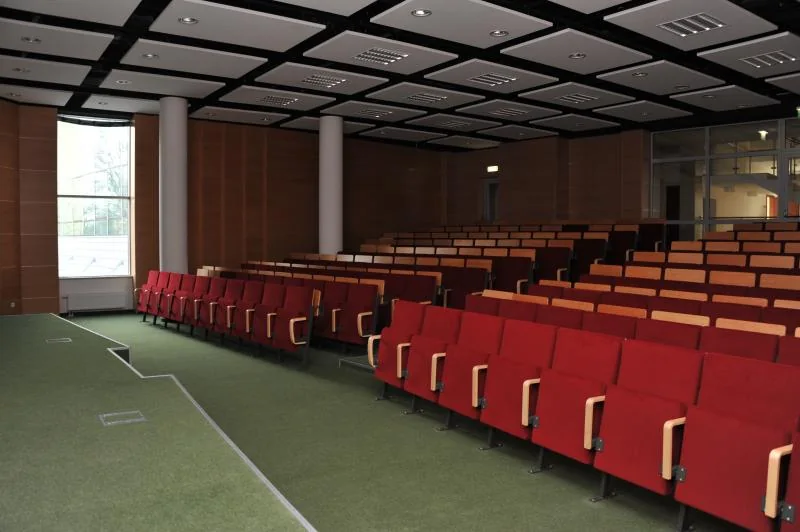
The Main Library was founded in 1955 and has occupied its newer building since 2012. Its collections support agriculture, horticulture, animal science, veterinary medicine, food technology, engineering, biotechnology, and environmental study. Open shelves allow readers to select frequently used books and journals directly. Electronic resources complement printed holdings, and library staff provide bibliographic assistance and training in finding scientific information.
Reading spaces include rooms for individual and group work, while the Scientific Information Department supports searches across bibliographies, databases, and other research sources. Student accommodation is available in university dormitories around Langiewicza Street and the Felin district. The university describes study rooms, communal facilities, and sporting amenities among the student surroundings, extending the academic environment beyond lecture rooms, research sites, and the library.
Sources: About the Main Library ↗ · Library services ↗ · Campus and accommodation ↗