Visa
About Agricultural-Technical Academy in Olsztyn
A historical academy in Olsztyn
The Agricultural-Technical Academy in Olsztyn was the Polish institution known as Akademia Rolniczo-Techniczna, or ART. Its history began with the Higher School of Agriculture established in 1950 through the union of agricultural schools from Łódź and Cieszyn. The academy name was adopted in 1972, reflecting an institution whose work had expanded beyond its original agricultural foundations.
The official chronology records the development of veterinary medicine, geodesy, mechanics and civil engineering alongside agriculture, animal husbandry, dairy science and fisheries. In 1989, the academy received the name of Michał Oczapowski. Management became a faculty in 1995.
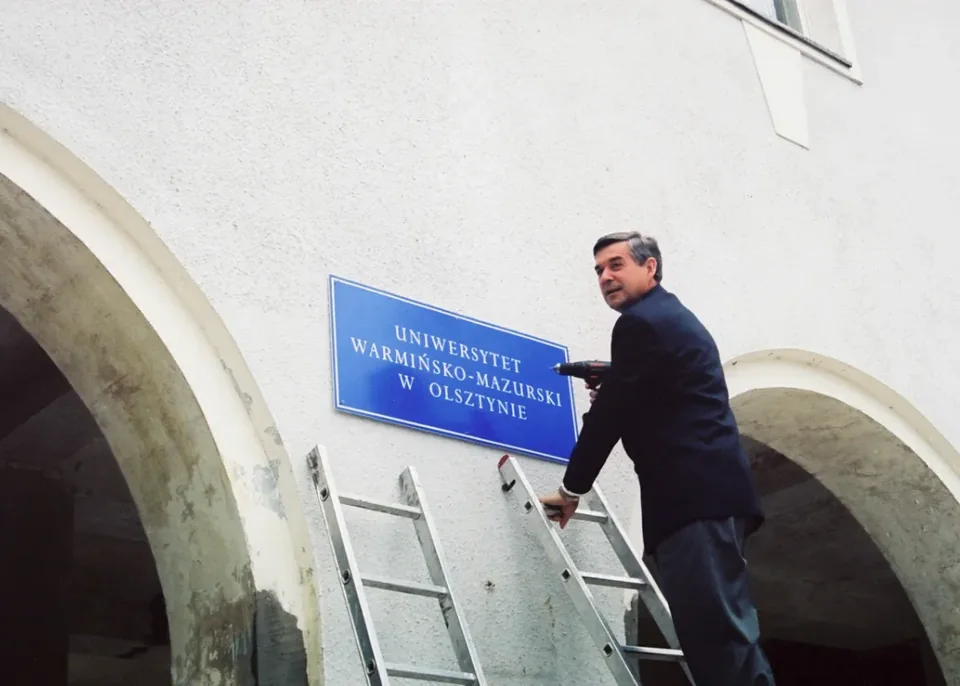
The academy subsequently helped create the University of Warmia and Mazury in Olsztyn, or UWM. A resolution supporting the new university was adopted by ART's senate in 1997, legislation followed in 1999, and UWM began on 1 September 1999 through the combination of ART, the Higher School of Pedagogy and the Warmian Theological Institute. The academy is therefore a historical predecessor of today's university, with its academic traditions continuing within that successor institution.
Sources: Official chronology of the academy and successor university ↗
A broad academic record
The UWM archive preserves records of the Higher School of Agriculture and ART across the 1950–1999 period. Its description shows the breadth of the academy's academic and administrative life. The collections include material from agriculture, animal science, food science, veterinary medicine, fisheries and water protection, surveying and spatial management, mechanics, construction and management.
The archive also holds records of applied biology, education, foreign-language teaching, international cooperation, research administration and the main library. Photographic collections form another part of this institutional record. When UWM was created, its archive brought together the earlier academy and pedagogical-school archives. These holdings preserve evidence of the separate institutions that contributed to the university.
Sources: University archive: academy records and institutional continuity ↗
Agricultural study and experimental work
The agricultural faculty's timeline links teaching with field experimentation from the early years of the predecessor school. Experimental facilities developed at Pozorty, Łężany and Bałcyny during the 1950s. The first engineering graduates and master's graduates emerged in 1952 and 1953 respectively, and student scientific groups also began during this period.
During the academy years, the faculty developed a teaching and experimental base at Tomaszkowo in 1975. Later changes included environmental protection and horticulture studies in the 1990s. The history also records the movement of some academic units into new faculties as the institution broadened. These developments show agriculture as both an established educational core and a setting from which related scientific and organizational fields grew.
Engineering alongside agriculture
The technical-sciences tradition began with a mechanical faculty established at the Higher School of Agriculture in 1969. Its first engineering graduates completed their studies in 1973, and integrated master's-level mechanics education began in the same year. The historical timeline subsequently records mechanics and machine construction education from 1987.
Agricultural and forestry technology was introduced in 1993, connecting technical study directly with the institution's agricultural setting. New teaching space followed in 1994. With the creation of UWM in 1999, the Faculty of Technical Sciences became part of the new structure. The chronology therefore illustrates a distinct engineering strand within ART's development, rather than an institution concerned only with crop or animal production.
From dairy education to food science
Food science has another important place in the academy's history. The dairy faculty entered the Olsztyn Higher School of Agriculture in 1950, alongside agriculture and animal husbandry. Its teaching and research grew from earlier dairy and cheese-making education in Cieszyn. Master's study began in 1958, followed by part-time provision in 1963.
As its interests widened, the faculty's names changed to include dairy and food technology, then food technology. During the 1970s it developed institutes concerned with food engineering and biotechnology and with the physics and chemistry of food. The Faculty of Food Science name was adopted in 1998, just before the creation of UWM. This sequence shows the progression from a specialized dairy foundation toward a broader study of food processing and associated sciences.
Collections continued in the university library
The academy's main library, founded in 1951, became one of the foundations of the UWM University Library in 1999. It merged with the library of the Higher School of Pedagogy. The resulting university service continued the work of collecting and providing access to academic resources while bringing the collections of the predecessor institutions together.
A new library building opened at Kortowo II in October 2007, after the academy had become part of UWM. It provided space for previously dispersed collections, open-access reading rooms, teaching activities and individual study. Digitization equipment and facilities for protecting and conserving materials supported the collections' long-term use. These are facilities of the successor university, continuing the library tradition established during the earlier agricultural-school period.
The successor’s present campus environment
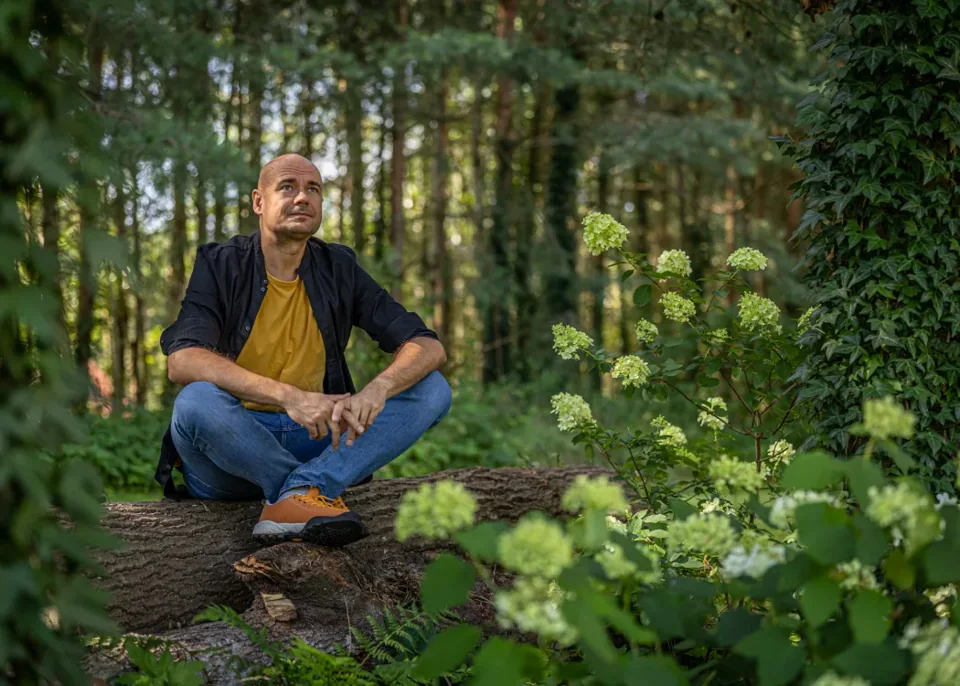
Kortowo remains a setting for the successor university's scientific and campus life. In a 2026 UWM interview, landscape architecture researcher Mariusz Antolak discussed biodiversity work there, including nature inventories, reduced mowing and planting native species. The article identifies him as the university's biodiversity adviser.
This contemporary work belongs to UWM, rather than to ART as an independent institution. It offers a present-day example of the relationship between scientific expertise and the management of the university environment, alongside the historical agricultural, technical and natural-science traditions described in the academy's records.
Sources: Kortowo biodiversity: interview with Mariusz Antolak, 2026 ↗