Visa
About AGH University of Krakow
A technical university in Kraków
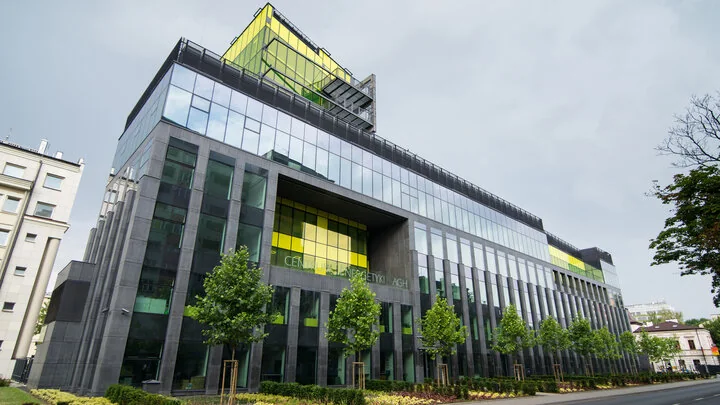
AGH University of Krakow is a Polish university whose teaching and research connect engineering and technology with the natural sciences, Earth sciences, social sciences and humanities. Its campus is embedded in Kraków, bringing teaching buildings, research facilities, administration and student organisations together within the same part of the city. The university’s development reflects both its industrial origins and a much broader contemporary academic range.
Its faculties cover areas including civil engineering and resource management, metals and materials, electrical engineering, computing and telecommunications, mechanical engineering and robotics, geology, energy, mathematics, physics, management and humanities. Space technologies also form part of its current academic organisation. The AGH Doctoral School provides a further institutional setting for research education beyond the undergraduate and master’s stages.
AGH’s institutional profile identifies digitalisation, energy transformation, climate change, the circular economy and industrial innovation among its research interests. These themes connect established technical disciplines with problems involving resources, environmental change and new technologies.
Sources: University profile and campus ↗ · Faculties and doctoral school ↗
From mining academy to a wider institution
The university’s origins lie in efforts to establish higher education for mining engineers in Kraków. These initiatives developed during the nineteenth century and became more concentrated in the early twentieth century. Formal approval for the Mining Academy was secured in 1913, but the First World War prevented the planned opening in 1914.
Teaching began after Polish independence. The academy was ceremonially inaugurated on 20 October 1919, with Józef Piłsudski officiating. Early teaching used borrowed and temporary accommodation before the institution developed its own premises. The cornerstone of the main building was laid in 1923, and departments and central administration began occupying it towards the end of the decade.
The historical connection with mining and metallurgy remains visible in the academy’s traditions and architecture. Its main building’s figures of miners and metallurgists reflect those origins, while the modern university’s disciplinary range extends well beyond the industries around which it first developed.
Sources: History of AGH ↗
Research cooperation and entrepreneurship
AGH’s business offer provides routes through which organisations can work with university researchers. These include expert reports, technical opinions and analyses, the use of laboratory infrastructure, and joint research, development and innovation projects. The university also maintains a repository of inventions and technologies that can support the application of research.
The AGH Research Offer database brings together information on research infrastructure and institutional capabilities. It gives prospective collaborators a way to identify relevant expertise and facilities rather than relying on a single general point of contact. The Centre for Cooperation and Technology Transfer supports engagement between the university and external organisations.
Academic entrepreneurship is another part of this work. AGH identifies start-up activity and INNOAGH as routes for connecting innovative teams, investors and business needs. Its account of cooperation links knowledge transfer with interdisciplinary research and the development of practical applications.
Sources: Research cooperation and business offer ↗
Computing infrastructure at Cyfronet
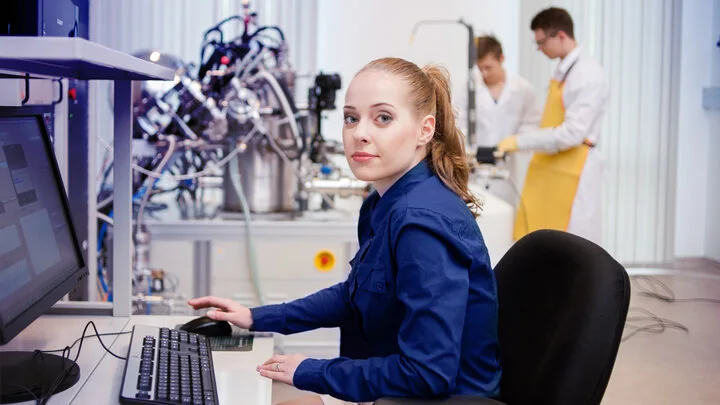
The Academic Computer Centre Cyfronet AGH provides computing resources, storage and specialist software for scientific and economic work. Its infrastructure supports high-performance computing and the analysis of large datasets. These capabilities complement the university’s laboratory-based and theoretical research activities.
The centre’s software environment includes licensed and open-source scientific packages, tools for large-scale data processing and architectures using graphics accelerators. Its public information directs users towards documentation and guidance on developing efficient applications for advanced computing systems. Access is organised for scientific users as well as industry and public administration under the centre’s published rules.
Cyfronet lists systems including Helios, Athena and Ares within its operational computing resources. Its services illustrate how research infrastructure extends beyond individual academic departments, providing shared technical capability for projects requiring substantial computational power or data handling.
Sources: Cyfronet supercomputing resources ↗
Living and learning on campus
AGH’s campus combines academic buildings with the Main Library, halls of residence, student clubs, dining facilities and sports spaces. The university also identifies a health centre, shops and other services within the campus environment. Bicycle racks and covered bicycle parking form part of its description of everyday access.
The student campus provides residential accommodation alongside a setting for cultural and recreational activity. Its facilities include laundry provision and sports areas used for volleyball, basketball, football and gym activities. Student clubs support cultural events during the academic year.
The residential campus also describes cooperation with the university’s disability-support service. Accessibility work includes adaptations to buildings, bathrooms and routes, with facilities such as lifts and ramps included in its account. These services place accommodation within a wider concern for participation in university life.
Sources: University profile and campus ↗ · Student campus ↗
Social responsibility and public engagement
AGH’s social-responsibility framework connects the university with professional sectors, public administration and local communities. Sustainable development is a guiding theme, linking education and research with environmental and social concerns. Its published examples include renewable-energy education, environmental research, air-quality monitoring and activities led by student research clubs.
The university identifies open science, public lectures, science events for children, cultural activities and community initiatives among its forms of engagement. Its institutional services also include psychological support, equality-related structures, student representation and a Welcome Point for international members of the community. Together these activities extend the university’s role beyond degree teaching, connecting its knowledge and campus resources with wider public participation.
Sources: Social responsibility ↗