Visa
About African Institute of Science and Technology
The Abuja institution
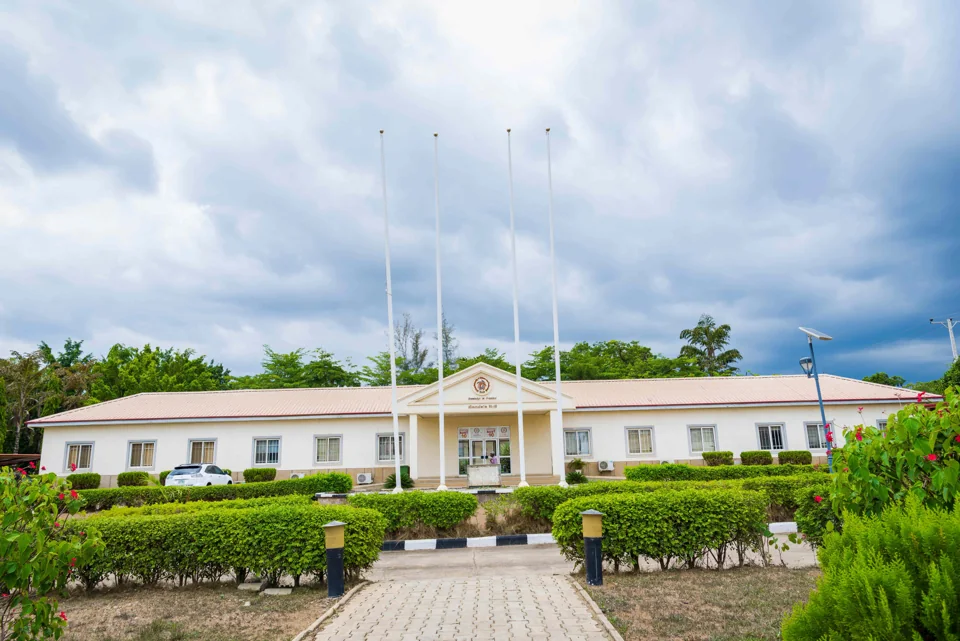
The African Institute of Science and Technology directory entry refers to the African University of Science and Technology, commonly known as AUST, in Abuja, Nigeria. The directory records the university’s name as an alias and links to its official website. This is the Abuja institution, whose campus address is on Umaru Musa Yar’Adua Road in Galadimawa, in Nigeria’s Federal Capital Territory.
Established in 2007, AUST describes itself as a private, pan-African, co-educational research university. Its mission connects structured teaching with applied research in science, engineering and technology, including their relationship with policy. The university presents knowledge as a resource for addressing African development priorities. Its academic approach brings formal study together with discovery and interaction within an international scholarly community.
Alongside its governing board, AUST identifies an African Scientific Committee and an International Scientific Advisory Board. These interdisciplinary scientific and engineering bodies contribute expertise to the university’s development and reflect the institution’s emphasis on research networks.
Sources: African University of Science and Technology homepage ↗ · About AUST ↗
Teaching and applied learning
AUST provides undergraduate and postgraduate education across scientific, engineering, computing and management fields. Its current academic organisation includes Computing and Information Technology, Science and Science Education, Engineering, and Administration, Business and Management Sciences. The programme directory spans areas such as computer science, mathematical modelling, materials engineering, petroleum and energy resources, business administration and public policy.
The university’s undergraduate teaching description emphasises project-based learning, bringing theory into contact with practical work. Its wider campus provision also includes continuing professional development linked to AUSTInspire. These activities are intended to connect classroom education with entrepreneurial and industrial applications and to provide additional learning opportunities for professionals and organisations.
Sources: African University of Science and Technology homepage ↗ · Undergraduate academics ↗
Materials science and engineering
Materials Science and Engineering offers a detailed example of AUST’s applied scientific focus. The discipline concerns the transformation of natural and synthetic materials into useful products, from refined metals and plastics to materials used in buildings, transport and electronics. At AUST, this is connected with Africa’s natural resources and the environmental and recycling challenges associated with their use.
The university describes its materials students as potential contributors to scientific and technological knowledge. Its published master’s structure combines core courses, electives and thesis research, bringing taught study together with investigation. Teaching includes lectures and problem-solving sessions. This arrangement gives the programme a research component while developing the scientific and engineering knowledge needed to understand how materials are produced, characterised and used. It also places resource transformation within a wider concern for technological development on the continent.
Sources: Materials Science and Engineering ↗
Artificial intelligence and emerging technologies
The Centre for Artificial Intelligence and Emerging Technologies is a multidisciplinary research and capacity-development initiative at AUST. It brings together students, researchers, industry participants and policymakers around the development and use of digital technologies. Its stated mission includes responsible deployment, linking innovation with economic and social development.
The centre’s research interests include machine learning, data analytics, robotics, three-dimensional printing, the Internet of Things, cybersecurity, distributed computing and blockchain technologies. It also identifies applications in healthcare, agriculture, energy and climate-related work. Technology policy, ethics and governance form part of its agenda alongside technical research.
Its published activities include professional training, consultancy, graduate supervision, workshops and collaborative projects. Technology incubation and entrepreneurship support are also included. These are presented as ways to connect research, talent development and practical innovation through cooperation between universities, government and industry.
Sources: Centre for Artificial Intelligence and Emerging Technologies ↗
Climate research and sustainability
AUST’s Centre for Climate Change Adaptation and Mitigation Studies links research-based learning with climate policy, sustainability and advisory work. Its organisation brings together interests in mitigation, adaptation and risk, alongside finance, policy design and stakeholder engagement. This places scientific enquiry in conversation with the institutions and communities involved in climate responses.
The centre identifies energy transitions, carbon capture and storage, green buildings, renewable energy, sustainable agriculture and climate data analytics among its priorities. Its services include research, training, consultancy, seminars and advocacy. Collaborative and translational research are central to its stated approach: the centre seeks to move knowledge between researchers and the people who can apply it. Green materials and environmentally conscious development also connect its work with AUST’s engineering and materials expertise.
Sources: Centre for Climate Change Adaptation and Mitigation Studies ↗
Libraries and scholarly resources
The university library supports students, faculty, staff and participants in academic activities. Its collections include books, journals, theses, dissertations, reference works and audiovisual materials, alongside online resources and reading lists. AUST identifies library provision in Mandela Hall, the African Development Bank building and the Mathematics Institute.
Digital access includes an online public catalogue and an institutional repository. The library also points readers towards electronic open resources associated with the International Centre for Theoretical Physics. These services provide different routes into published scholarship and university research, complementing the campus collections. Together, the physical libraries and online tools support the reading, information discovery and research work associated with AUST’s teaching and scientific programmes.
The library’s stated role includes research support as well as access to relevant information materials. Its constituency extends to visitors and those attending university-organised activities, reflecting the use of scholarly resources within a wider academic community. Reference materials and research dissertations sit alongside the general teaching collections.
Sources: University library ↗