Visa


About Afe Babalola University
A university in Ado-Ekiti
Afe Babalola University, Ado-Ekiti, usually known as ABUAD, is a Nigerian university in Ekiti State. Established in 2009, it began its first academic session in January 2010. Its founder, Afe Babalola, conceived the institution as a contribution to educational development, combining academic learning with character, discipline, service and practical capability.
The university operates through a collegiate structure, with fields extending across engineering, sciences, social and management sciences, law, pharmacy, medicine and health sciences. Undergraduate education is complemented by postgraduate study. Its public academic platforms connect programmes with resources such as the library, electronic learning and a university repository. This structure brings several professional and academic disciplines together within one institution while allowing colleges to organise their own teaching and research.
Sources: University academic overview ↗ · Library and institutional establishment ↗ · Founder’s meeting report, January 2025 ↗
Engineering education
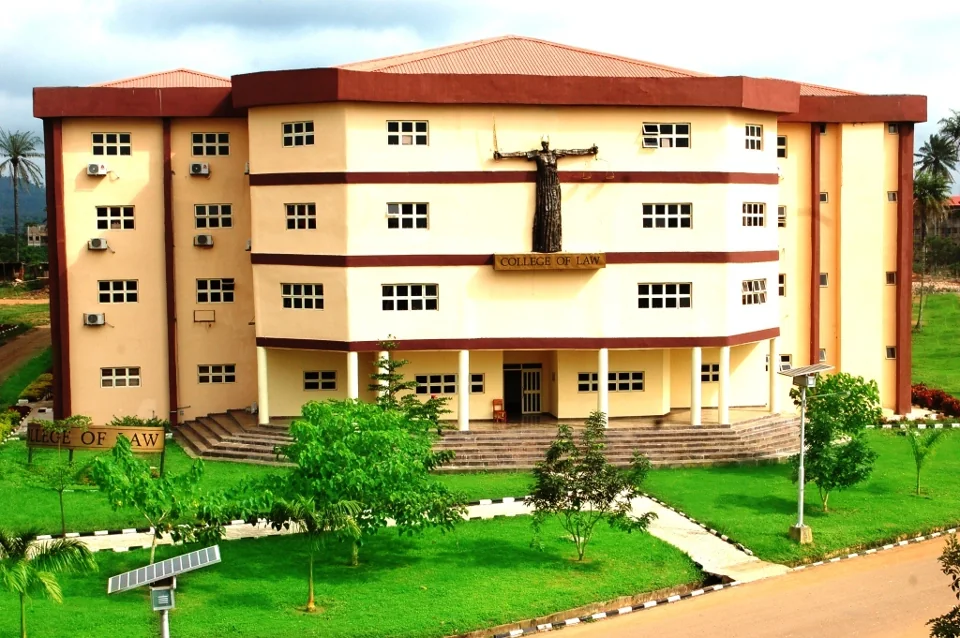
The College of Engineering was one of the university's pioneer colleges, established in January 2010. Its academic philosophy emphasises integrity, self-reliance and the contribution engineering can make to society and physical infrastructure. Its published undergraduate range includes mechanical, mechatronic, electrical and electronic, civil, chemical, computer and petroleum engineering.
Agricultural and biomedical engineering are also represented, alongside aeronautical and astronautical engineering. The postgraduate directory includes diploma, master's and doctoral study across several engineering fields. This creates opportunities for progression from foundational professional education to more specialised academic work. The College describes research publication, conferences, exhibitions and colloquia as part of its scholarly activity. Its teaching therefore sits within a wider engineering community concerned with communicating work and relating technical knowledge to industry and society.
Sources: College of Engineering ↗
Science and computing
The College of Sciences combines teaching with experimental and research activity. Its undergraduate subjects include microbiology, biotechnology, biochemistry, industrial chemistry and geology. Computing provision includes computer science, cyber security, data science and software engineering. Agricultural sciences and architecture are also listed on its current programme page.
Postgraduate study extends into areas such as agricultural economics, agronomy, animal science, biochemistry, biology, biotechnology, computer science and physics with electronics. The College's account emphasises critical thinking, problem-solving, practical experimentation and collaboration between disciplines. Its laboratories and research facilities provide settings for students to connect theoretical study with investigation. The resulting academic range brings living systems, chemical processes, computing and the physical environment into the university's science provision, rather than treating science as a single undifferentiated field.
Sources: College of Sciences ↗
Social sciences, business and the humanities
The College of Social and Management Sciences describes its work through social sciences, management sciences and the humanities. Its social-science subjects include economics, political science, international relations and diplomacy, communication and media studies, sociology, and peace and conflict studies. These fields examine institutions, social relationships and the ways people organise collective life.
Business administration, accounting, finance and entrepreneurship address organisations and the use of resources. The College also identifies performing arts and foreign languages within its humanities provision. Its postgraduate listings cover a range of these subjects, including human resource management, tourism and events management, mass communication and social justice. The College's description connects academic analysis with managerial, entrepreneurial and communication skills, giving students different approaches to understanding organisations, communities and public affairs.
Library and research information services
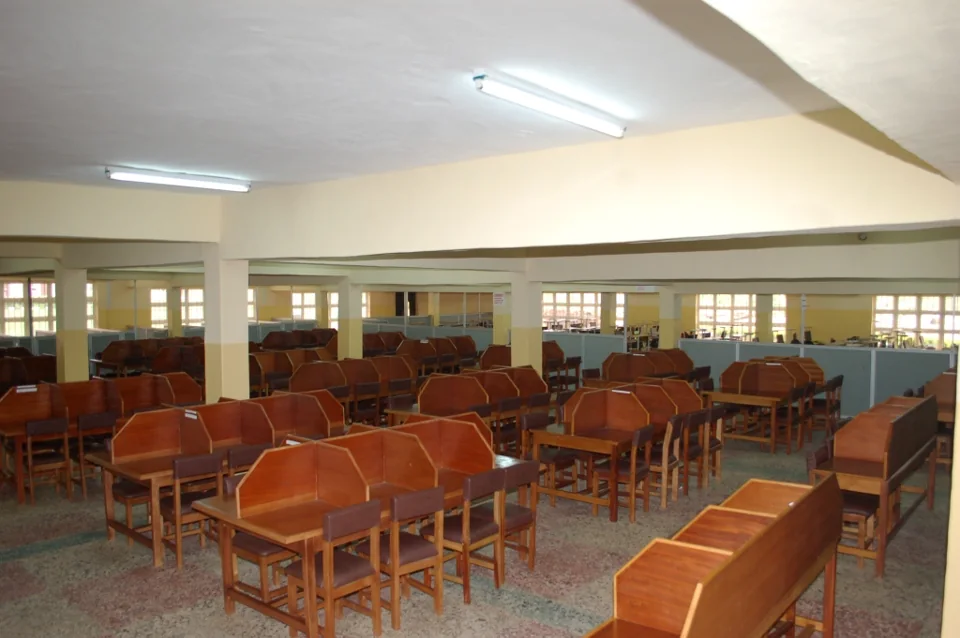
The ABUAD Library provides print, electronic and digital resources for students, faculty and researchers. Its services include circulation, serials, reference assistance, reserved course materials and specialised support for theses and dissertations. An online catalogue helps users discover materials, while electronic resources extend access beyond the physical collection.
The library lists academic databases, electronic books, legal information and open-access research tools among its resources. Its scholarly communication and automation work supports the institutional repository, journal management, publishing and the visibility of university research. College-based workstations and spaces support both individual and collaborative study. Collection development, cataloguing and preservation provide the organisational work behind these services, connecting the selection of information resources with their long-term availability and practical use.
Sources: Library and institutional establishment ↗
Student life and guidance
The Division of Student Affairs supports students' academic, social, moral and emotional development. Its responsibilities include accommodation, welfare and counselling, student conduct, permission to leave campus, clubs and associations, and sports and recreation. These services provide an administrative and support framework around the academic work of the colleges.
Counselling is described as confidential support for emotional, psychological and social well-being through individual and group work. Residential services include room allocation and attention to accessibility. The division also directs students towards the student handbook for conduct and residency expectations. Together, these functions address the everyday organisation of campus life as well as the personal circumstances that can affect a student's experience of university study.
Sources: Division of Student Affairs ↗
A platform for engineering scholarship
The ABUAD Journal of Engineering Research and Development is based in the College of Engineering. It is an open-access, double-blind peer-reviewed journal publishing original research and development work. Its scope includes agricultural, biomedical, chemical, civil, computer, electrical, environmental, mechanical, mechatronic and other engineering fields.
Articles are made available online, and the journal provides a channel for communicating research to readers beyond the university. Its published preservation arrangements include established digital archiving networks. This publication activity forms one part of the institution's wider research environment, connecting the production of new findings with review, dissemination and continuing access to scholarly work.