Visa


About Adeleke University
A faith-based university in Ede
Adeleke University is a private, faith-based university in Ede, Osun State, in southwestern Nigeria. Its campus is located on Logun-Ogberin Road. Founded in 2011 by Dr. Adedeji Adeleke through the Springtime Development Foundation, the university connects its educational purpose with widening opportunities for students and developing knowledge alongside character.
The institution's educational philosophy draws on the Seventh-day Adventist tradition. Its published account describes holistic development across intellectual, physical, spiritual and social dimensions, with service to God and humanity forming part of that outlook. The motto brings together education, excellence and character. These ideas explain the university's emphasis on academic study within a wider ethical and spiritual setting, rather than presenting education solely as the completion of a qualification.
Sources: University identity ↗
The foundation behind the institution
The university's history traces its origins to the Springtime Development Foundation, a non-profit organisation established in 1996. The foundation's areas of activity included community development, education, skills, health services, welfare and relief. Adeleke University emerged from its educational objectives as a more sustained form of intervention than individual donations or short-term assistance.
The institutional account explains the university as an extension of work already involving scholarships, books and educational infrastructure. Its underlying idea was to create opportunities for people to develop their own capabilities and contribute to their communities. This background places the university within a philanthropic project concerned with educational access and social development. The founding organisation and the university have different establishment dates: 1996 for the foundation and 2011 for the university.
Sources: Institutional history ↗
Arts, humanities and student engagement
The Faculty of Arts began academic activities in September 2011. Its published structure includes History and International Studies, Languages and Literary Studies, and Religious Studies, alongside the General Studies Unit. The faculty describes teaching and research intended to develop questioning, analysis and compassionate engagement with other people.
Its history records the graduation of its first students in 2015 and the introduction of postgraduate programmes in 2017. Beyond classes, the faculty describes a counselling unit, course and level advisers, and student associations at faculty and departmental levels. The Faculty of Arts Students' Association was formally inaugurated in July 2018. The faculty also records excursions and experiential learning visits to cultural, historical and academic locations, connecting humanities study with places and institutions beyond the campus.
Sources: Faculty of Arts ↗
Science and practical investigation
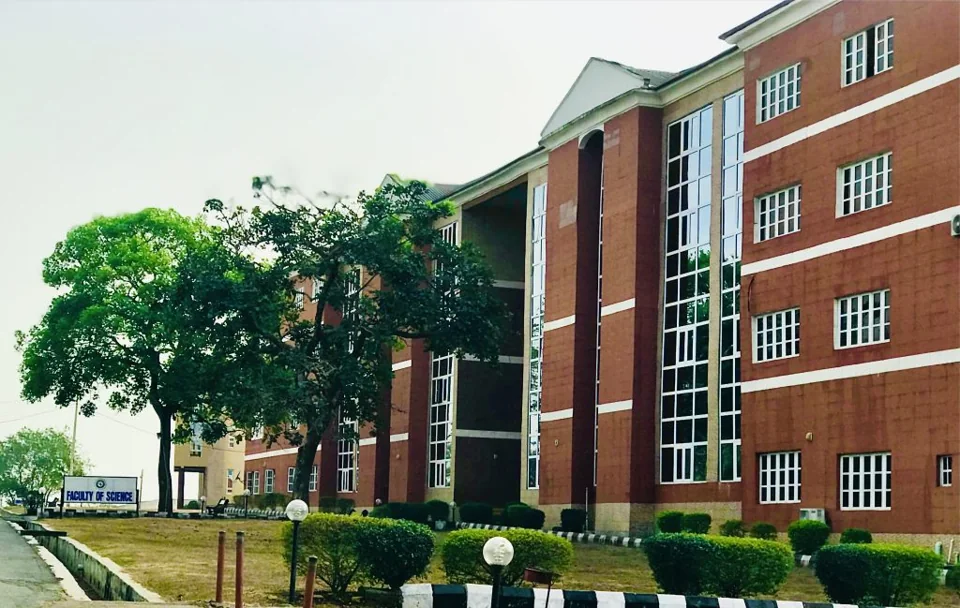
The Faculty of Science was one of the university's founding faculties in 2011. Its early departments were Computer Science and Basic Sciences, with later development into additional scientific fields. Its published subject coverage includes biology, chemistry, physics, mathematics, microbiology, biochemistry, computer science and information systems. The faculty also teaches foundational courses taken by students in other parts of the university.
The faculty's account places substantial emphasis on laboratory practicals and Students' Industrial Work Experience. It describes practical learning as a recurring element of study, linking theoretical knowledge with investigation and exposure to workplaces. Research communication is another strand: its historical activities include a mobile e-services conference in 2017, a bioinformatics workshop in 2018 and a regional microbiology symposium in 2019. These examples show scientific exchange through lectures, conferences and specialist training.
Sources: Faculty of Science ↗
Engineering education
The Faculty of Engineering was established during the 2014–2015 academic session. Its description connects mathematical and natural science knowledge with the design and practical use of materials, systems and physical resources. Agricultural, civil, electrical and electronics, and mechanical engineering are the established areas named in its introductory account, while its departmental list also includes chemical and computer engineering.
Teaching is supported by laboratories and workshops, with departmental handbooks providing curriculum information. The faculty's stated educational aims include teamwork, innovation, entrepreneurship and continued learning. Character and contribution to society sit alongside technical competence in its mission. This approach links the academic foundations of engineering with practical skills and the responsibilities involved in professional work.
Sources: Faculty of Engineering ↗
Library collections and information skills
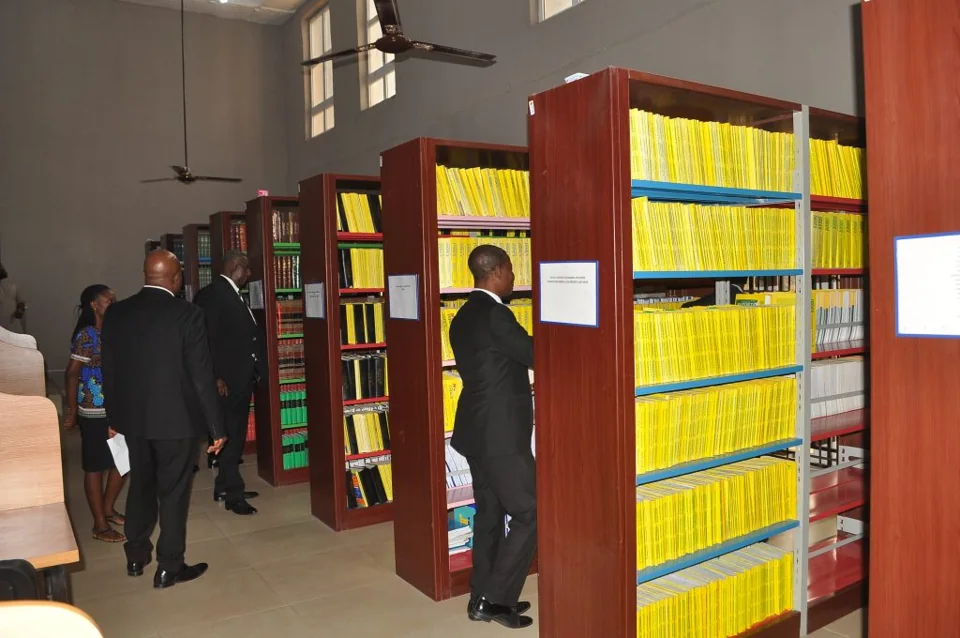
The university library was established in 2011 to support the academic and research needs of students and staff. It describes itself as a hybrid library, combining printed resources with electronic books and journals. Formal and informal learning spaces accommodate different ways of reading and studying.
Library support extends beyond access to collections. Orientation, instruction in library use, information literacy classes and individual guidance help users locate and work with information. The library website identifies circulation, reference, serial and electronic services, with subject libraries serving areas such as engineering, law, science, arts, accounting, nursing and medical laboratory science. These resources give students a means to develop independent research habits alongside the teaching provided in their faculties.
Sources: Library history and services ↗
Campus life and facilities
The campus facilities account identifies the Senate Building as the university's administrative hub and the chapel as a place of worship for its community. Student accommodation includes hostels for men and women, with dining provision through a cafeteria. Information and communications technology facilities support digital learning and access to university resources.
Sport and recreation add other dimensions to residential life. The university lists basketball, football and table tennis among its facilities and activities, as well as sports tournaments and cultural events. These spaces provide opportunities for participation outside formal coursework. Together with faculty associations, library learning spaces and the university's faith-based activities, they contribute to the social setting in which students pursue their education.
Sources: Campus and facilities ↗