Visa
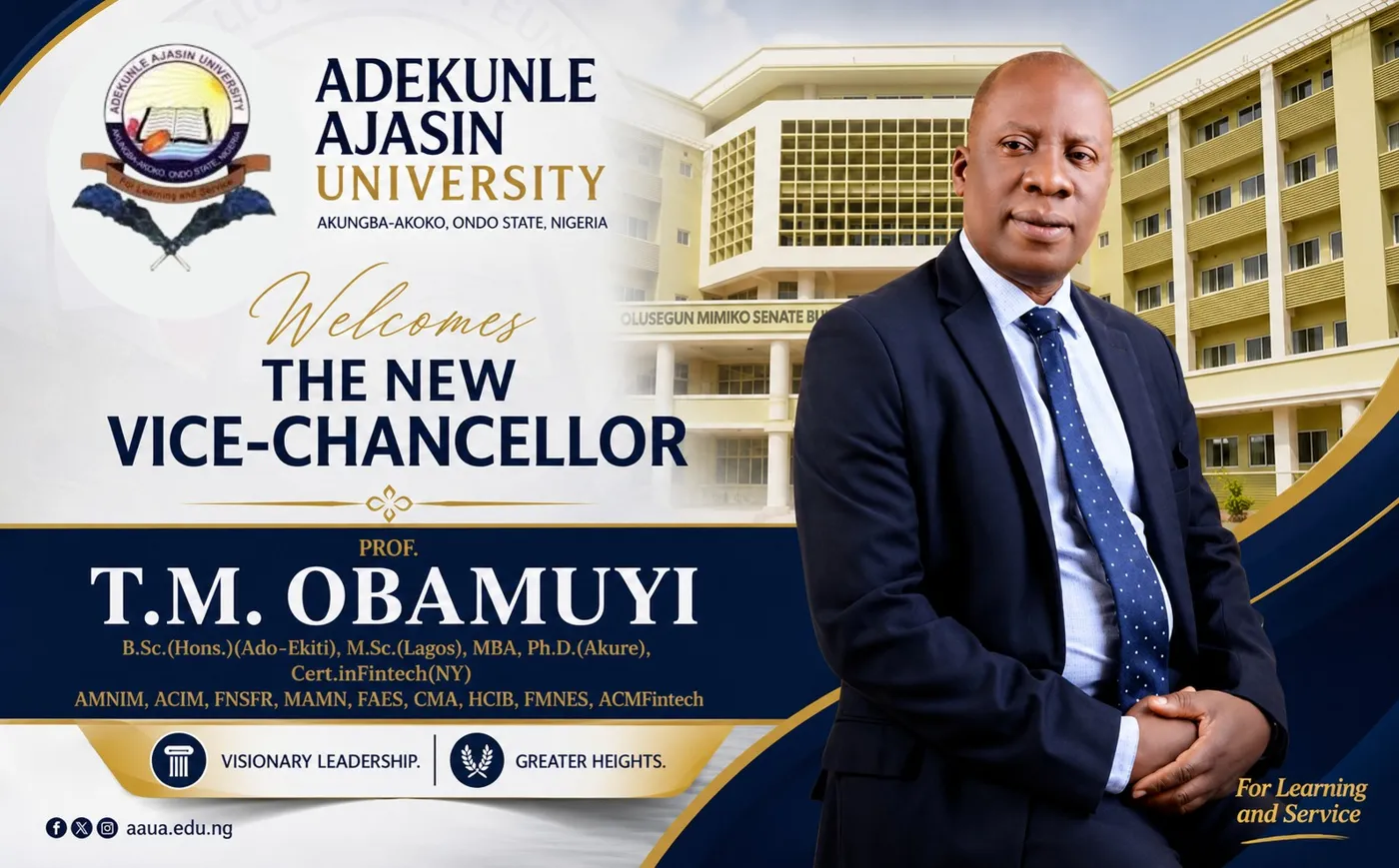

About Adekunle Ajasin University
Learning and service in Ondo State
Adekunle Ajasin University is based in Akungba-Akoko, Ondo State, Nigeria. Its academic community spans fields in the arts, sciences, education, law, agriculture, computing, social sciences and other professional areas. The university describes its purpose in terms of developing knowledge and skills for self-reliance, supported by an environment in which teaching and research can take place. Its location in Akungba-Akoko forms part of its institutional name and identity.
The university traces its beginnings to March 1982, when the government of the old Ondo State established it as Obafemi Awolowo University under Chief Adekunle Ajasin. This historical name belongs to AAUA’s own institutional account and should be understood in that context. The present university’s work combines academic education with research and service, reflected in its network of faculties, specialised centres and student-facing administrative services.
Sources: University overview and history ↗
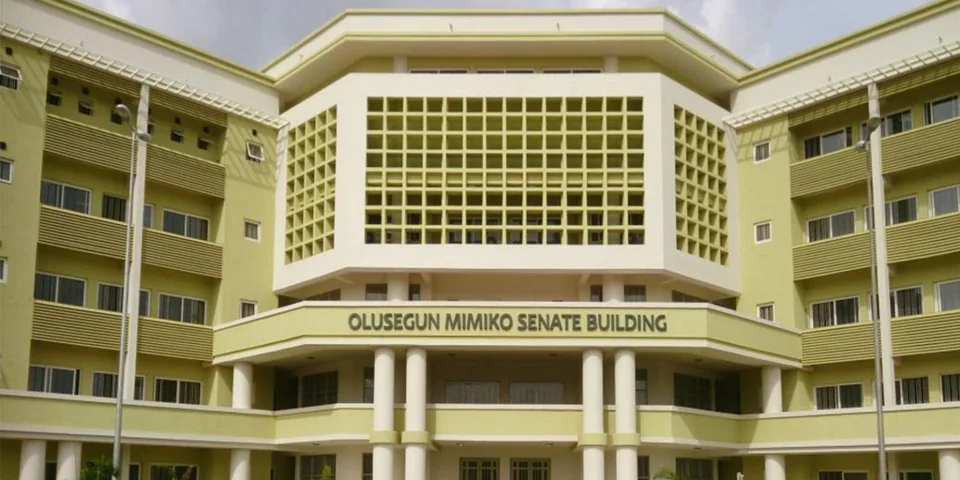
Humanities and scientific enquiry
The Faculty of Arts brings together philosophy, religion and African culture, history and international studies, linguistics and languages, English studies, and performing arts. Its introduction connects research with the circumstances and environment in which the university operates, while seeking to contribute to wider scholarship. This combination gives attention both to cultural and intellectual traditions and to the interpretation of contemporary experience.
The Faculty of Science describes an educational purpose that includes curiosity, critical thinking and investigation of practical challenges. Areas identified in its departmental directory include biochemistry, chemical sciences, animal and environmental biology, earth sciences, mathematical sciences, microbiology, physics and electronics, and plant science and biotechnology. Its welcome also highlights concerns such as climate change, public health, resource management and technological innovation. The faculty encourages connections with alumni and external partners through research support, mentorship and the development of learning facilities.
Sources: Faculty of Arts ↗ · Faculty of Science ↗
Education and computing
Teacher education is another substantial part of the university’s academic work. The Faculty of Education describes its aim as preparing committed teachers and educational leaders, supported by research into complex questions affecting education. Its departmental directory covers arts education, educational management, guidance and counselling, early childhood, science education, human kinetics, health education, adult education, and industrial technology and vocational education. These fields connect classroom teaching with the administration, support and wider social contexts of learning.
The Faculty of Computing’s introduction identifies software development, artificial intelligence, data science, information and communication technology, and cybersecurity as areas within its educational outlook. It emphasises collaboration, creativity and problem-solving in relation to digital technologies. This provides a further strand in the university’s range of subjects, bringing attention to the principles and applications of computing alongside its established humanities, education and science fields.
Sources: Faculty of Education ↗ · Faculty of Computing ↗
Library resources and information skills
The University Library supports teaching, research, independent study and community service through printed and electronic resources. Its collections include books, journals, theses, dissertations, databases and digital repositories. Reading spaces, internet-enabled research facilities and electronic library services provide different ways for users to access this material. Professional librarians and technical and administrative staff support the organisation and delivery of these services.
The library’s structure includes readers’ services, technical services, collection development, serials, electronic resources, research support and special collections. Readers’ services handles registration, circulation, reference enquiries and orientation. Technical work includes acquiring, cataloguing, classifying and preserving materials. Other units assist with electronic information retrieval, citation management and research data. Institutional repository services help preserve and disseminate university publications and postgraduate research. Information-literacy programmes are intended to help students and staff use these resources more effectively. The University Librarian coordinates these activities and advises university management on information services, resource development and research support, linking specialist library work with institutional planning.
Sources: University library ↗
Research development and external engagement
The Centre for Research and Development was established to support needs-driven research and sustainable development. It also provides a repository for research ideas and inventions and describes an incubating role for public- and private-sector initiatives. As the university’s intellectual property and technology transfer desk, it seeks to protect the results of individual and collective intellectual effort.
The centre acts as a clearing house for applications for local and international grants and maintains information about research outcomes and sponsorship. It is also the university’s consultancy arm, drawing on academic expertise across disciplines to respond to external assignments. Its stated mission links research with capacity building, partnerships and solutions to societal needs. This gives it a coordinating role between academic enquiry and engagement with government, industry and other organisations.
Space, energy and environmental research
A specialised centre established in 2008 focuses on space, energy and environmental research. Its remit brings these subjects together through interdisciplinary investigation and the exchange of findings. The centre’s account identifies work involving remote sensing and geographical information systems for cocoa production, connecting space-related techniques with agricultural questions relevant to Ondo State.
Other reported activities include environmental and climate observation, alternative-energy research and student training in relevant software. Its account also describes work on a digital telemetry weather station and a small campus FM transmitting station. These examples illustrate the range from environmental data collection to applied technical development. The centre’s objectives include capacity building, publication, workshops and consultancy, placing research communication and training alongside the investigation of scientific problems.
Sources: Centre for Space, Energy and Environmental Research ↗