Visa
About Academy of Silesia
A multidisciplinary private academy in Silesia
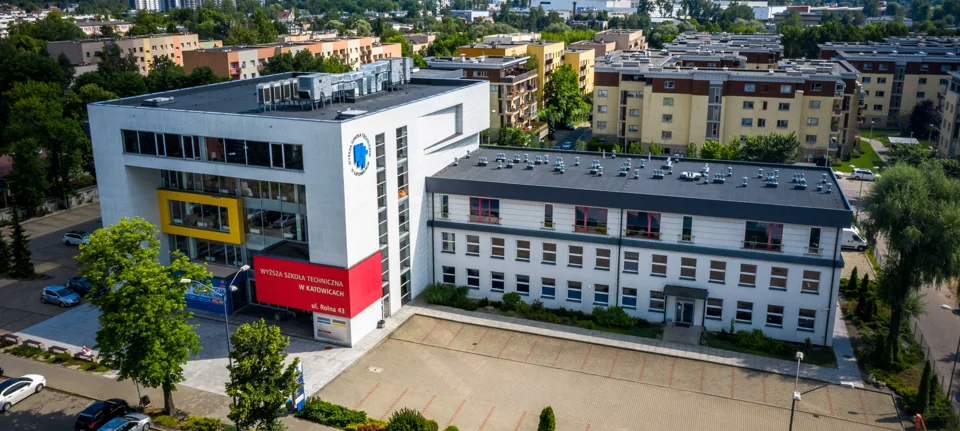
The Academy of Silesia, known in Polish as Akademia Śląska, is a private higher education institution whose teaching spans technical, artistic, medical and business subjects. It previously operated as Wyższa Szkoła Techniczna w Katowicach, a name still visible in some of its institutional resources and older campus photographs. Its official introduction identifies the ministerial decision of 15 December 2003 as the basis for its activity and gives its registration number in the Polish higher education system as 286.
The Academy’s mission connects teaching and participation in research with contemporary social and economic needs. Its structure includes the Faculty of Architecture, Civil Engineering and Applied Arts, the Professor Zbigniew Religa Faculty of Medical Sciences, and the Faculty of Social Sciences and Humanities. The locations page places the first and third of these in Katowice and the medical faculty in Zabrze, while also identifying branches in Jaworzno and Rybnik.
Sources: Institution and mission ↗ · Faculty locations ↗
Architecture and the relationship between technology and design
The first-cycle architecture programme lasts four years, or eight semesters, and leads to the professional title inżynier architekt. The published programme has a practical profile and is available in full-time and part-time formats. Its description combines technical and general knowledge with artistic methods, spatial design, building regulations and the stages through which an investment project is developed.
Selected subjects include architectural design, computer-aided design, computer graphics, three-dimensional modelling, ergonomics, urban sociology and landscape design. Geographic information systems and digital analytical environments sit alongside work on historic buildings, post-industrial land, regional heritage and urban regeneration. Sustainable development in architecture is also included. Professional learning comprises drawing fieldwork, architectural surveying, urban-planning practice and a substantial architectural placement. This arrangement brings visual expression, technical reasoning and the practical analysis of places into the same course of study.
Sources: Architecture first-cycle programme ↗
Medical education and clinical learning
The medicine programme is a six-year integrated course comprising twelve semesters and leading to the Polish professional title lekarz. Its published structure includes morphological sciences, scientific foundations of medicine, preclinical subjects, behavioural and social sciences, clinical disciplines, legal and organizational aspects of medicine, and practical clinical teaching. Professionalism and humanism in medicine are identified alongside scientific and clinical knowledge.
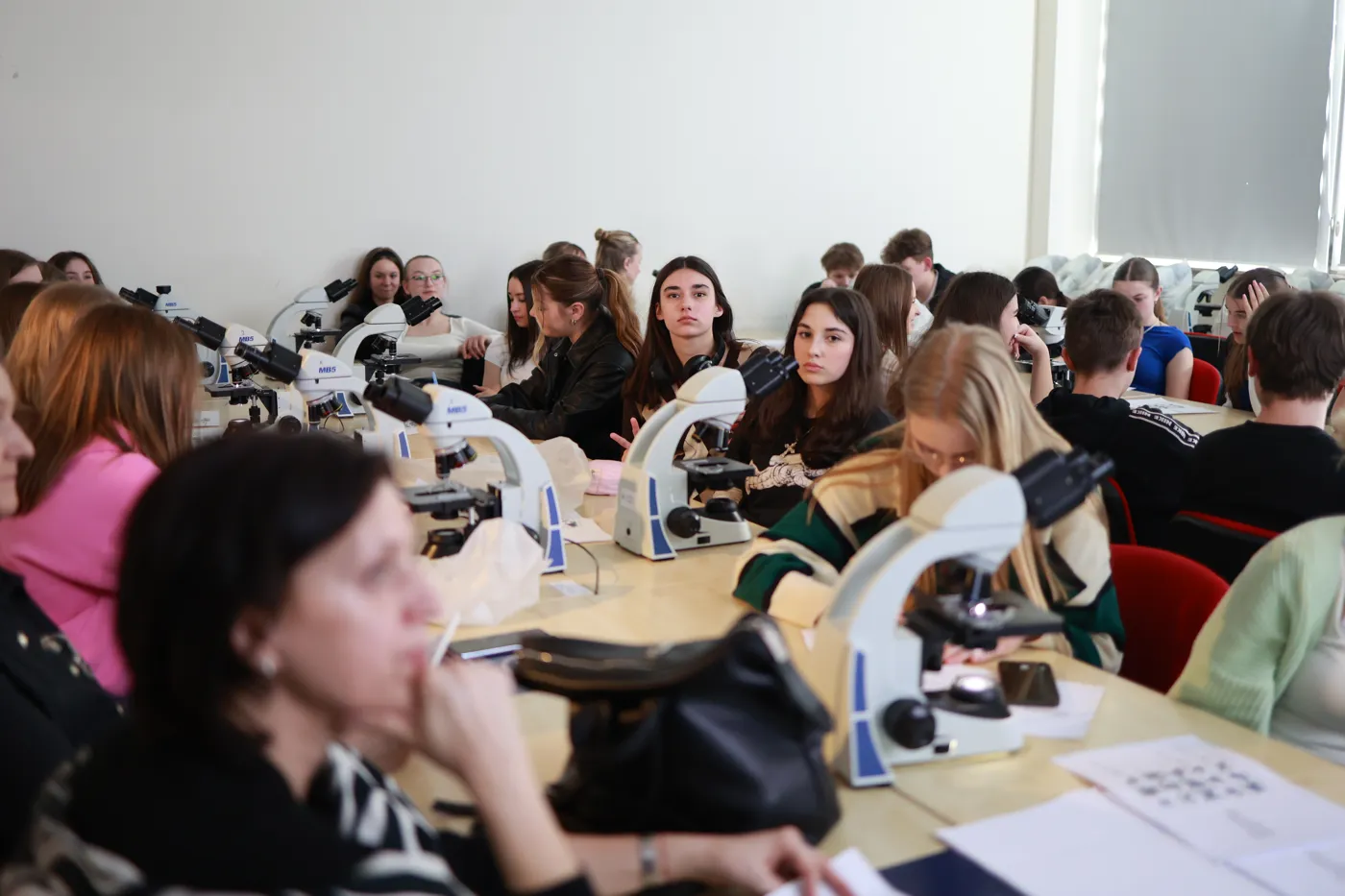
Teaching uses classrooms and laboratories as well as clinical environments and a Medical Simulation Centre. Digital educational tools, including the PathXL platform, supplement other learning methods. The programme’s subject list includes anatomy, biochemistry, physiology, genetics, microbiology, pharmacology, pathology and laboratory diagnostics, followed by a broad range of clinical fields. The final year concentrates on practical clinical learning in areas including internal medicine, paediatrics, surgery, obstetrics and gynaecology, psychiatry, emergency medicine and family medicine. Communication with patients and their families, teamwork, ethics and public health also appear within the curriculum.
Sources: Medicine programme ↗
Social sciences, humanities and the wider educational setting
The Faculty of Social Sciences and Humanities presents a practical approach to study and research that addresses contemporary challenges. Its statement emphasizes combining local experience with international perspectives, developing future-oriented competencies and participating in both community life and international projects. Sustainable development, respect, diversity and social inclusion form part of its declared values.
Across the Academy, the wider offer includes architecture, civil engineering, mechatronics, computer science, graphics, interior architecture and design, together with medicine and health-related programmes. The institutional introduction also identifies nursing, emergency medical care, physiotherapy, electroradiology and management. The mix places creative and technical fields alongside professions concerned with health and organizations, while the faculty structure provides distinct settings for their teaching and research.
Sources: Faculty of Social Sciences and Humanities ↗ · Institution and mission ↗
Library collections and access to research material
The Academy’s library supports researchers, students and administrative staff. Its collections relate to the subjects taught at the institution and are supplemented through publication exchanges. The library identifies cooperation with several Polish academic libraries, including those of technical universities and art institutions, as well as the Library of Congress in the United States.
A catalogue supports discovery of the holdings. Rare or valuable publications are made available in the reading room, which also provides domestic and international periodicals and archived journals. The multimedia reading room offers access to scientific databases and journals through academic licences, together with internet access. The library’s electronic-resource guidance points readers towards free e-books, online journals, open-science information, staff research outputs and the Academica system. These resources extend study support beyond the printed items available for borrowing.
Sources: Library ↗
International exchange and student scientific activity
The Academy participates in the higher education sector of Erasmus+. Its programme information provides routes to partner-university details, recruitment for students and staff, recognition arrangements and accounts of mobility experiences. It distinguishes cooperation with European Union and programme-associated countries from the KA171 route involving countries outside that group. This offers an institutional framework for international educational exchange alongside study at the Academy’s own locations.
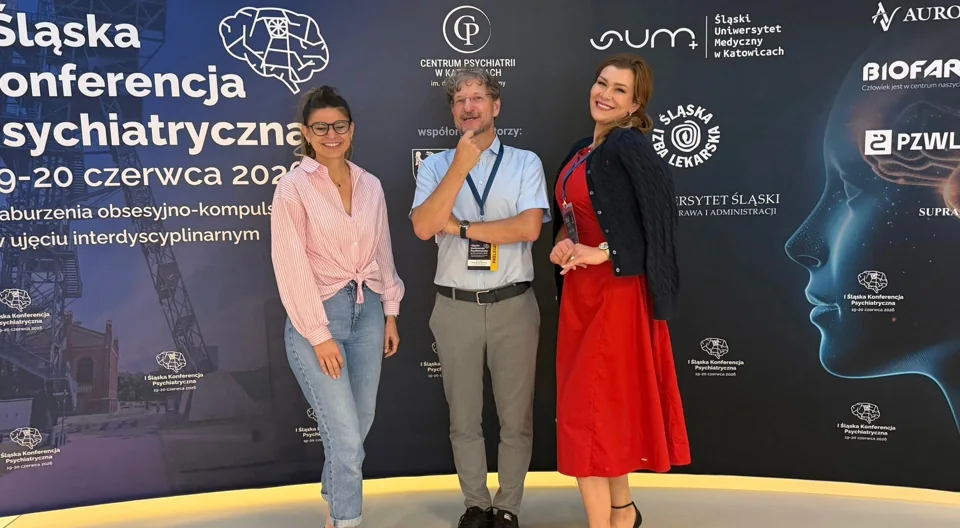
Student scientific activity also connects classroom learning with professional discussion. On 19–20 June 2026, representatives of the Academy’s psychAŚ scientific circle took part in a conference concerning obsessive-compulsive disorder and related conditions. The official report describes lectures, practical workshops and discussion across clinical psychiatry, psychotherapy and associated fields. The circle also presented a research questionnaire developed through its own activity. The example shows students engaging with a specialist scientific meeting and contributing work prepared within their academic community.
Sources: Erasmus+ ↗ · Student scientific conference participation, June 2026 ↗