Visa

About Academy of Medical Sciences of Croatia
A medical learned academy in Zagreb
The Academy of Medical Sciences of Croatia, known in Croatian as Akademija medicinskih znanosti Hrvatske and abbreviated AMZH, is an association of elected scientists based in Zagreb. Its central purpose is to advance medical science in support of better public health. It operates as an independent legal organization with a nonprofit purpose. Its educational contribution takes the form of scientific exchange, professional meetings, publications and research collaboration. These activities connect medical knowledge with questions encountered in clinical work, public health and the wider scientific community.
The Academy identifies three linked objectives: developing medical science, improving population health and strengthening the international presence of Croatian medicine. Its programme includes encouraging scientific work throughout medicine, organizing scientific and professional gatherings, undertaking research projects and publishing medical knowledge. Collaboration includes the Croatian Medical Association and other organizations in Croatia and abroad with related scientific purposes.
Sources: History of the Academy ↗ · Objectives and activities ↗
From a research commission to an independent association
The Academy traces its origins to 1961, when a commission for scientific research was established within the Croatian Medical Association. The commission developed into the Association’s Medical Academy in 1971. In 1983 it separated from the Association and became an independent organization. Its Croatian name changed in 1991 and changed again in 1997, when the AMZH designation was restored. This history places the Academy within a long tradition of organizing Croatian physicians around research as well as professional practice.
The Zagreb earthquake of 22 March 2020 also affected the Academy. Its history page records the subsequent relocation of its headquarters to Kaptol 15 in Zagreb. The same page documents its former premises in Praška Street after the earthquake, preserving a visible record of the disruption to the organization’s working space.
Sources: History of the Academy ↗
Membership and elected governance
The Assembly is the Academy’s highest governing body and brings together its full and associate members. An annual Assembly meets once a year, while the electoral Assembly for the Academy’s governing bodies is held every four years. Elections for new Academy members normally take place every two years, with an annual meeting possible exceptionally. Extraordinary assemblies can also be convened when required.
The organization includes a Main Board, Presidency, Supervisory Board, Senate, Ethics Committee and Court of Honour. A separate committee handles awards and distinctions. The elected leadership structure includes a president, two vice presidents and secretarial responsibilities covering general, financial and supporting work. These arrangements provide an institutional framework for both scientific activity and the conduct of the association’s affairs.
Sources: Organization of the Academy ↗
Scientific colleges and focused committees
Eight scientific colleges organize the Academy’s work across internal medicine, surgery, basic medical sciences, psychiatry, public health, dental sciences, veterinary medicine and pharmaceutical sciences. They are working bodies for major fields of medical knowledge. The inclusion of veterinary and pharmaceutical sciences gives the Academy a scope extending beyond individual clinical specialties.
More focused committees address particular research and professional concerns. Within internal medicine, the listed subjects include reducing salt intake, clinical epidemiology and evidence-based medicine, thyroid diagnostic and treatment methods, and medical education. Public-health committees cover e-health, climate change and health, nutrition, accident prevention, occupational and sports medicine, rational medicine use, bacterial resistance to antibiotics, and health tourism and spa medicine. Other committees address apoptosis and oral health. The combination makes room for molecular questions, clinical decision-making and health-system issues within the same learned association.
Sources: Scientific colleges and committees ↗
Medical publishing and research communication
Acta Medica Croatica provides an important publishing outlet associated with the Academy. Its author instructions describe contributions in Croatian and English, including original research, reviews, guidelines, clinical observations, case reports, editorials, correspondence and book reviews. The journal also accommodates thematic and supplementary issues associated with congresses and symposia.
The instructions require original research to present its purpose, methods, results, discussion and conclusions, supported by references. Structured summaries connect Croatian and English readerships. Manuscripts undergo anonymous review, and the editorial process allows authors to respond to requested revisions. The Academy’s online archive provides access to earlier volumes and supplements, giving readers a way to follow published medical discussions over time. This publishing work complements the direct exchange of ideas at scientific meetings.
Sources: Acta Medica Croatica: journal and author instructions ↗
Recognition and scientific gatherings
The Ante Šercer award recognizes an author from Croatia for outstanding scientific work published in the preceding year. The Academy’s award record covers research across several fields, including immunology, oral medicine, vaccination, childhood vasculitis and transplantation. Alongside publication and meetings, this recognition gives individual research achievements a place in the Academy’s public activities.
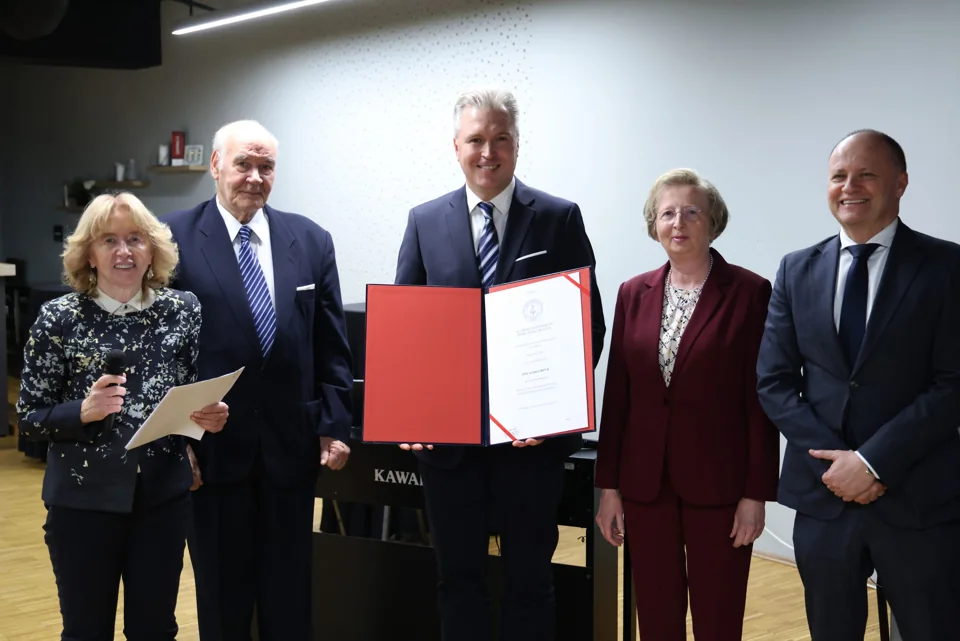
Its event programme encompasses lectures, symposia, congresses, workshops, courses and webinars. Examples listed for 2026 include a course on bacterial susceptibility testing and antimicrobial therapy, a congress on biosafety and biosecurity, and meetings on oncolytic virotherapy and interactions between human and veterinary medicine. Public lectures in Split have addressed thyroid disease, chronic kidney disease, cataract diagnosis and diabetes. The official gallery also records the 2025 Dies Academicus gathering and an antimicrobial-awareness meeting held at the Andrija Štampar School of Public Health. Together, these activities show how the Academy combines specialist scientific discussion with continuing professional education and communication about health.
Sources: Ante Šercer award ↗ · Official photograph gallery ↗ · Academy events and activities ↗