Visa
About Academy of Humanities and Economics in Lodz
A private university in Lodz
The Academy of Humanities and Economics in Lodz, known in Polish as Akademia Humanistyczno-Ekonomiczna and abbreviated AHE, is a non-public higher education institution in Poland. Its English-language international office also uses the name University of Humanities and Economics in Lodz. Established in 1993, it has developed an educational approach joining specialist academic knowledge with creative problem solving and active participation in learning.
The institutional introduction identifies project and workshop teaching as central methods. Students work on tasks connected with their subjects while developing the ability to make decisions and collaborate. The Polish Virtual University forms part of the institution's educational environment, supplying an online dimension alongside campus teaching. AHE's main contact address is Sterlinga Street 26. Its international cooperation office provides a separate point of contact for exchange activity and information about studying within the Academy's academic community.
Sources: Erasmus institutional introduction ↗
Mission and specialist teaching spaces
AHE's mission emphasises the development of creativity and personal potential. Its current institutional presentation connects professional knowledge with social and interpersonal competences, entrepreneurial attitudes and practical projects. Students are encouraged to consider how ideas can be implemented in organisations and in collaboration with external partners. These are stated educational aims rather than guarantees about an individual graduate's career.
The university lists teaching spaces suited to different subjects: a medical simulation centre, cosmetology rooms, a teaching courtroom, audio and translation facilities, and computer laboratories. Dance teaching has dedicated theatre space, while galleries support the presentation of artistic work. The institutional account also identifies the Arterion radio and television studio. Renovated nineteenth-century factory buildings associated with Jakub Kestenberg form part of its physical setting. This combination places academic teaching, artistic presentation and specialist practical exercises within the city's former industrial environment.
Sources: Mission and facilities ↗
Projects and workshops as teaching methods
The university's methods page describes projects as a way for students to investigate and solve problems themselves. The teacher prepares tasks and advises when difficulties arise, taking a supporting role in the process. Groups develop and carry out shared projects related to their interests, bringing theoretical material into contact with questions that require analysis and practical decisions.
Workshops depend on active involvement from everyone in the group. The lecturer acts as a mentor and moderator, remaining open to students' suggestions while guiding the activity. Participants learn from one another, examine problems and draw conclusions. The described learning process includes setting goals, proposing methods, considering consequences and evaluating results. Communication, negotiation and cooperation accompany the subject knowledge involved. The approach therefore gives attention to how students organise their work and reflect on choices, as well as to the content of a completed assignment.
Sources: Teaching methods ↗
Library resources and shared study
AHE's international student guide locates the library in a renovated factory building on Sterlinga Street. The multi-level facility includes open access to books, reading places and computer workstations. It combines a physical study environment with electronic information resources, allowing students to move between browsing material, reading and searching for further sources.
The library website provides access to online catalogues, databases, electronic journals and books. Its collections include printed, electronic, audio and audiovisual material, reflecting the range of subjects and teaching methods within the university. Library staff provide an identifiable point of contact for assistance. The same student guide identifies sports and recreation provision at Pomorska Street, including fitness, dance and gym activity. Together, these facilities support time spent studying independently and participating in university life outside scheduled classes, complementing the institution's project and workshop teaching.
Sources: Library and student life ↗
English-language study and international support
The current international study page's detailed programme list identifies Political Science, Management, Graphics and Computer Science at bachelor's and master's levels. It also lists annual Polish- and English-language courses for international learners. These options connect AHE's humanities, organisational, artistic and computing interests with its English-language educational provision. The Centre for International Studies is based at the Sterlinga Street address.
The university describes a sequence of programme selection, online application, submission of documents and an institutional admissions decision. Its Student Service Centre provides individual contacts and English-language communication for applicants. The required academic and identity documents depend on the programme and applicant's circumstances. This advisory role gives international participants a route for obtaining programme-specific information and preparing for arrival. It sits alongside Erasmus exchange arrangements, allowing the institution to support different forms of international participation rather than presenting them as one identical study route.
Sources: Study in English ↗
Welcoming exchange students in September 2026
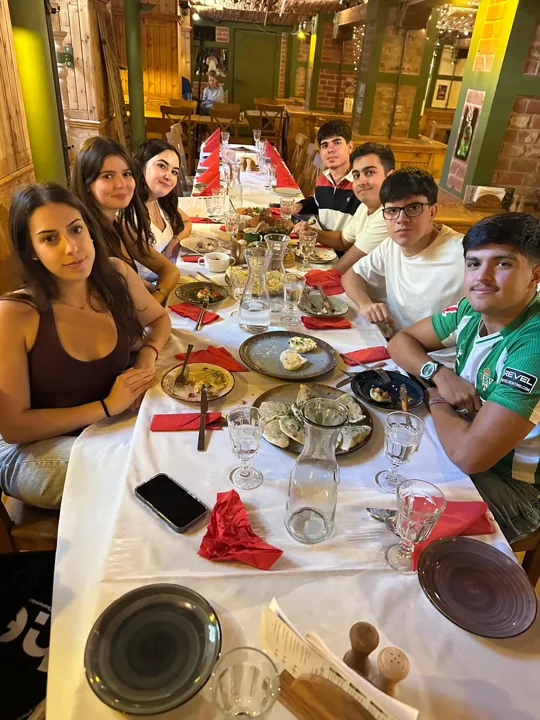
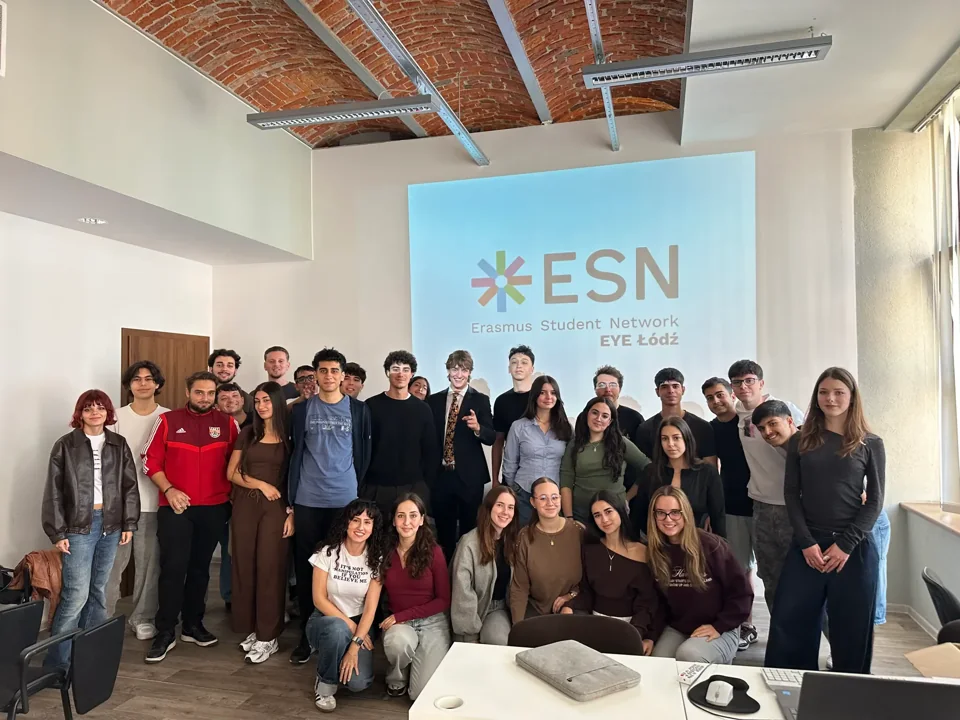
Introduction Days held from 28 to 30 September 2026 provide a documented example of AHE's international student activity. The university welcomed Erasmus participants from Spain, Turkey, Italy, Portugal and Greece. The three-day programme combined opportunities to meet fellow students with visits introducing Lodz and its cultural environment. One activity took the group to the Marek Edelman Dialogue Centre.
A shared restaurant visit introduced Polish and local food, while bowling provided another informal setting for conversation and group participation. Representatives of ESN EYE also met the incoming students to explain the ESN card and local initiatives. The university's published photographs document both the group meeting and the shared meal. These activities show the practical social side of an exchange period: becoming familiar with a new city, meeting peers and learning how to take part in the local student community.
Sources: Introduction Days, September 2026 ↗