Visa
About Academy of Applied Studies Šabac
A public academy with three departments
The Academy of Applied Studies Šabac is a higher education institution in Šabac, Serbia, known in Serbian as Akademija strukovnih studija Šabac. It was established by a Serbian government decision dated 18 July 2019 through the merger of three existing professional colleges. These became its departments for medical and business-technological studies; agricultural-business studies and tourism; and educator and nurse-educator studies. The academy therefore brings several distinct traditions of professional education into one institution.
Its teaching covers technological, social, humanities and medical fields. The first level consists of three-year basic professional studies worth 180 ECTS credits, followed by two-year professional master's studies worth 120 credits. In the medical and business-technological department, the academy's overview lists information technology, economics, environmental protection, engineering management, pharmacy, nursing, gastronomy and food technology. This breadth places health, production, computing and business subjects within the same institutional framework.
Sources: About the Academy ↗
Agriculture and regional professional education
The agricultural department developed from a higher agricultural school created to prepare specialists for primary agricultural production. Its early teaching addressed the farming potential of the Podrinje and Posavina area, with separate crop and livestock branches. Consultation with agricultural organisations, cooperative associations and chambers of commerce informed revisions to its curricula during the 1960s. Crop teaching subsequently incorporated agricultural mechanisation.
The department's later development reflects a widening interpretation of agricultural education. Plant protection and agricultural management were approved as new fields in 2003. Fruit growing and viticulture followed in the 2009–10 academic year, while environmental protection and tourism appeared in later stages of the school's development. Professional master's study in agribusiness management was accredited in 2020. The merger into the academy retained this agricultural background while connecting it with the other professional disciplines taught in Šabac.
Sources: Agricultural department history ↗
Plant production, management and environmental study
The agricultural department's 2026–27 information describes Agronomy through plant-production and animal-production modules. Plant-production teaching includes field crops, vegetables, fruit, vines, and medicinal and aromatic plants. The animal-production module addresses conventional and alternative livestock production, including beekeeping. Phytomedicine combines theoretical and practical plant-protection study, with practice in agricultural supply pharmacies and visits to pesticide producers.
Management is presented as preparation for organising business activities and using resources effectively, combining theoretical knowledge with practical business skills. Environmental Protection is a shared programme at academy level, emphasising analysis of environmental conditions and practical problem solving through individual and team work. At master's level, Agribusiness Management brings management, agronomy and environmental protection together in a four-semester, 120-credit programme. These subjects connect the department's original agricultural purpose with the organisation of enterprises and the stewardship of natural resources.
A continuing tradition of educator preparation
The educator department traces its educational tradition to a pedagogical division established alongside the Šabac gymnasium in 1920, when the region needed more teachers. The Podrinje teacher-training school formally opened in 1926. It later became an experimental teacher-training school and, in 1972, a pedagogical academy. When that academy closed in 1993, a higher school for preschool educators continued the tradition in the same building.
The preschool school worked with the local Naše dete preschool institution and developed projects concerned with educating students, supporting parents and widening participation in early childhood education. Its programmes subsequently moved into the professional higher education framework. The department's history records the introduction of professional master's education in 2017 and its incorporation into the academy in 2019. Today its named basic programmes distinguish preschool educators from nurse educators, with further professional master's study for educators.
Sources: Educator department history ↗
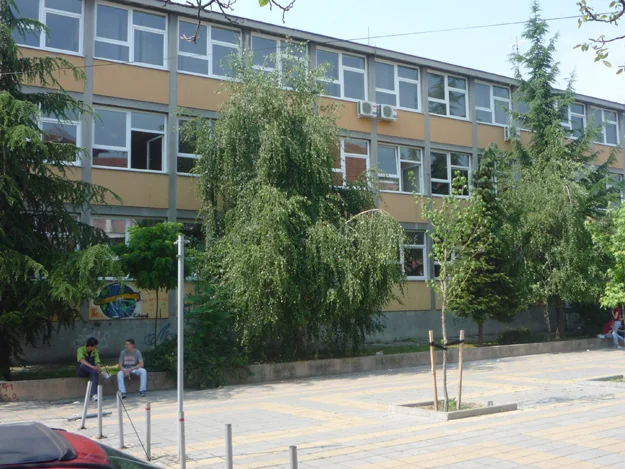
How preschool educators learn
The preschool educator programme integrates theoretical classes at the department with exercises and practical work in preschool institutions. Its published description sets out six semesters and 180 credits, including compulsory and elective subjects, five pedagogical placements and a final project. Practice takes place during the first five semesters, helping students connect their studies with the daily work of early childhood settings.
The curriculum moves from foundational understanding of children's physical, social, emotional and cognitive development toward more specialised professional skills. Later study addresses individual approaches, recognition of developmental and learning difficulties, documentation of children's progress, and environments that support learning. Students undertake supervised professional research as part of their final work. Teaching methods include workshops, discussion, mentoring, role play, projects and team presentations alongside lectures and exercises. This combination gives practical observation and reflective work a defined place within the programme.
Sources: Preschool educator programme description ↗
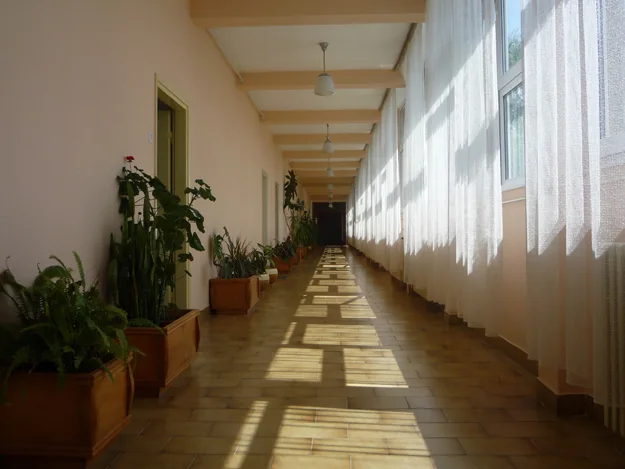
Nurse educators and early childhood development
The nurse-educator programme is also organised as three years of basic professional study. Its objectives focus particularly on children under three, connecting nursing, health and social care with physical, sensory, cognitive, emotional and social development. The programme treats care and education as closely related responsibilities in early childhood rather than separate areas of preparation.
Its published competencies include planning and evaluating care and educational activities, maintaining pedagogical and health documentation, using information technology, and communicating with families and colleagues. Play, creativity and a stimulating environment feature alongside attention to children's wellbeing. Ethical conduct, reliability, flexibility and teamwork are named professional qualities. The programme also stresses continued learning and the ability to follow changes in practice. Together with preschool educator preparation, it gives the academy a substantial early childhood education strand alongside its agricultural, technological and business fields.