Visa


About Academy of Applied Studies Polytechnic
A multidisciplinary academy of applied studies
The Academy of Applied Studies Polytechnic is a public higher education institution headquartered at 3 Katarine Ambrozić Street in Belgrade, Serbia. Its educational work spans technical and technological subjects, art, social sciences and humanities, and medical fields. The Academy was established by a Serbian government decision dated 29 August 2019 through the merger of four institutions: Belgrade Polytechnic, the Technical College of Applied Studies in Belgrade, Tehnikum Taurunum, and the technical college in Požarevac.
These institutions contributed the Academy’s Zvezdara, Novi Beograd, Zemun and Požarevac sections. Its mission combines applied higher education with professional, research and artistic work, short study programmes and lifelong learning. Collaboration with employers is a central part of its educational approach, alongside student participation in improving teaching. The Academy describes bachelor programmes of three years and 180 ECTS, one-year specialist programmes of 60 ECTS, and two-year applied master’s programmes of 120 ECTS.
Sources: About the Academy ↗
Engineering, design and professional programmes
The study catalogue illustrates the breadth of the Academy’s provision. Undergraduate fields include mechanical engineering, road traffic engineering, mechatronics, network information technologies, smart-building technologies and energy systems. Occupational safety, environmental protection, sustainable technologies, and disaster and fire safety engineering connect technical study with protection and sustainability. Other programmes address food engineering and food safety, digital agriculture, health care and pharmacy.
Art and design pathways include graphic design, industrial-product design, leather-product fashion design, concept art and character design, interior design, and user-interface and user-experience design. Applied master’s offerings include interdisciplinary design, graphic production, integrated management systems, Industry 4.0, food technology and phytomedicine, alongside engineering subjects. The catalogue also lists specialist studies in industrial engineering and information security. This range places creative production, digital systems and industrial processes within the same institutional portfolio.
Sources: Study programme catalogue ↗
Mechanical and graphic technology centres
The Mechanical Engineering Centre’s published activities cover the design and production of machine parts and assemblies. Work includes three-dimensional modelling, calculations, prototype production using 3D printing, and machining with conventional and CNC equipment. Its listed resources include a LOLA HBG-50 machining centre, water-jet equipment and a CNC grinder. Other activity addresses metal and welded structures, heating, cooling, air conditioning, energy-efficiency assessments, electrical engineering and automation.
The Graphic Technology Centre connects print production with packaging and quality control. Its services include printing proofs, preparing three-dimensional models and packaging containers, introducing colour management, and calibrating and characterising printing equipment. Inspection of packaging materials and verification of printed output are also included. These activities bring production processes, materials and measurement together, extending the Academy’s applied technical work beyond classroom teaching into specialist services and cooperation with industry.
Sources: Mechanical Engineering Centre ↗ · Graphic Technology Centre ↗
Design and biotechnology in practice
The Design Centre lists work across visual communication, products, fashion, digital art and interiors. Graphic-design activity includes visual identities, infographics, typography, photography and image processing. Industrial-product work encompasses technical documentation, visualisation, animation, physical models and prototypes. Leather-product fashion design includes footwear, clothing, accessories and small-series production. Concept and character design brings in illustration, storyboards, digital modelling and animation, while interior projects include custom furniture and spatial visualisation. Examples of documented cooperation include interior design for the Serbian Medical Chamber and visual identity work for a sturgeon-protection brand associated with WWF Adria Serbia.
The Biotechnology Centre’s work includes agricultural production and food-processing activities. Its services address perennial fruit and vineyard planting, organic agriculture, and production planning. Food-technology areas include milk and dairy products, flour and bakery processing, confectionery, oils, meat and spirit beverages. Depending on the field, activities include monitoring production, managing technological processes, consulting and checking conformity with standards. The centre lists cooperation with agricultural advisory services, food producers, educational institutions and health organisations in the Požarevac area.
Sources: Design Centre ↗ · Biotechnology Centre ↗
Libraries and support for study
The Academy’s library network includes separate libraries at the Zvezdara, Novi Beograd, Zemun and Požarevac sections. Its libraries participate in the university-library network associated with the Svetozar Marković University Library. Printed professional literature is complemented by access to electronic databases and educational platforms, while reading rooms provide computers for study.
Librarians help users locate information sources, choose literature and prepare professional papers. Students can reserve books and arrange extensions to return deadlines by telephone or email. This combination of local reading facilities, specialist guidance and electronic access supports the Academy’s different subject areas without requiring all information services to be concentrated in one building. Each section publishes its own library contact and service schedule.
Sources: Academy libraries ↗
Expansion and institutional milestones
Two integrations broadened the Academy in 2026. An official February announcement states that the College of Applied Studies Aviation Academy joined Polytechnic following a decision effective on 7 February. In June, the College of Tourism transferred from the Academy of Applied Studies Belgrade under a decision effective on 20 June. Both announcements emphasise continuity for enrolled students and their programmes during integration. These changes add aviation and tourism traditions to Polytechnic’s existing multidisciplinary work.
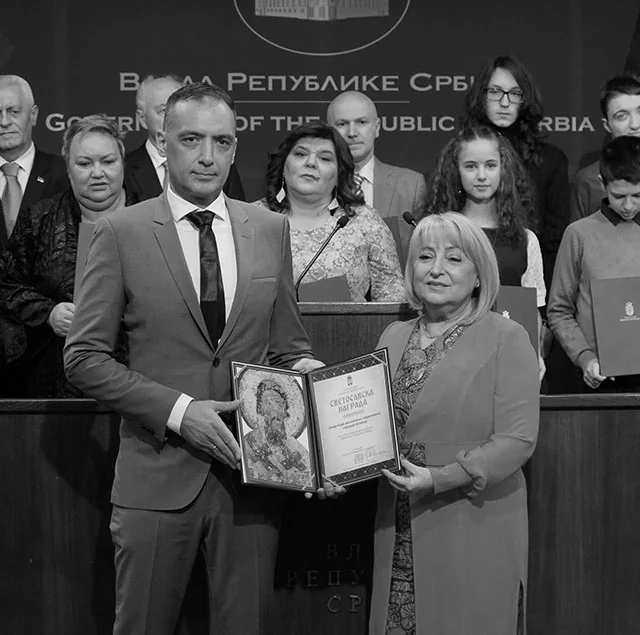
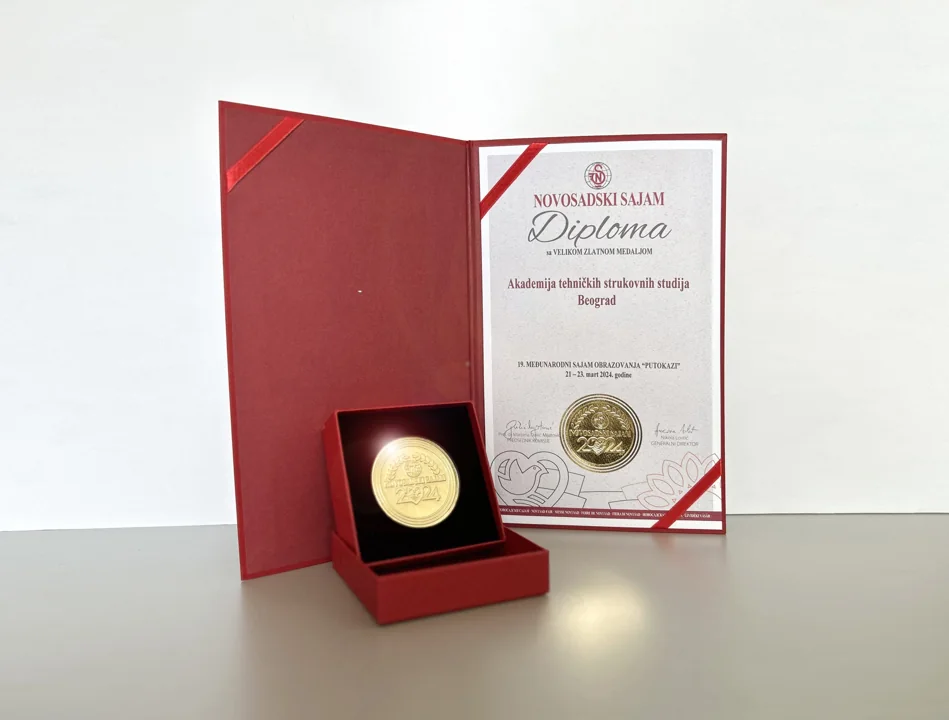
The Academy’s institutional record also includes the Saint Sava Award for 2023, reported in January 2024, and a Great Gold Medal at the nineteenth Putokazi International Education Fair in Novi Sad in March 2024. The announcements and accompanying photographs document specific moments in its development and public educational activity.
Sources: Aviation Academy integration, February 2026 ↗ · College of Tourism integration, June 2026 ↗ · Putokazi education fair recognition, March 2024 ↗ · Saint Sava award ceremony, January 2024 ↗