Visa

About ABTI American University of Nigeria
Historical name and university origins
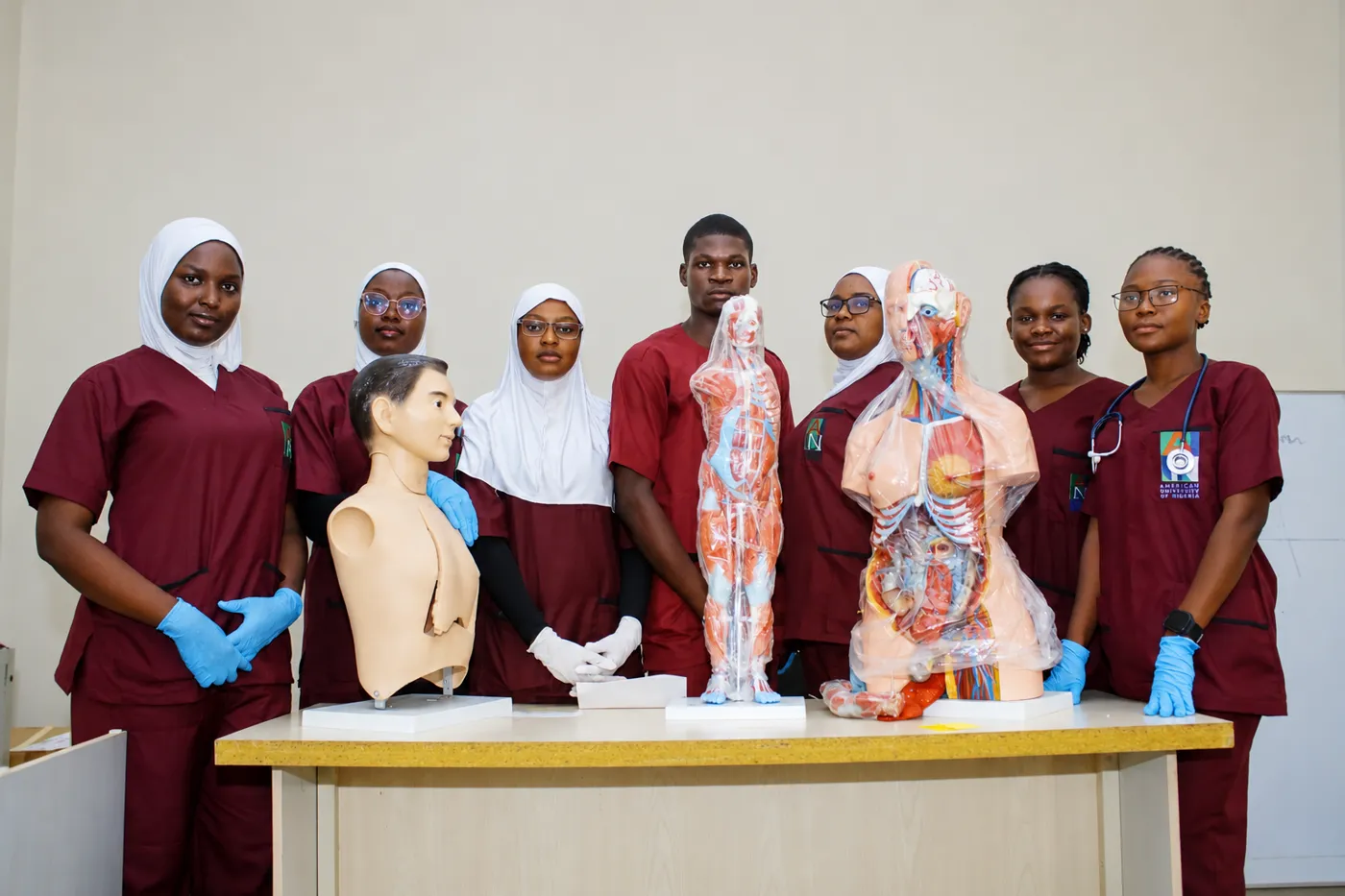
ABTI American University of Nigeria is a former name of the institution now known as the American University of Nigeria, or AUN. It is located in Yola, the capital of Adamawa State in northeastern Nigeria. The university's official history identifies 2007 as the year it adopted its present name, making the older ABTI designation part of its institutional history.
The development began with founder Atiku Abubakar seeking advice from American University in Washington, DC, about establishing a university using an American educational model. The institution was licensed as ABTI University in 2003, construction began in 2004, and the first students entered in the 2005 to 2006 period. Its initial academic schools covered arts and sciences, business and entrepreneurship, and information technology and computing. The first graduating class completed its studies in 2009. Later developments included graduate education and the opening of the Robert A. Pastor Library and E-Learning Center in 2014.
Sources: University History ↗
A mission linked to development
AUN describes itself through the idea of a development university. This means combining the familiar university roles of preserving, teaching and creating knowledge with practical engagement in the needs of Nigeria and Africa. Its mission connects leadership with democratic citizenship, responsible use of technology and service to a diverse society.
The institution's strategic goals include teaching, research and mentoring that help students address societal problems. They also concern the technological and physical conditions needed for learning and the creation of a supportive institutional environment. Its values place emphasis on understanding between national, ethnic and religious communities, integrity, transparency and academic honesty. Freedom of expression is also identified as a central condition of intellectual life. These principles help explain why community service, entrepreneurship and the application of knowledge appear repeatedly across AUN's academic and campus activities rather than being presented only as separate extracurricular interests.
Sources: Mission, Vision and Values ↗
Business and entrepreneurship
The School of Business and Entrepreneurship connects its academic work with equitable and sustainable prosperity. Its published undergraduate programmes include accounting, finance, marketing, business administration, and entrepreneurship and management. Students in other degree areas can also complement their studies with minors in accounting, business administration or finance.
Graduate provision includes the MBA, business administration research degrees and other management-oriented programmes. The school describes mentoring students through the development of entrepreneurial ideas, from initial concepts toward consolidation and expansion. Its learning outcomes combine disciplinary knowledge with analysis of business situations, evidence-based decisions, ethical practice and the use of digital tools. Communication, teamwork and research are also part of this account. The emphasis is therefore broader than learning how an existing organisation operates: students are encouraged to identify opportunities, develop sustainable ventures and understand the responsibilities that accompany commercial and financial decisions.
Sources: School of Business and Entrepreneurship ↗
Community engagement and service learning
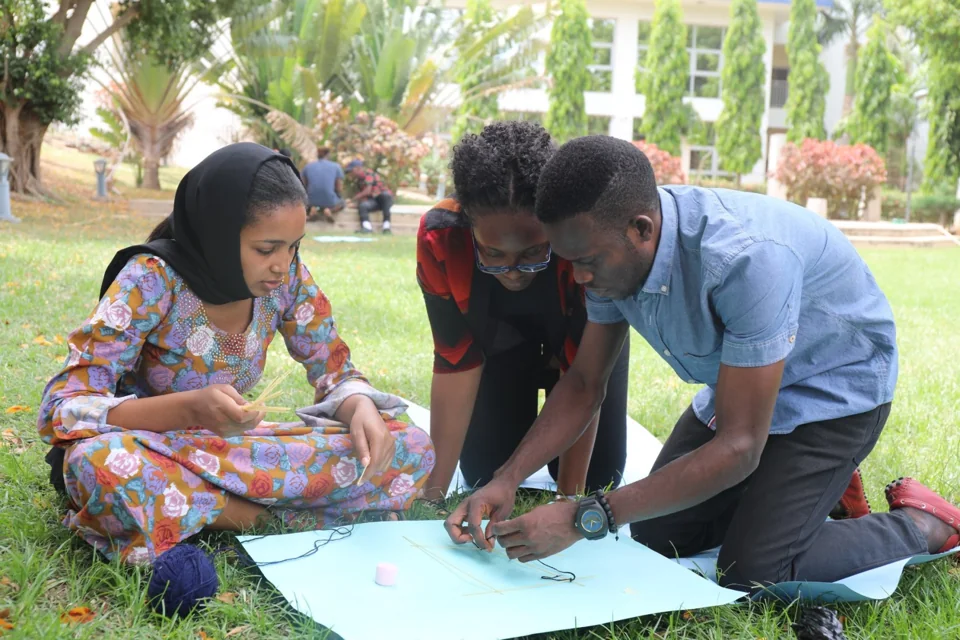
The Office of Community Engagement and Service Learning connects AUN students with Yola, Jimeta and surrounding communities. Its account describes organised opportunities for service, including transport for community visits. The aim is to relate university participation to citizenship and a responsibility to contribute time and skills to wider society.
Examples include tutoring in English, mathematics and science, skills training for women and girls, and assistance to displaced people, orphanages and disadvantaged communities. Residence halls also participate through projects identified and carried out during a semester. The office describes a student service event during orientation that introduces new arrivals to this aspect of university life. Alongside voluntary activity, service learning links community problems with classroom investigation and researched proposals. This gives practical expression to the development mission by asking students to engage with local circumstances and consider how academic knowledge can contribute to addressing them.
Sources: Community Service ↗
Residential life and shared responsibility
AUN provides residence halls intended to support both study and community life. Its housing page identifies separate male and female halls, including named residences and halls designated by letters. Room configurations include spaces for two or three students, with both shared-facility and in-room washroom arrangements described. The options vary between halls rather than being identical throughout the residential estate.
The university describes supervision by trained residence directors and student residence assistants. Their work includes organising activities and supporting the overall residential experience. The stated objectives include academic progress, respect for others, personal growth and responsibility toward the community. Laundry services are also included in the published description. These arrangements place student housing within an educational framework: residents are encouraged to develop relationships and shared expectations alongside managing the practical routines of living near their academic facilities.
Sources: Housing and Dining ↗

Mathematics and statistical learning support
The Mathematics Resource Center supports students who need additional help and those who want to develop their mathematical or statistical abilities further. It is staffed by faculty and experienced senior students, with tutorial assistance described as largely individual. The emphasis is on explaining underlying concepts and principles so that students can work through their own academic problems with stronger understanding.
A mathematics computer laboratory complements this support. Its systems contain mathematical and statistical applications used for practical demonstrations connected with formal teaching and for independent practice outside class. Laboratory demonstrators assist students with the basic knowledge needed to use the resources. The university also describes the laboratory's use in STEM outreach to the local community. This combination of individual explanation, software-based practice and outreach shows another connection between academic support and AUN's wider interest in applying education beyond the boundaries of a single course.
Sources: Mathematics Resource Center ↗