Visa
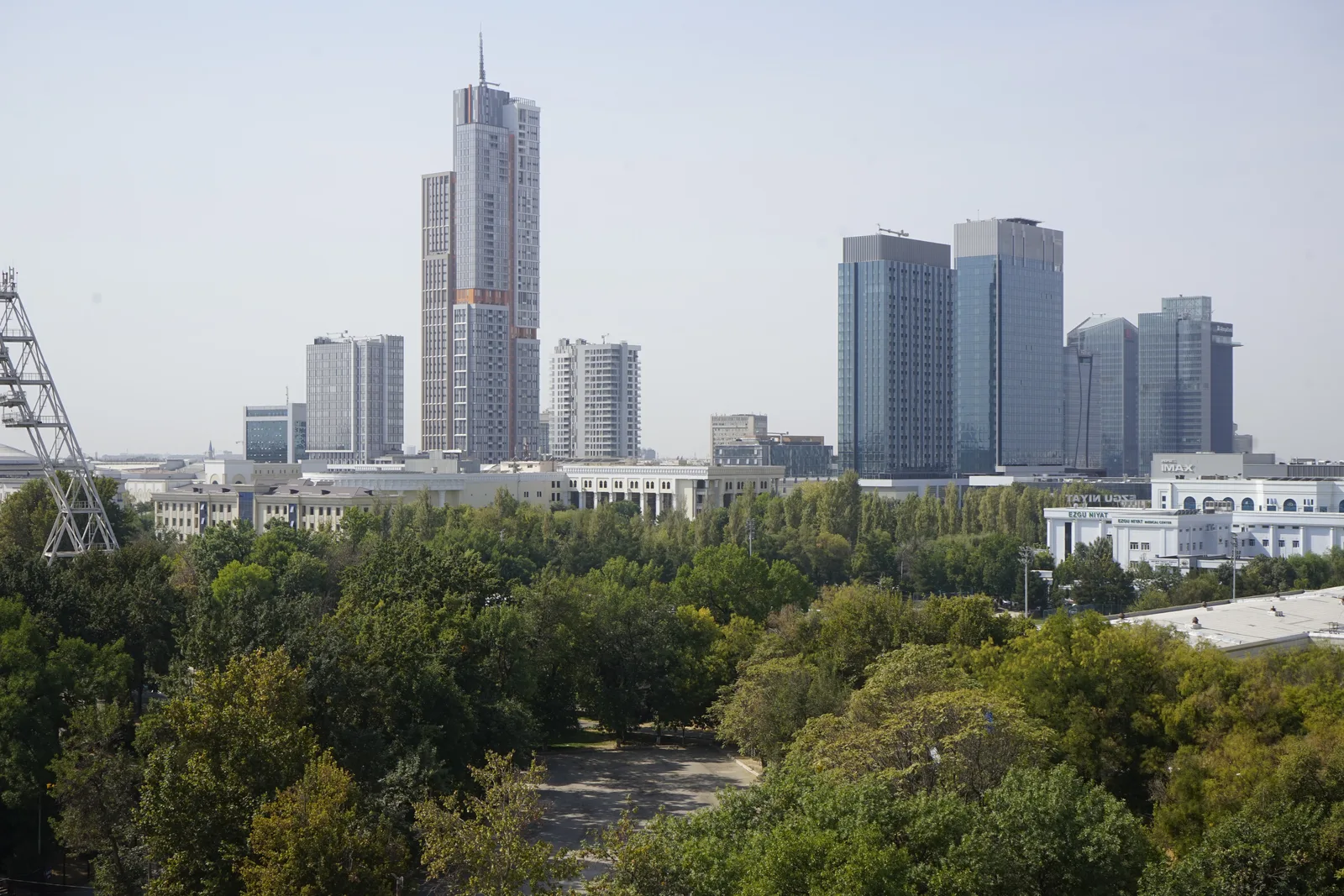
Give the capital more than an airport night
Tashkent rewards travellers who leave room between the monuments. Uzbekistan's capital brings together neighbourhood markets, tiled religious buildings, elaborate metro stations and broad avenues shaped by successive periods of rebuilding. It is a useful place to recover from a flight, understand the country you are entering and organise the railway journeys ahead. Two full days provide a workable introduction; a third makes room for museums without turning each afternoon into a race.
Its appeal differs from the compact historic centres of Samarkand and Bukhara. Important sights are spread across a functioning metropolis, so walking everything is rarely the best plan. Choose an area near the metro, combine nearby stops and leave the hottest hours for an indoor visit. Start with VisaWand's Uzbekistan country guide for the wider trip, then use this guide to decide where Tashkent belongs in it.
For visitors comparing possible bases, the central question is how much time you want in a large contemporary capital. Tashkent offers the infrastructure and variety of an administrative and business centre, alongside its historic sites. Travellers seeking an uninterrupted sequence of old monuments may prefer fewer nights here. People considering a move should allow additional ordinary weekdays, when schools, offices and commuting patterns can be assessed more realistically.
Read the city's layers before choosing your route
The national tourism board's Tashkent overview traces the city's earlier identities, including Shash and Chach, and its connections with Silk Road trade. That history survives unevenly: courtyards and religious ensembles sit alongside Soviet planning and newer commercial developments. A street that looks unremarkable from a car can lead to a busy market or a neighbourhood with a very different scale.
The earthquake of 26 April 1966 is another essential part of the story. Reconstruction helped shape the broad streets and residential districts visitors encounter today. The Courage Memorial provides a useful place to consider that upheaval. Avoid imagining that every older building disappeared or that the present capital represents a single architectural period; the interesting part is how these layers meet.
Choose a base around the journeys you will make
For a short first visit, the central area around Amir Temur Square and nearby metro stations offers a practical starting point for museums, hotels and onward journeys across town. A map pin beside a large road is less useful than an entrance within an easy walk of your station. Check the actual pedestrian route, including crossings, before deciding that two addresses are close.
An old-city base around Chorsu can suit travellers who want market mornings and time around Khast Imam. Compare evening food options and the route back after sightseeing. Newer developments around Tashkent City offer another setting, but a skyline view does not establish convenient access to every attraction. For longer stays, the daily trip to work or school should outweigh proximity to a famous square.
Browse Chorsu with time to look and ask
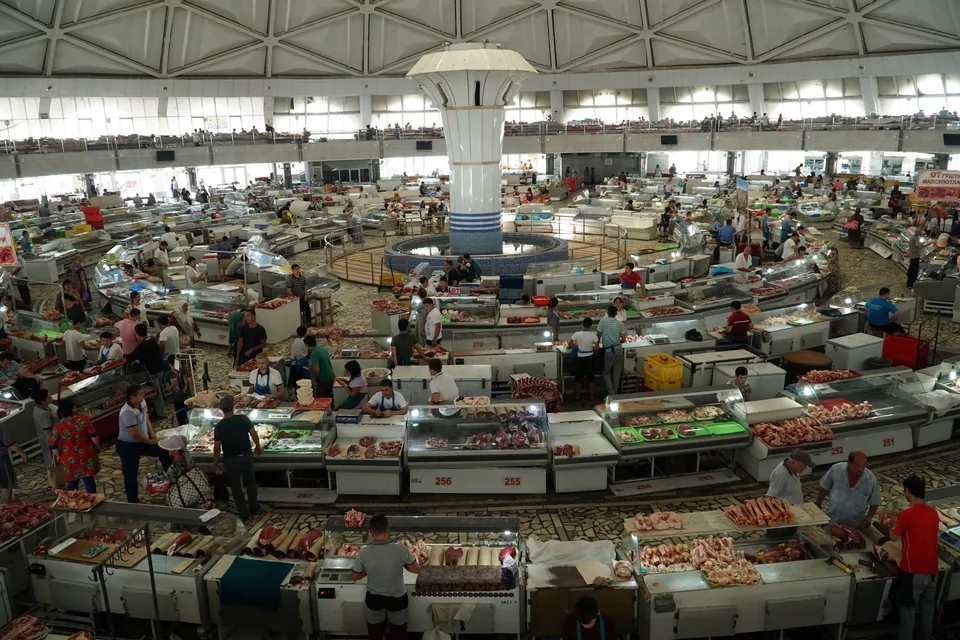
Chorsu is a worthwhile introduction to the everyday city as well as an attraction. Its domed market hall and surrounding trading areas work best as a browsing visit: look at the range, compare stalls and establish whether a quoted price refers to a piece, a portion or a weight. Ask before photographing people closely, especially when a vendor is serving customers.
There is no need to turn the visit into a compulsory shopping expedition. Buy an amount you can use, inspect packaged goods and keep fragile purchases in mind when planning the next train journey. For food, choose preparation and storage conditions you are comfortable with. A busy counter can still warrant questions about ingredients, serving temperature and whether a dish contains meat or dairy.
Visit Khast Imam as a living religious ensemble
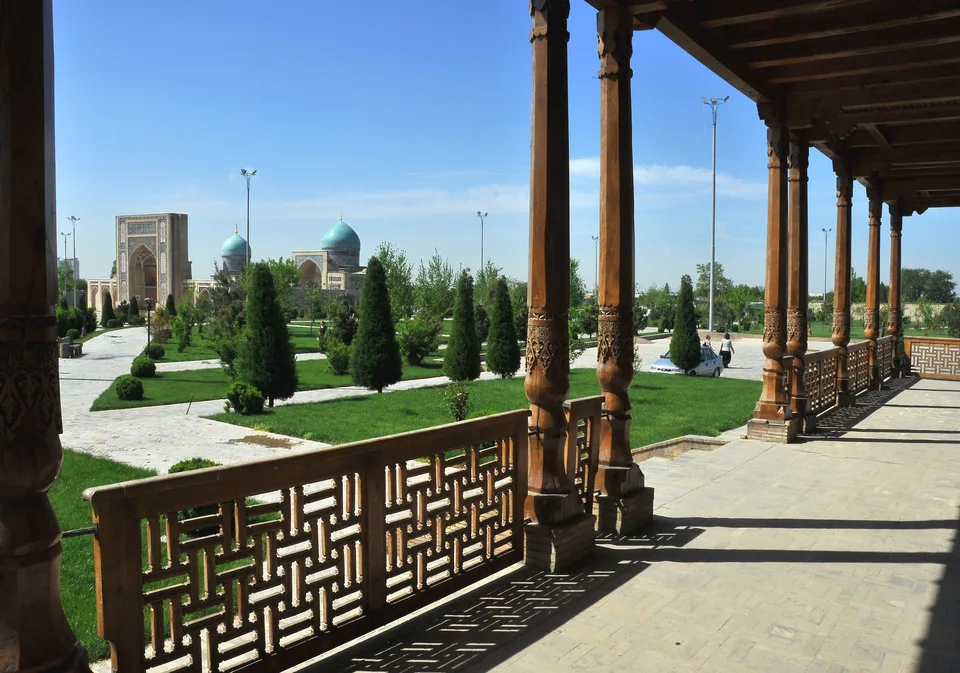
The Khast Imam complex gives the old city a different rhythm from the central avenues. Its ensemble includes the Barak Khan madrasah, Tillya Sheikh mosque and the mausoleum associated with Kaffal ash Shashi. Allow time for the spaces between buildings and for the contrast between open squares, tiled surfaces and carved timber details, rather than treating it as a single photograph.
Religious use comes first. Dress respectfully, follow the instructions at each entrance and ask about access during prayer or other observances. Photography permission can differ between courtyards, worship areas and displays. Older descriptions of where the celebrated Quran manuscript is exhibited require particular care: the opening of the nearby Islamic Civilization Center in 2026 changed the visitor's research checklist.
Understand the new Islamic Civilization Center
The Tourism Committee's April 2026 opening report confirms that the Islamic Civilization Center opened in March. Its galleries cover different historical periods, scientific scholarship and Islamic civilisation, with the Mushaf of Uthman presented in the Quran Hall. Describe the manuscript as traditionally associated with Uthman; devotional significance and precise scholarly conclusions about its production are different questions.
Check the centre's own visitor information and admission categories before booking. At this review, it lists daily opening from 09:00 to 22:00 and UZS425,000 for foreign visitors aged 18 and over, including an audio guide. Lower advertised starting prices and local-resident tickets are different categories. Timed visits and additional experiences need separate attention. Set aside a substantial indoor visit, and check the rules for photography and religious areas.
Use the central square as an orientation point
Amir Temur Square is a useful anchor for understanding central Tashkent. The equestrian monument, surrounding streets and nearby museum provide a manageable first outing after arrival. Walk the area when you have the energy to notice the buildings and street layout; there is little benefit in forcing a long cross-city itinerary immediately after an overnight flight.
Inside the State Museum of the Timurids, the focus shifts to the dynasty, its history and cultural legacy through objects, miniatures, models and other displays. The museum opened in 1996. A Quran displayed in its central hall is described by the tourism authority as a copy, so do not confuse this collection with the manuscript exhibition at the Islamic Civilization Center. Confirm current admission arrangements before setting your schedule.
Leave an afternoon for applied arts
The State Museum of Applied Art offers another way into Uzbekistan: through ceramics, embroidery, jewellery, clothing, woodwork and other forms of skilled production. Its origins reach back to a craft exhibition in 1927. It is particularly useful before shopping, because it helps visitors notice differences in technique and material rather than buying solely on colour or an enthusiastic sales description.
Allow enough time to look at individual pieces instead of trying to identify every regional style in one visit. Museum displays can provide context, but they do not authenticate an unrelated object offered in a market. For a significant purchase, ask who made it, what it is made from and whether any export paperwork is required; retain the receipt and obtain specialist advice where necessary.
Make the metro part of a sensible route
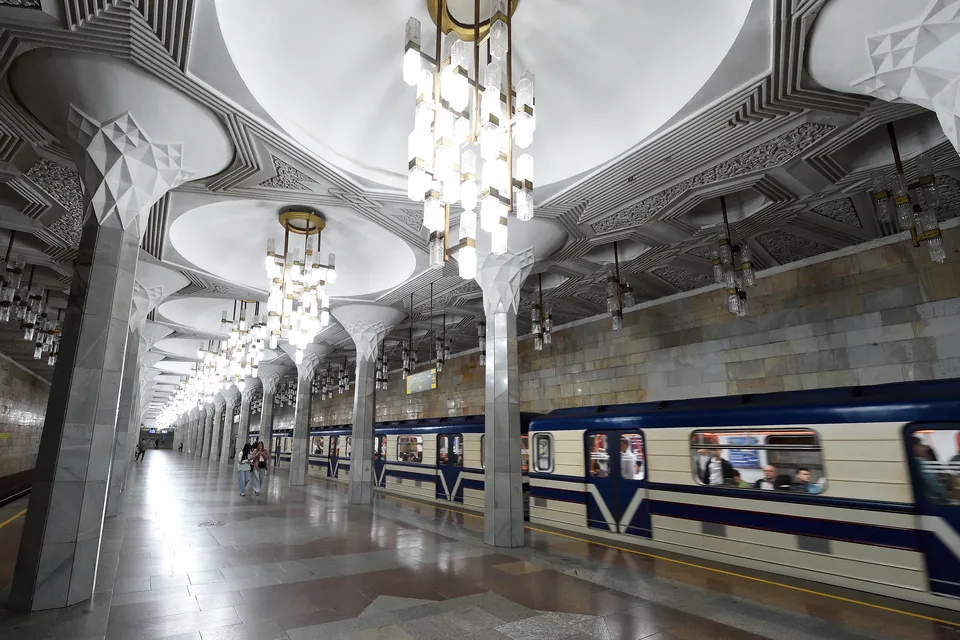
Tashkent's metro, opened in 1977, is both transport and an architectural experience. Mustaqillik Maydoni is one example of how a routine journey can include chandeliers, columns and carefully designed interiors. Visit stations while travelling between areas you actually want to see, rather than spending an entire day repeatedly entering and leaving the system for photographs.
The ATTO notice effective 1 October 2026 sets a single electronic journey at UZS2,500, payable through the listed electronic methods, including ATTO cards, bank cards and mobile applications. A single-use QR ticket bought with cash through an information kiosk costs UZS3,000. That is different from handing cash to a driver. Older UZS1,700 figures should not anchor a current budget; check the latest operator notice before travel.
Save your accommodation address in a form a driver or station employee can read, and keep an offline map available. Check the last part of each journey before leaving internet access. These small preparations are especially useful when a building entrance faces a different street from its map marker.
Plan airport connections around the correct entrance
Islam Karimov Tashkent International Airport serves the capital, but terminal access deserves attention. The city administration's airport information describes a separate road entrance for the domestic terminal. Give your driver the flight details and confirm the required entrance with your airline; a generic airport destination can create an avoidable detour, especially when connecting between flights.
For flights with the national carrier, use Uzbekistan Airways' official flight and passenger information to check the current schedule, baggage allowance and check-in requirements. Arrange an arrival transfer with a clearly stated price and meeting point, or use a service whose booking terms you understand. No single taxi fare or journey time suits every terminal, hotel and traffic condition. Leave a margin before an onward train.
Book onward trains before fixing every hotel night
The official Uzbekistan railway booking service allows searches by origin, destination and date, with Tashkent, Samarkand, Bukhara and other cities listed. Use the actual result for your travel day rather than assuming a popular service runs at the same time every day. Check the departure station on the ticket, the passenger details and the conditions for changing or refunding it.
It is usually more comfortable to give Tashkent its own nights than to plan an airport-to-station connection with no room for disruption. If a train is central to your itinerary, confirm availability before purchasing accommodation with restrictive cancellation terms. Keep the ticket accessible offline, along with the identity document used for booking, and allow time to find the correct station entrance and boarding area.
Before paying, read the train type and accommodation category as carefully as the destination. A seat on one departure is not automatically equivalent to a berth or another service's class. Check baggage conditions and whether your party is seated together. If the booking cannot be completed, use the operator's assistance channels rather than interpreting an empty search or payment error as proof that all services have stopped.
Match accommodation to sleep, access and facilities
Tashkent offers different accommodation styles, from smaller properties to full-service hotels. Compare recent room information for sound insulation, cooling, lifts, breakfast, late arrival and the exact address. A low nightly rate can lose its advantage if the location adds repeated car journeys. For summer stays, functioning air conditioning matters more than decorative photographs; for winter, ask about heating rather than assuming every room is equally comfortable.
As one verifiable central example, Hyatt Regency Tashkent lists its address on Navoi Street and facilities including a pool and meeting spaces. That may suit some business or leisure stays, but it is not a universal recommendation. Compare the total for your dates, including meals, transfers and cancellation conditions. Ask any property how it handles the registration requirements applying to foreign guests.
Eat locally without guessing what is on the plate
The national tourism board highlights plov among Tashkent's food experiences. Treat a meal as a chance to ask about the particular preparation rather than expecting every version to be identical. If you avoid meat, dairy or particular allergens, explain the restriction explicitly and ask about stock, cooking fat and garnishes as well as the obvious ingredients.
Markets, informal dining and hotel restaurants offer different settings, but the useful comparison is the complete order. Establish portion size, drinks and any additional charges before paying. Keep some smaller notes for purchases where electronic payment is unavailable, while avoiding unnecessary large cash holdings. When buying food for a rail journey, choose items that travel safely and do not depend on refrigeration you cannot provide.
For craft shopping, distinguish a souvenir you like from an object sold as antique, handmade or historically important. Those descriptions require evidence beyond appearance. Ask whether the seller can provide an itemised receipt and explain the production method. If your interest is mainly in the design, an honestly described contemporary piece may suit you better than a costly purchase whose age or origin you cannot establish.
Build a budget from the items you will actually buy
Use Uzbek sum for planning and check your own bank's conversion and withdrawal charges. A simple verified comparison shows why attraction choices matter: the centre's UZS425,000 foreign-adult admission plus two UZS2,500 electronic transport journeys totals UZS430,000, before food or accommodation. A day built around markets and outdoor walks will have a different cost profile, without requiring an invented average daily budget.
List room costs, intercity tickets, local journeys, meals and paid visits separately. Add the cost of a transfer if you arrive when your preferred transport is unavailable. Keep receipts for important purchases and check the currency shown before confirming a card payment. For a longer stay, distinguish refundable deposits from monthly spending so the first month's cash requirement is not mistaken for a normal recurring budget.
Choose your season around walking and indoor time
Uzbekistan has a continental climate, with hot summers and meaningful seasonal variation. The national hydrometeorological service is the appropriate starting point for current conditions and warnings. National climate averages should not be presented as Tashkent's station records. Spring and autumn are practical periods to consider for a trip involving substantial walking, while checking the forecast for the actual week remains essential.
In summer, move longer outdoor visits earlier, carry water and use museums as part of the day's structure. Winter visitors should prepare for cold conditions and check the forecast rather than relying on descriptions of a reliably snowless city. Rain can change the comfort of market visits and pavements. Leave enough flexibility to exchange an outdoor afternoon for an indoor collection without losing a prepaid onward connection.
Spend three days without rushing across town
On day one, settle into your accommodation and orient yourself around Amir Temur Square. Visit the Timurid museum if your arrival time and energy permit, then keep dinner close to your base. An evening walk can help establish the real distance to the metro and the practical crossing points you will use the following morning.
Use day two for Chorsu and the old-city area, followed by Khast Imam and a planned visit to the Islamic Civilization Center. Confirm the admission time before deciding the order. On day three, visit the Applied Art museum, include a metro journey through stations that interest you and leave a clear buffer for the station or airport. With only two days, choose between major indoor visits instead of compressing all three into a checklist.
Test everyday life before signing a long lease
For a move, begin with temporary accommodation and use it to test the commute at the times you would actually travel. Walk the route from a prospective apartment to transport, groceries and essential services. A short map distance can conceal awkward crossings or a long approach through a residential development. Ask about evening noise, building access, lifts and the reliability of the internet connection you would use for work.
Inspect heating, cooling, hot water and appliances, and establish which utility charges are included. Request a written inventory, clear deposit conditions and a contract you understand. Confirm that the landlord can meet the registration requirements applicable to your stay before paying a substantial amount. There is no single verified rent figure here that responsibly covers every district, apartment condition and contract length.
Compare at least two locations against the same household needs. A furnished apartment should be assessed for usable equipment, bedding, laundry and storage, not simply the word furnished. If you depend on remote meetings, test the connection from the room where you would work and ask about installation or repair responsibilities. Clarify how maintenance is reported, who holds spare keys and how notice to end the tenancy must be given.
Organise registration, identification and family needs
Use the government's services for foreign citizens to check the requirements applying to your accommodation and immigration status. Confirm who completes registration and retain the resulting evidence; do not assume an informal rental is handled in the same way as a hotel. Requirements should be settled early in the stay, especially before changing accommodation or relying on a landlord's verbal assurance.
The official PINFL guidance for foreign citizens explains the personal identification number used in administrative and financial procedures. An identification number does not itself grant residence or employment rights. Families can also consult the school admission service for foreign children, then confirm placement, teaching language and documentation with the relevant institution. For health needs, check insurance coverage, payment arrangements and prescription supplies. Official government practical information lists ambulance 103 and police 102.
For banking and mobile service, ask the chosen provider which documents and identification it requires for your particular status. Compare charges, contract duration and account closure procedures before committing. Keep a secure copy of important documents and the original available when required. Households with ongoing medical needs should identify a suitable clinic and a workable payment process before an urgent appointment makes those questions harder to resolve.
Separate visiting from working and studying
Check the Foreign Ministry's visa information for your nationality, travel document and purpose. Where applicable, the official electronic visa instructions explain the application process; use the government domain and ensure the details match the passport you will carry. The portal describes a non-refundable consideration fee, including when an application is refused. Visa eligibility and permission to undertake a particular activity are separate issues.
Employment can require confirmation of the right to work and the appropriate immigration arrangements. Studying requires an institution and the relevant permission; neither a tourist visit nor a rental contract establishes permanent residence. For individual circumstances, compare the services offered by consultants listed for Uzbekistan and verify their credentials and scope. Obtain case-specific official guidance before committing to a job, course or long lease.
Work undertaken online also deserves a specific eligibility check. Being paid abroad should not be treated as proof that any visitor permission allows the activity. Explain the proposed arrangement accurately when requesting advice, including where the employer or clients are based and how long you plan to stay. Keep immigration, employment and tax questions distinct so that an answer about entry is not mistaken for a decision covering all three.
Continue to the Uzbekistan that fits your interests
Tashkent works well alongside Samarkand for travellers interested in monumental architecture and Bukhara for time in a more concentrated historic setting. These are distinct destinations, so give each its own nights and transport planning. Moving rapidly between them can consume the time that makes their streets, museums and everyday routines rewarding.
Use the VisaWand Uzbekistan destination directory to compare other places geographically; a directory entry is not necessarily a completed travel guide. Before adding another stop, check the real rail or flight options, the season and the time available after transfers. A well-paced Tashkent stay can be both a destination in its own right and a useful foundation for a broader journey.
Official planning resources
Reviewed 28 October 2026. Use the official resources linked throughout this guide for admission, transport, housing and immigration decisions. Prices, services and rules can change; confirm the details relevant to your dates. Photography illustrates the locations and is not a live view.
View all official resources
- Uzbekistan official tourism: Tashkent
- Courage Memorial and 1966 earthquake
- Khast Imam ensemble
- Tourism Committee: Islamic Civilization Center opening
- Islamic Civilization Center visitor information
- Amir Temur Square
- State Museum of the Timurids
- State Museum of Applied Art
- ATTO: Tashkent fares effective 1 October 2026
- Tashkent city administration airport information
- Uzbekistan Airways
- Uzbekistan Railways official ticket search
- Hyatt Regency Tashkent
- Uzbekistan Hydrometeorological Service
- Government services for foreign citizens
- PINFL identification for foreign citizens
- School admission for children of foreign citizens
- Uzbekistan government practical information
- Uzbekistan Ministry of Foreign Affairs visa information
- Official electronic visa instructions
- Confirmation of the right to work
Plan the next part of your journey
Explore the Uzbekistan guide, browse other cities or compare consultants for your travel and relocation questions.