Visa
Samarkand deserves more than a photograph stop
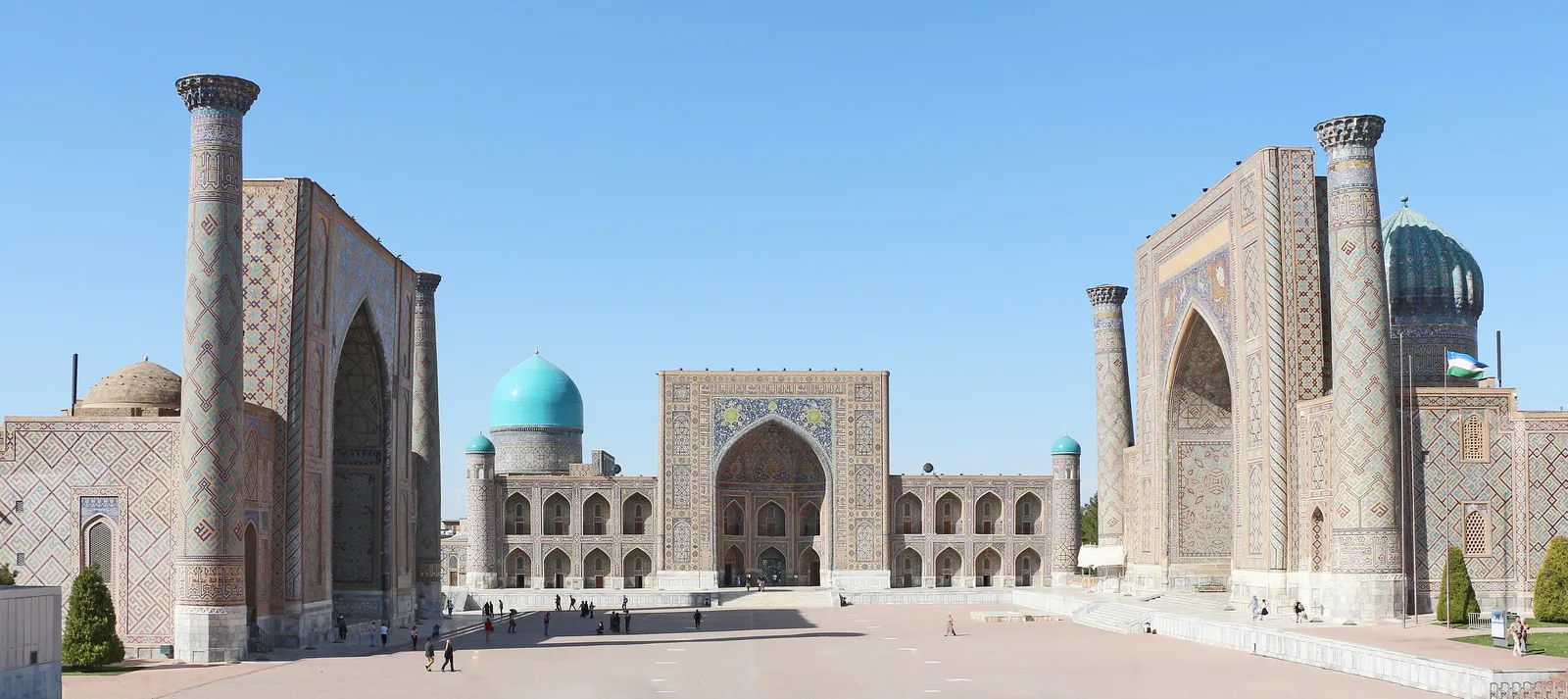
Samarkand is a city of monumental public spaces, tiled tombs and ordinary streets that continue beyond the famous silhouettes. The Registan supplies the immediate drama, but the more useful question is how much time you want between monuments. A rushed visit can deliver several façades; two or three nights allow you to compare their interiors, follow a market visit with lunch and return to a favourite view without watching the clock.
For a first journey, plan around a few substantial visits rather than every named sight. Samarkand suits travellers interested in architecture, Central Asian history and craft traditions. People considering a longer stay should also look beyond the sightseeing area: a beautiful courtyard does not establish a workable commute, reliable home internet or suitable schooling. VisaWand’s Uzbekistan guide provides the national context alongside this city-focused planning.
Read the city through its different historical areas
The UNESCO World Heritage description places Samarkand in an oasis in the Zerafshan valley and explains why its historic areas need separate attention. Ancient Afrosiab, the medieval city associated with the Timurids and later nineteenth-century development represent different stages of growth. The most significant Timurid expansion took place in the fourteenth and fifteenth centuries. These are connected parts of a city, rather than a single enclosed museum quarter.
That distinction changes a visit. A tiled portal can be appreciated immediately, while an archaeological landscape benefits from explanation and a museum. Modern streets carry the practical life that supports both. Decide whether you most want architecture, archaeology or everyday urban experience, then distribute your time accordingly. A knowledgeable guide can help make the connections; ask about language, itinerary, admission charges and the size of the group before agreeing to a tour.
Choose a base by the journeys you will repeat
For a short architectural visit, compare accommodation around the Registan and Gur-Emir with options closer to the Bibi-Khanym and Siyob area. Look at the actual entrance and walking route, not only a map pin centred on a famous monument. A room described as central may still involve steps, a narrow approach or a transfer with luggage. Ask where a driver can stop and how late check-in works.
A station-area booking can be useful for an awkward train time, but should be evaluated against the trips you will make on every other day. For a longer stay, add grocery shopping, the university or workplace and medical appointments to that comparison. Request an address in writing and save it offline. A slightly higher room price can be worthwhile if it removes repeated transfers, especially when travelling with children or someone who needs regular rests.
Give the Registan a proper visit
The Registan’s three madrasas are Ulugbek, Sherdor and Tilla-Kari. Start with the ensemble as a whole, then move closer to compare portals, courtyards and decorative surfaces. The national tourism account of Registan Square also describes its historical role as a place of trade and civic activity. That background helps turn an impressive view into an understanding of a public space.
The Registan Directorate’s ticket service publishes daily hours of 07:00–24:00 between 20 February and 20 November, and 08:00–20:00 between 20 November and 20 February. Confirm arrangements for your date, particularly around events. These opening periods do not guarantee access to every room, performance or elevated viewpoint. Check what your ticket includes and whether it permits a return visit. If evening illumination matters to you, ask about that day’s programme before building dinner or transport around it.
Treat Shah-i-Zinda as a sacred place
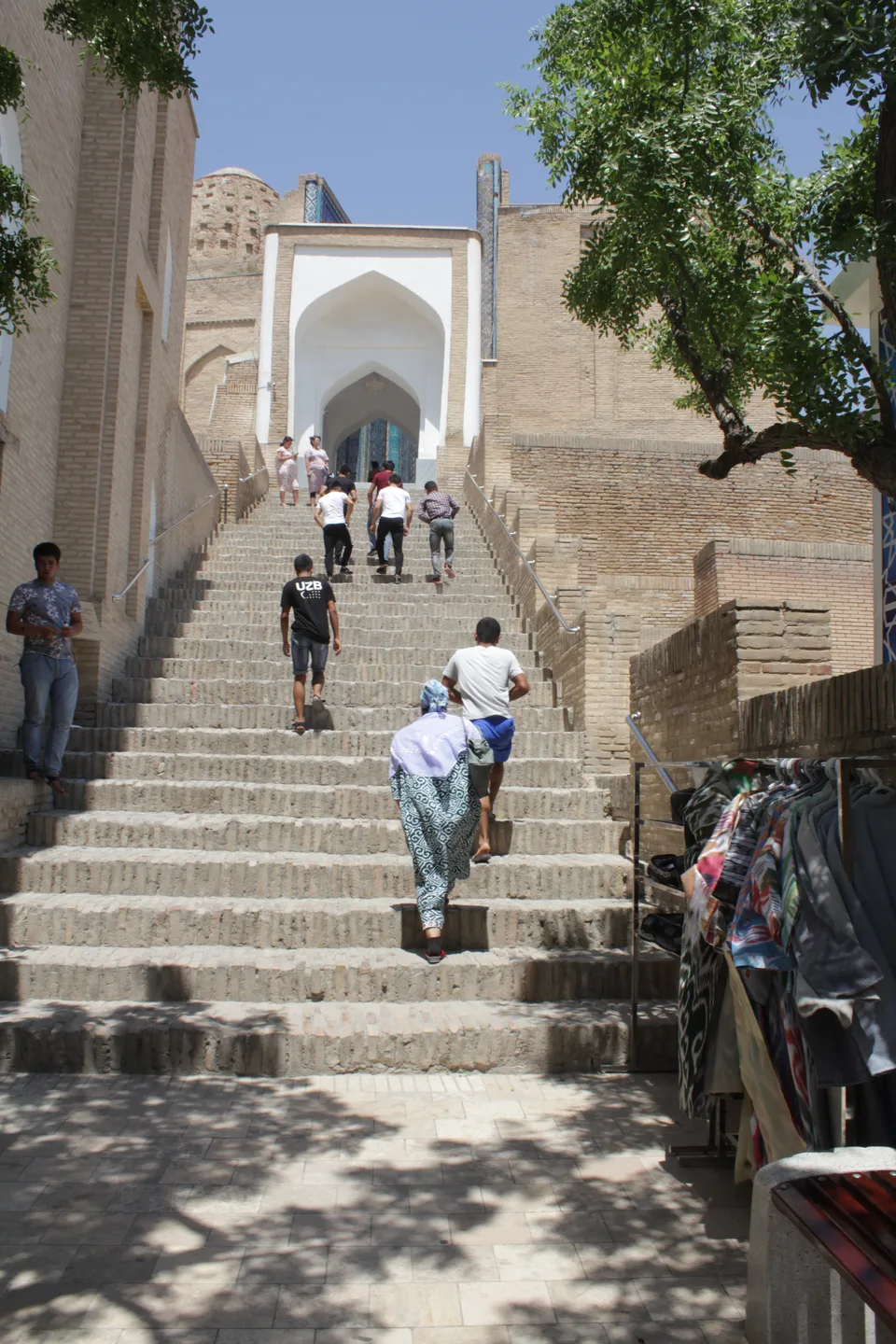
The Shah-i-Zinda memorial ensemble combines richly decorated mausoleums with continuing religious significance. Blue and turquoise surfaces reward close attention, but it is also a necropolis and pilgrimage destination. Give worshippers room, keep voices low and ask before photographing people. Its religious associations include traditions concerning Qusam Ibn Abbas; those traditions should be understood as beliefs, rather than presented as independently established events.
The entrance steps are an important practical consideration. Travellers with limited mobility should request a description of the current accessible route and available assistance before buying a tour. Do not assume a vehicle drop-off removes the need for climbing. Visit when you can proceed at a comfortable pace, with drinking water and suitable footwear. A quieter, attentive visit is more rewarding than trying to photograph every decorated doorway while moving with a large group.
Pair Bibi-Khanym with the surrounding streets
The Bibi-Khanym Mosque was commissioned by Amir Temur and built in 1399–1404. Its monumental portal and large architectural composition offer a different experience from the more intimate spaces of the necropolis. Allow time to look at scale as well as ornament: the relationship between the entrance, courtyard and main building is part of the interest.
Siyob Market, also rendered Siab, is next to the mosque in the old part of Samarkand. Combining the two makes sense, but allow a break between a formal monument visit and browsing. Keep the mosque and the similarly named mausoleum distinct when checking ticket descriptions or meeting a guide. An advertised price for one does not establish admission to the other. Avoid relying on a story about the building’s construction unless your guide distinguishes documented history from the legends that surround it.
Make room for Gur-Emir
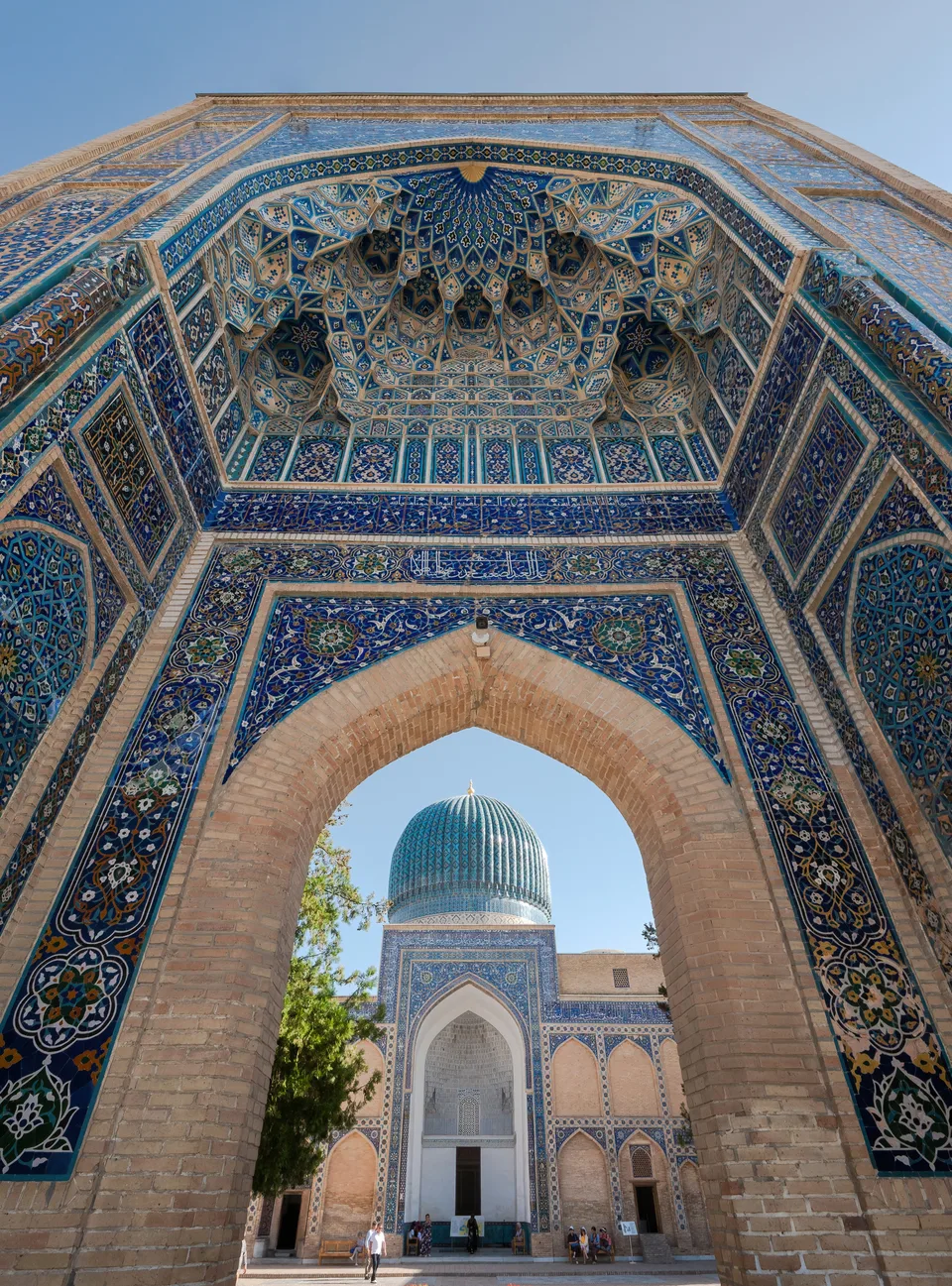
Gur-Emir is the Temurid royal mausoleum associated with Amir Temur, whose jade gravestone is one of its notable features. Compared with the open space of the Registan, a visit here invites closer observation of a funerary setting. Read the interpretation, look carefully at the decoration and resist the temptation to reduce the visit to a quick photograph beneath the dome.
Ask about interior access and photography conditions on arrival. A guide’s service, the admission ticket and any additional access should be clearly distinguished. Plan this as a separate stop with time to sit afterwards, especially if you have already visited another major complex. There is little advantage in reaching a significant interior when you are too tired to notice it. If a room is crowded, patience and a smaller itinerary will usually serve you better than an ambitious schedule.
Choose archaeology and astronomy for a different perspective
Afrasiab’s ancient settlement lies in the northern part of the city. Its ruins reward visitors who want to understand the earlier urban landscape rather than see another decorated façade. Pair the archaeological setting with museum interpretation where available, and confirm which collections and galleries are open. Exposed ground and uneven surfaces make footwear and weather relevant to the experience.
The Ulugbek Observatory introduces Samarkand’s history of scientific observation. Built in 1428–1429, it is associated with a school of astronomy and a catalogue describing 1,018 stars. Part of the large measuring instrument survives below ground; visitors should not expect an intact medieval observatory building. These two stops can give a third day a different theme. Choose them because you want that explanation, rather than treating distance travelled or the number of tickets collected as a measure of a successful visit.
Add a craft visit at Konigil if it interests you
The Konigil village and Meros paper mill offer an excursion beyond the main monument circuit. The national tourism authority describes the Mukhtarov brothers’ revival of traditional handmade paper production there. It is a useful option for someone who wants to see a material and a process, particularly after several substantial architectural visits.
Confirm demonstration times, admission, transport and the return journey before setting out. A workshop visit is most useful when someone can explain the process in a language you understand. Ask which objects were made on site and which stages you can actually observe. Buying something is optional; compare the material, finish and price without feeling obliged to purchase because a demonstration was arranged. Leave enough space in the day to enjoy the village instead of inserting it between a long museum visit and a departing train.
Accommodation involves more than a room category
Compare guesthouses, conventional hotels and apartments by the features you will use: bathroom arrangement, cooling or heating, breakfast, laundry and access with luggage. For a courtyard property, ask whether your room faces a shared seating area and what quiet hours apply. Confirm whether taxes, registration and any airport collection are included in the quoted total.
The modern Silk Road Samarkand tourist complex, developed along the rowing canal, includes hotels, a congress centre and the Eternal City craft and dining development. It provides another accommodation setting, particularly for visitors attending events. Evaluate its transfers to your planned sights. The Eternal City is a modern visitor development; it should not be confused with the surviving historic fabric of central Samarkand. Compare the facilities you want with the journeys required, rather than assuming that every hotel carrying the city’s name serves the same kind of stay.
Plan the airport arrival around the hour you land
The airport’s ground-transport page lists buses M1 and 256 between the airport and Samarkand’s central railway station, operating daily from 06:00 to 21:00. It publishes an approximate fifteen-minute interval and places the airport stop outside the arrivals area. At the time of review, the listed fare was UZS 3,000 in cash or UZS 2,000 using cards issued by Uzbek banks. A foreign bank card should not be assumed to qualify for that discount.
The station is a transport connection, not a promise of a direct ride to your accommodation. Check the remaining journey before choosing the bus. For a late landing, heavy luggage or a difficult address, compare a confirmed transfer with the airport’s listed taxi service. Agree the destination, total charge and meeting point, including what happens if the flight is delayed. Do not use a daytime bus plan for an arrival after its published operating period.
Book rail travel against an actual departure
Use the Uzbekistan Railways booking portal to search your date and stations, then compare the available trains, class, arrival time and total fare. Samarkand can form part of a wider journey involving Tashkent and Bukhara, but a familiar route name does not guarantee a suitable seat. Confirm transport before committing to an inflexible hotel or a tightly timed day trip.
The railway’s passenger and ticket guidance says non-residents should book using the passport with which they will travel. Check the spelling and document details before payment, and keep a printed ticket as well as an offline electronic copy. Some older guidance on the operator’s site contains dated fee and payment information; use the current booking flow for the amount and available payment methods. Leave time for reaching the station and its checks instead of treating the train’s departure as the time to arrive outside.
Walk in clusters and use transport between them
Build walking around a small group of visits, with a place to rest between them. The main sights are not all one continuous shaded promenade. A map’s distance also says little about crossings, steps or how comfortable the route feels in the afternoon. If you need step-free access, ask about the complete journey from vehicle to entrance and through the building.
For a taxi, confirm the correct entrance and the payment arrangement before leaving. Save the destination in a form the driver can read, and check the vehicle details if using a booking service. Visitors who enjoy walking can still benefit from a transfer after an absorbing museum visit. For prospective residents, repeat a likely commute at the actual hour you would travel. That observation is more useful than estimating daily life from a sightseeing walk on a quiet morning.
Food and shopping work well with unhurried breaks
The national tourism guide to Samarkand highlights pilaf, kebabs, manti and the city’s bread, alongside the dried fruit, nuts and sweets of its bazaars. These offer an introduction, rather than a mandatory checklist. Ask what a dish contains and how it is prepared if you have allergies or dietary requirements; a short translated explanation can be more useful than relying on a dish name.
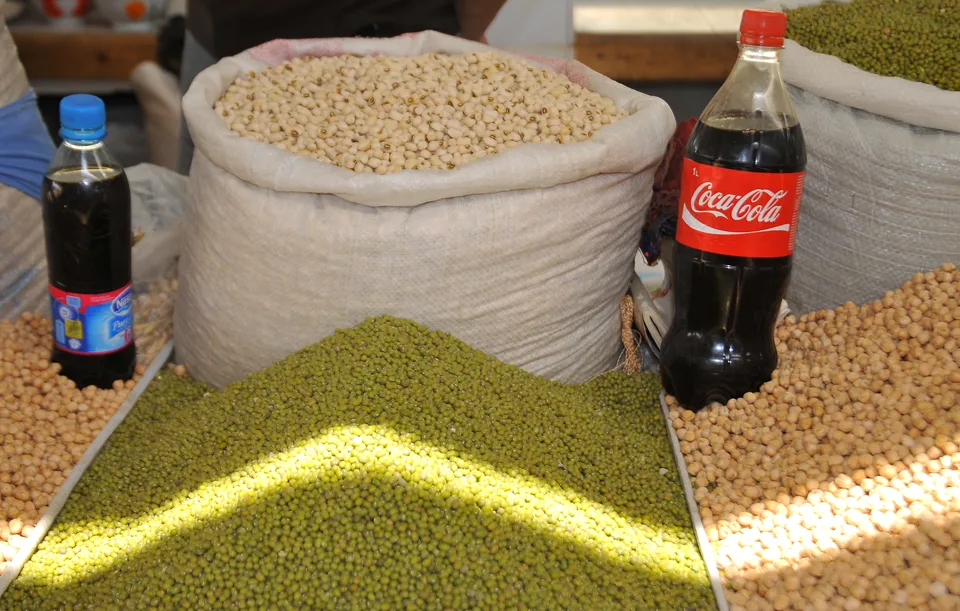
At Siyob, compare quantities and prices before buying, and ask permission for close photographs of vendors. For textiles, ceramics or other substantial purchases, ask where the item was produced and obtain a clear receipt. A shop in an old building does not prove that everything inside was locally handmade. Leave space for a proper meal rather than fitting lunch into the minutes between ticketed visits. Check opening times directly for any restaurant on which your day depends.
For market food purchases, establish whether the quoted amount is per kilogram, per piece or for the whole package. If you plan to take food or craft materials across a border, check the destination’s import restrictions before purchasing. Packaging suitable for a short walk may also need replacing for a train journey or checked luggage.
Budget for separate admissions and practical extras
Build your budget in Uzbek soum, separating accommodation, intercity travel, local transport, admissions, food and discretionary shopping. A guide’s quotation should explain which of these it covers. Keep a modest cash reserve while checking the payment methods accepted by your accommodation and the places you intend to visit. Avoid converting every amount using a remembered exchange rate.
The Samarkand State Museum-Reserve publishes a price list, but the page does not clearly establish a current effective date. This guide therefore does not present its listed amounts as guaranteed admission prices for your visit. Confirm the specific site, visitor category and total at the operator or ticket desk. The mosque, mausoleum and museum are not interchangeable ticket descriptions. Include optional guiding and photography charges only after confirming what applies, and retain enough flexibility to choose fewer visits rather than rushing through prepaid ones.
Choose the season for the time you want outdoors
Samarkand has marked seasonal differences, and the tourism authority warns of very hot summers. If you have flexibility, spring and autumn are sensible periods to consider for a walking-focused visit. Check the forecast for your actual dates: a seasonal preference does not guarantee comfortable temperatures or clear skies. In summer, put substantial outdoor walking earlier in the day and allow a proper midday rest.
Winter planning should include warm layers and confirmation that your room has effective heating. In other seasons, ask about cooling and whether it can be controlled in your room. Match the itinerary to daylight and the weather rather than trying to preserve a summer plan throughout the year. Travellers with children or reduced stamina should give accommodation comfort particular weight, since the ability to return for a break can determine how much of the city they enjoy.
A realistic three-day introduction
On the first day, concentrate on the Registan and Gur-Emir, with a substantial meal and rest between them. This is an introduction to different architectural settings, not a competition to finish the main landmarks. Return to an exterior view later only if you still want to, and check any ticket or programme conditions before assuming you can re-enter.
Use the second day for Bibi-Khanym, Siyob and Shah-i-Zinda, adjusting the order to opening arrangements and your pace. Protect time for browsing and for the necropolis’s steps. On the third day, choose the archaeological and astronomical sites, or make Konigil your main excursion if craft interests you more. This is a suggested sequence, not a claim that every attraction operates every day. Keep departure day lighter, with enough margin for luggage collection, station checks and the consequences of a changed connection.
Test housing against everyday needs before committing
A longer stay needs a different inspection from a weekend booking. Check the proposed lease, the landlord’s authority to let the property, deposit arrangements, notice period and responsibility for repairs. Ask how your address registration will be handled before paying a substantial sum. A low rent is not useful if the accommodation cannot support your lawful stay.
Inspect heating, cooling, hot water, cooking facilities, laundry and the internet connection in the actual apartment. Ask how utilities are metered and billed, what is included and how outstanding balances are handled. Try the route to groceries, a pharmacy and your workplace or campus. For households with children, establish school availability, teaching language, admissions and transport before signing a long lease. Short initial accommodation gives you time to investigate these questions with an address and a realistic routine, rather than choosing entirely from photographs.
Organise registration, communication and healthcare early
Uzbekistan’s government guidance for foreigners requires accommodation registration, with hotels responsible for their guests and private hosts handling private stays. Arrange it on arrival and keep the confirmation. Official guidance describes three working days, while UK travel advice uses a stricter three-day formulation including weekends; do not postpone the task by relying on a favourable interpretation. Recheck registration when changing address.
For a local SIM, ask about passport requirements, coverage and the rules affecting your handset. The official UZIMEI system is the place to check device-registration requirements before extended use; buying a SIM does not settle every handset obligation. For healthcare, confirm access to any treatment you need and insurance covering evacuation where necessary. The FCDO health page lists 103 for an ambulance. Check medicine import rules before carrying a long supply, and identify practical support before an urgent problem occurs.
Match entry permission to the purpose of your stay
Consult the Uzbekistan Ministry of Foreign Affairs visa guidance for your nationality, passport and intended duration. Visa-free entry and tourist permission do not by themselves establish the right to take local employment, enrol on a long course or settle permanently. Employment and study have separate requirements. For study, use Samarkand State University’s foreign-applicant channel to confirm the current programme, admission process and institutional support.
If you need an electronic visa, use the official e-visa instructions. The portal states a US$20 single-entry application fee, which is non-refundable, and requires the issued visa to match the passport used for travel. Check the final conditions before paying. For a complicated situation, compare relevant profiles through VisaWand’s consultant directory, and use official authorities to confirm the applicable route. An exploratory visit should help you assess Samarkand without being mistaken for permanent residence permission.
Compare the rest of the journey before adding another stop
Use the Tashkent city page and Bukhara city page when comparing where to spend additional nights. The Khiva location page, listed under Xiva, offers another geographical reference. These destination pages help organise choices; check each page’s available content and the current transport for your proposed route rather than assuming every connection is equally convenient.
VisaWand’s Uzbekistan destination page and country city directory provide further starting points. Before finalising the trip, read the current official safety and local-law guidance, including passport-carrying and photography restrictions. Samarkand is most rewarding when the pace leaves room to understand what you are seeing. Choose the extra stop, excursion or longer rental because it serves your interests and practical needs, with the time and permissions to make it work.
Official planning resources
Reviewed 17 October 2026. Use the official resources linked throughout this guide for admission, transport, housing and immigration decisions. Prices, services and rules can change; confirm the details relevant to your dates. Photography illustrates the locations and is not a live view.
View all official resources
- UNESCO: Samarkand – Crossroad of Cultures
- Uzbekistan Tourism: Registan Square
- Registan Ensemble Directorate: official tickets and opening hours
- Uzbekistan Tourism: Shah-i-Zinda memorial ensemble
- Uzbekistan Tourism: Bibi-Khanym Mosque
- Uzbekistan Tourism: Gur-Emir and Amir Temur’s tomb
- Uzbekistan Tourism: ancient Afrasiab
- Uzbekistan Tourism: Ulugbek Observatory
- Uzbekistan Tourism: Konigil and Meros paper mill
- Uzbekistan Tourism: Silk Road Samarkand complex
- Samarkand Airport: ground transport
- Uzbekistan Railways: official booking portal
- Uzbekistan Railways: ticket and passenger guidance
- Uzbekistan Tourism: Samarkand
- Samarkand State Museum-Reserve: published price list
- Uzbekistan government: services for foreigners
- UZIMEI: official device registration system
- UK FCDO: health and healthcare in Uzbekistan
- Uzbekistan MFA: visa and visa-free categories
- Samarkand State University: foreign applicant documents
- Uzbekistan MFA: official electronic visa instructions
- UK FCDO: laws, safety and security
Plan the next part of your journey
Explore the Uzbekistan guide, browse other cities or compare consultants for your travel and relocation questions.