Visa
Negombo deserves more than an airport night
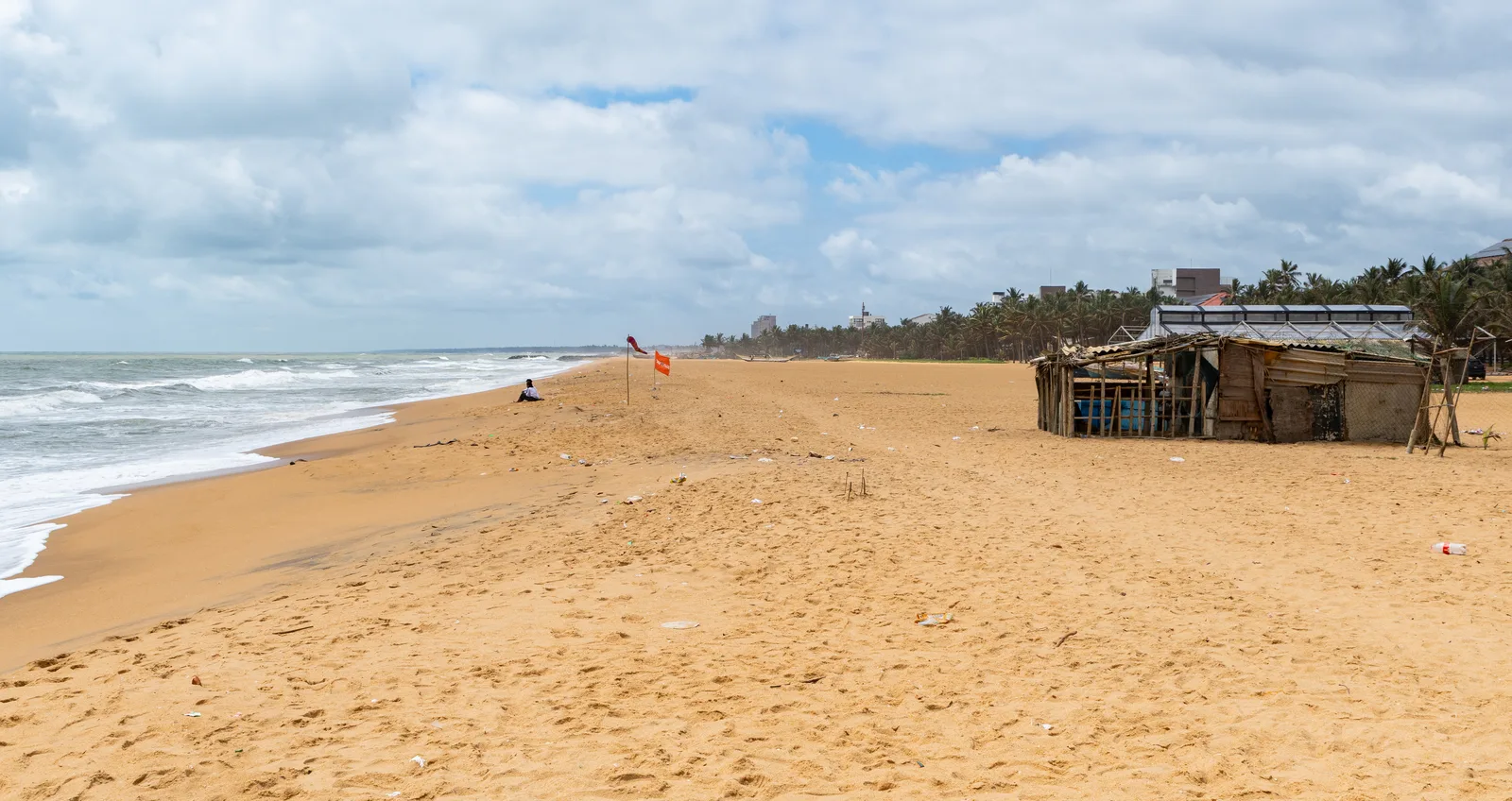
Negombo is easiest to appreciate when you give it a morning as well as a sunset. Arrive, sleep, then look beyond the hotel beach: fishing boats crowd the lagoon, churches interrupt the streetscape, and a canal threads through an inhabited town. The contrast between a resort stay and a working waterfront is the reason to stop.
Sri Lanka’s official Negombo visitor page places the city at the lagoon’s mouth, north of Colombo, with fishing and tourism central to its economy. Choose it for a gentle beginning or end to an island journey, with enough time for food, worship sites and water. Two nights are a useful starting point; a longer stay makes sense if you actively want the accommodation and coastal setting. Read VisaWand’s Sri Lanka country guide alongside this local plan.
Understand the town, beach strip and lagoon
Start your accommodation search with three map pins rather than the single word Negombo. Town-centre errands and sightseeing, the northern hotel strip, and the Thalahena lagoon side are different bases. A property advertising a Negombo address may suit one purpose far better than another.
Jetwing Blue’s location page identifies its Ethukala setting on a beach strip of restaurants and shops. Hotel J gives a Lewis Place address. Use these reference points to compare nearby accommodation and the facilities within walking distance. Thalahena’s lagoon-side setting offers another choice, across a different part of the city’s coastal geography. Check the actual route between your shortlisted hotel, dinner options and planned excursions. Straight-line proximity across water can make a map look more convenient than the journey proves.
A colonial history within a living city
Negombo’s heritage survives in fragments and daily use. The tourism board identifies Portuguese and Dutch influences, a canal once used for colonial supply, and the Dutch fort gate dated 1672. It also notes that the fort site forms part of a prison. Treat the gate area as a brief exterior stop where access permits, rather than expecting a restored fortress museum.
The name Little Rome reflects the city’s Catholic churches. It should not obscure Negombo’s other religious communities or turn an entire town into a colonial exhibit. Give yourself permission to explore a short stretch of street slowly. Buildings, shopfronts and water routes make more sense together than a checklist of isolated monuments, particularly when a guide can explain what remains and what has changed.
Start with the fishing waterfront
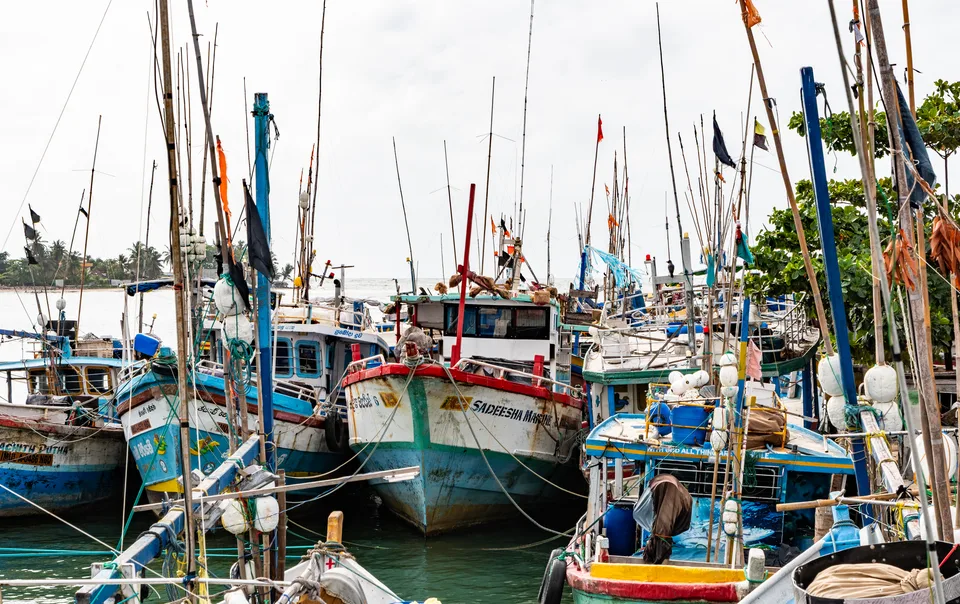
Lellama fish market is a seafood trading area at the northern end of Negombo Lagoon. It is a place of work, with boats, deliveries and bargaining taking precedence over visitors. Agree on an appropriate visiting time with a local guide or your accommodation; trading conditions matter more than an advertised sightseeing slot.
Wear shoes that tolerate wet surfaces and leave room for people carrying their catch. Ask before photographing workers closely, and avoid stepping onto boats or handling equipment without permission. Families should consider whether the smells, slippery ground and sight of fish being processed suit their children. A short, considerate visit can be more rewarding than lingering in the way. Keep the experience separate from lunch: seeing a fishing harbour does not establish the hygiene or sourcing of every restaurant nearby.
Visit St Mary’s with time to look up
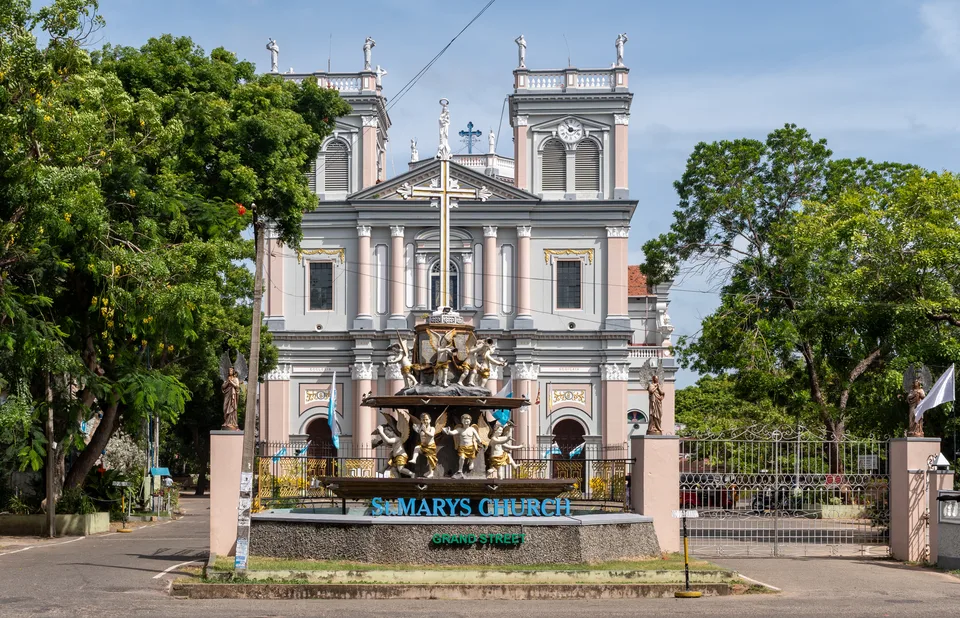
St Mary’s Church is a good anchor for a town visit. The local hotel operator’s church overview draws attention to its painted ceiling, a detail easily missed if you only photograph the entrance. Check whether visitors can enter before planning an interior stop, and arrange your visit around services.
Sit quietly before reaching for a camera. Church visits work best when treated as invitations into a worship space, with any photography rules respected. A driver should know the precise church you mean: similar saint names appear at different locations around Negombo. Do not book a vague “church tour” and assume every stop has the same history, access or relationship to the city’s Catholic community. Ask for the actual names and route in advance.
Angurukaramulla offers another perspective
The tourism board’s Angurukaramulla Temple profile identifies the site as Bodhirajarama Maha Viharaya and describes its vivid decoration, older carved details and library building opened in 1941. It makes a worthwhile change of focus after the churches and waterfront. Allow time to understand the religious setting instead of treating the decoration simply as a photographic backdrop.
Follow official advice on Buddhist temple etiquette: cover legs and shoulders, remove shoes and hats, and respect religious images. Ask locally about current access, donations and any guided explanation before entering; a dependable current admission tariff was not established for this guide. Carry footwear that is easy to remove, and plan a shaded break afterwards rather than linking every religious site into an exhausting midday circuit.
Walk a short section of the canal
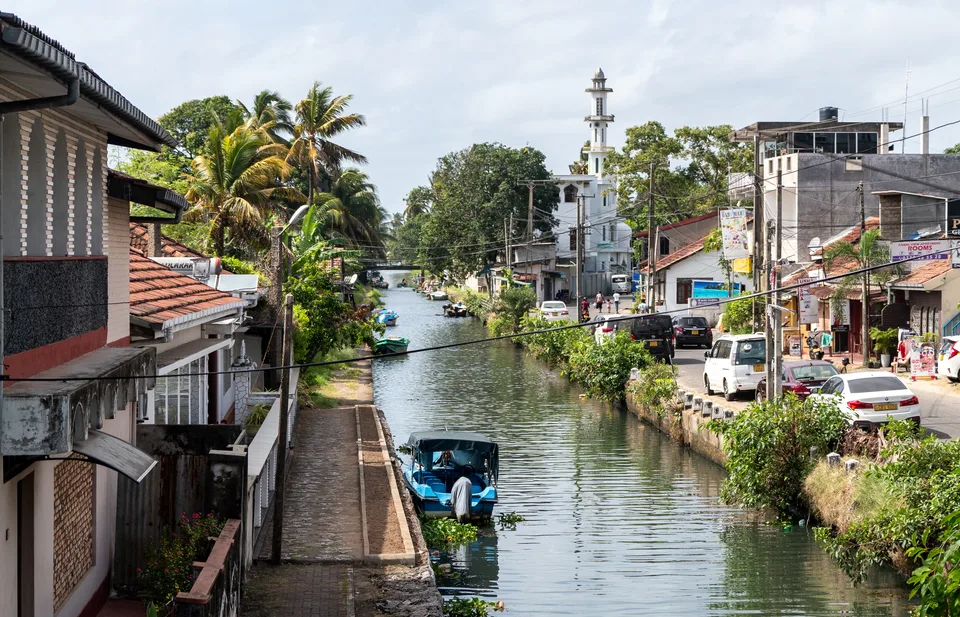
The canal is most interesting as part of Negombo’s streets, not as an uninterrupted scenic promenade. Pick a short section with a clear pedestrian route and look at the relationship between buildings, bridges and boats. The photograph here shows that the waterway runs beside roads and everyday premises; conditions and individual stretches differ.
If you want to go onto the water, book an actual excursion rather than assuming a boat beside a bridge is available for hire. Request the departure point and route in writing. A canal trip, a lagoon circuit and a wetland outing are different products. The distinction affects your transfer, time on the water, wildlife expectations and total cost, so make it explicit before comparing quotes.
Choose a lagoon or wetland outing carefully
Jetwing Sea’s excursion information includes trips through canals towards the Muthurajawela mangroves and birdwatching around Anawilundawa. These are possibilities to arrange, rather than evidence that every tour leaves daily or follows the same route. Ask how much travel is involved before committing a short stopover day.
For a boat outing, confirm passenger numbers, shade, properly sized life jackets, boarding arrangements and the weather cancellation policy. Describe any mobility needs before paying. Wildlife sightings depend on conditions; a precise species promise should not determine your booking. Avoid excursions that encourage feeding or handling wild animals. If rain or water conditions make departure unsuitable, replace the outing with a meal or indoor visit instead of pressuring an operator to continue.
Choose accommodation for the stay you need
For a brief arrival stay, reliable late check-in, a confirmed transfer and a quiet room can matter more than a long facilities list. For several beach days, give greater weight to the pool, shade, dining choices and room position. Beach access does not establish safe swimming, so a pool may substantially change your holiday.
Jetwing Blue publishes family and adapted room categories, while Hotel J describes a limited-service model with different standard and ocean-view rooms. Jetwing Lagoon Wellness currently operates as an adults-only property and highlights Geoffrey Bawa’s design. These examples illustrate meaningful differences, not a ranking. Families should check age policies directly; travellers needing step-free access should request measurements, bathroom photographs and the route from vehicle to room. Compare the complete booking price, cancellation terms and breakfast inclusion for identical dates.
Getting from Bandaranaike airport to your door
Use Bandaranaike International Airport at Katunayake, airport code CMB, when researching the main international arrival. The airport authority’s current ground transport page lists its supervised taxi service, private counters, Uber and PickMe. Airport taxis have counters in the Arrival Lobby and Arrival Outer Porch. Establish your meeting point before leaving the terminal.
Send the driver your hotel’s full address and map pin, not just “Negombo beach”. Jetwing Blue quotes approximately 12 kilometres from the airport for its own property, illustrating why a town-wide distance is a poor transfer estimate. Obtain a total for your vehicle, luggage and arrival time. The airport’s advertised 187 bus runs towards Colombo Fort; it is not a direct shuttle to northern Negombo hotels. Check the complete public-transport connection before choosing it with heavy luggage or after a late flight.
Book the correct night for your flight
An arrival shortly after midnight needs particular care. If you want a bed immediately, tell the hotel the flight date and landing time and obtain written confirmation of the room’s availability. Simply booking the calendar date on which you land can leave you waiting until afternoon check-in. Ask how staff handle a delayed aircraft and whether reception remains open.
On departure day, establish when the room must be vacated and what luggage storage, changing facilities or paid late checkout are available. A beach afternoon followed by a night flight is less appealing without somewhere to shower. Keep medicines, travel documents and one change of clothing accessible while bags are stored. These small arrangements can determine whether an airport stay actually feels restful.
Local trips and onward connections
For a first visit, group nearby stops and use a car or tuk-tuk between areas when the walking route is unsuitable. Agree on the full fare, waiting time and whether the driver will return you to your hotel. Keep a separate transfer arrangement for the airport rather than assuming your sightseeing driver remains available indefinitely.
At review, Sri Lanka Railways’ timetable notice said its schedule page was temporarily unavailable during redevelopment. Confirm dated services and fares with the operator or station before planning a connection. Jetwing also describes a short Kattuwa–Bolawatta rail outing, which is an optional local experience rather than an airport express. For onward travel, compare the entire journey, including station transfers and connections. A cheap ticket becomes less useful if a missed service costs your reserved hotel night elsewhere.
Eat through the fishing town’s strengths
Seafood is a sensible starting point, but order with a price as well as an appetite. Establish whether fish or shellfish is priced per portion, by weight or as a shared dish, and ask what accompanies it. A quoted whole fish can be poor value for a solo diner even when its unit price sounds reasonable.
For something more involved, Meegama Pick and Cook combines produce selection with a cooking experience led by a local culinarian. Confirm the meeting place, transfers, menu and dietary substitutions when booking. It is a scheduled experience, not an assumed walk-in restaurant service. Explain allergies clearly and ask about ingredients, preparation surfaces and shared utensils. For everyday meals, compare menus before sitting down and keep room in the plan for a simple meal when a long tasting or cooking session would feel excessive.
For a meal with a predictable setting, The Kitchen at Jetwing Blue publishes buffet and à la carte options, with breakfast listed from 07:00 to 10:30. Confirm the service and current price for your day, particularly as a non-resident visitor. A hotel breakfast can suit a slow morning; a prearranged packed breakfast may be more useful before an early transfer. Do not assume that breakfast included in a room rate is available at any hour.
Build a budget around your actual stay
No representative, current Negombo rent or restaurant-price survey was verified for this guide. Build a budget from your dates and actual quotes. Separate accommodation, airport transfers, local travel, meals, excursions, connectivity and a disruption reserve. This exposes the cost of a remote hotel more clearly than a single daily spending figure.
Use Sri Lankan rupees for comparisons. Keep a payment fallback and obtain receipts for substantial bookings. Commercial Bank’s official locator lists branches and ATMs in Negombo; confirm the machine and any fees rather than relying on a generic claim that cash is always easy to obtain. For shopping, compare labelled prices and buy what you can transport legally and safely. A souvenir purchase should not compromise the luggage allowance needed for the rest of your trip.
Weather, sea conditions and the best timing
The government’s climate overview identifies the southwest monsoon as May–September and the October–November inter-monsoon as a particularly rainy period nationally. December–February belongs to the northeast monsoon; March–April is another inter-monsoon. Negombo remains a warm coastal destination, so plan outdoor activity early and allow recovery time indoors.
For a west-coast beach-led trip, investigate December–March first, then compare actual forecasts and accommodation prices. This is a planning preference, not a dry-weather guarantee. Rough surf and rip currents can make entering the sea dangerous regardless of sunshine. Ask about conditions that day and respect warnings. If swimming is central to the trip, confirm the pool and have an alternative to the beach. Rainy-season savings only help if you would still enjoy the stay when boats or outdoor plans are cancelled.
Current disruption deserves a place in the plan
At the 21 October 2026 review, UK government travel advice warned of heavy inter-monsoon rain, flooding and landslides affecting transport across Sri Lanka. It also described flight disruption linked to the Middle East and weekly fuel quotas, with special arrangements announced for tourism operators and hotels. These are time-sensitive national conditions, not a forecast that every Negombo transfer will fail.
Reconfirm your flight and driver shortly before travel, especially before an onward journey with a fixed booking. Ask what happens if a road or service is disrupted, and retain funds for a different arrangement. Follow your own government’s advice and local instructions. The Sri Lankan tourism hotline listed in the advisory is 1912. A flexible final day is particularly valuable when it protects an international departure.
A realistic two-day Negombo itinerary
On the first morning, arrange an appropriate fish-market visit, then explore St Mary’s and a manageable town-centre stretch. Stop for lunch and return to your accommodation during the hottest part of the day. Finish with a beach walk if conditions suit, followed by dinner close enough that returning is straightforward.
Use the second morning for one prebooked lagoon or wetland outing, with time for its transfer. If the trip is cancelled, choose Angurukaramulla and a short canal visit instead. Keep the afternoon light: a cooking session can replace another major activity, rather than becoming a third excursion squeezed into the day. If flying that evening, shorten the programme and prioritise checkout, luggage collection and the airport. With one night only, choose town exploration or a water outing; attempting both around a long flight often defeats the stopover’s purpose.
Test ordinary life before renting long term
Negombo may appeal if you want a coastal base near the airport, but a holiday hotel cannot establish whether daily life suits you. Spend an initial period in temporary accommodation and repeat the journeys you would actually make: work, groceries, school and medical appointments. Test them at the required times, including the return home.
When inspecting housing, look for damp, drainage, secure doors, ventilation, insect screens and working cooling equipment. Visit after rain if possible and listen for road, venue or neighbourhood noise at night. Ask who repairs appliances and how quickly problems are handled. Record the inventory and meter readings before moving in. Obtain written terms for rent, deposit, notice, utilities and refunds, and verify who has authority to let the property before transferring a large advance.
For commuting, compare a northern beach address with a town or lagoon-side address using your actual workplace. Count waiting, walking, connections and the last part of the journey, not just time in a vehicle. Trial both directions before committing to a lease. A location that feels convenient during a relaxed weekend can become tiring when every workday requires the same transfer. If working from home is permitted, test whether your household can function during an interrupted connection instead of relying on a hotel lobby as a permanent office.
Check utilities, connectivity and household costs
Request recent electricity bills for the actual home and establish whether the meter is shared. Use the Public Utilities Commission’s published tariff information to understand the applicable charges; air-conditioning use and billing arrangements matter more than a landlord’s casual monthly estimate. Ask about water supply, storage, drainage and responsibility for maintenance before signing.
Test mobile reception and internet at the desk where you would work, with your own equipment. Dialog’s current tourist plan page advertises a tax-inclusive LKR 1,399 monthly plan with 20GB and requires passport verification for activation. That is a published connectivity example, not proof of coverage inside a particular rental. Confirm current validity and allowances at purchase. For ongoing household planning, price groceries, laundry, cooking facilities and necessary transport separately so that an attractive rent does not hide a costly routine.
Healthcare and family needs require specific checks
Identify where you would obtain routine care and how you would reach a suitable hospital in an emergency. Official travel health guidance highlights mosquito-borne disease risks and the potential cost of private treatment and evacuation. Seek individual medical advice before departure and arrange insurance appropriate to your activities and length of stay.
For an emergency ambulance, 1990 Suwa Seriya covers all districts and is free to call; it is a pre-hospital emergency service, not transport for routine clinic appointments. Keep your address and location pin accessible. Families considering relocation should confirm school admission, teaching language, fees, transport and support needs directly before choosing housing. A short, convenient beach stay is not evidence that the same location supports a particular child’s school routine or a person’s specialist healthcare needs.
Tourist permission is separate from moving permission
Under the Immigration Department’s scheme effective 25 May 2026, nationals of 40 listed countries, including the United Kingdom, United States, India and Pakistan, qualify for a free 30-day tourist ETA. The department still requires an ETA before arrival, including for the free scheme. Check the complete nationality and passport rules, then use the official ETA portal. Free processing does not mean no application.
The scheme allows double entry within its 30-day validity from first arrival; an extension application involves the applicable fee and separate approval. Immigration’s employment guidance states that working on a visit visa is unlawful. Work and study require the appropriate purpose and documentation under the residence visa categories. Do not infer permission for remote work, permanent settlement or a change of employer from a tourist approval. For individual planning, review VisaWand’s Sri Lanka consultant listings and verify the adviser’s relevant expertise.
Decide where Negombo belongs in the wider journey
Compare Colombo if your priorities are city institutions and urban sightseeing, Kandy for a different inland stay, or Galle for another coastal heritage base. Read their individual guides before allocating nights: airport convenience alone should not decide the whole itinerary.
Negombo works particularly well when its fishing waterfront, accommodation and easy first-day pace are things you actually want. Keep it to a purposeful stop if your interests lie elsewhere, or stay longer after testing the practical routine. Use the Sri Lanka location directory to explore other destinations; a directory entry identifies a place and should not be mistaken for a completed travel guide.
Official planning resources
Reviewed 21 October 2026. Use the official resources linked throughout this guide for admission, transport, housing and immigration decisions. Prices, services and rules can change; confirm the details relevant to your dates. Photography illustrates the locations and is not a live view.
View all official resources
- Sri Lanka Tourism: Negombo
- Jetwing Blue: location
- Hotel J Negombo: limited-service accommodation
- Jetwing Lagoon Wellness: Thalahena location
- Jetwing: Lellama fish market
- Jetwing: churches in Negombo
- Sri Lanka Tourism: Angurukaramulla Temple
- UK FCDO: swimming, road and cultural safety
- Jetwing Sea: experiences around Negombo
- Jetwing Blue: rooms and facilities
- Jetwing Lagoon Wellness: adults-only stays
- Bandaranaike airport: current ground transport
- Sri Lanka Railways: current train schedule notice
- Jetwing: Kattuwa to Bolawatta train outing
- Jetwing: Meegama Pick and Cook
- Jetwing Blue: The Kitchen dining
- Commercial Bank: official branches and ATMs
- Department of Census and Statistics: climate seasons
- UK FCDO: current Sri Lanka travel advice
- PUCSL: approved May 2026 electricity tariff
- Dialog: tourist SIM and eSIM plans
- UK FCDO: health planning
- 1990 Suwa Seriya: emergency service FAQ
- Immigration: tourist ETA scheme effective 25 May 2026
- Official Sri Lankan ETA application portal
- Immigration: employment and visit visa restrictions
- Immigration: residence visa categories
Plan the next part of your journey
Explore the Sri Lanka guide, browse other cities or compare consultants for your travel and relocation questions.