Visa
Make room for Colombo itself
Colombo works best when it has a place in your itinerary beyond the airport transfer. Sri Lanka's principal commercial city brings together a working harbour, busy markets, religious buildings, museums and a seafront where an evening walk can become the day's main event. Give it two full days for a useful introduction, or three if you want a slower pace and time for shopping.
For someone considering a move, Colombo offers a different set of questions: where the job is, how the commute works and whether a particular home meets everyday needs. Use VisaWand's Sri Lanka country guide alongside this city guide. A central hotel can simplify sightseeing, while a longer stay calls for testing school journeys, household services and immigration arrangements before committing to an address.
Read the city through its harbour
The Sri Lanka Ports Authority's historical account explains how Colombo's maritime position drew successive trading and colonial powers. Portuguese, Dutch and British connections formed part of this story; British harbour engineering, including the southwest breakwater completed in 1885, helped transform the port. The coast remains central to understanding the city, even when your interest is architecture rather than shipping.
Fort is a district name, not a promise of a complete enclosed fortress to walk around. Treat its historic streets as part of a functioning commercial centre. Colombo's metropolitan identity also extends beyond one municipal boundary: the national Parliament is in Sri Jayewardenepura Kotte. Confirm the exact address of a government appointment, rather than assuming every national office is beside the old waterfront. That distinction matters for both visitors arranging paperwork and residents planning regular journeys.
Choose between Fort, the coast and Colombo 7
Fort suits a short stay focused on the historic commercial centre and onward rail travel. Nearby Pettah is better approached as a busy market outing than as a place to drift with all your luggage. Galle Face provides the coastal reference point, while Kollupitiya, often called Colpetty, is another name to recognise when comparing addresses and accommodation listings.
Colombo 7, associated with Cinnamon Gardens, is useful for the National Museum and Independence Square. Check the street address as well as the district name: a postal label cannot tell you whether the last part of a walk is pleasant or whether your destination is across a difficult road. For repeated appointments farther out, map those journeys first. Choose a base around the places you will actually use, then compare the room, facilities and total rate.
Walk Pettah with a purpose
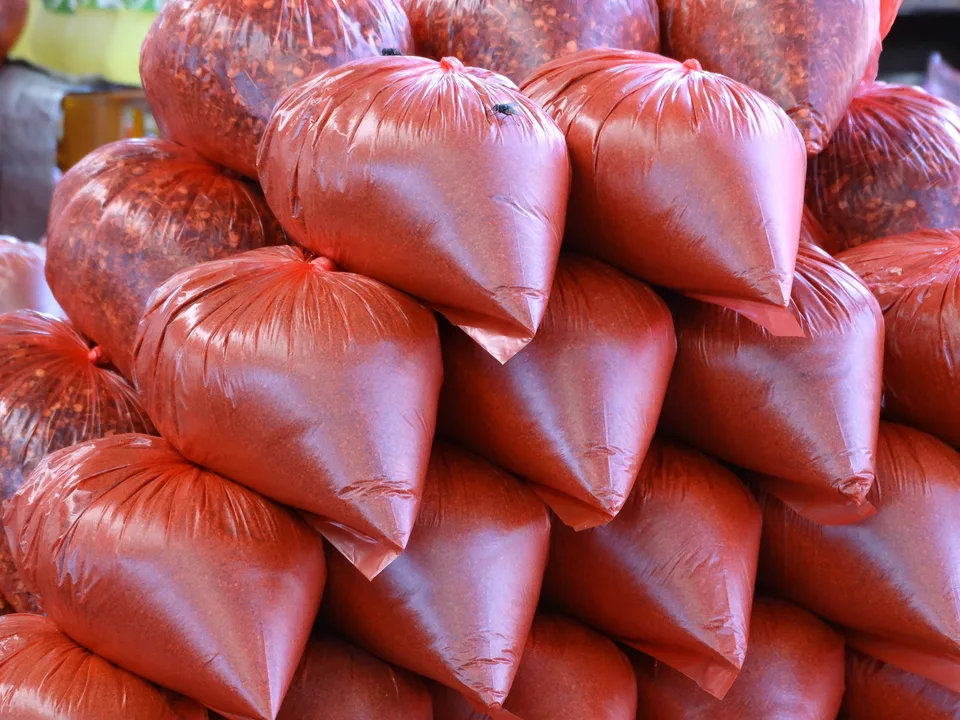
Pettah Market is a good place to see the city trading. Clothing, bags, electronics and spices occupy a setting where shopping and deliveries take priority over sightseeing. Start with a manageable circuit, keep your belongings close and step aside before stopping for photographs. A local guide can help interpret the area if you want more than an unstructured browse.
Decide whether you are looking, buying household items or making a substantial purchase. Those are different visits. Compare quality, quantities and the final price before paying; an appealing label does not establish a branded product's authenticity. For spices or food to take home, ask for sealed packaging and check your destination's import rules. Avoid filling a bag early in a hot walking day. Keeping the outing compact leaves more energy for the rest of Colombo.
Reserve a proper morning for the National Museum
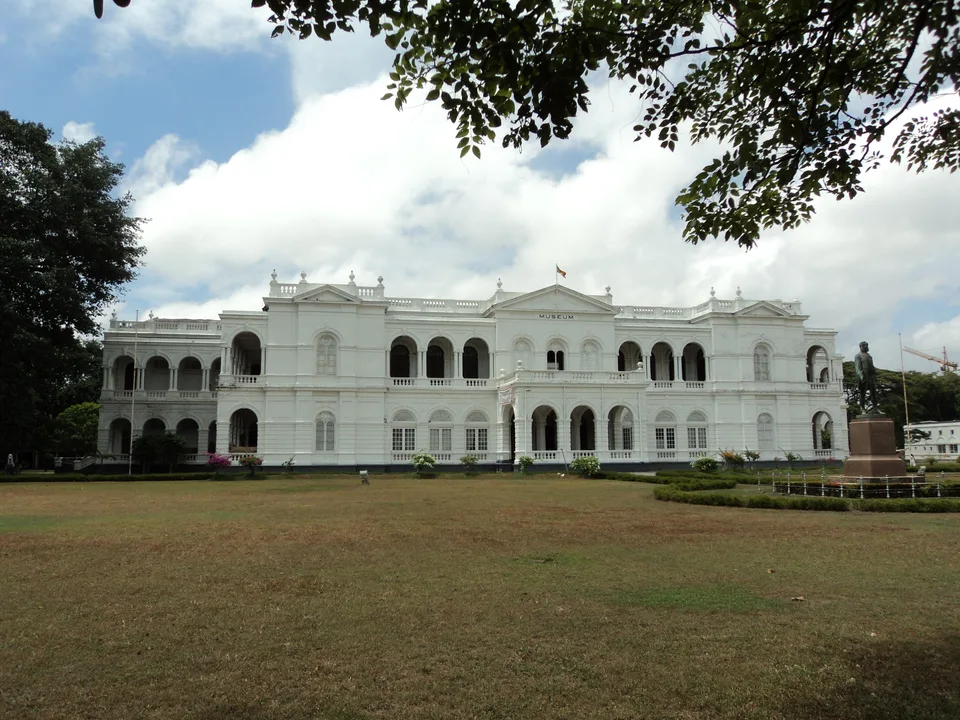
The Colombo National Museum occupies a white Italian-style building on Sir Marcus Fernando Mawatha in Colombo 7. Established in 1877, it provides an introduction to the island's history through thematic galleries arranged in historical sequence. The department's collections include religious sculpture, royal objects and masks, giving context to places you may visit elsewhere in Sri Lanka.
Allow enough time to read the displays rather than treating the facade as the entire visit. Check current opening arrangements and admission directly with the department: its current museum page does not provide a reliably confirmable tariff for this guide. If visiting with children, choose a few themes to explore rather than expecting sustained attention through every gallery. Ask about accessible entry and movement between floors before booking a transfer if stairs would be a problem.
Combine the park and Independence Square
Viharamahadevi Park, opposite the Town Hall, offers a useful outdoor pause around a museum visit. Tourism's visitor information lists no entrance charge. Walk at a comfortable time of day and judge the route by shade, weather and how far your group wants to go. A park break is particularly useful when children need something less structured after indoor displays.
Independence Memorial Hall is a separate stop in Colombo 7. Its design draws on the Audience Hall in Kandy, with decorated pillars and surrounding lion figures. Give yourself time to look at those details before walking in the square. The two outings can share a day without becoming a continuous march between landmarks. Check any event restrictions locally, and arrange a clear pickup point if you are using a driver.
Visit Gangaramaya and the lake respectfully
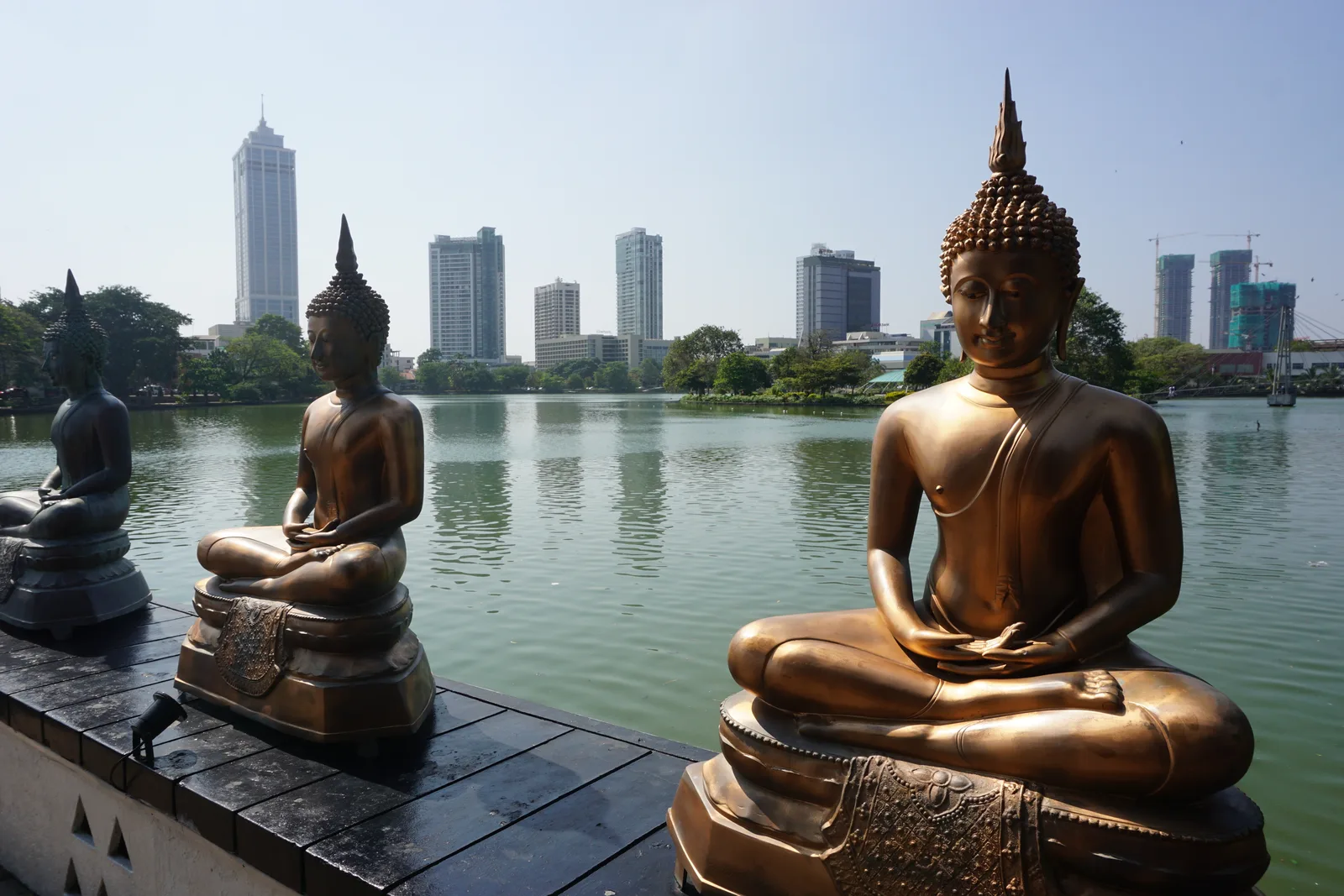
Sri Lanka Tourism identifies Gangaramaya as both a Buddhist religious centre and a place with collections of art and objects. Nearby Seema Malaka on Beira Lake provides another perspective on the city's religious landscape. Confirm which spaces your admission covers and what is accessible that day; the two names should not be treated as interchangeable entrances.
Wear clothing covering shoulders and legs, remove shoes and hats where required, and follow instructions about photographs. Buddhist images are objects of reverence: avoid posing in ways that disrespect them. Leave room for worshippers and ask before entering a ceremony. Around the lake, choose the actual public route available rather than assuming every waterfront edge is a connected promenade. A short, attentive visit is more useful than trying to collect every possible viewpoint.
Save Galle Face for an evening walk
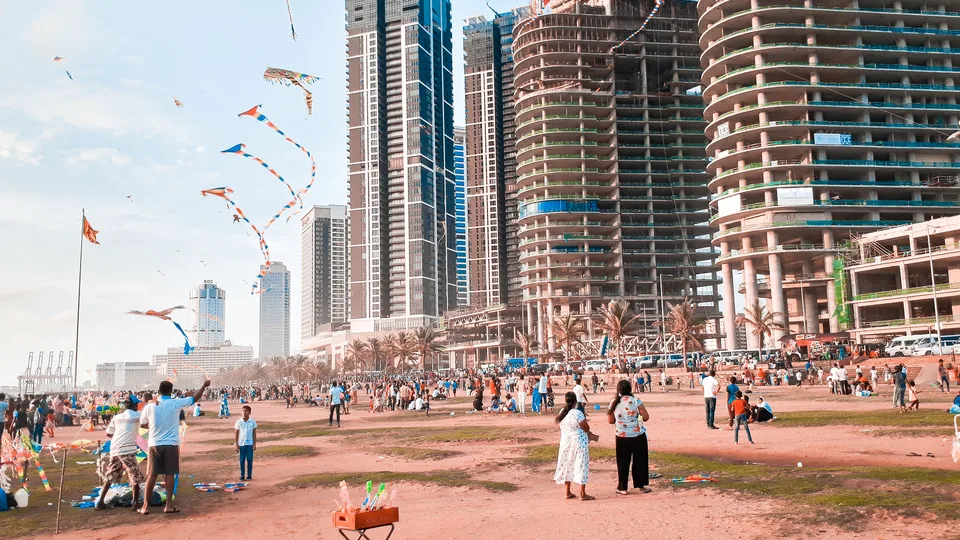
Galle Face Green offers an open coastal setting for walking, watching kite flying and looking towards the Indian Ocean. Its history as a planned public space goes back to 1859. The scale of the waterfront becomes easier to appreciate when you have already explored the denser streets inland. Choose an evening with enough flexibility to stay if the weather is pleasant.
Treat this as a seafront outing; do not assume that a city shoreline is suitable for swimming. Stay clear of an exposed edge when waves are rough and follow local instructions. Take a rain option seriously, especially during a stormy period. If you buy food or drinks, confirm the price before ordering. A nearby restaurant can make an alternative meeting point when a large group would otherwise struggle to find one another outdoors.
Decide whether the Lotus Tower fits your budget
The Lotus Tower's official foreign visitor ticket page lists US$20 for an adult observation-deck visit and US$10 for a child; its observation-deck and Pixel Bloom combination is listed at the same prices. Children under three require no ticket. Check the operator's age categories before booking, particularly for a child at the ten-year boundary, where its displayed labels overlap.
For two adults, allow US$40 at the displayed rate before transport or food. The site states that payment is processed in Sri Lankan rupees at checkout. Tickets are tied to a date and entry slot, and foreign visitors should bring their passports. Review the current conditions before paying. Choose the tower if an elevated city view matters to you, while accepting that rain and haze can limit visibility. A sunset booking cannot guarantee a clear sunset.
Select accommodation by the complete stay
Compare hotels, guesthouses and serviced apartments using the same dates, occupancy and cancellation conditions. For a brief sightseeing visit, a room near your chosen cluster can save repeated transfers. For a family or someone staying several weeks, kitchen facilities, laundry and space to work may become more important than a reception lobby or rooftop photograph.
Ask whether breakfast, taxes, service charges, electricity and cleaning are included. Confirm air conditioning, hot water, lift access and the time at which you can actually enter the room. An early flight arrival may require a previous-night booking or an agreed early check-in. For a coastal room, ask about windows and noise from the surrounding road. Before paying for an apartment, establish who manages it, how you collect keys and whom you contact if a service fails.
Know which Colombo airport you are using
Bandaranaike International Airport is at Katunayake, outside central Colombo. Check the airport name on your ticket and transfer booking: Colombo International Airport, Ratmalana, is a different airport. An accommodation listing using Colombo in its name does not establish a short journey from your terminal.
The Bandaranaike airport operator's ground transport page lists supervised airport taxi counters in the arrivals area and links to Uber and PickMe. Compare a taxi or booked hotel transfer when carrying luggage or travelling with children. Confirm the vehicle size, luggage allowance, meeting point and total charge, including any waiting or expressway costs. Keep your destination address available offline. Current travel advice also reports fuel limits, so ask your operator to confirm the arrangement close to departure instead of assuming unrestricted availability.
Use route 187 when its destination suits you
The official airport bus information identifies route 187 as an air-conditioned service between BIA and Colombo Fort, operating 24 hours. Boarding at the airport is at the departure-terminal outer porch. The published fare is LKR325 per passenger, with an additional LKR325 for baggage exceeding 23kg. Check how your luggage is charged before boarding.
The operator estimates approximately 50 minutes to Colombo or Fort railway station, but allow extra time for traffic and disruption. A 24-hour service does not establish a particular overnight frequency. Confirm the next departure and how to reach the boarding point after arrivals formalities. Add the final journey from Fort to your accommodation when comparing the bus with a direct car. For an early flight home, verify the return arrangements separately rather than reversing an estimated arrival journey on paper.
Plan rail journeys from the official timetable
For travel beyond Colombo, use Sri Lanka Railways' reservation guidance and its linked timetable. The reservation service lists routes from Colombo Fort towards destinations including Kandy, Badulla and Beliatta. Check the actual train and stopping station for your date, especially when an onward hotel is some distance from the railway.
The current FAQ permits reservations 30 days ahead and up to two hours before departure, subject to availability. It accepts emailed e-tickets and lists a 5% convenience fee. Seats are allocated rather than chosen individually, so do not promise yourself a specific window seat. An unavailable online result can have several causes; ask at a reservation-enabled station before concluding that every train is cancelled. Leave a margin between a long rail journey and an international flight, and keep luggage and documents accessible without obstructing other passengers.
Use short car or tuk-tuk journeys selectively
Within Colombo, group outings into areas instead of crossing the city between every attraction. Walking can work within a compact circuit, while heat, crossings and rain may make a short vehicle journey worthwhile. Confirm a tuk-tuk's meter or agree the price before setting off. For app bookings, check the vehicle and driver details before boarding and make sure the destination pin is correct.
Ask for a suitable vehicle and child restraint arrangements in advance if travelling as a family. Choose a pickup location where you can wait without standing in moving traffic. Keep a second way to contact your accommodation in case your mobile connection fails.
Order Sri Lankan food with curiosity
The tourism board's Sri Lankan food guide distinguishes several dishes worth seeking out. Rice and curry brings together different vegetable, meat or fish preparations and accompaniments. Hoppers are bowl-shaped pancakes made with fermented rice flour and coconut milk; string hoppers are steamed nests of rice-flour strands. Kottu combines chopped roti with vegetables, egg or meat, with many variations.
Ask what is included, how spicy it is and which accompaniments cost extra. A vegetarian-looking dish can still contain ingredients you need to avoid, so explain dietary requirements directly. Compare a complete meal rather than the smallest number on a menu. For a longer stay, try the groceries and food options near a potential home as well as the restaurants near your hotel.
Build a budget around choices you can price
Start with your actual room quote, return airport transfers and planned admissions. Route 187 and the Lotus Tower provide two verified reference prices, but they do not establish an average daily budget. Add meals, local transport, communications and a reserve for changing plans. Compare totals in LKR and check the exchange rate offered when a service displays another currency.
For shopping, distinguish a market purchase from a specialist craft, clothing or jewellery purchase that needs more investigation. Request a receipt and check returns or shipping arrangements before paying a substantial amount. Avoid making an expensive purchase simply because a driver takes you to a shop. FCDO advice recommends using ATMs inside banks or hotels where possible and keeping payment cards in sight.
Take the rain calendar seriously
Official climate guidance identifies the southwest monsoon from May to September and an October–November intermonsoon period with widespread rain and thunderstorms. Colombo's western coastal location matters: advice for an eastern beach or the central highlands cannot simply be applied to a city stay here. Bring light clothing, sun protection and a practical rain layer, with somewhere dry for your phone and documents.
At the October 2026 review, current travel advice warns of heavy-rain flooding, landslides and possible transport disruption. Verify the particular road or rail journey with your operator. Keep museum or indoor time available when outdoor plans become uncomfortable, and avoid exposed seafront areas during a storm. For a household inspection, ask about drainage and access during heavy rain; a sunny viewing cannot answer those questions. Check a fresh forecast close to each excursion.
Spend two or three days at a realistic pace
On the first full day, explore a compact part of Fort and Pettah in the morning. Pause for lunch and return to your accommodation if heat or fatigue warrants it. Spend the later afternoon at Galle Face when conditions permit. Book a separate dinner only if you want a fixed end to the day.
On day two, give the National Museum a substantial morning, followed by a break around Viharamahadevi Park. Visit Independence Square later, with a transfer if the group needs one. An optional third day can include Gangaramaya and Seema Malaka, shopping or a prebooked Lotus Tower slot. Keep the departure day lighter, especially with an airport transfer.
These are suggested groupings, not timed tours or assurances that every site is open. Adjust them to worship, events, weather and individual mobility. With only one full day, choose the historic commercial area or the museum-led outing instead of attempting both at speed.
Test a home through an ordinary week
Begin a possible move with temporary accommodation and investigate the routes you will use repeatedly. Test the commute to the exact workplace, school or institution at the relevant hours. Include the walk from the vehicle drop-off to the entrance. A prestigious district name cannot compensate for a daily journey that does not suit you.
Inspect a rental for ventilation, damp, drainage, air conditioning, hot water and working sockets. Ask about water storage, electricity backup, lift arrangements and building management. Request a written breakdown of rent, deposit, maintenance, utilities and notice requirements. Clarify who repairs appliances and how emergencies are handled. The Colombo Municipal Council provides local-service information, but greater Colombo includes other jurisdictions: confirm which authority serves the address. Obtain current comparable rental quotations rather than relying on a citywide figure with unclear property standards.
Arrange healthcare, education and household services
Identify a suitable hospital and review your medical insurance and payment arrangements before a longer stay. The emergency ambulance number is 1990. Keep relevant medical records and prescriptions accessible, and confirm availability for any treatment you need regularly. Dengue and other mosquito-borne illnesses are recognised risks; seek current professional travel-health advice appropriate to your circumstances.
For children, contact schools about places, fees, transport and support before choosing a home. Test internet inside the intended room and ask a provider about installation and backup options. Locate groceries, laundry and a pharmacy along routes you can manage. For a household budget, separate rent from utilities, transport, education and healthcare so you can compare equivalent arrangements. Check which payments are required in advance, obtain receipts and retain funds for an unexpected service or travel interruption.
Check the current tourist ETA before flying
The official ETA portal is the starting point for short tourist visits. Under the notice effective 25 May 2026, nationals of 40 listed countries, including India, Pakistan, the UK and the US, qualify for a fee-free 30-day tourist ETA. Fee-free travellers still need the required authorisation before arrival. Other nationalities should check their applicable process and fee.
The double-entry facility runs within the original validity period; leaving and returning does not create another full 30 days. Extensions require a separate application and applicable payment. Check the precise conditions for your passport and purpose, retaining approval and onward-travel documents. An older notice about arrival arrangements is not a substitute for the current rules. Do not leave an extension until after your permitted stay has expired.
Match a longer stay to its authorised purpose
Sri Lanka's residence visa categories distinguish employment, education, family and other purposes. Ask the employer or institution about the required approvals before making commitments. Study documentation includes institutional support and relevant recommendations. Older My Dream Home and Resident Guest schemes are listed for extensions of existing holders, not as new applications for anyone wanting to retire.
The separate Digital Nomad Visa covers qualifying remote work for overseas clients or employers. Published requirements include a minimum monthly remittance of US$2,000 for the main applicant, with additional amounts for more than two dependants, supporting clearances, insurance and a ministry recommendation. The stated annual fee is US$500 per person, including spouse and dependants. It does not permit local employment. Confirm eligibility and application arrangements with Immigration; a tourist ETA or property lease does not replace the appropriate permission. VisaWand's consultant listings can help you identify suitable professional support.
Choose your next base deliberately
Negombo's VisaWand location directory can help you compare a different west-coast base near the airport region. Kandy's location directory offers an inland alternative, while Galle's location directory points towards a southern coastal city whose old town and fortifications are a UNESCO World Heritage property. These directory pages should not be mistaken for completed travel guides.
Allow each onward destination its own travel time and accommodation decision. Galle Fort is distinct from Colombo's Fort district, and a Kandy excursion should be assessed against actual trains or road conditions. Explore the Sri Lanka location directory and destination page for broader comparisons. Choose Colombo for the city experiences and practical connections you want, then give the next place enough time to be more than a long return journey.
Official planning resources
Reviewed 15 October 2026. Use the official resources linked throughout this guide for admission, transport, housing and immigration decisions. Prices, services and rules can change; confirm the details relevant to your dates. Photography illustrates the locations and is not a live view.
View all official resources
- Sri Lanka Tourism: things to do in Colombo
- Sri Lanka Ports Authority: Colombo harbour history
- Department of National Museums: Colombo National Museum
- Sri Lanka Tourism: Viharamahadevi Park
- Sri Lanka Tourism: Independence Memorial Hall
- Colombo Lotus Tower: official foreign visitor tickets
- Bandaranaike Airport: ground transport
- Bandaranaike Airport: route 187 luxury bus
- Sri Lanka Railways: seat reservation FAQ
- Department of Census and Statistics: climate seasons
- FCDO: current Sri Lanka travel advice
- FCDO: local customs, transport and safety
- FCDO: healthcare and emergency contacts
- Sri Lanka Department of Immigration: official ETA portal
- Department of Immigration: 40-country fee-free tourist ETA notice
- Department of Immigration: residence visa categories
- Department of Immigration: digital nomad visa requirements
- Colombo Municipal Council: local services
- UNESCO: Old Town of Galle and its Fortifications
- Parliament of Sri Lanka: location and contact
- Sri Lanka Tourism: Pettah Market
- Sri Lanka Tourism: Galle Face Green
- Sri Lanka Tourism: Sri Lankan food
- Sri Lanka Tourism: Beira Lake and Seema Malaka
Plan the next part of your journey
Explore the Sri Lanka guide, browse other cities or compare consultants for your travel and relocation questions.