Visa
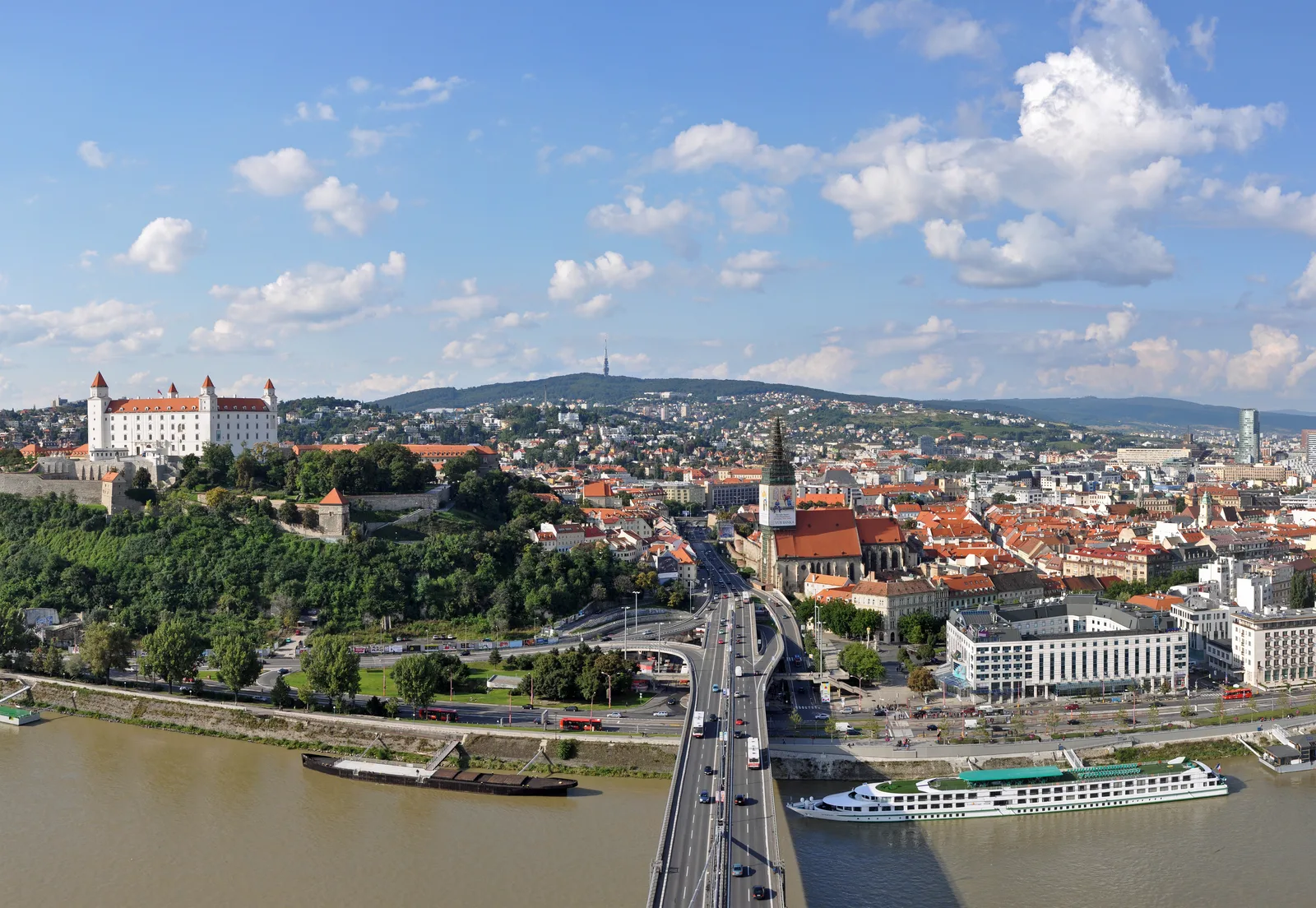
A Danube capital worth more than a stopover
Bratislava rewards visitors who give it a little breathing room. The castle, cathedral and lanes of the old town make an inviting first circuit, but the riverfront, residential districts and countryside within the municipal boundary reveal a broader city. You can spend a compact weekend here without a car, or use a longer visit to examine whether everyday life would suit you.
Its position beside Austria and Hungary makes international travel unusually relevant to ordinary planning. Nevertheless, a nearby airport or foreign workplace brings its own tickets, commuting arrangements and legal questions. Proximity does not make those arrangements automatic.
Start with three days. VisaWand’s Slovakia country guide supplies national context, while its destination page and location directory help you explore alternatives. Directory entries may have practical location information without a completed editorial guide.
Read the city through its changing names
Bratislava’s history becomes clearer when you encounter its earlier names: Prešporok, Pressburg and Pozsony. They reflect the different languages and communities that shaped this Danube city. In 1536 it became the capital of the Kingdom of Hungary; St Martin’s Cathedral subsequently hosted coronations between 1563 and 1830.
The tourist board’s account of the coronation period explains the circumstances behind that role, including Ottoman expansion and proximity to Vienna. Maria Theresa was crowned here in 1741. Look for the small crowns set into the pavement marking part of the ceremonial route.
This history is best read alongside the modern city rather than as a self-contained royal story. Cross the river and the monumental housing of Petržalka offers another chapter, very different from the old town’s palaces.
Choose a base by the journeys you will make
Staré Mesto is the straightforward starting point for a short sightseeing stay. Being near the pedestrian centre puts squares, museums and evening meals within a manageable walking circuit. Establish the exact entrance before booking: cobbles, steps and restricted vehicle access matter when arriving with luggage.
The waterfront around Eurovea combines newer development, shopping and a promenade. Nivy is particularly relevant to coach arrivals. Neither label guarantees that a hotel is beside the stop you need; inspect the actual address and walking route.
For a longer stay, compare individual addresses in Petržalka, Ružinov and Nové Mesto with your workplace or campus. These are extensive districts, not single commuting environments. The city’s welcome package introduces its 17 boroughs and the division between municipal and local responsibilities.
Give Bratislava Castle a proper morning
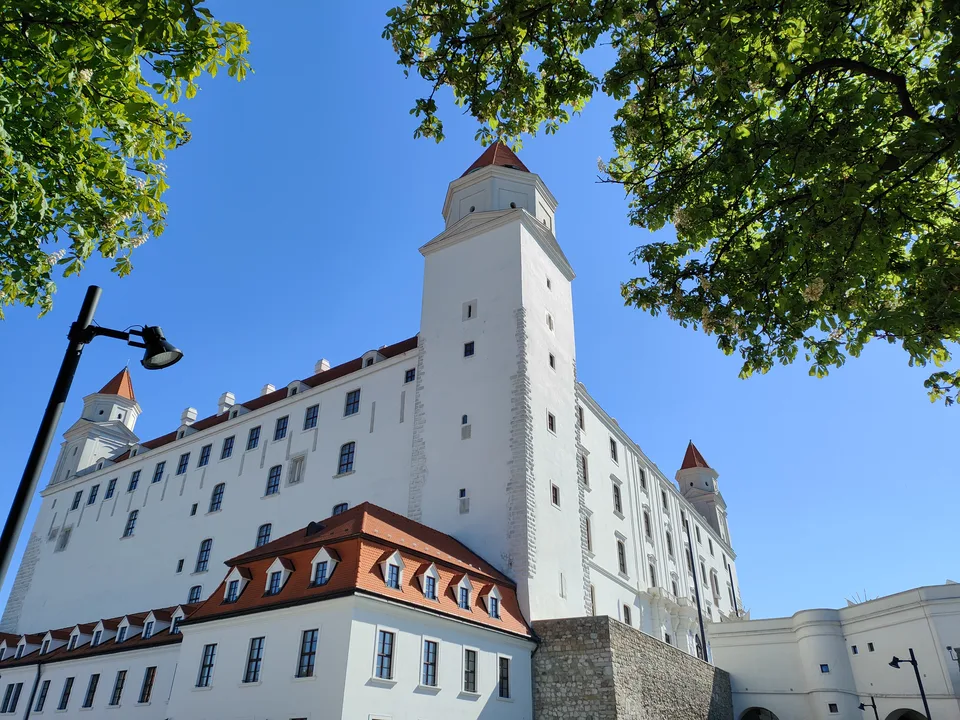
The white castle above the Danube is the city’s most recognisable landmark, but there are several different visits here. Walking the grounds, visiting the garden and entering the Museum of History are separate decisions. Build the uphill approach into your schedule instead of treating arrival at the hill’s foot as arrival at the entrance.
The museum’s adult admission is €14, including the castle interior, Treasury and Northern Walls exhibitions. A cheaper Treasury-only ticket is not the same product. Check the exhibitions before buying if your main interest is a particular subject.
The museum opens Wednesday to Monday, 10:00–18:00, with final entry at 17:00; Tuesday is its regular closing day. Grounds normally open daily, 08:00–22:00. The Baroque garden has shorter seasonal hours, including 09:00–17:00 in October.
Use the Old Town Hall to look beyond façades
Hlavné námestie is an obvious place to pause, but the Old Town Hall offers more context than another photograph of the square. Its museum circuit connects the history of the city with the Apponyi Palace and viticulture displays. That makes it a useful complement to the national perspective at the castle.
The city museum’s published adult price (source unavailable) is €8 for the Old Town Hall–Apponyi Palace circuit. The tower-only ticket is €4; exhibition-hall tickets are different again. Choose deliberately rather than assuming every price displayed covers the whole complex.
Regular hours are Tuesday–Sunday, 10:00–18:00, with last entry half an hour before closing. Holiday exceptions apply. If you have only one museum afternoon, compare the current exhibitions and your interests before filling the day with admissions.
Visit the Blue Church as a working church
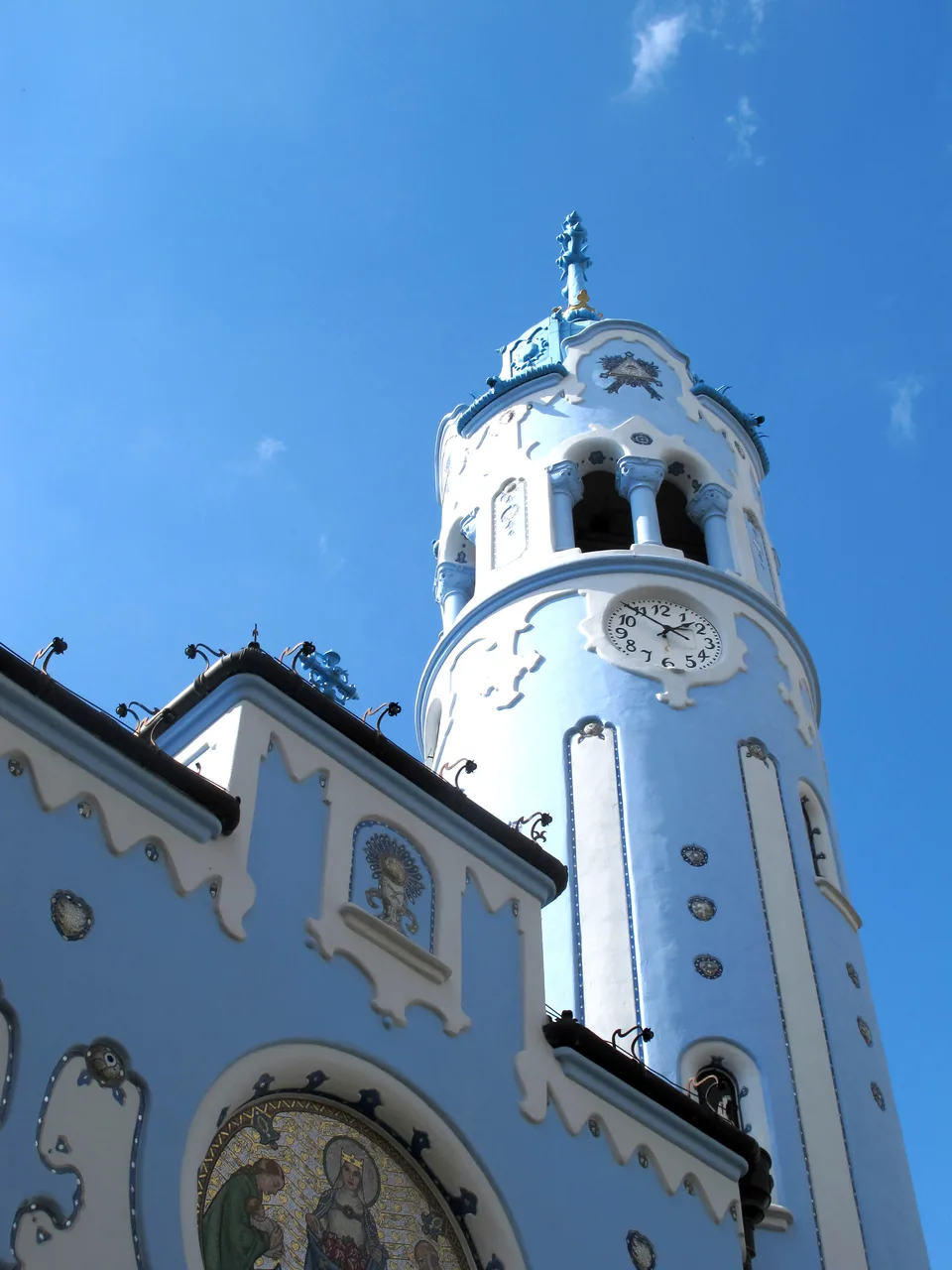
St Elizabeth’s Church on Bezručova Street is an unusually vivid example of Hungarian Secession architecture. Pale blue surfaces, decorative ceramics and the rounded tower make it distinctive even among Bratislava’s varied streets. The tourist board’s architectural introduction identifies its designer as Edmund Lechner and records its consecration in 1913.
An exterior visit is easy to combine with a walk towards the waterfront. Going inside requires more planning. The parish’s own visiting times are Monday–Saturday, 07:00–07:30 and 17:30–19:00; Sunday, 07:30–12:00 and 17:30–19:00.
Use the parish’s information ahead of older tourism timetables. This remains a place of worship: services and private ceremonies take priority, and an open door should not be treated as permission to interrupt them for photographs.
Cross the river for a different perspective
The pedestrian crossing at Most SNP offers a useful transition from the old town to the opposite bank. Looking back helps you understand how the castle, cathedral and river relate to one another. It is also an uncomplicated way to extend a central walk without another museum ticket.
The UFO observation deck is a paid alternative. Its normal adult tariff is €11.50 on weekday mornings before 13:00 and €12.50 later or at weekends. Christmas and New Year pricing differs; tickets are bought at reception rather than reserved online.
The operator’s access information makes an important distinction: the bar and restaurant can accommodate wheelchair users, but the observation terrace has 30 steps and the toilets are not adapted. A lift to the building does not make every part accessible.
Allow half a day for Devín
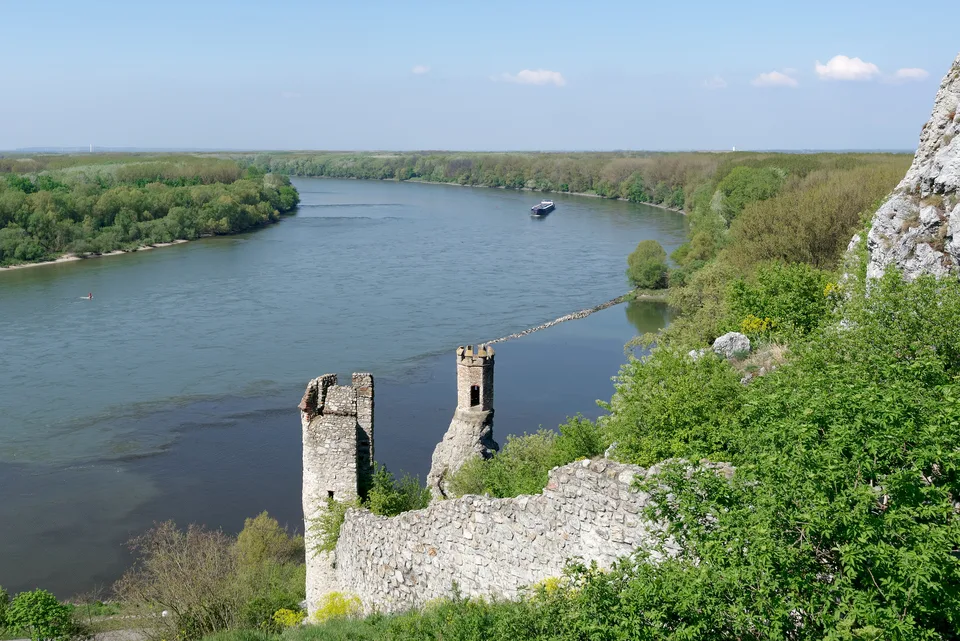
Devín combines ruined fortifications with the meeting of the Morava and Danube. It is a worthwhile change of scale after central Bratislava: the landscape and border setting are as significant as the surviving masonry. Treat it as an excursion, allowing time for the journey and exposed hillside paths.
The castle’s own admission tariff lists €8 for adults from April to October and €6 from November to March. Some older visitor pages show a lower winter price. Event admissions can differ from the ordinary tariff.
In October, opening is Tuesday–Sunday, 10:00–17:00, last entry 16:15. Winter hours shorten further and exhibitions close. Steep sections do not meet wheelchair-access standards; discuss your specific requirements with the castle rather than relying on a general accessibility label.
Make room for art outside the centre
Danubiana offers a different riverside experience at Čunovo. Choose it when contemporary art and a spacious setting appeal more than another central monument. Its location means it deserves its own block of time, rather than being added casually after a late return from Devín.
The museum’s visitor information gives Tuesday–Sunday opening, 10:00–18:00, with final entry at 17:30. Confirm the current exhibitions and admission directly before travelling; individual exhibition programmes change.
Its transport page identifies bus 90 and the Danubiana stop, followed by a short walk. Check the current departure point and timetable for your date. Avoid assuming that every central bus serves the museum, or that a ticket covering a short old-town journey will last for the entire excursion.
Match accommodation to the length of your stay
For two or three nights, paying for a convenient position may save more time than hunting for the lowest room price. Compare a central hotel, a serviced apartment and a property near your arrival station using the same total: room, breakfast, taxes, parking and late-arrival arrangements.
A family should establish sleeping arrangements and kitchen facilities in writing. Ask about lifts and the final stairs between the lift and room if access matters.
For a reconnaissance trip before moving, book somewhere flexible enough to permit neighbourhood visits and apartment viewings. A holiday apartment’s nightly price is not evidence of the local long-term rental market.
Arrive through the right airport
Bratislava Airport and Vienna Airport are distinct options. Compare the whole journey from landing to your accommodation, especially for a late arrival. A cheaper flight can lose its advantage if the last convenient onward service has departed.
Bratislava Airport’s official transport page identifies daytime service 61 to Hlavná stanica, the main railway station, and night service N61. There is no direct airport railway station: the airport describes the connection to trains through bus 61.
For Nivy, Slovak Lines advertises a separate Airport Shuttle, with online fares from €1.90. This is a commercial coach product, not the ordinary city bus fare. For Vienna Airport, consult its official bus connections and the operator’s dated timetable; confirm the actual stop on your ticket.
Keep railway stations and coach stops distinct
When booking a train, retain the complete station name. Bratislava hlavná stanica and Bratislava-Petržalka are different places, on different sides of the city. Work backwards from the station printed on your ticket, leaving time for the final local connection and platform access.
International coaches may use Nivy or other named stops. The Slovak Lines connection page shows several route variants, so do not assume that every departure calls at the airport, main station and Most SNP. Open the timetable for the particular service you plan to take.
A transport pass valid in Bratislava does not automatically cover a ride to Austria. Recheck engineering notices before relying on a familiar train route or an old screenshot of a timetable.
Understand the temporary city fare reduction
Public transport is useful beyond the compact centre, but October 2026 visitors face an unusual pricing distinction. DPB has announced temporary half-price basic city fares from 12 October to 10 November 2026. The measure covers urban zones 100+101 and does not require proof of concession eligibility during that period.
Paper tickets temporarily cost €0.60 for 30 minutes, €0.90 for 60 minutes, €2.70 for 24 hours and €5.35 for 72 hours. The standard prices are €1.20, €1.80, €5.40 and €10.70 respectively. Recheck the operator after the announced end date.
The reduction is not a blanket discount on every regional or international journey. IDS BK’s ticket guidance explains zone and time validity. Validate paper tickets as required and allow enough validity for the complete journey, including transfers.
Pay contactlessly without losing track of validity
DPB’s TAPni sa system lets you buy a ticket using a contactless bank card, phone or watch at a marked validator. A simple tap selects the basic 30-minute product. Select a longer ticket on the screen before paying when the journey requires it.
Transfers are permitted within the ticket’s validity without purchasing again; watch the remaining time. Use the same card or device consistently because the daily cap is tied to that device. Tickets bought for companions do not receive the cardholder’s cap.
During the temporary reduction, a basic 30-minute tap costs €0.55 and the daily cap is €2.43. Maintain a valid ticket even after reaching the cap. TAPni sa covers DPB services, not every regional bus or train participating in the wider integrated system.
Calculate whether the city card suits your plans
The 2026 Bratislava CARD leaflet lists transport-inclusive prices of €30, €36 and €39 for 24, 48 and 72 hours. Versions without transport cost €27, €32 and €35. Start with your likely visits rather than the maximum savings printed in promotional examples.
The current benefits guide includes the castle museum, Old Town Hall and Devín among its free attractions. Free benefits are generally usable once; activation starts the continuous validity period. Check opening days before activating, particularly for a Monday or Tuesday visit.
A transport-inclusive card covers the specified IDS BK network, not a Vienna airport coach. The temporary cheap city fares also change the calculation. If you mainly want walks and one museum, separate tickets may be the better choice; a fuller museum programme deserves an actual comparison.
Eat and shop with a sense of place
Bratislava rolls are a good introduction to local baking. The tourist board’s account of the traditional pastry identifies poppy-seed and walnut fillings. Ask which is which rather than assuming that every crescent-shaped pastry contains the same thing, particularly if nuts are an allergy concern.
For food shopping with a more social atmosphere, visit the Old Market Hall on Saturday. Its current market programme gives 09:00–15:00 opening, free admission and exceptions around Christmas and New Year. Expect producers, specialist foods and an upstairs book exchange; this is not a daily indoor grocery market.
Compare displayed menus before sitting down and check whether a lunch offer includes drinks or additional courses. For an apartment stay, balance restaurant meals with groceries instead of relying on an invented universal daily food allowance.
Build a budget from specific choices
Accommodation is likely to make the largest difference between two otherwise similar visits. Compare complete quotes for your dates, then add the attractions you actually intend to enter. Museum prices make this more useful than a vague claim that Bratislava is cheap.
For example, the castle museum (€14), Old Town Hall circuit (€8) and Devín in October (€8) total €30 in adult admissions before transport, food or accommodation. This is a planning example across several days, not a package or a recommendation to rush all three.
Leave room for café stops, luggage storage and an occasional taxi when necessary. A city card, a transport day ticket and a hotel breakfast are different purchases solving different problems. Evaluate each against your own programme, including any concession you can actually document.
Choose the season for the visit you want
Bratislava has warm summers and cold winters. Spring and early autumn are attractive choices for combining walking with museums, while summer calls for water, shade and a less ambitious midday programme. Riverside and hillside conditions can feel different from sheltered central streets.
The tourist board’s autumn introduction connects the season with wine traditions in the city and Small Carpathians. Check individual event dates rather than booking around an annual festival name alone. Winter brings shorter attraction hours and a greater need for indoor alternatives.
Use SHMÚ’s Bratislava forecast shortly before travelling, particularly for Devín or other exposed outings. A forecast is more relevant to tomorrow’s plans than an unlabelled historical average. Leave flexibility to swap an outdoor day with a museum day.
A realistic three-day first visit
On day one, settle in and walk the old town: Hlavné námestie, the cathedral surroundings and the streets between them. Choose the Old Town Hall if its programme interests you. Continue towards the Blue Church, fitting an interior visit around the parish’s limited visiting windows.
Reserve day two for the castle museum and grounds, followed by the Danube waterfront. Cross Most SNP for a view back towards the centre; add the UFO only if conditions and your budget make the paid viewpoint worthwhile.
On day three, choose Devín or Danubiana rather than trying to force both into the same excursion. Substitute the Saturday market when appropriate. This is an editorial itinerary, not a timed tour: rearrange it around Tuesday castle closure, Monday museum closures, weather and your departure.
Examine housing through the full household bill
Before moving, distinguish a furnished short stay from a residential lease. Request a written breakdown of rent, heating, water, electricity, internet, deposit and any agency charge. Establish how advances are reconciled with actual consumption and who receives the bills.
IOM’s rental introduction is useful on these basic questions, but its older examples should not be treated as current market prices or universal contract terms. Inspect the property and obtain advice on the actual agreement before transferring a substantial deposit.
If accommodation evidence is needed for immigration, discuss it before signing. Residence applications have specific documentation requirements, potentially including notarised signatures or an accommodation provider’s confirmation. The city’s housing-services pages describe municipal programmes; they are not an assurance that a newcomer will receive a public rental flat.
Test commuting and essential services before committing
A promising apartment can look different after a trial commute. Travel from the address at the time you would normally leave, including the walk to the stop, any transfer and the final approach. Compare this with school or childcare journeys rather than judging the household around one person’s route alone.
For drivers, read PAAS parking-card eligibility carefully. A lease does not automatically qualify someone for resident parking: permanent address and other property and vehicle conditions matter. A card also does not reserve a space outside the building.
Before moving in, confirm broadband availability, heating controls, meter readings, waste arrangements and appliance inventories. Identify the relevant borough office for local services. Keep the landlord’s and building manager’s contacts alongside the documents you will need for banking and registration.
Arrange healthcare for your actual status
Visitors and residents need different arrangements. An eligible visitor’s EHIC supports access to contracted healthcare under applicable local conditions; it should not be treated as universal private cover or a substitute for appropriate travel insurance. Check your own entitlement before departure.
For a move, ask the insurer or employer when your coverage begins and how to register with providers. VšZP’s eligibility guidance sets conditions for foreign employees and self-employed people; simply renting a flat does not settle public-insurance entitlement. The public administration portal provides an English-language starting point.
Families should identify a doctor and discuss ongoing prescriptions before relocating. Ask clinics about language availability and appointment procedures rather than assuming English service everywhere. For an emergency, the city’s welcome material identifies 112; routine administrative questions belong with the relevant provider.
Separate a visit from permission to live and work
For travellers covered by the Schengen short-stay framework, the Slovak Foreign Ministry explains the rolling 90-days-in-180 rule. Days elsewhere in the Schengen area matter too. Visa validity and permitted days of stay are different things; check nationality-specific entry requirements and the conditions on any issued visa.
Third-country nationals planning employment, study, business or family residence should use the purpose-specific residence guidance. Tourist admission does not establish permission to take a local job, and permanent residence has separate eligibility requirements.
EU, EEA and Swiss citizens follow different rules. IOM’s current Union-citizen guidance explains registration after three months. Arrival reporting is another obligation: deadlines differ by status, and accommodation providers normally report guests in their facilities. For individual advice, compare relevant VisaWand consultant listings without assuming a listing is a government authority.
Consider nearby places without blurring the borders
Bratislava makes a useful starting point for exploring beyond the central sightseeing circuit. Pezinok and the Small Carpathians may appeal for a slower regional excursion; verify transport zones, opening times and any pre-booked activity before setting out.
Vienna’s city guide offers a contrasting capital nearby, while Budapest’s guide helps plan a longer onward journey. Compare their museums, accommodation and travel connections with the time you actually have. Border proximity should encourage sensible planning, not a schedule spent mostly changing vehicles.
For someone considering a move, visit possible residential areas separately from the holiday circuit. A comfortable weekend demonstrates that the city is enjoyable to visit; checking the lease, commute, healthcare and legal route provides the evidence needed for a longer commitment.
Official planning resources
Reviewed 15 October 2026. Use the official resources linked throughout this guide for admission, transport, housing and immigration decisions. Prices, services and rules can change; confirm the details relevant to your dates. Photography illustrates the locations and is not a live view.
View all official resources
- DPB: temporary half-price fares, October 2026
- IDS BK: single tickets
- DPB: TAPni sa contactless ticketing
- Bratislava Airport: connections
- Slovak National Museum: opening hours
- Slovak National Museum: admission
- Devin Castle: official admission
- Bratislava Tourist Board: 2026 city-card leaflet
- Bratislava Tourist Board: 2026 card guide
- Bratislava Tourist Board: coronation history
- Bratislava Tourist Board: traditional rolls
- Bratislava Tourist Board: autumn travel
- Slovak Foreign Ministry: residence types
- Slovak Foreign Ministry: Schengen visas
- IOM Migration Information Centre: residence applications
- City of Bratislava: welcome package
- Devin Castle: seasonal opening hours
- Devin Castle: accessibility
- Bratislava City Museum: Old Town Hall (source unavailable)
- IOM: Union citizens residence
- IOM: arrival and reporting duties
- Vienna Airport: bus connections
- Slovak Lines: Bratislava connections
- Slovak Lines: airport shuttle
- Blue Church parish: visiting
- Bratislava Tourist Board: Blue Church architecture
- Danubiana: visitor information
- Danubiana: bus access
- Old Market Hall: Saturday food market
- PAAS: parking-card eligibility
- City of Bratislava: housing services
- IOM: renting a flat
- UFO: official admission prices
- UFO: practical access
- SHMU: Bratislava forecast
- VszP: public health-insurance eligibility
- Slovak public portal: health insurance
Plan the next part of your journey
Explore the Slovakia guide, browse other cities or compare consultants for your travel and relocation questions.