Visa
Budapest at a glance
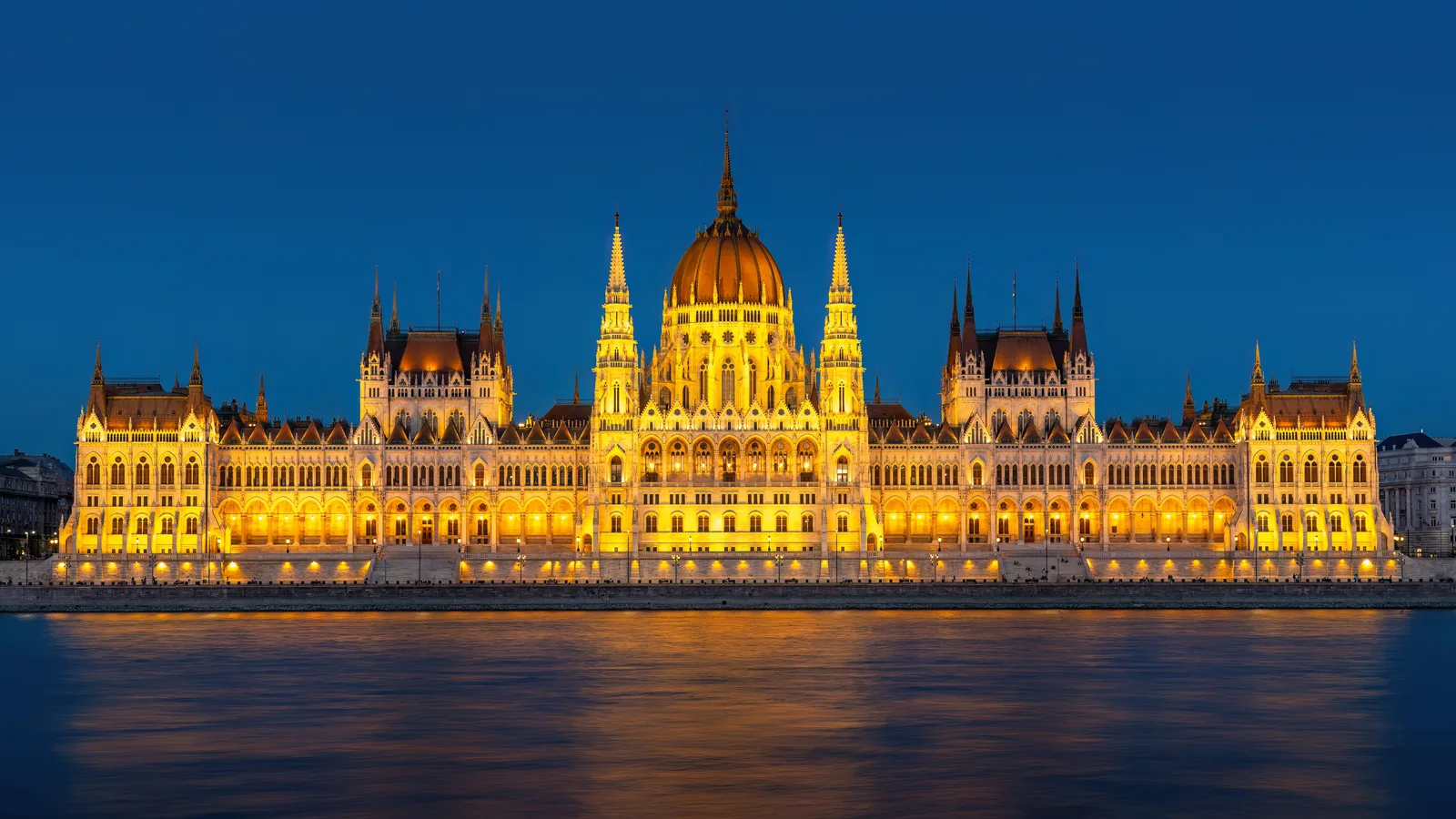
Budapest’s geography gives a first visit its shape. Buda occupies the hilly western side of the Danube; Pest spreads across flatter ground to the east. Between them, bridges frame views of Parliament and the Castle District. Hungary’s capital is a place to combine architectural walks with a substantial museum visit, a bath session or an evening programme, rather than spend every hour travelling between landmarks.
Three days provide a workable introduction if you group activities by area. Four or five allow a slower cultural visit or an outing beyond the city. The main decision is whether you want a compact central base, an evening-focused district or accommodation that suits a longer stay. A beautiful river view does not establish how well an address will work for an ordinary commute.
Use the Hungary country guide for national planning, Hungary destination information for the next stage of a visa enquiry, and the Hungary location directory to identify other places. Consultant listings can help with an individual application. This article concerns Budapest and clearly identified nearby destinations; it does not treat a city break as proof that moving here will suit your household.
How the city came together
UNESCO’s account of Budapest explains why the two riverbanks feel different. Buda’s castle quarter retains medieval and Baroque characteristics, while Pest’s streets and major public buildings express the expansion of a later metropolis. The union of Buda, Pest and Óbuda in 1873 brought those distinct urban identities into one city.
The nineteenth-century transformation is visible along Andrássy Avenue and in Parliament’s monumental riverfront presence. The underground railway beneath the avenue belongs to that same period of growth. These are useful historical connections to make while walking, without assuming that every impressive building belongs to the same era or survived without reconstruction.
The World Heritage property comprises the Danube banks, Buda Castle Quarter and Andrássy Avenue, with defined boundaries. The designation should not be applied indiscriminately to the whole city. Give the river landscape an unhurried viewing period, then choose one interior that helps explain it. A short visit becomes more memorable when architecture has context rather than simply supplying a sequence of photographs.
Areas to consider for your base
Central Pest suits visitors who want several transport connections and access to the riverfront, shopping streets and evening plans. Deák Ferenc tér is a useful transport reference when comparing addresses. A property described as central still needs an exact-location check: the walk from a stop with luggage can differ considerably from a map’s straight-line distance.
The Castle District offers a different setting, with historic streets, views and gradients. Choose it if time in Buda is central to the visit, while accounting for journeys across the river. An attractive hilltop room should be assessed alongside the entrance steps, local transport and the return route after dinner.
The national tourism authority identifies District VII as an important evening and ruin-pub area. That can be convenient for nightlife, but room orientation and sound insulation matter if you prefer early nights. The Andrássy and City Park corridor offers another focus for culture and bathing. Compare addresses by your planned activities, rather than treating a district number as a guarantee of atmosphere, value or quiet.
Accommodation choices and room checks
A hotel works well when staffed arrival, luggage storage and a straightforward breakfast simplify a short visit. An apartment can be useful for a family or a longer stay if its kitchen, laundry and sleeping arrangements are genuinely suitable. Compare the final quoted price, cancellation conditions and any separately charged services before settling on a property.
Ask whether photographs represent the actual unit and whether there is a lift from street level. For a summer booking, confirm the room’s cooling arrangements; for colder months, ask about heating and window condition. A courtyard-facing room may reduce exposure to street activity, but its daylight and ventilation still deserve attention.
Anyone arriving late should confirm check-in instructions and how assistance is provided if a key or access code fails. A room near your main appointments can justify a higher rate by reducing daily journeys. A cheaper outer address needs a realistic transport comparison. Keep accommodation flexible while confirming the experiences that matter most, especially when a particular timed visit would determine your whole day.
Arriving through Budapest Airport
BKK’s airport connection information describes the 100E Airport Express as a round-the-clock link between Liszt Ferenc International Airport and Deák Ferenc tér, via Kálvin tér. The standard airport ticket currently costs HUF 2,500. Select your stop by the actual accommodation address and allow separately for the final walk or connection.
The 200E also operates around the clock, using the regular ticket or pass arrangement. It requires an onward journey for many central addresses, so compare the complete route in the current journey planner. The special airport shuttle ticket is not valid on 200E, and an ordinary city travelcard should not be assumed to cover 100E.
Eligible pass holders can buy a HUF 1,000 airport add-on in BudapestGO. The airport add-on rules specify valid Budapest-passes, Pest County Passes or Hungary Passes; other products do not automatically qualify. That distinction matters for a visitor buying a 24- or 72-hour travelcard. On departure, budget time for the road journey, terminal procedures and airline requirements rather than relying on a fixed airport-transfer estimate.
Understanding tickets before boarding
The current BKK fare catalogue lists a standard single ticket at HUF 500 and an onboard single at HUF 700. A block of ten costs HUF 4,500. These figures are useful for a walking-heavy trip, but the single-ticket rules are crucial: it covers one uninterrupted street-level vehicle journey, with a limited exception for transfers between metro lines in one direction.
Paper tickets need validation before entering the metro’s paid area or when boarding other services. A ticket in your pocket is not equivalent to a validated journey. Digital products have their own scanning and inspection procedure, and an active internet connection is required for mobile single tickets. Follow the instructions for the product you bought.
For repeated sightseeing journeys, the 24-hour travelcard is HUF 2,750 and the 72-hour version HUF 5,750. These allow unlimited eligible trips during their validity, but special services have separate rules. Time-based tickets are another option: HUF 600 for 30 minutes or HUF 850 for 90 minutes, with validation at each transfer. Choose according to your movements, not simply the shortest duration or lowest headline price.
Walking, accessibility and daily journeys
The Danube is an excellent orientation aid, but a map can conceal Buda’s climbs and the length of a bridge crossing. Divide a walking day into an area to explore, a place to eat and an optional additional stop. Use transport when it preserves energy for the experience you came to see.
BKK’s accessibility information should guide anyone who needs a step-free route. Check the whole journey, including the station entrance, transfer and pavement approach, rather than assuming that an accessible vehicle resolves every obstacle. The same approach helps families with a pushchair and travellers carrying luggage.
For a longer stay, test a weekday journey at the hours you would actually travel. The published full-price monthly Budapest-pass is HUF 8,950; eligibility and identification requirements for discounted products need separate checks. Night transport can change the practicality of an address, especially after an evening shift or performance. Review the current planner and service notices before making a housing decision around an expected connection.
The Castle District without rushing
The national tourism authority’s Castle District information brings together Buda Castle, Matthias Church and Fisherman’s Bastion. Their combination of built heritage and viewpoints merits a substantial block of time. Plan the district as an area, with room to pause and choose an interior, rather than attempt it as a brief detour between two Pest bookings.
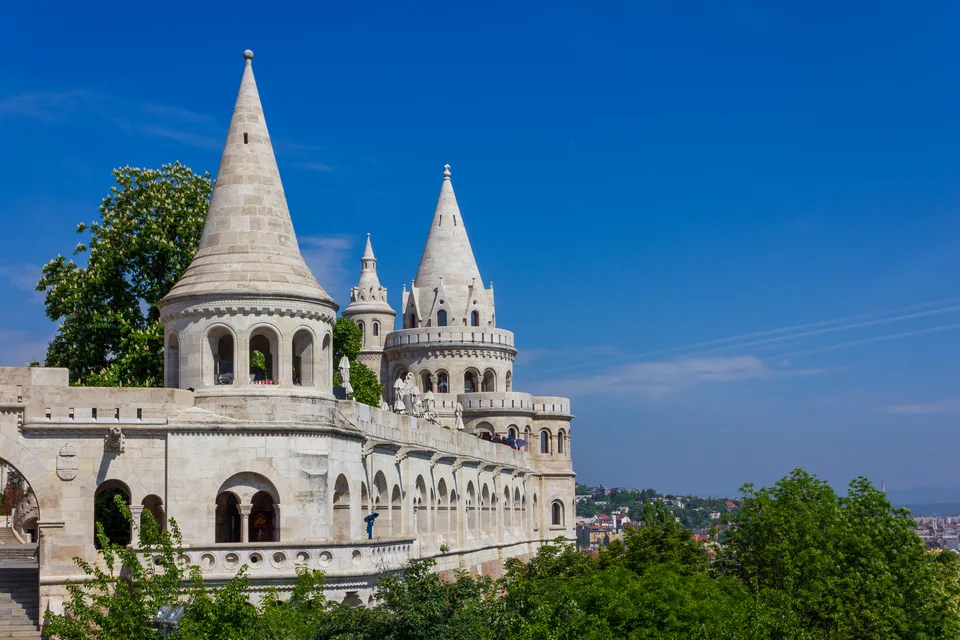
The arcades and towers of Fisherman’s Bastion provide a memorable architectural setting above the river. Individual sights, upper terraces and interior experiences can have different admission arrangements; verify the specific access you want before assuming one purchase covers everything. The photograph here dates from May 2014 and illustrates the structure, not today’s construction or visitor conditions.
Choose between a church visit, an art collection or another historical interior according to your interests. The Hungarian National Gallery is associated with Buda Castle, but its current exhibition access and opening arrangements should be checked before you build a day around it. Leave a transport alternative for the uphill approach and return. A hilltop view is easier to enjoy when the schedule is not forcing an immediate sprint elsewhere.
Parliament, Andrássy and City Park
Parliament’s Danube-facing silhouette is one of Budapest’s defining sights, and an exterior viewing stop works independently of an interior tour. If a tour is essential, obtain current availability, language, price and identification instructions from the official Parliament visitor service before arranging other reservations. Interior tariffs are not quoted here because the current booking information could not be reliably verified.
Andrássy Avenue provides another coherent walking and transport corridor, leading towards Heroes’ Square and City Park. Its architectural setting makes sense alongside the historical underground line. At the park end, the Museum of Fine Arts and other cultural venues give you choices beyond another river viewpoint; select a collection or exhibition before arriving, then check that institution’s current programme.
City Park can also provide breathing space between indoor visits. Pair it with either a cultural experience or a bath, allowing lunch and the return journey. Combining several large interiors, a full bath session and an evening performance into one day leaves little room to absorb any of them. Choose an anchor and let the rest of the area supply a flexible second half.
Thermal baths and current restrictions
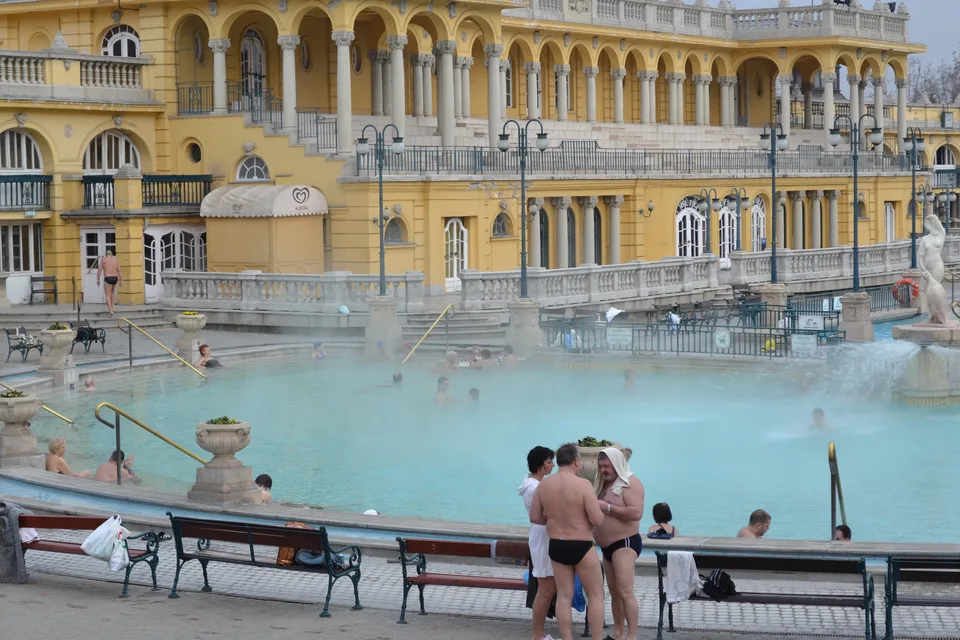
Széchenyi’s operator currently lists the standard daily ticket with a locker at HUF 13,200 Monday–Thursday, HUF 14,800 on Fridays and weekends, and HUF 15,800 during holidays and peak periods. Fast-track and other packages cost more. Match the date and product to the current bath price list before paying; an upgrade is not required merely to enjoy the building and pools.
The operator’s bath FAQ says children under 14 are not admitted for an ordinary leisure visit. A narrow specialist-medical-certificate exception requires prior approval, so families should choose a suitable alternative rather than arrive expecting the outdoor pools to be exempt. The building is also not fully barrier-free; ask about your particular access requirements before booking.
Bring swimwear, a towel and slippers; the operator says equipment rental is unavailable. A cap is required for the lap pool. The current pool availability notice closes that pool for maintenance from 8–23 October 2026, while listing other pools separately. Gellért’s closure notice says that bath has been shut since October 2025, with reopening planned for 2028. Older itineraries recommending an immediate Gellért visit should therefore be treated cautiously.
Food and the Central Market Hall
Hungarian food is a useful part of the trip when approached through actual menus. The official food and etiquette overview introduces goulash soup, lángos with sour cream and cheese, and sweet chimney cake. Look beyond that familiar trio if a menu interests you, but confirm ingredients for dietary requirements rather than assuming a dish’s name establishes its recipe.
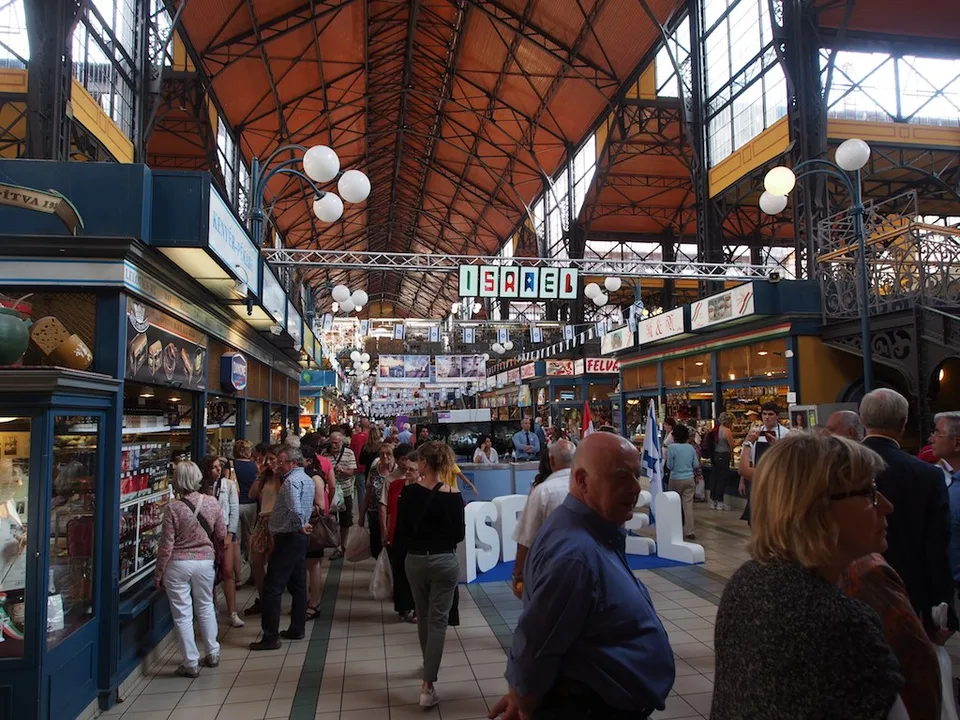
The Central Market Hall offers a combined food-shopping and architectural stop. The market operator confirms free entry at Vámház körút 1–3 and closure on public holidays. Its dedicated English and Hungarian pages publish Sunday hours, while a separate general opening-hours page gives a conflicting schedule. Confirm with the operator before relying on a Sunday visit, and remember that individual stalls can keep shorter hours.
Compare displayed prices and what a portion includes before ordering. A stall purchase, a café break and a planned restaurant dinner can make a more varied day than choosing every meal beside a principal attraction. For an apartment stay, grocery shopping also tests the practical usefulness of your kitchen and neighbourhood. The market photograph is from August 2013; current stalls and stock may differ.
Shopping, money and a transparent budget
Hungary uses the forint, shown as HUF or Ft. The tourism authority’s money information notes that some businesses accept euros, but their conversion rates may be unfavourable and change can be given in forints. Keep your budget in HUF, check payment methods and carry useful smaller denominations for purchases that require cash.
A three-day transport example is straightforward: a HUF 5,750 travelcard plus two standard 100E airport journeys at HUF 2,500 each totals HUF 10,750. Add a standard Monday–Thursday Széchenyi locker ticket at HUF 13,200 and those selected items reach HUF 23,950. This subtotal excludes accommodation, food, other admissions and extras, and the bath price changes by day category.
Use real accommodation quotes and current menus to complete the calculation. A sightseeing discount card has its own included attractions and terms; compare the benefits you will actually use instead of treating it as interchangeable with a transport travelcard. For souvenirs, consider how an item will travel and any food-import restrictions at your next destination. Leave a reserve for a changed connection or alternative indoor plan.
Weather and choosing your dates
The national weather overview describes a variable temperate climate, with January the coldest month and July and August the warmest. Those national patterns are useful for preparation but are not a Budapest street-level forecast. Summer walking can require shade and rest; winter riverfront and hilltop stops need suitable warm clothing.
Spring or autumn may suit a visit focused on long walks, provided you keep flexibility for rain and cooler evenings. An indoor cultural programme can work in colder months, but confirm holiday schedules and daylight before adding a hill walk. Pack for your planned activities: wet paving, outdoor transfers and time around a pool require different equipment from a restaurant evening.
Check the short-range forecast shortly before travelling, then adjust the order of your days. A poor-weather morning can become a museum period, while a clearer interval can suit the Castle District. Do not assume a thermal-bath ticket guarantees every pool is available in every season. Current maintenance notices and operating restrictions remain relevant even when the weather looks ideal.
A realistic three-day introduction
Day one: establish the river and central Pest on foot, then choose a confirmed Parliament interior visit if it is available and important to you. Otherwise, keep the building as an exterior stop. Have lunch before following part of the Andrássy corridor towards Heroes’ Square and City Park. Pick one cultural visit or a relaxed park period, leaving the evening for dinner.
Day two: devote the main morning block to the Castle District, accounting for the uphill approach. Combine Fisherman’s Bastion’s setting with one interior that suits your interests, then pause for lunch. Spend the afternoon on the river landscape or a different neighbourhood rather than adding a second long museum automatically. Confirm any performance or live-music programme and the return route in advance.
Day three: choose a bath session if the age rules, access and available services work for your group. Allow changing and rest time afterwards. Fit the Central Market Hall into an operating period, or move it to another day if a holiday or uncertain Sunday schedule intervenes. Families who skip the bath can substitute a chosen cultural venue. This plan leaves time for meals and travel rather than stacking consecutive appointments.
Preparing for a longer stay
Compare a proposed home with the actual workplace or campus journey before paying a deposit. A trial weekday commute is more useful than a weekend taxi ride. The Budapest rental listings on ingatlan.com provide asking prices and property details for comparison; an advertisement does not verify a landlord, availability or the suitability of a lease.
Ask for a written agreement that you understand, clarify deposit and notice terms, and establish who can legally let the property. Calculate rent alongside heating, electricity, water, internet and any building charges. Record the condition, meter readings and included furnishings at handover. Check the practical essentials: lift access, washing facilities, cooking equipment, ventilation and the precise broadband connection.
Arrange healthcare and insurance according to your status rather than assuming that residence or employment automatically settles every entitlement. Identify how to contact a local doctor and obtain repeat medication before a move. Families should confirm school availability and language provision directly. Keep temporary accommodation long enough to complete those checks, and ask what address documentation a tenancy can supply for the applicable registration or immigration process.
Tourism, work and nearby alternatives
Hungary’s immigration authority’s short-stay information describes the general Schengen limit for eligible third-country visitors as 90 days in any 180-day period. Nationality, travel documents and previous Schengen stays affect your position. Do not treat a move between Schengen countries as a fresh allowance, or a tourist stay as automatic permission for employment, study or permanent settlement.
Use the relevant immigration route for your purpose. The White Card guidance concerns eligible remote work connected to a foreign employer or foreign business and sets specific conditions; it is not a general entitlement to take Hungarian employment. EEA citizens and family members have a separate framework. Check the current official requirements and application route before signing commitments that depend on approval. The Enter Hungary portal handles applicable residence applications; follow the instructions for your category.
For an outing beyond Budapest, the official Szentendre overview introduces a smaller Danube-side town with galleries and an established artistic history. Check the full journey and any suburban fare beyond the Budapest boundary. The Ferenczy Museum and Margit Kovács ceramics collection give an art-focused visit a more specific purpose than simply leaving the capital. Check their current exhibitions and opening times before travelling; a riverside walk can fill the rest of the outing without requiring another paid stop. Allow a full, flexible day if several collections interest you, and avoid pairing it with a tightly timed evening reservation back in Budapest. This is a separate town with its own programme, not an outer neighbourhood to squeeze between central appointments. Carry the ticket needed for the complete return journey.
For a different city break, compare the Vienna city guide or Prague city guide, while planning entry conditions for your complete itinerary. Browse consultant listings if the next step is an application rather than a holiday booking.
Official planning resources
Reviewed 14 October 2026. Use the official resources linked throughout this guide for admission, transport, housing and immigration decisions. Prices, services and rules can change; confirm the details relevant to your dates. Photography illustrates the locations and is not a live view.
View all official resources
- UNESCO Budapest World Heritage boundaries, geography and history
- Visit Hungary Budapest neighbourhoods and principal cultural areas
- BKK 100E and 200E airport routes and ticket arrangements
- BKK airport add-on eligible passes and validation requirements
- BKK current ticket, travelcard and pass prices
- BKK single-ticket validity, transfers and validation
- BKK visitor guide to time-based tickets, travelcards and official sales
- BKK accessible transport and journey planning
- Visit Hungary Castle District and Andrassy heritage overview
- Hungarian Parliament official visitor service; verification may be requested
- Szechenyi Bath 2026 prices and locker-ticket categories
- Szechenyi Bath current age, accessibility, equipment and admission rules
- Szechenyi current services and October 2026 lap-pool maintenance
- Gellert Bath closure and planned 2028 reopening
- Visit Hungary food, street-food dishes and visitor etiquette
- Budapest Market Halls Central Market Hall location, free entry and dedicated hours
- Budapest Market Halls general hours; conflicts with dedicated Central Market Hall schedule
- Visit Hungary forint currency and payment information
- Visit Hungary national climate overview credited to HungaroMet
- Ingatlan Budapest asking-rent advertisements; not verified tenancy offers
- Hungarian immigration authority short-stay Schengen rules and limited bilateral exceptions
- Hungarian immigration authority White Card remote-work eligibility and application conditions
- Official Enter Hungary electronic residence-application portal
- Visit Hungary Szentendre riverside setting and artistic collections
Plan the next part of your journey
Explore the Hungary guide, browse other cities or compare consultants for your travel and relocation questions.