Visa
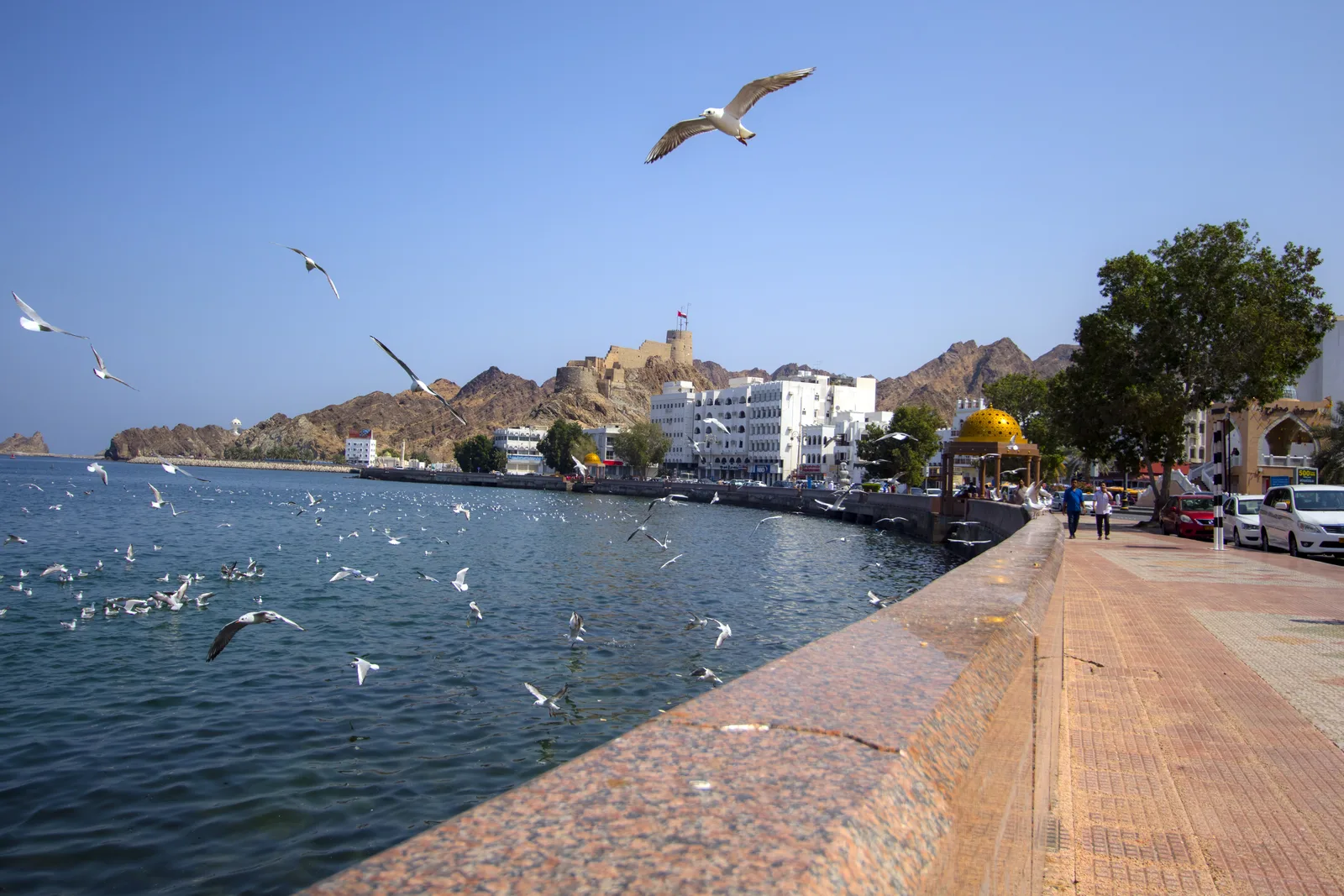
Muscat makes more sense when you follow the coastline
Muscat reveals itself in stretches: a harbour edged by white buildings, a road passing through bare hills, a mosque garden and a neighbourhood facing the sea. The appeal lies in that relationship between landscape and everyday life. Visitors can combine museums, markets and architecture without making every day an expedition into the desert.
The practical challenge is distance. Old Muscat, Muttrah, Qurum, Al Khuwair and the airport area serve different purposes. A hotel described as being in Muscat may be convenient for one part of your trip and awkward for another. Decide what you want to do before choosing an address.
Three nights allow a measured introduction, provided flights and conditions permit. A longer visit gives you room for an excursion or quieter days by the coast. For a prospective resident, the same trip can test commuting and household routines alongside sightseeing. Start with VisaWand’s Oman country guide for wider context.
Check current conditions before fixing your plans
Travel arrangements need particular attention at the time of writing. On 15 October 2026, the UK Foreign Office’s Oman advice describes regional attacks, including in Oman, and warns of possible flight cancellations, airspace closures and further disruption. These conditions can change independently of a hotel’s availability or an attraction’s advertised hours.
Check your own government’s advice, your airline’s operating information and insurance terms before making commitments. Consider how you would manage a changed departure date, including accommodation, medication and access to funds. Choose cancellation terms with that possibility in mind.
This guide’s suggested routes assume ordinary access and suitable conditions; they are planning options rather than assurances that a particular flight or outing will operate. Local instructions take priority over a saved itinerary. Avoid military and security facilities, and check current advice again close to departure.
Separate the old port from the wider capital
The Oman Foreign Ministry’s regional overview places Muscat on the Sea of Oman and describes its long role in maritime trade. It dates the capital’s establishment to 1793 and the expansion of modern infrastructure to the period following Sultan Qaboos’s accession in 1970. Those layers help explain the contrast between the historic harbour districts and newer commercial areas.
Muscat Governorate includes six wilayats: Muscat, Muttrah, Bawshar, Seeb, Al Amirat and Qurayyat. The old city is one part of this much larger administrative area. Treating every attraction across the governorate as a neighbouring central-city stop creates unrealistic plans.
Look for the differences as you travel: waterfront trading streets, government and cultural buildings, residential roads and shopping districts. They tell a more useful story than a single founding legend or a claim that the entire capital is an untouched historic town. Allow the museum to supply context before adding distant monuments.
Choose a base around your actual journeys
Muttrah suits travellers who want time around the harbour and souq. Old Muscat works for a concentrated visit to the National Museum and palace surroundings. These are related historic areas, but they do not remove the need to plan transport to the mosque, opera house or airport.
Qurum puts a beach promenade into the picture, while Al Khuwair is a practical area to investigate for serviced accommodation and access to offices. The Foreign Ministry identifies Al Khuwair as an important administrative district. Seeb and airport-area accommodation deserve consideration when onward travel or a western workplace matters more than the old harbour.
Check the precise map pin, the entrance and the surrounding roads. Ask your accommodation to explain the journey in both directions, including any difficult crossing, rather than relying only on a straight-line distance shown in search results. Ask whether a café, supermarket or bus stop is reachable by a sensible walking route. A short distance across a highway may be less convenient than a longer route within one neighbourhood. Residents should repeat this exercise for school and work.
Give Muttrah’s harbour and souq unhurried time
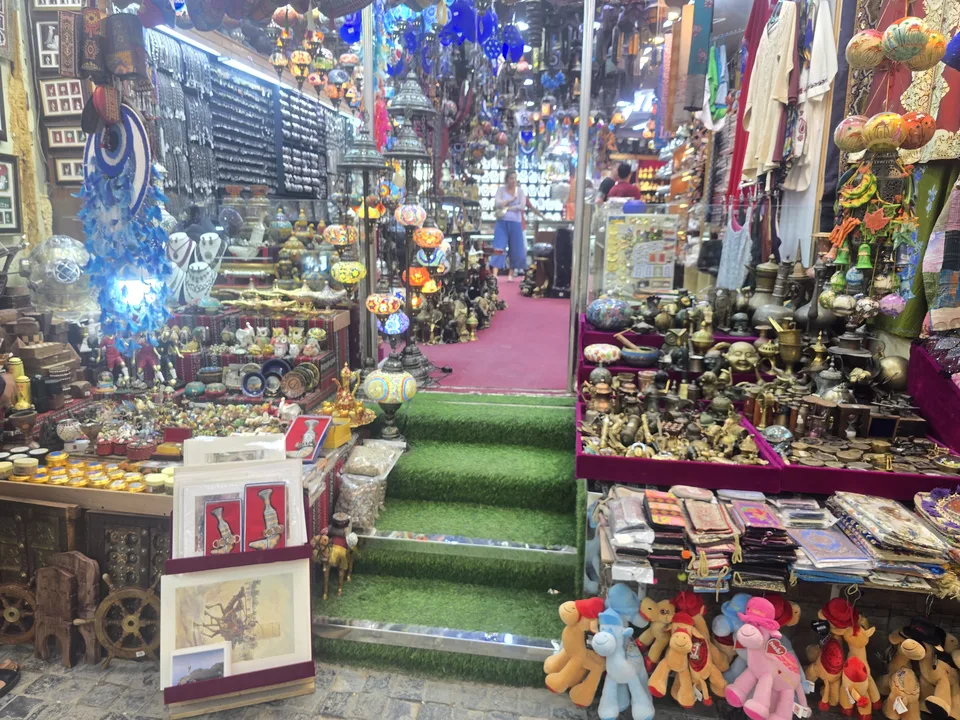
Muttrah is a rewarding place to begin with observation rather than a shopping list. Walk the waterfront in comfortable weather, then explore the market streets. The official Mutrah Souq destination page locates the market, while the Foreign Ministry’s regional account explains its historic importance to trade.
Individual businesses set their own opening patterns. If a particular purchase matters, check the shop directly rather than treating a general market listing as a guarantee. Leave time to compare goods and ask questions about materials, manufacture and price. A souvenir displayed in Oman is not automatically made there.
For jewellery or expensive objects, request an itemised receipt and a clear description. Check transport and customs requirements before buying anything that may be restricted or awkward to carry. You can enjoy the souq’s variety without purchasing, and a relaxed circuit is often more useful than rushing between shops before a transfer.
Use the National Museum to understand what you see
The National Museum stands opposite Al Alam Palace in Old Muscat. Its collections provide an organised introduction to Oman’s heritage, making it a useful early stop for visitors who want more than photographs of impressive buildings. Give the galleries enough time to connect objects with the landscapes and traditions you encounter elsewhere.
The museum’s dedicated visiting page currently publishes daily hours of 10am–5pm, with the ticket desk closing at 4.30pm. Its FAQ retains a different Friday timetable, so check directly before a Friday or holiday visit rather than relying on that older answer.
Published admission fees are OMR5 for tourists, OMR2 for residents and OMR1 for adult Omani and GCC citizens, with the appropriate identification. GCC citizenship and residence are different categories. The museum specifies Visa or Mastercard payment. Check any exemption that might apply to your party separately, and carry the evidence required.
Plan the Grand Mosque around its visitor window
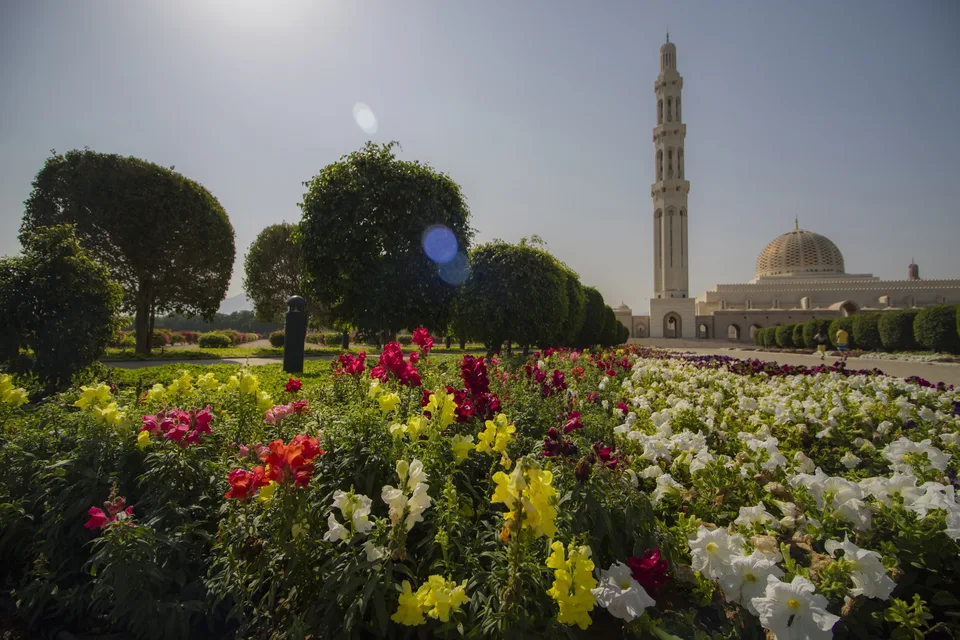
Sultan Qaboos Grand Mosque is in Bawshar, away from the old harbour. The Diwan of Royal Court’s mosque website describes its marble prayer hall, decorated corridors and calligraphy. The gardens and exterior deserve attention too; allow time to move through the site respectfully rather than aiming only for one interior photograph.
For non-Muslim visitors, the Diwan publishes 8.30–11am daily except Friday. Experience Oman gives an earlier opening of 8am; planning within the shared 8.30–11am window avoids depending on that discrepancy. Confirm arrangements for holidays and special circumstances.
The tourism authority currently lists OMR8 admission, so older descriptions of universally free visitor entry should not determine your budget. Dress modestly, with women covering their hair, and remove footwear where required for the prayer hall. Follow current photography instructions and give worshippers space. Visitor admission hours describe sightseeing access, not the mosque’s complete religious timetable.
Decide between an opera performance and a house tour
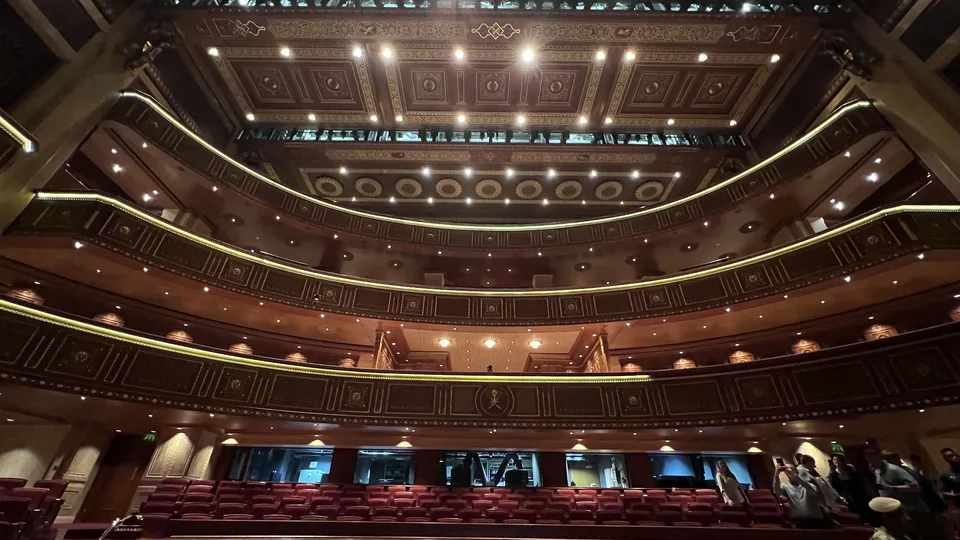
The Royal Opera House Muscat’s tour information offers an architectural visit as well as access to its musical setting. Standard house tours are advertised Saturday–Thursday, 8.30am–5.30pm, running every 20 minutes. Adult admission is OMR3.15 for one building or OMR4.20 for the combined ROHM and House of Musical Arts visit.
Those prices concern ordinary visits. Private tours have separate arrangements and charges, and a house-tour ticket is not a performance ticket. Ask what spaces will be accessible on your date, particularly if seeing the auditorium is the main reason for going.
For an evening performance, use the operator’s current programme and ticket information, then check dress, arrival and audience rules for that event. Build dinner and transport around its timing. A tour can fit a daytime sightseeing route; a concert deserves its own evening rather than becoming a hurried final stop after an excursion.
Make room for the sea without assuming perfect conditions
The Qurum Beach visitor page describes a sandy shoreline and promenade. It provides a different rhythm from museum galleries and market lanes: an opportunity to walk, sit and spend time outside when the weather is comfortable. Staying nearby may be worthwhile if that everyday access matters to you.
A beach being listed as a year-round attraction does not establish safe swimming conditions on a particular day. Follow signs and local instructions, assess the sea and keep children closely supervised. Choose clothing appropriate to the setting, and establish where you can change before planning a swim.
If you book a boat outing, confirm the departure marina, return arrangements, weather policy and equipment rather than assuming all departures are close to your hotel. Ask the operator about any permits for protected destinations. Keep a land-based alternative available; the value of the day should not depend on a sea departure proceeding.
Compare accommodation by facilities as well as location
Muscat offers conventional hotels, serviced suites and coastal resort stays. The right choice depends on how much time you want to spend at the property and how often you expect to leave it. Compare complete stay costs, including breakfast, transport, taxes and cancellation terms, rather than a room rate alone.
For families or an exploratory relocation visit, cooking and laundry facilities can make a material difference. Fraser Suites Muscat’s two-bedroom accommodation page gives one concrete Al Khuwair example, listing an equipped kitchen and washing machine. It is a facility comparison point, not a claim that the property is the cheapest or right for every traveller.
Confirm the exact room category and occupancy. Ask about access requirements, pool rules, parking, works and the distance from the entrance to the facilities you intend to use. A resort address may deliver a quieter stay while adding journeys to ordinary shopping and cultural visits.
Arrive with an onward transport plan
Use Muscat International Airport’s transport information to arrange the final part of your journey. The airport identifies Mwasalat public buses at a station outside the building on the ground floor, taxis through the airport taxi office in the public arrivals hall, and rental-car facilities.
Compare options against your actual arrival time, luggage and destination. For a hotel transfer, obtain the meeting instructions, charge and policy for delayed flights in advance. Courtesy transport is property-specific; the existence of hotel buses does not mean every booking includes a free transfer.
With a rental, check driver eligibility, insurance excess, deposit, permitted roads and return arrangements before paying. The airport describes rental returns in P2, level zero, but follow your company’s instructions. Allow time for vehicle inspection and handover. A published airport-to-hotel driving estimate is only an estimate, especially when several different Muscat districts could be called central.
Keep local transport realistic
Mwasalat is the public bus operator identified by the airport. Check the operator’s current route and timetable information, including the last service and any connection, before relying on a bus for a timed appointment. A route map alone does not establish how long the complete journey will take.
For a short visit, combining local walks with prearranged or metered taxi journeys can simplify days with several distant stops. Ask for the expected fare or meter arrangements and the pickup point. Do not turn an estimated fare for one journey into a fixed citywide price.
Group attractions geographically, then protect time for meals and returning to your accommodation. For a possible move, test the journey during the hours you would actually travel. A pleasant sightseeing drive offers little evidence about a daily commute. Check parking and the final walk as well as the time spent on the main road.
Build a budget around your chosen activities
The Omani rial prices in this guide are local charges, not conversions into your home currency. Check your payment provider’s exchange rate and fees when comparing a booking. Accommodation and transport can dominate a trip, so small admission savings should not obscure the larger decisions.
For one foreign tourist, the published National Museum ticket of OMR5 and standard combined opera-house visit of OMR4.20 total OMR9.20. Adding the tourism authority’s listed OMR8 mosque admission brings that example to OMR17.20, before transport, food or any performance. It is an attraction subtotal, not a daily budget.
Prepare separate lines for rooms, airport transfers, local journeys, meals and optional excursions. Compare refundable and restricted bookings using their full conditions. Keep access to a second payment method and some contingency for a changed departure. Recheck prices before purchase, particularly when a different ticket category or special event applies.
Choose the season for the days you want
Experience Oman’s seasonal guidance describes the cooler period from November to early March as more comfortable for outdoor activity. That makes it easier to combine waterfront walks with cultural visits. Conditions still vary, and a forecast close to departure is more useful for packing than a broad seasonal description.
Lowland summer heat changes the structure of a day. Choose accommodation with dependable cooling, make indoor visits worthwhile in their own right and shorten exposed walks when necessary. A cheaper room is poor value if its location forces uncomfortable journeys for every meal.
Dhofar’s khareef belongs to a different part of Oman; it should not be used to promise cool, green summer conditions in Muscat. Mountain excursions also need their own forecast and clothing decisions. For any outdoor journey, follow weather alerts and local access advice rather than assuming a city forecast describes the whole route.
A workable three-night introduction
On arrival day, settle in and keep the first outing local. If you are staying near Muttrah and conditions suit, make a short waterfront walk and have dinner without adding a distant attraction. A late arrival is a good reason to leave the evening empty.
On your first full day, concentrate on the historic side: the National Museum, palace surroundings and Muttrah’s harbour and souq. Choose a few meaningful stops and allow transport between the clusters. On the second, visit the Grand Mosque within its non-Muslim window, then choose the opera-house tour or an evening performance, with a break between activities.
Adjust that order around Friday access, opening notices and your base. Departure day should protect the airport journey. With an extra night, add either a properly planned excursion or a quieter coastal day. Someone assessing a move can use that extra time for neighbourhood visits and an actual commute test.
Investigate housing before committing to a lease
Begin a move with temporary accommodation if possible, then inspect homes in person. Compare the journey to work or school, grocery access, parking and the property’s condition. Al Khuwair, Qurum and Seeb are starting points for investigation rather than interchangeable answers to where everyone should live.
Ask for the full payment schedule, deposit terms, maintenance responsibilities and termination conditions. Inspect cooling, water pressure, windows and signs of damp, and document the condition when taking possession. Establish who pays utilities, whether bills are shared and what happens when you leave.
The government’s lease-registration service explains the documentation of the landlord–tenant relationship. Confirm who will complete registration and provide the required records. A signed rental agreement should not be mistaken for immigration permission, and advertised rents should be compared with completed terms rather than treated as a verified citywide average. Household circumstances matter more than a promotional neighbourhood label.
Arrange the essentials of daily life
Before choosing a home, check mobile reception and the availability of the internet service you need at that specific building. Ask how electricity and water accounts will be handled, obtain meter readings and clarify outstanding bills. Include cooling costs in the household plan rather than assuming every rental includes consumption.
For healthcare, the Ministry of Health’s Muscat information provides a starting point for understanding local services and finding relevant facilities. Confirm your insurer’s provider network, eligibility and expected charges directly. The presence of a public health centre does not establish that every visitor or resident receives free treatment.
Families should confirm school places, fees, transport and admission documents before settling on an address. Ask an employer which relocation costs and benefits are actually included in writing. Check residence-card requirements with the Royal Oman Police as part of the move, keeping copies of the approved immigration and employment documents.
Match immigration permission to the purpose of your stay
Use the Foreign Ministry’s entry guidance and Royal Oman Police eVisa portal for your nationality and circumstances. The existing 14-day exemption has conditions, including supporting bookings and insurance, with additional eligibility rules for its second nationality group. GCC citizens have a different position from GCC residents. That exemption cannot be extended or converted into residence.
A separate free 14-day tourist visa announced in August 2026 permits replacement with other tourist categories under specified conditions. It does not make every passport eligible or turn a visit into work permission. Check the applicable route rather than combining rules from different categories.
The government work-visa service describes an employer-led process involving a Ministry of Labour permit, apart from the stated government-employer exception. Study arrangements need the institution’s and authorities’ confirmation. Neither tourism nor renting a home establishes permanent residence. For help identifying questions, use VisaWand’s consultant directory, then verify requirements with the issuing authority.
Consider another base when your main interest lies elsewhere
Muscat makes a useful cultural introduction, but another base may suit a more focused trip. Nizwa offers an inland alternative associated with its fort and market in the Foreign Ministry’s regional overview. An overnight stay can give an inland visit more breathing room than adding it to an already full Muscat day.
Likewise, a mountain stay should be planned around its access requirements and weather, while Dhofar belongs to a separate southern itinerary. Avoid presenting these very different landscapes as a handful of neighbouring city attractions. Compare the journey and the experience you want before adding accommodation changes.
For a different Gulf city break, compare VisaWand’s completed Manama guide or Doha guide. The Oman location directory can help identify other places to research, while the Oman destination page provides another starting point. Choose fewer bases when that leaves more time for the experiences that brought you here.
Official planning resources
Reviewed 15 October 2026. Use the official resources linked throughout this guide for admission, transport, housing and immigration decisions. Prices, services and rules can change; confirm the details relevant to your dates. Photography illustrates the locations and is not a live view.
View all official resources
- UK Foreign Office: Oman travel advice
- Oman Foreign Ministry: entry visas
- National Museum: visiting hours
- National Museum: admission prices
- Experience Oman: Sultan Qaboos Grand Mosque
- Diwan of Royal Court: Grand Mosque
- Muscat International Airport: onward transport
- Royal Opera House Muscat: house tours
- Oman government: work visa
- Muscat Governorate: lease registration
- Oman Foreign Ministry: Arabic announcement of 14-day tourist visa
- Royal Oman Police: Oman eVisa
- Oman Foreign Ministry: Muscat and the governorates
- Experience Oman: seasons and regional weather
- Experience Oman: Qurum Beach
- Experience Oman: Mutrah Souq
- Experience Oman: Omani food and hospitality (French)
- Fraser Suites Muscat: two-bedroom accommodation
- Oman Ministry of Health: Muscat healthcare services
Plan the next part of your journey
Explore the Oman guide, browse other cities or compare consultants for your travel and relocation questions.