Visa
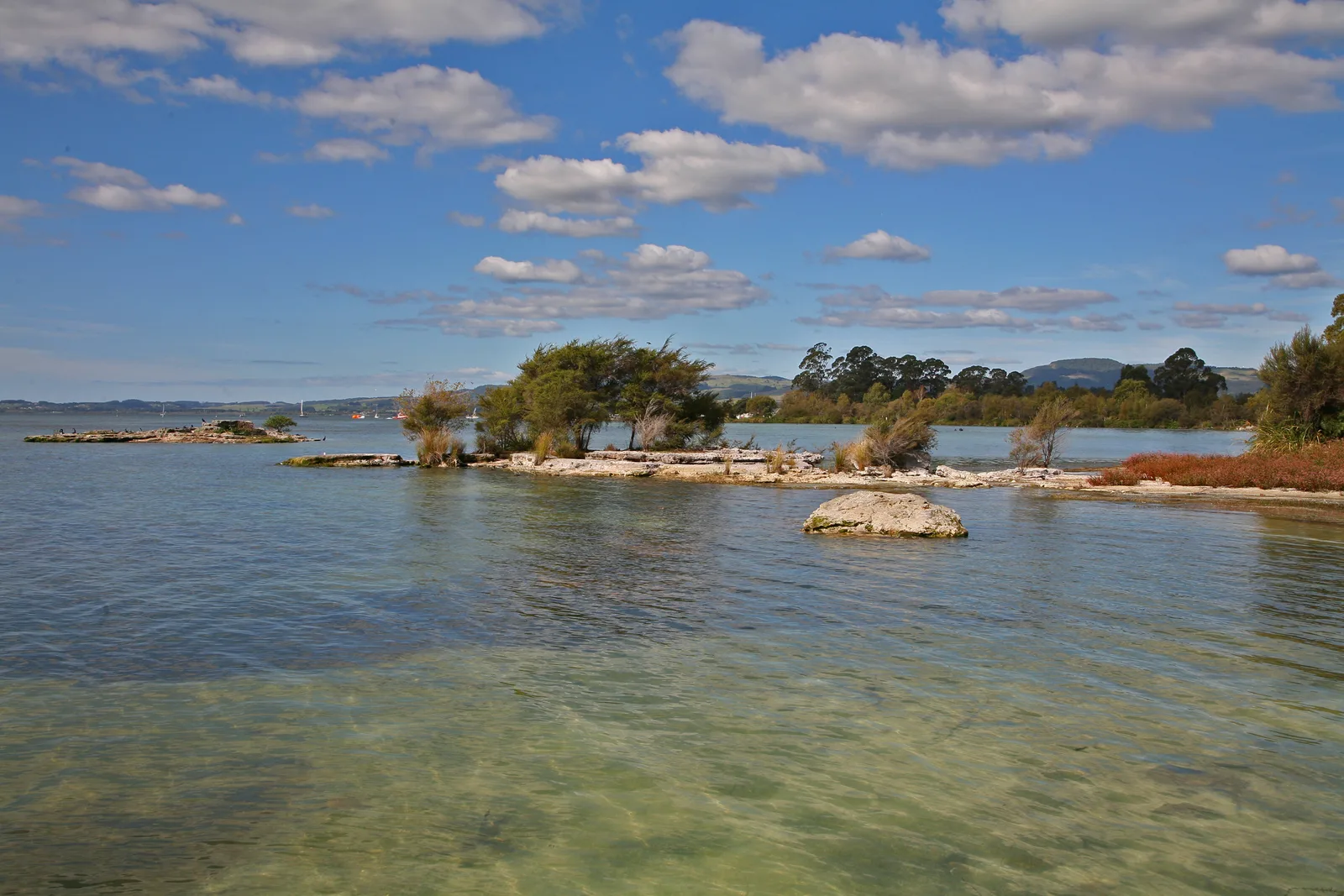
A lakeside city with an active landscape
Rotorua is a place to slow down and look closely. Steam rises from geothermal ground, forest walks lead beneath tall redwoods, and Māori guides explain a landscape whose significance reaches well beyond its appearance. The city sits in New Zealand’s North Island beside Lake Rotorua. Its appeal comes from that combination of living culture, accessible outdoor experiences and a landscape that refuses to behave like an ordinary city park.
Allow at least three nights for a first visit, especially if you want a substantial cultural experience and an excursion beyond the centre. The official Rotorua visitor information helps distinguish the city from its wider district. For a prospective resident, the same visit should include everyday errands and a commute rather than only paid attractions. VisaWand’s New Zealand guide provides the national context for entry, travel and longer-term plans.
Understand the history behind the attractions
Māori tourism here has a much longer history than the modern coach tour. Te Ara’s account of nineteenth-century Māori tourism describes how Te Arawa communities welcomed visitors to the hot springs and how Tūhourangi controlled access to the Pink and White Terraces. Guiding and transport generated income and supported Māori economic independence. These were organised businesses and relationships, not simply colourful additions to a landscape discovered by outsiders.
The 1886 Tarawera eruption devastated communities and transformed the visitor economy; many Tūhourangi moved to Whakarewarewa. That history gives a guided visit a different meaning from a quick photograph of steam. Listen to the distinctions between iwi, hapū and individual places rather than assuming one story represents every community. Ask before photographing people or entering spaces, follow your host’s directions and treat contemporary Māori life as part of the present, not a performance of a vanished past.
Choose accommodation around your actual route
A central base is useful when you want straightforward access to meals, the lakefront and departure points for tours. A property advertised as being in Rotorua may nevertheless involve a drive for each activity. Check its exact address against your itinerary before comparing nightly rates. If you will use buses, assess the walk to the stop and the available return service after an evening experience.
Compare hotels, motels, apartments and holiday-park accommodation according to the facilities you will use. Cooking and laundry can matter more than a decorative lobby for a family staying several nights. If bringing bikes, ask about secure storage, cleaning arrangements and whether equipment can be taken inside. Confirm parking, heating, room orientation and cancellation terms. For accommodation advertising a spa or thermal pool, ask what is included, who can use it and whether a private session requires another booking.
Visit Government Gardens without expecting museum admission
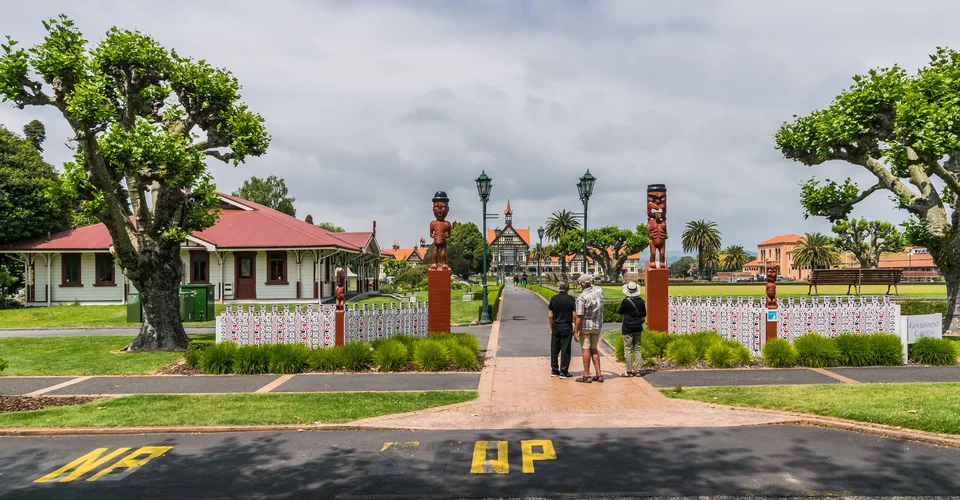
Government Gardens provides a useful introduction to the city’s historic spa setting. Walk through the grounds, look at the surrounding buildings and leave time to appreciate the contrast with the commercial streets. It makes a manageable first activity after arrival, without committing you to a long tour or a distant drive. Check any current works and pedestrian restrictions rather than expecting every approach shown in an older photograph to remain accessible.
The important distinction is that Rotorua Museum Te Whare Taonga o Te Arawa remains closed for earthquake strengthening. The building originally operated as a bathhouse before becoming a museum, but its exterior is not evidence that exhibitions are open. Do not reserve an afternoon for admission on the basis of an old guide or mapping listing. Follow the Museum’s own project updates if your future visit depends on reopening; proposed completion dates can change during a major restoration.
Give Te Puia a proper guided visit
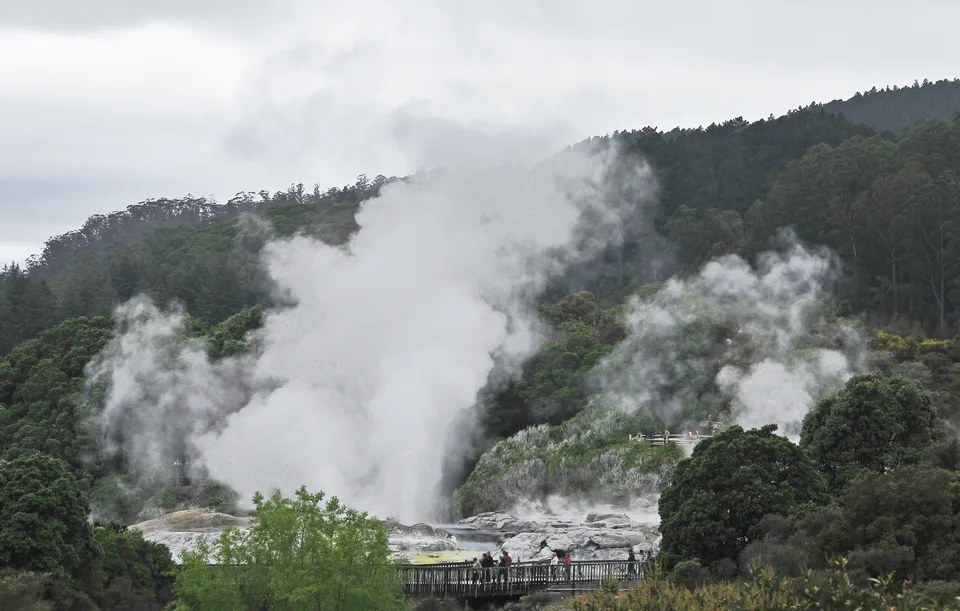
Te Puia’s visitor FAQs describe a daytime experience led by guides, combining the geothermal valley and Pōhutu Geyser with the New Zealand Māori Arts and Crafts Institute and Kiwi Conservation Centre. The standard Te Rā tour takes about 90 minutes, and visitors are asked to check in 15 minutes before departure. Book the experience you intend to take rather than assuming all daytime, dining and evening products include the same programme.
The site is iwi owned and cashless. Bring a suitable payment card and check the current departure time, access arrangements and cancellation terms when booking. Pōhutu’s eruption cannot be guaranteed during your visit, even though the geyser is active. That uncertainty is a reason to value the wider interpretation and arts experience, rather than buying a ticket solely for a photograph at an exact moment. Leave breathing room afterwards instead of scheduling another timed attraction immediately across town.
Compare a living village experience on its own terms
Whakarewarewa, the Living Māori Village is a separate experience, owned and operated by local residents. Its guided village tours, cultural performances and geothermal trails should be compared by their actual inclusions. Similar place names and neighbouring thermal landscapes can make booking descriptions confusing; establish which entrance, product and departure your confirmation covers before travelling there.
Choose according to what you hope to learn. A locally guided village visit offers a different emphasis from a forest walk or an afternoon at a bathing complex. If a meal or performance matters to you, confirm that it is included in the selected ticket and mention dietary or access requirements before paying. Respect the fact that this is a community as well as a visitor destination. Stay in the areas your host identifies, and ask about photography rather than assuming that a paid ticket grants unrestricted access.
See geothermal activity without leaving the centre
Kuirau Park’s council information describes an active geothermal park within walking distance of the centre, with no entry charge. It is a useful choice when you want a shorter outing or a lower-cost day. Walkways provide views of mud pools and hot water, but the setting remains active and unpredictable. Stay on the provided tracks and do not climb rock features to obtain a clearer view.
Treat this as observation, not an invitation to enter any water that looks inviting. Children need close supervision, particularly where steam obscures what lies beyond a barrier. A modest walk here can fit between meals or other commitments without filling the whole day. It also gives a prospective resident a chance to see how a visitor attraction functions as an ordinary urban park. Check facilities on arrival and choose a comfortable route rather than trying to inspect every thermal feature.
Plan Waiotapu as an excursion
Waiotapu Thermal Wonderland’s visitor information lists opening from 8.30am to 4.30pm, with last admission at 3pm. It is cashless, and tickets can be purchased online or at the visitor centre. Plan enough time for the park itself and your transport rather than treating the last-admission time as the start of an unhurried afternoon. It is outside the central sightseeing area, so decide how you will get back before setting off.
For visitors without a car, RotoruaNZ lists a combined shuttle and entry package departing from the isite at 1167 Fenton Street at 9am and returning by 1.30pm. The checked price is NZ$99 per person, with a two-passenger minimum and exclusions for Christmas Day and New Year’s Day. Confirm availability and inclusions for your date. A listed service is not a guarantee that a departure will run with only one booking.
Keep geothermal viewing and bathing separate
The Waiotapu safety guidance explains why barriers matter: thermal ground can conceal hot water, thin crusts and hazardous fumes. Stay on marked routes, wear sturdy footwear and keep children with an adult. Never lean over a steam vent or step off a path because the surface looks solid. The operator prohibits drones. These precautions protect both visitors and a landscape whose hazards are not always visible.
Lady Knox Geyser has a scheduled presentation at 10.15am, which staff trigger; it should not be described as an eruption that naturally runs to a clock. The operator requires visitors to drive between the main centre and the geyser location. If using organised transport, confirm how this part of the visit works. Separately, Health New Zealand warns against immersing the head, especially the nose, in untreated thermal pools. A sightseeing pool and a managed bathing facility are different environments; follow the rules for the particular site.
Walk among the Redwoods at your own pace
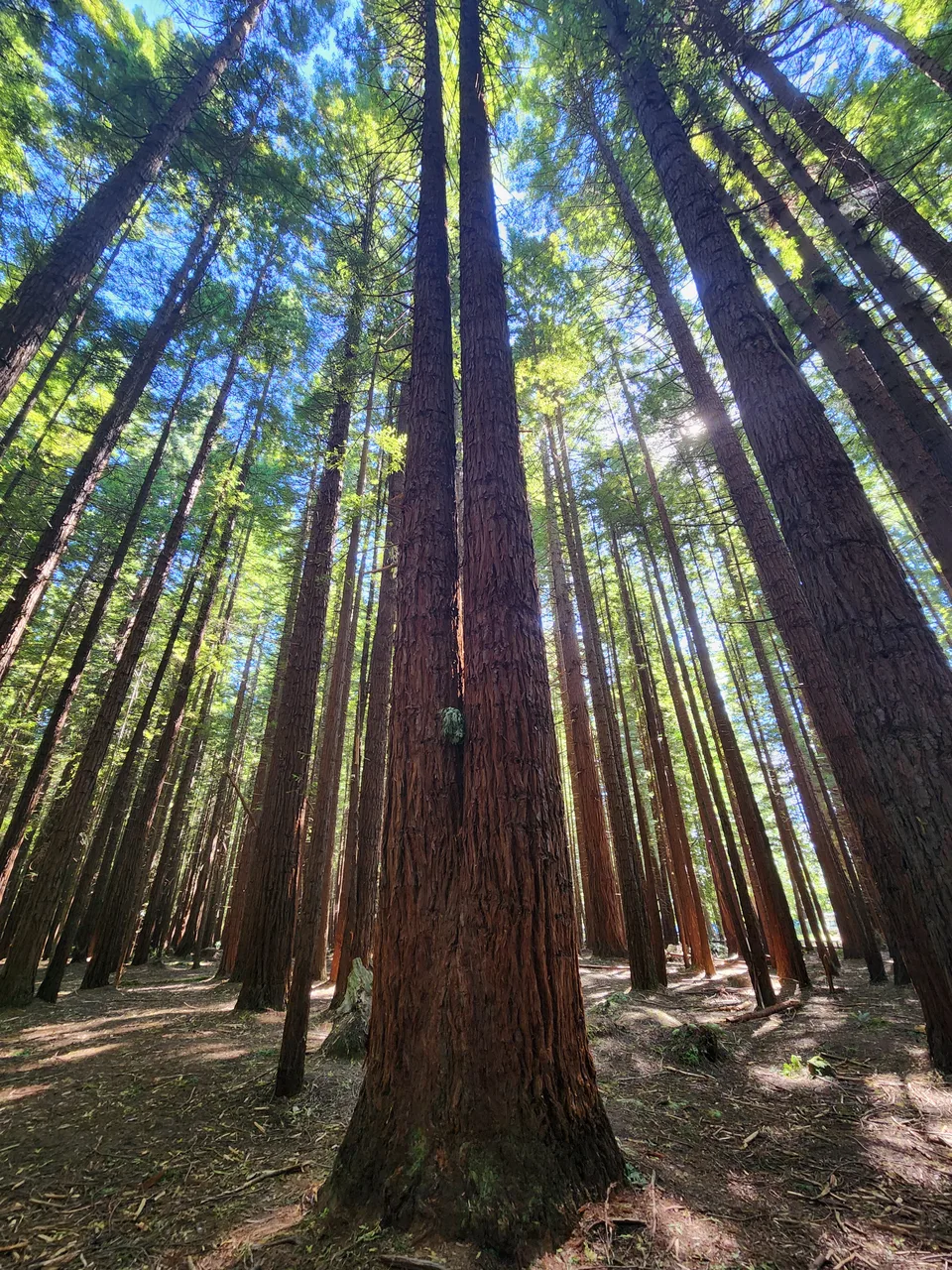
The Redwoods walking information describes six signposted tracks starting at the visitor centre, with options for different levels of effort. Begin with the route that fits your time and ability rather than the longest line on the map. The grove of Californian coastal redwoods offers an immediate change from the geothermal landscape, while longer walks extend through other native and exotic vegetation.
Check current track notices and carry a layer and water. Follow the walking route rather than wandering onto a mountain-bike trail or an enticing shortcut. If hiring bikes instead, discuss experience, equipment, route difficulty and return arrangements with the provider. A commercial aerial or night experience should be booked and budgeted separately from an ordinary forest walk. For a mixed-ability group, a shorter shared outing followed by a break may work better than separating into parties without a clear meeting place or reliable communications.
Choose a bathing product rather than a generic spa ticket
Polynesian Spa’s bathing options include different family, adult and private experiences. Compare age rules, session arrangements and facilities before choosing. A private pool, a shared bathing area and a treatment appointment are not interchangeable purchases. Read what is provided, what to bring and whether additional people incur another charge. If combining bathing with a treatment, allow time to change and move between appointments.
Book around the rest of the day, not as another task to rush through. After a walk or a tour, a quiet bathing session may be more appealing than another long drive. Follow the operator’s health and bathing instructions and seek suitable medical advice if you have concerns about hot-water immersion. Avoid interpreting historic “taking the cure” language as a modern medical promise. Check the cancellation terms before fitting a prepaid session around a flight or other connection that could be delayed.
Arrive with a practical onward connection
Rotorua Airport’s transport page identifies taxis, shuttles, rental cars and the Route 10 bus to the city. The bus stop is on the left as you leave the main entrance. Check the current timetable against the time you will actually be outside the terminal, not simply the flight’s scheduled arrival. An evening arrival can require a different plan from a daytime one.
Rental providers have their own operating and key-return arrangements, so confirm those directly if collecting or returning a vehicle outside staffed hours. For an overland journey, InterCity’s Rotorua–Auckland service information provides a starting point for checking date-specific departures and stops. Do not assume a city coach is a direct airport transfer or that two independently booked services will protect a missed connection. Leave a realistic buffer for baggage, transfers and the final journey to your accommodation.
Use the correct bus fare in your budget
The current Baybus Rotorua adult fare table lists NZ$2.60 with a Bee Card and NZ$3.20 when paying cash for urban travel. A Rotorua Daysaver is NZ$8. The page requires a registered Bee Card to tag on and tag off. These are the adult urban figures checked for this guide, not the different concession tables or an older fare announcement.
Compare the day ticket with your planned number of paid rides. Buses can help with everyday journeys, but an urban fare does not establish that a particular outlying attraction is served at the time you need. For a longer stay, test the journey from a proposed home to work or class, including the return after a late finish. Compare walking distance, waiting time and service frequency as well as price. A cheap ride is less useful if it leaves you facing an impractical connection.
Eat and shop without letting every meal become an event
RotoruaNZ’s Eat Streat information introduces a concentrated restaurant and bar area that can make an evening choice straightforward. Compare menus and opening hours rather than assuming every venue suits your budget or dietary needs. If you have a cultural dining booking, plan the rest of that day’s meals around it. Confirm what the experience includes instead of buying a second substantial dinner unnecessarily.
For groceries and everyday purchases, use your accommodation’s cooking facilities if they genuinely suit your plans. A kitchenette may offer much less than a full kitchen, so check the equipment before shopping. Keep a budget in New Zealand dollars covering accommodation, food, transport, paid experiences and a contingency. Compare total bookings for everyone travelling; per-person attraction prices accumulate quickly for families. Choose a few substantial experiences and leave space for parks, forest time and a simple meal rather than trying to buy every available activity.
Match the season to your plans
RotoruaNZ’s seasonal planning advice identifies the warmer period from late spring into early autumn as a busy visitor season, with school holidays adding pressure on accommodation and popular experiences. New Zealand’s summer falls in December to February and winter in June to August. A trip from the northern hemisphere therefore needs a different packing assumption from the same calendar dates at home.
Carry warm layers and rain protection even when the itinerary is mainly outdoors in a warmer month. Check the MetService Rotorua forecast and warnings close to departure and again before a longer walk or drive. Keep flexible activities between fixed bookings so you can move a forest outing or lake visit when conditions change. A geothermal attraction operating in rain does not mean every visitor will be comfortable in wet clothing for the rest of the afternoon. Choose footwear for the ground and a dry layer for afterwards.
A realistic three-day introduction
Day one: settle into your accommodation, walk through Government Gardens and spend time beside the lake. Add a short central geothermal outing if your arrival leaves enough energy, then eat close to your base. Keeping the first evening flexible helps if travel takes longer than expected and gives you time to confirm the following day’s arrangements.
Day two: make one guided cultural and geothermal experience the main event. Leave time afterwards for a meal and a break rather than immediately driving to another timed tour. Day three: choose a forest walk with optional bathing, or make Waiotapu the principal excursion if that landscape is a priority. With a fourth day, add a lake outing. Anyone considering living here should replace one sightseeing block with property inspections, groceries and the actual journey to a workplace or teaching site.
Evaluate a home beyond the holiday setting
A move requires a different comparison from a three-night break. List the weekly rent, lease term, furnishings, heating costs, internet and transport separately. Check the commute from the actual property at the time you would travel. If employment involves early starts or late finishes, test those hours before assuming a daytime bus journey represents your whole working week.
Tenancy Services limits a general bond to four weeks’ rent. Its rent payment guidance also says a landlord cannot require more than two weeks’ rent in advance, with specific rules for service tenancies. A general bond is distinct from any applicable pet bond, so read the arrangement relevant to your household. Obtain a written agreement and condition record, understand bond lodgement and retain payment evidence. Verify the property and the person offering it before transferring funds in response to an urgent listing.
Check warmth, utilities and household services
The healthy homes standards cover heating, insulation, ventilation, moisture and drainage, and draught stopping, subject to applicable exemptions. Tenancy Services states that all private rentals had to comply from July 2025. Ask for the required compliance information and inspect the rooms you would use. A photograph of a sunny lounge tells you little about bedroom ventilation, dampness or how expensive the home will be to heat.
Confirm which utilities are included and whose responsibility it is to open accounts. Test mobile reception and establish internet installation arrangements before relying on a home for remote work. Use the Rotorua Lakes Council service directory to find address-specific rubbish collection and other household information. Families should contact the relevant school about enrolment and address requirements before choosing housing on an assumption about access. For health care, check public funding eligibility with the Ministry of Health; arrival in New Zealand does not automatically make every service free.
Separate tourism, overseas remote work and local employment
Begin with Immigration New Zealand’s Visitor Visa information to establish whether your passport and circumstances require that visa or an NZeTA. Read the permission and conditions actually granted. Visitor arrangements are for a temporary stay; they are not a general right to take a local job, enrol for an extended course or settle permanently. Do not commit to non-refundable travel while a required visa remains undecided.
There is an important exception for permitted overseas remote work. Visitor visas applied for from 27 January 2025 allow remote work for overseas employers or clients, but the rule does not cover taking work for a New Zealand employer or exchanging services with a local business. Tax obligations are separate. For local employment, longer study or residence, use the appropriate official visa pathway information and check your own conditions. VisaWand’s consultant directory can help identify advisers; verify relevant authorisation and the service offered before paying.
Keep immigration documents, insurance details and booking confirmations accessible while travelling. If a holiday becomes a plan to stay, establish the next legal step before accepting work or extending commitments. A promising conversation with an employer is useful information, but it does not replace the permission required for the role or a decision on a residence application.
Give the surrounding lakes their own time
The council’s Lake Tikitapu information describes a reserve on Tarawera Road with picnic facilities and access to a 5.5-kilometre lake circuit. Check the route and conditions before committing the group to a full walk. A picnic and a shorter outing may be enough when you have already had several active days. The neighbouring Green Lake, Rotokākahi, has a different status: it is sacred, privately owned by local iwi, and swimming, fishing and boating are prohibited.
For a wider journey, compare VisaWand’s Taupō city page and Tauranga city page according to your route and interests. Auckland’s city page offers another urban comparison, while the New Zealand city directory and New Zealand destination page support further planning. Keep the number of stops realistic. Rotorua works best when you have enough time for interpretation, changing weather and an unhurried experience of the places you have chosen.
Official planning resources
Reviewed 17 October 2026. Use the official resources linked throughout this guide for admission, transport, housing and immigration decisions. Prices, services and rules can change; confirm the details relevant to your dates. Photography illustrates the locations and is not a live view.
View all official resources
- RotoruaNZ: official visitor information
- Te Ara: 19th-century Māori tourism
- Rotorua Museum: strengthening project
- Te Puia: visitor FAQs
- RotoruaNZ: Whakarewarewa Living Māori Village
- Rotorua Lakes Council: Kuirau Park
- Waiotapu Thermal Wonderland: visitor information
- RotoruaNZ: Waiotapu shuttle and entry package
- Waiotapu: geothermal health and safety
- Health New Zealand: untreated thermal water precautions
- Redwoods: walking, hiking and running
- Polynesian Spa: bathing options
- Rotorua Airport: rental cars and transport
- InterCity: Rotorua to Auckland
- Baybus: Rotorua fares
- RotoruaNZ: Eat Streat
- RotoruaNZ: seasons and planning
- MetService: Rotorua forecast
- Tenancy Services: general bonds
- Tenancy Services: charging rent
- Tenancy Services: healthy homes compliance
- Rotorua Lakes Council: A–Z services
- Ministry of Health: public health eligibility
- Immigration New Zealand: Visitor Visa
- Immigration New Zealand: remote work while visiting
- Immigration New Zealand: work visa pathways
- Rotorua Lakes Council: Tikitapu and Rotokākahi
Plan the next part of your journey
Explore the New Zealand guide, browse other cities or compare consultants for your travel and relocation questions.