Visa
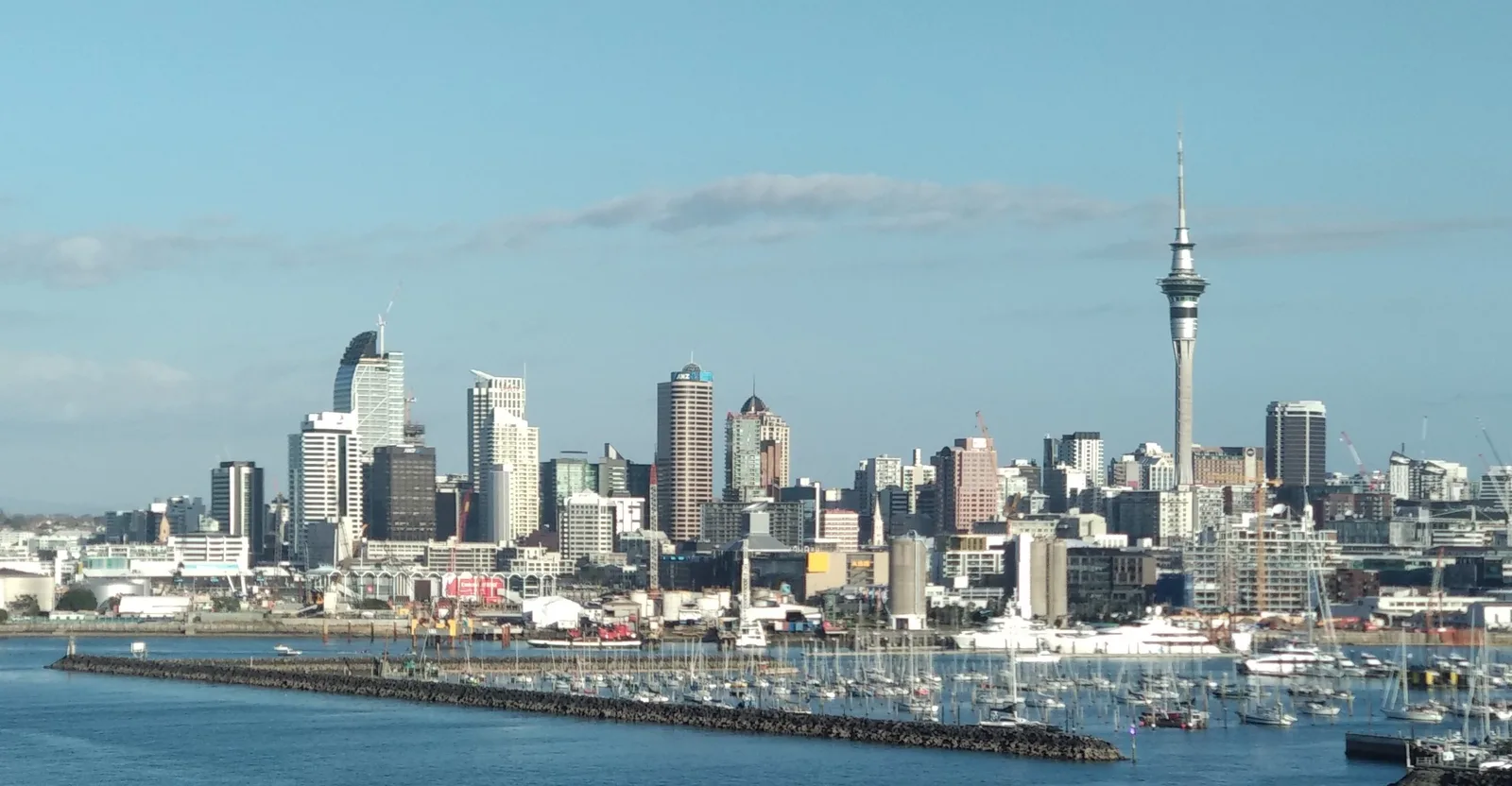
A harbour city worth more than a stopover
Auckland puts a working waterfront, volcanic landscapes and island journeys within reach of the same base. Its appeal lies in that combination: a morning with New Zealand art can lead to an afternoon beside the harbour, while a different day takes you onto an island trail or into a vineyard landscape. Give the city three full days if you want something beyond an arrival-night impression.
The distances deserve attention. Tāmaki Makaurau Auckland includes neighbourhoods and coastal areas far beyond the central skyline; a hotel advertised as being in Auckland may be poorly placed for your particular plans. Start with the official Auckland visitor planner, choose a base around your journeys and leave room for changeable weather. Prices in this guide are in New Zealand dollars, checked on 15 October 2026.
Read the landscape alongside its history
The maunga, or ancestral mountains, are fundamental to understanding this place. Their terraces and other archaeological features speak of Māori occupation long before the nineteenth-century colonial town. Treat them as cultural landscapes with continuing connections to mana whenua, the Māori groups holding customary authority here, rather than simply elevated platforms for skyline photographs.
The Waitangi Tribunal’s account of Auckland’s founding explains Ngāti Whātua of Ōrākei’s invitation to Governor Hobson in 1840 and the hopes surrounding the new settlement. It also describes the severe loss of tribal land that followed. Reading this before visiting the museum and maunga gives those experiences a common thread, and avoids a history that begins only with European buildings around the harbour.
Stay central when your time is short
For a first visit without a car, the central city usually offers the simplest arrangement. Britomart and the lower city place you near harbour transport, restaurants and shopping. The Viaduct and Wynyard waterfront areas suit travellers who value time beside the water. Compare the actual hotel entrance with the ferry departure point you need; a harbour view is not necessarily a short walk to your boat.
Midtown accommodation can suit gallery visits, the Sky Tower and evening activities. The official accommodation-area guide helps compare the broader choices. Check hills, nearby construction, evening noise and the cost of parking before booking. A room that saves money nightly can lose that advantage if every outing requires an additional journey.
Look beyond the waterfront for neighbourhood character
Ponsonby offers restaurants, boutiques and an evening atmosphere that can appeal more than a conventional downtown hotel setting. Karangahape Road is another area to consider for nightlife and creative activity. Choose it because those interests suit your trip, then check the room’s position and sound insulation rather than assuming a lively district will also provide a quiet early night.
Takapuna can make sense for a beach-focused stay on the North Shore, while airport accommodation suits awkward flight times. Neither should be treated as interchangeable with a central-city base. For several weeks, begin with temporary accommodation and test daily journeys before choosing a residential district. Auckland’s variety is an advantage only when the location works for your routine.
Give Auckland Museum a substantial visit
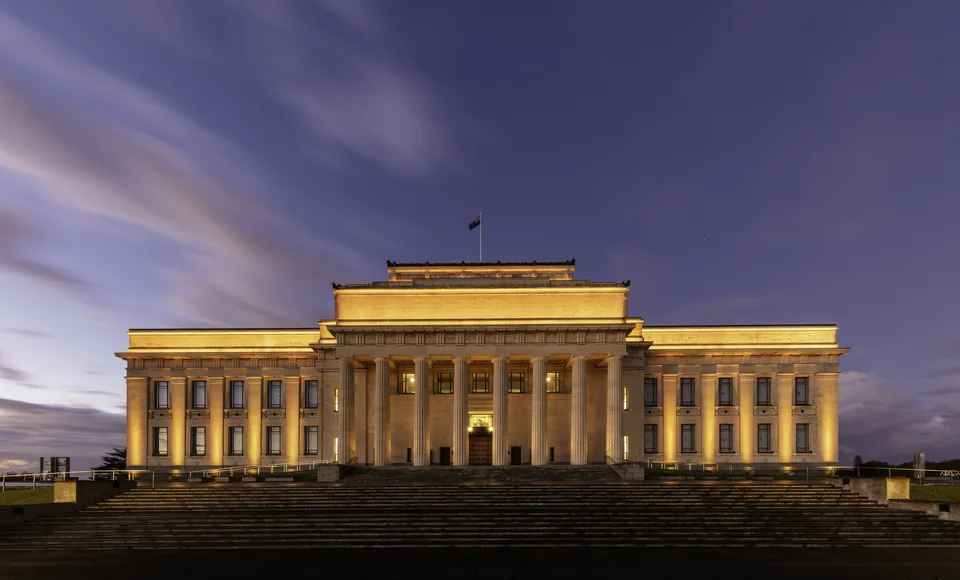
Auckland Museum in the Domain is a useful place to build context for the rest of your journey, with permanent collections spanning cultural and natural history. Set aside an unhurried part of the day, and leave time in the surrounding park when weather permits. The building is also a war memorial, so approach commemorative spaces with appropriate consideration.
The official admission page lists international adult entry at NZ$32, children aged 5–15 at NZ$16, and a two-adult, two-child family ticket at NZ$86. General admission covers permanent galleries; special exhibitions, tours and experiences can cost extra. Free general admission is for Auckland residents with evidence, while other New Zealand residents are invited to donate. Visitors should not assume those arrangements apply to them.
Check hours for your date. The museum advertises 09:00–17:00 during school holidays and late Twilight Tuesday opening; these should not be read as an identical schedule for every day of the year. The evening exterior photograph here is a historical image, not a promise of evening access.
Make the Art Gallery an easy cultural anchor
Auckland Art Gallery Toi o Tāmaki offers free admission to its general collection exhibitions for everyone, including international visitors. Special exhibitions and events may be ticketed. It normally opens daily from 10:00 to 17:00, except Christmas Day, making it a practical indoor option when the weather disrupts an outdoor plan.
Its New Zealand, Māori and Pacific art gives the visit a distinct local purpose. Combine it with nearby Albert Park and a meal rather than treating it as something to rush through between longer excursions. Check the current exhibition programme before deciding how much time to allow. Large bags and backpacks go into the free cloakroom; photography rules can vary between works and exhibitions, so follow the signs.
Check accessibility across the whole day
Auckland’s hills and the steps on some outdoor routes make it sensible to assess the complete journey. Ask accommodation about the entrance, lift and bathroom arrangement, then check the connection from the station or pickup point. A central address can still involve a slope that matters when using a wheelchair, pushing a buggy or travelling with limited stamina.
The Art Gallery’s accessibility information describes accessible entry doors, lift routes and bathrooms, with wheelchairs and other mobility aids available free; booking is recommended. This provides a useful basis for a specific conversation with staff. Island visits require separate checks for the vessel, boarding conditions and the activity after landing. Do not assume an accessible ferry guarantees an accessible walking route or beach. Keep a less demanding option available for anyone who needs a shorter day.
Approach Maungawhau with care
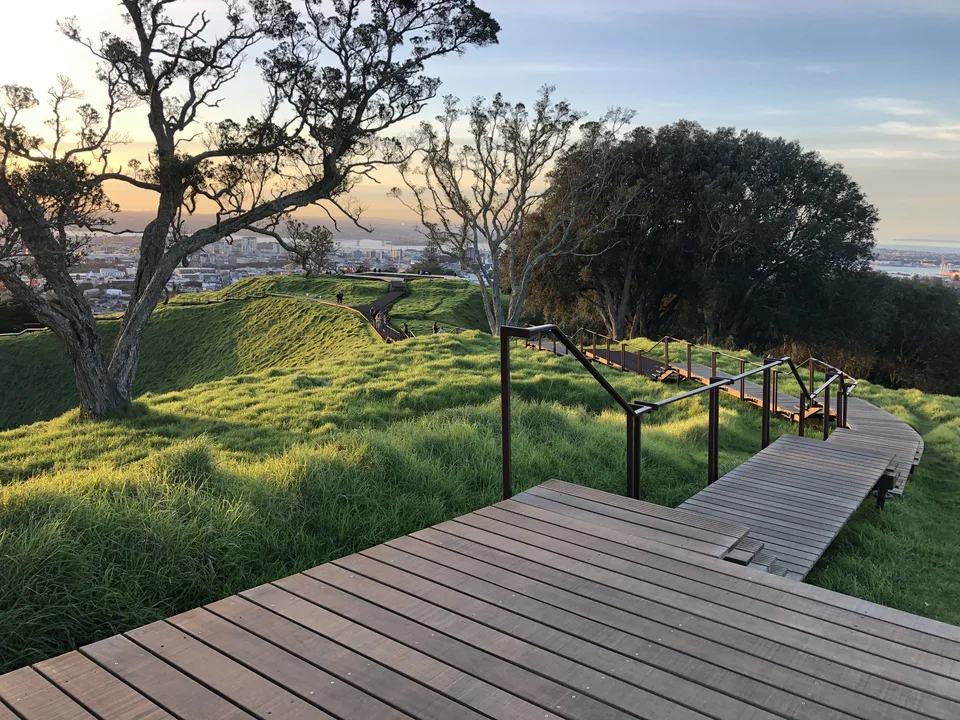
Maungawhau / Mount Eden provides a view of the wider city while bringing its volcanic and cultural landscape into focus. The Tūpuna Maunga Authority’s account of the boardwalk explains how the route protects surviving pā terraces and storage features. Stay on designated paths and boardwalks, respect signs and avoid treating the grassy archaeological landscape as a shortcut.
The summit road has been made vehicle-free for ordinary private traffic; visitors with mobility needs should ask the Authority about the appropriate access arrangement. Its 2026 gate-access notice is useful background, but temporary construction dates in an older notice are not proof of a closure today. Check current access before setting out. Wear shoes that suit slopes and allow time to pause, especially in warm weather.
Decide whether the Sky Tower adds enough to your visit
The Sky Tower offers an elevated overview of the city and gulf, which can be particularly useful early in a trip. Choose a clear weather window if the view is the main reason for paying. Poor conditions can limit visibility, and the operator warns that weather or private events can affect access.
The Sky Tower’s own admission information lists NZ$47 for adults aged 15 and over, with the higher Sky Deck costing an additional NZ$2 per individual. Compare that with the free outdoor viewpoints you already intend to visit. The SkyBar is restricted to adults aged 18 and over, so it is not a family viewing substitute. Check the operator’s current seasonal closing and last-entry times rather than relying on a directory listing.
Choose an island day that matches your interests
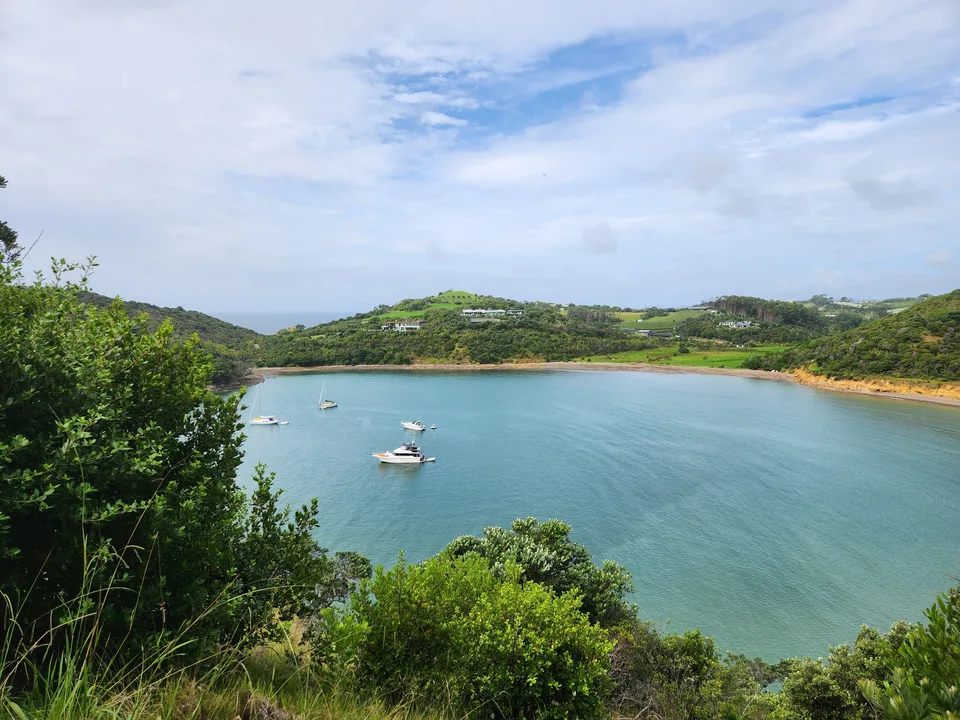
Waiheke suits a day combining coastal scenery, food, galleries or vineyards, with local transport planned beyond the ferry. Fullers360 describes the crossing to Matiatia as approximately 40–45 minutes, with some services taking longer via Devonport. Arrival at the wharf is the start of the island journey, not arrival at every beach or restaurant you might want to see.
The operator’s Waiheke ticket page lists a Standard adult return at NZ$65. Priority at NZ$75 and the separate Reserve service at NZ$104 have different booking and boarding arrangements. The NZ$48.50 off-peak return requires departure from Auckland from 13:00 and return from Waiheke from 19:00; it is not a cheap ticket for an unrestricted morning departure.
Select a modest island programme and establish how you will reach it. Check whether a wine experience includes food, tastings and transport, and reserve independently where needed. Keep the return sailing and any weather notices in view throughout the day.
Rangitoto is a walking excursion
Choose Rangitoto for volcanic terrain and walking rather than expecting Waiheke’s dining infrastructure. The Department of Conservation’s summit-track guidance describes a seven-kilometre return walk taking about two hours, with a steady climb over rough volcanic ground. That estimate excludes generous breaks, side trips and time waiting for ferries.
Bring food and drinking water: neither is available on the island. DOC recommends one to two litres of water per person, sturdy footwear, sun protection and warm, waterproof layers. Mobile coverage is patchy in places. Work backwards from the return ferry and leave a substantial margin; an interesting detour is not worth missing the boat.
Clean and check your gear for pests, soil and seeds before boarding. Take rubbish away, and follow the total fire ban, which includes cigarettes and cookers. This is a conservation visit with real preparation needs, even though the island is visible from the city.
Compare airport journeys by the complete route
The public-transport option involves the AirportLink bus and a connection at Puhinui Station, rather than a train departing directly from the terminal. Use the Auckland Transport journey planner for your date, final destination and any rail closures. Allow for the interchange and the final distance from the station to your accommodation, especially with luggage.
SkyDrive’s airport coach runs non-stop between the airport terminals and Hobson Street near the Sky Tower. Check the operator’s booking system for your date’s price and timetable. Its same-day ticket flexibility depends on space being available, so it should not be interpreted as a guaranteed seat on any departure.
A taxi or arranged transfer may be more practical for a late arrival, a group or an address poorly served by public transport. Compare the full charge, luggage arrangements and pickup instructions. Road travel depends on traffic; avoid an itinerary that assumes a fixed airport-to-hotel journey time.
Use the new rail network and the right payment method
City Rail Link passenger services began on 13 September 2026, according to the project’s official record. Te Waihorotiu and Karanga-a-Hape are now part of the central-city network. Old advice describing Britomart as the only central station can therefore mislead. Check the current planner for the route serving your destination rather than following an outdated diagram.
Contactless payment charges the adult AT HOP rate on eligible services. Each person needs their own card or device, and must use the same one to tag on and off. A phone and the physical card behind it are not interchangeable for that purpose. Concession fares require the relevant HOP arrangements.
Contactless users have a NZ$20 daily cap on eligible buses, trains and inner-harbour ferries. HOP users instead have the NZ$50 seven-day cap on the specified services. Waiheke ferries are excluded: neither cap pays for an island day there. Check the rules before choosing a payment method for a longer stay.
Eat across the city without inventing a restaurant checklist
Waterfront restaurants are convenient when your evening already revolves around the harbour, while Ponsonby offers another setting for a meal and browsing. For a different food-focused outing, consider Dominion Road, especially the concentration around Balmoral. The visitor board describes a strong range of Asian cuisines, making the area a useful alternative to staying within the central dining precincts.
Use current menus to choose a business that suits your budget and dietary needs. Ask about ingredients directly when allergies matter. Do not assume a neighbourhood’s reputation guarantees that every venue is inexpensive or still trading. For shopping, compare the central precincts around Britomart and Commercial Bay with independent stores elsewhere; purchases and meals can share a neighbourhood visit without becoming a separate cross-city expedition.
Budget with prices that apply to you
Two international adults visiting Auckland Museum would pay NZ$64 for general admission at the checked rate; two Sky Tower adult tickets add NZ$94 before any Sky Deck supplement. Choosing the Art Gallery’s free general collection instead changes the budget substantially. These are different experiences, so decide what interests you rather than buying several overlapping sightseeing packages automatically.
The 2026 AT fare table lists adult HOP/contactless bus and train fares of NZ$3 for one zone and NZ$4.90 for two zones. Inner-harbour ferry travel is NZ$7.80 at that payment rate. Plan the actual journeys, then add accommodation, food, airport travel and island tickets. A single daily spending figure hides too many choices to be useful.
Compare accommodation totals including parking, breakfast, cancellation terms and laundry. Self-catering can help a family or longer stay, provided the kitchen has the equipment you need. Keep a separate allowance for excursions: a ferry ticket does not automatically include island buses, a guided visit or lunch. Check foreign-card charges with your bank and retain booking confirmations showing exactly what you paid for.
Plan around southern seasons and coastal weather
Auckland’s seasonal guide places summer in December–February and winter in June–August. Summer suits long evenings and island outings, but Christmas, New Year and school holidays can make popular accommodation and ferries busier. Autumn can work well for walking and food-focused visits, while winter makes an indoor cultural programme particularly useful.
Spring brings longer evenings but can mix showers, wind and sunshine. Pack adaptable layers and a waterproof jacket in any season, plus sun protection for time outdoors. Check the near-term forecast before an exposed walk or boat trip. For swimming, consult Safeswim’s current beach information; a beautiful coastline or a sunny day does not establish water quality or safe conditions.
A balanced three-day itinerary
Day one: settle into a central base, explore the waterfront and visit the Art Gallery if your arrival leaves enough time. Choose the Sky Tower only if the weather and your energy make it worthwhile. Keep dinner close enough that a delayed flight does not unravel the whole evening.
Day two: give Auckland Museum a substantial morning or afternoon, with time in the Domain. Add Maungawhau when conditions suit, allowing for travel and the climb. Make dinner a neighbourhood choice, perhaps around Ponsonby or Dominion Road, rather than adding another major attraction.
Day three: choose Waiheke or Rangitoto, not both. The former suits a planned mix of island stops; the latter requires walking preparation. Keep a gallery, shopping or relaxed food day available as a weather alternative. With a fourth day, Devonport or another part of the region can fit more comfortably than squeezing every possibility into three.
Assess a move through the actual commute
Before choosing a lease, test journeys to the workplace, campus or family commitments that will shape the week. Auckland’s broad residential geography means that distance on a map can conceal inconvenient transfers or traffic. Compare the commute at the relevant time and include the cost of parking, public transport and any necessary car ownership.
Inspect the property before committing or arrange a trustworthy inspection. Check damp, heating, noise, sunlight, storage and internet availability at that address. Ask whether the advertised rent is weekly, and compare equivalent periods when budgeting. A furnished short stay can give you time to understand a district before buying household items or signing a longer agreement.
Understand bonds, housing standards and pets
Tenancy Services states that a general bond can be no more than four weeks’ rent and must be lodged with the agency. Read the agreement and retain the condition report, photographs and payment records. Identify whether you are entering a tenancy or a different flat-sharing arrangement, since responsibilities and protections can differ.
Ask for the healthy homes compliance information relevant to the property. The standards address matters including heating, insulation, ventilation, moisture and draughts; exemptions can apply, so an explanation should be specific. Do not treat a polished interior photograph as evidence of a warm, dry home.
If bringing a pet, check the rules introduced in December 2025. Written consent or permission in the agreement matters, and an additional pet bond of up to two weeks’ rent can apply under the rules. The general four-week bond limit is therefore not a reliable statement of every renter’s total possible bond commitment.
Arrange household services and healthcare early
Clarify electricity, internet, rubbish arrangements and water charges before moving in. Under Tenancy Services’ water guidance, responsibility depends on the type of charge and whether metered usage can be attributed to the tenant. Ask for bills and a written explanation instead of assuming every fixed charge is yours. Record meter readings and establish who handles repairs.
Find nearby groceries, a pharmacy and a suitable primary-care practice. Health New Zealand’s eligibility guidance distinguishes publicly funded healthcare by immigration and other circumstances; it is not automatically free for every visitor or new arrival. The page also flags eligibility changes from 1 December 2026. Check the rules that apply on your dates, and arrange insurance for the cover you actually need.
Keep visiting, remote work and relocation distinct
Use Immigration New Zealand’s visitor guidance to establish whether your passport and journey require a visa or NZeTA. The official NZeTA page explains that its travel validity is different from the stay granted on arrival. Entry permission remains necessary; do not interpret a two-year NZeTA as permission to live in Auckland for two years.
Qualifying visitor conditions can allow remote work for overseas employers or clients. The official Visitor Visa and remote-work information distinguishes this from work for a New Zealand employer or work requiring your presence in the country. Check your own permission and tax position before relying on that option. Local employment, longer study and residence need their appropriate immigration pathways.
The VisaWand New Zealand country guide provides wider planning context, and consultant listings can help you identify professional assistance. Verify credentials and the service offered. Housing, a job conversation or a consultation does not by itself establish a right to work or settle.
Complete the arrival formalities and leave room for more
The New Zealand Traveller Declaration is free and separate from a visa or NZeTA. Each arriving traveller, including a child, needs a declaration. Follow the official timing instructions for your journey and declare relevant food, outdoor equipment and other risk items. If uncertain, ask a border officer rather than guessing.
For a wider itinerary, compare Wellington’s location page or Christchurch’s location page with the time available for travel. These are location listings, rather than promises of completed city guides. The New Zealand destination overview and country location directory can help you explore alternatives while keeping Auckland’s own city, coast and island experiences in proportion.
Official planning resources
Reviewed 15 October 2026. Use the official resources linked throughout this guide for admission, transport, housing and immigration decisions. Prices, services and rules can change; confirm the details relevant to your dates. Photography illustrates the locations and is not a live view.
View all official resources
- Auckland visitor planning
- The founding of Auckland: Waitangi Tribunal
- Choosing where to stay
- Auckland Museum hours and admission
- Auckland Art Gallery visitor information
- Art Gallery accessibility
- Maungawhau boardwalk and heritage
- Maungawhau vehicle access update
- Sky Tower official admission
- Rangitoto Summit Track
- Fullers360 Waiheke fares and services
- SkyDrive Auckland airport coach
- Auckland transport fare changes2026
- Contactless public transport payments
- AT HOP seven-day fare cap
- City Rail Link official opening
- Auckland Transport journey planner
- Dominion Road dining district
- Auckland seasons
- Safeswim beach conditions
- General rental bonds
- Healthy homes compliance
- Pet tenancy rules fromDecember2025
- Water and wastewater rental charges
- Public healthcare eligibility
- New Zealand visitor entry requirements
- NZeTA official information
- Visitor Visa and overseas remote work
- Completing the New Zealand Traveller Declaration
Plan the next part of your journey
Explore the New Zealand guide, browse other cities or compare consultants for your travel and relocation questions.