Visa
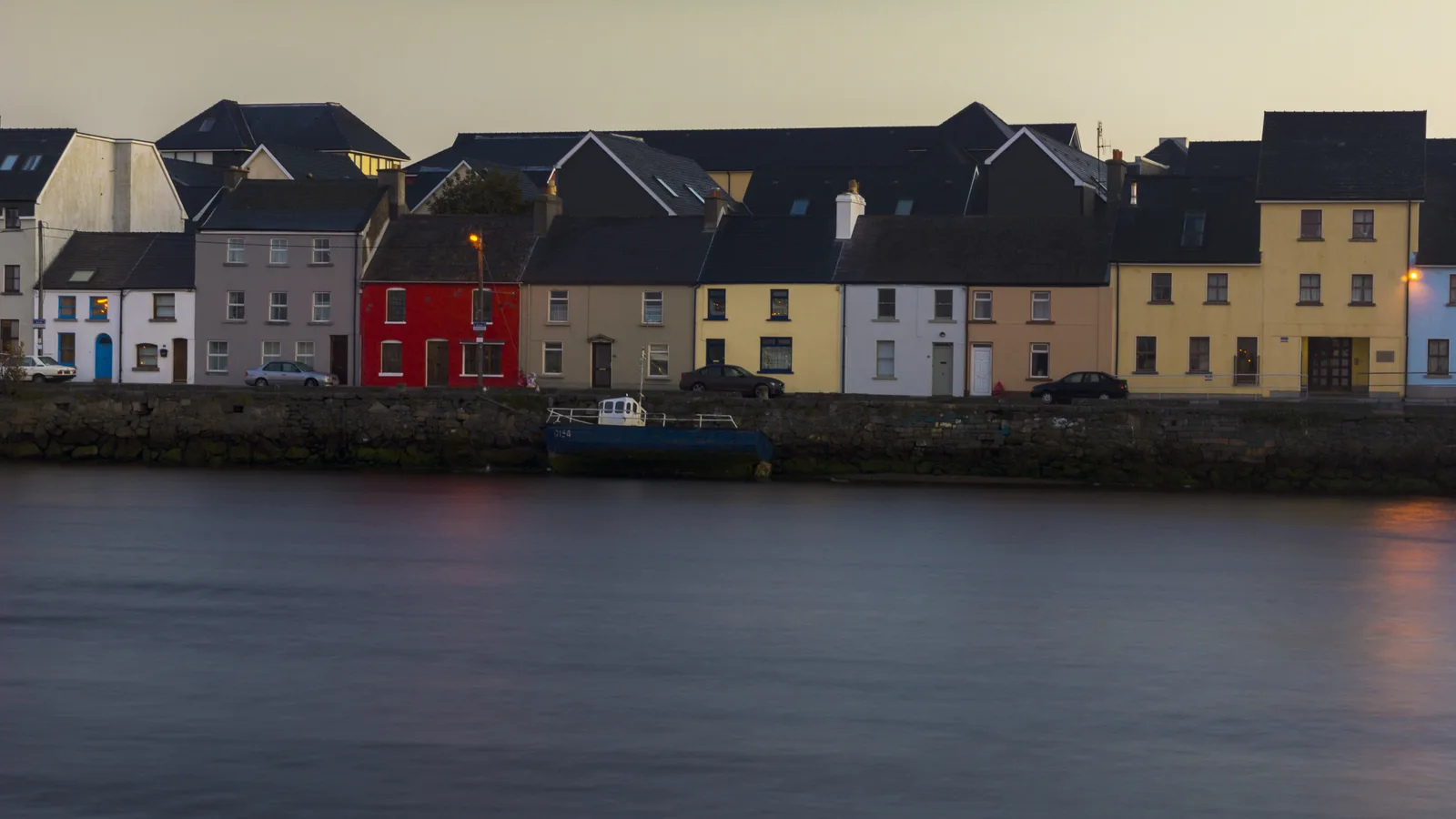
Galway at the meeting of river and Atlantic
Galway makes most sense on foot, moving between the compact streets around Eyre Square, the Corrib waterfront and the open horizon at Salthill. Its appeal is the change of pace between them: a busy shopping street can give way to a riverside view within a few turns. Come for urban culture with the possibility of an Atlantic excursion, rather than treating the city as a convenient bed between coach tours.
The official Galway city visitor page is a useful starting point for that balance. Two or three nights allow a proper city visit and one substantial outing. A longer stay gives you room to rearrange outdoor plans around weather. For relocation, the questions change: securing suitable housing and testing an actual commute matter more than proximity to the most photographed streets.
Read the trading city behind the waterfront
The river mouth helps explain Galway's history. The Corrib meets Galway Bay here, connecting an inland waterway with Atlantic trade. The museum's account of medieval Galway describes a de Burgo stone castle in 1232 and later urban growth; that is more useful context than assigning every surviving street to a single founding year.
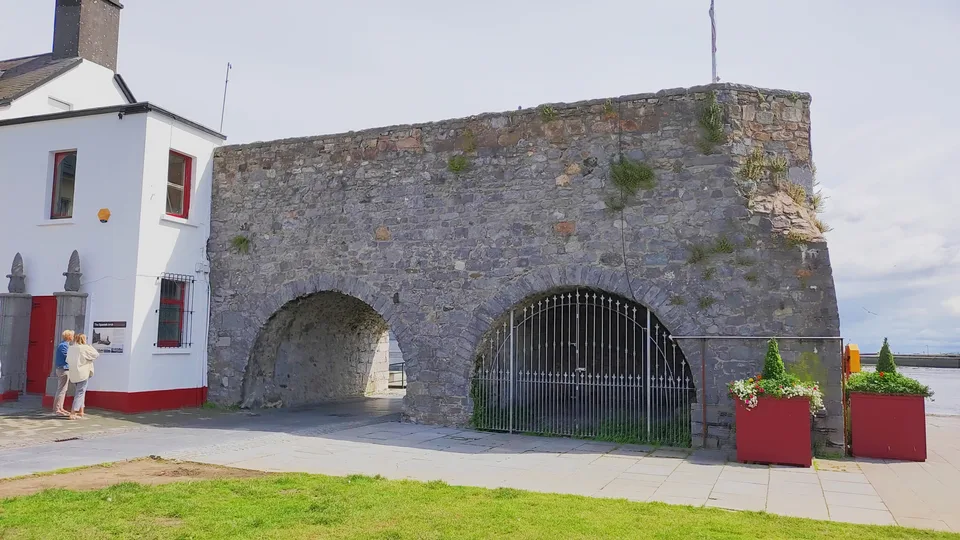
The familiar “City of the Tribes” name refers to fourteen merchant families influential from the fifteenth to seventeenth centuries. Surviving and reconstructed pieces of the walls reveal how differently the city once worked. Look around the Spanish Arch, then notice the wall incorporated into Eyre Square Shopping Centre. These fragments are prompts to look closely, rather than evidence that the entire modern centre is an untouched medieval town.
This history also gives a walking visit a useful organising theme. Follow the relationship between commerce, the defended town and the water, rather than trying to recognise every building from a checklist. The modern shopping centre and the surviving stonework belong to different periods of the same changing place. Leave room for that contrast in photographs and in the way you understand the city.
Choose a neighbourhood for the stay you want
Eyre Square suits travellers who value arrival convenience, shops and access to the central streets. The Latin Quarter and the streets leading towards the Spanish Arch put evening activity close at hand. That convenience comes with a booking question: ask whether the room faces a busy street, a venue or a quieter courtyard, especially if an early start follows your arrival.
Across the river, Galway's Westend gives a different angle on the city, with food and cultural venues around its streets. Salthill suits a stay organised around the waterfront and promenade. Compare the journey back after dinner as well as the daytime walk into town. A broad “Galway” address can also mean somewhere outside the central area: check the map pin and pedestrian route before choosing a seemingly cheaper room.
For a first visit without a car, write down the places you expect to reach most often before comparing listings. A station arrival, two central evenings and one excursion make a different case from several days spent along the seafront. Families needing a kitchen or travellers needing step-free access may reasonably put the room itself ahead of the closest postcode. Ask specific questions about lifts, entrance steps and bathroom arrangements.
Give the museum an unhurried morning
Start with Galway City Museum's visiting information before building a historical walk. Admission is free, with a suggested €5 donation. Its regular opening is Tuesday–Saturday, 10:00–17:00, with galleries closing at 16:45. Sunday opening applies only between Easter and mid-September, so a winter Sunday needs another plan.
There is a specific forthcoming exception: the museum announces closure on Wednesday 21 October 2026 because of industrial action, reopening normally on Thursday 22 October. Check the notice if your visit falls around that date. Beside the Spanish Arch, the museum provides a manageable indoor anchor for a day that also includes the waterfront. Ramps, lifts and baby-changing facilities help with practical planning; ask staff about any individual access requirements rather than assuming every historic stop nearby has equivalent provision.
Walk from the Spanish Arch to the river crossings
Leave time around the Spanish Arch and the Long Walk to look across the water rather than photographing the frontage and immediately leaving. The useful contrast is between this exposed waterfront and the enclosed shopping streets behind it. A short central route can link these areas without requiring a car or a ticketed tour.
Use the official city experience listings to add a guided walk if you want more interpretation. Choose one with a stated meeting point, duration and subject that interests you; avoid booking several overlapping introductions. In wet weather, shorten the exposed stretch and move an indoor visit earlier. A map may make a riverside connection look obvious, but follow public paths and signed crossings instead of assuming every waterfront edge is a through route.
Visit the cathedral with its working life in mind
The cathedral stands on the west bank of the Corrib near Salmon Weir Bridge, giving a central walk another distinct stopping point. Galway Cathedral's visitor guidance lists no admission charge and suggests a €3 contribution. It normally opens approximately 08:00–20:00, with arrangements subject to its religious programme.
This remains a working place of worship. During Mass, enter only if you intend to participate, and fit sightseeing around services. An entrance ramp is at the east transept. Pair the visit with a river crossing and a quieter pause rather than treating it as a timed attraction with a guaranteed unrestricted visiting slot. If access or a particular feature is essential to your trip, contact the cathedral before travelling.
Make Salthill a separate part of the day
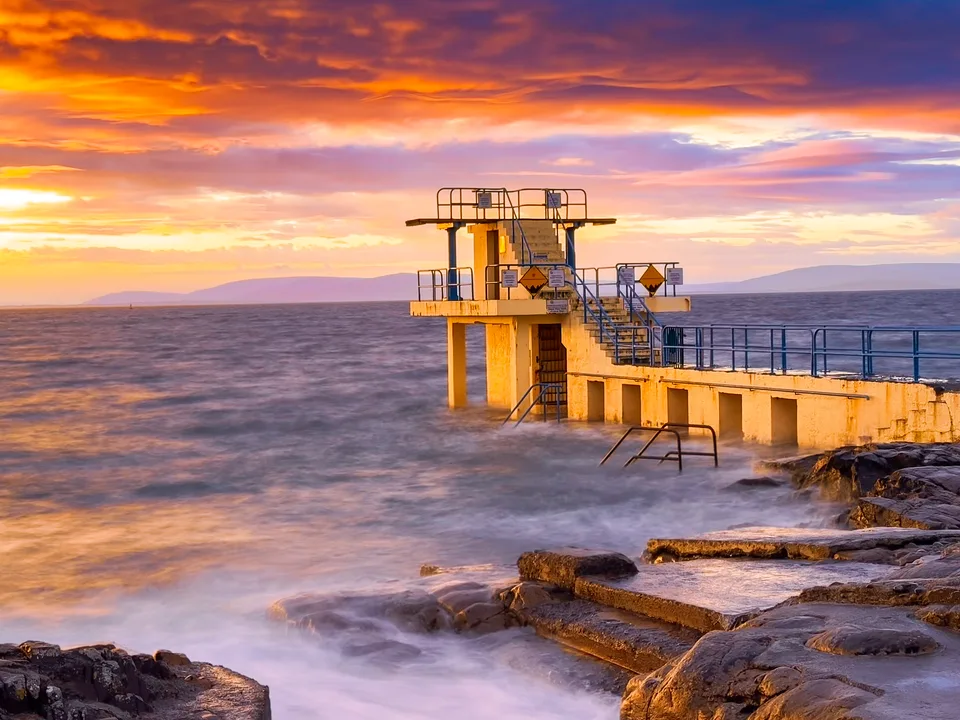
The Salthill Promenade opens the visit out towards Galway Bay. Give it enough time for a walk, a pause and a return journey, rather than adding the whole seafront to the end of an already full city itinerary. The experience depends on wind and visibility as much as sunshine: a sheltered central street is not a reliable guide to conditions beside the water.
Blackrock Diving Tower is an identifiable landmark, but a striking photograph of swimmers does not establish safe conditions for your visit. You can enjoy the promenade without entering the sea. Anyone considering a swim should assess conditions and local advice independently. Families should also plan the return before children become tired, particularly when carrying wet-weather clothing or combining the promenade with an indoor attraction.
Use the aquarium as a planned indoor visit
Galway Atlantaquaria's visitor page provides a useful weather-independent option in Salthill. Current listed adult admission is €15 online or €16 on arrival; children's tickets are €10 online or €11 on arrival. Children aged two and under enter free with a paying adult, and under-twelves must be accompanied by an adult.
Last admission is one hour before closing, so “go there late if it rains” needs a timetable check. Compare the family ticket combinations with individual tickets before paying. This is a purposeful aquarium visit rather than a free shelter to drop into briefly. Build the surrounding Salthill walk around the booked visit, and keep an alternative return arrangement if the weather changes while you are inside.
Find music and food without outsourcing every choice
Galway rewards an evening with one clear intention: a meal, a performance or time in a pub, with flexibility around it. Look for a published programme when a particular musical experience matters. The existence of a venue does not guarantee a session at the hour you arrive, and a festival reputation does not mean every evening has the same programme.
The Galway International Arts Festival is worth checking before choosing dates. Its 2026 festival has already taken place; consult the next announced programme rather than booking around an archived calendar. For food, compare menus displayed by the businesses themselves, including service times, dietary options and the total cost of the meal. Reserve when a particular restaurant is central to the evening; otherwise leave space to choose after walking the area.
Book accommodation with the whole bill visible
Hotels, guesthouses, hostels and self-catering stays serve different trips. A central hotel can simplify a short visit; a kitchen can make a longer stay easier if you will actually use it. For a seafront booking, check whether “sea view” describes the room being sold and whether that room has the bed configuration and accessibility you require.
Compare the final price, cancellation deadline, breakfast, parking and arrival arrangements. If arriving by late coach, ask about check-in before paying. A property outside the centre may work well with a car but less well for evenings on foot. Avoid using a short-stay booking as proof that long-term housing will be equally straightforward: relocation involves another market, different contracts and a separate search.
Travellers bringing a car should ask where it can actually remain overnight, how access works and whether the quoted price includes that space. For a city stay followed by countryside touring, compare collecting the vehicle later with paying to keep it parked throughout the urban portion. The answer depends on the onward route and hire terms; having the keys from arrival is not automatically the most convenient arrangement.
Arrive by rail or an airport coach
Galway Ceannt station is near Eyre Square, with rail links involving Dublin Heuston and Limerick. Dublin Heuston and Dublin Connolly are different stations; use the station named on your ticket. Ongoing works at Ceannt warrant checking passenger information, particularly for assistance, meeting points or a tight connection.
Dublin Airport is another arrival option by road. Citylink's current route listings distinguish direct airport service 760 from services with other calling patterns. Compare the actual departure and destination, rather than choosing any coach labelled Dublin. Private coach departures at Galway Coach Station and services associated with Ceannt are not interchangeable meeting points. Allow time to find your departure bay and keep flight connections separate from an optimistic map estimate of driving time.
Compare airports by the complete journey
An airport choice needs a usable arrival flight, an onward service and a workable return on departure day. Ireland West Airport lists Expressway route 64 connections towards Galway via intermediate towns. Look at the timetable for your flight date and the airport stop itself; the presence of a route does not guarantee a convenient connection after every arrival.
For an early departure, compare a night nearer the airport with the cost and uncertainty of a very early transfer. The same principle applies when considering Shannon or Dublin: price the entire journey, including bags, onward tickets and any overnight stay. Do not assume a railway station serves the terminal, or that a coach ticket automatically includes a city hotel transfer. Keep booking confirmations available offline.
Use local buses without importing Dublin's fare rules
Walking works well for much of the centre, while buses widen accommodation and sightseeing choices. Consult the TFI Galway city network information and the actual operator's timetable for the stop nearest your destination. City Direct and Bus Éireann both operate local services; City Direct's Galway information helps identify its routes.
For Bus Éireann's listed city fares, an adult standard journey costs €1.35 with Leap or €1.90 cash; the higher fare is €1.55 or €2.20 respectively. The listed adult Red Zone 24-hour ticket is €3.80. Check the operator's fare table against your journey and ticket conditions. Do not assume Dublin's transfer arrangements apply here. A day ticket is worthwhile only when the journeys you need fall within its coverage.
Budget for choices rather than a fictional daily average
Separate the expenses you can control from those fixed by your dates. Accommodation is usually the first comparison to make, followed by the airport transfer and any substantial excursion. Then add meals, local journeys and the particular admission tickets you intend to use. A low spending day can centre on walking and free cultural stops; a ferry day has a different cost structure.
For shopping, begin with what you need to carry home and the baggage allowance you have bought. Check opening hours before leaving essential purchases until departure morning. Self-catering visitors should check whether the kitchen has basic equipment before buying ingredients. Keep a small contingency for a taxi or changed plan, without assuming that every attraction, meal and journey must fit a single published “budget traveller” figure.
Leave weather room in the schedule
Use Met Éireann's county warnings and marine information when planning exposed walks or an excursion. A seasonal description cannot settle the conditions on the day. Carry a waterproof outer layer and choose footwear that remains comfortable on wet pavements; clothing that works for a central café stop may be insufficient for time beside the bay.
Longer daylight can make a broader outdoor programme possible, but popular dates also need accommodation checks. In the cooler part of the year, plan around the available daylight and the opening days of individual attractions. Keep one indoor city option available when a coastal outing is uncertain. A cancelled sailing is a reason to change the day, not an invitation to squeeze the same journey into an unsuitable weather window.
Treat an Aran Islands trip as a full excursion
Aran Island Ferries operates year-round from Rossaveel, about 37 kilometres west of Galway city, to the three islands. Its city shuttle leaves from Victoria Place; check whether the transfer is included in the ticket you select and book the required elements together. Rossaveel is not a pier you can casually walk to from a central hotel.
The operator's seasonal Galway city service currently advertises 26 March–3 October 2027. Its return itinerary combines Inis Mór with a Cliffs of Moher cruise: viewing the cliffs from the sea is different from visiting their clifftop paths. Check the sailing season, island time, return arrangements and cancellation terms. Keep the island day free of another distant excursion or an essential flight connection.
A realistic three-day plan
On the first day, settle into your accommodation and walk from Eyre Square through the central streets towards the Spanish Arch and waterfront. Choose an evening meal near where you intend to spend the rest of the night. This introduction works better without an airport arrival immediately followed by a prepaid, tightly timed activity.
Use day two for the museum when open, a river crossing and the cathedral around its services. Give Salthill the afternoon, adding the aquarium if it suits your interests. On day three, choose either an island excursion or a countryside day, subject to weather and transport. If staying only two days, keep the city and Salthill; adding an island trip means deliberately giving up city time. Reverse the days when conditions or opening calendars make that sensible.
Consider Connemara without compressing the map
Connemara National Park is near Letterfrack, a separate journey from Galway. Admission is free, and the official page lists bus connections including Citylink 923. Match the outward service, walk and return bus before committing. A landscape excursion needs daylight and equipment appropriate to the selected trail, rather than the assumptions of a shopping-street walk.
Current park information lists the visitor centre Wednesday–Sunday, 09:00–17:30, with bank-holiday Monday exceptions, until further notice. Grounds close during orange and red weather warnings. Check notices again near departure. If the real purpose of your holiday is several days exploring Connemara, consider staying there for part of the trip. Returning to Galway every night is a choice with transport consequences, not an unavoidable rule.
For a wider Irish trip, compare the Dublin city page and Cork city page alongside Galway, matching arrival airports and onward journeys to the places you actually want to see. These are separate urban bases, rather than stops to squeeze into the same Galway sightseeing day. Choose fewer changes of accommodation when each move would consume the time you hoped to spend exploring.
Moving to Galway starts with securing a workable home
The University of Galway accommodation service warns about housing pressure and advises viewing in person before transferring money. That is valuable preparation even if you are not a student. Temporary accommodation should leave enough time to inspect realistic options without turning an expensive short-stay extension into the default plan.
For each property, list the rent, deposit, heating, electricity, internet, refuse arrangements and commute. Ask what is included and record it in the agreement. Test the journey to your actual workplace or campus at the relevant hour; a centre-to-centre distance cannot answer that question. For residential tenancies covered by the rules, the Residential Tenancies Board's deposit guidance states a maximum deposit of one month's rent. Establish what type of arrangement you are signing, particularly for a room in an owner-occupied home.
Set up daily life before assuming everything is included
Inspect heating controls, ventilation, storage and laundry facilities when viewing. Ask how repairs are reported and who supplies any missing household essentials. Photograph the condition at move-in, keep payment receipts and establish whose name appears on utility accounts. These questions are easier to resolve before handing over money than after discovering an unfamiliar heating system on the first evening.
Arrange healthcare for the length and purpose of the stay. The HSE's guidance for visitors explains necessary public healthcare using an eligible EHIC; this does not replace travel insurance or cover private treatment automatically. A resident's arrangements require their own eligibility checks. Keep enough flexibility in your arrival schedule for practical appointments, shopping and establishing services rather than assuming a sightseeing itinerary doubles as a relocation plan.
For a household move, prepare two budgets: the initial setup and an ordinary month after settling. Temporary lodging, a deposit and basic purchases belong in the first; the agreed rent, household bills and commuting belong in the second. Keeping them separate exposes whether the move depends on a quick housing search or on income that has not yet started. Avoid signing for a location until the employment or study arrangements make its daily journey workable.
Match immigration permission to the real purpose
Ireland operates its own immigration system, separate from Schengen. Start with the Irish Immigration visitor guidance for your nationality and circumstances. A visa, where required, and permission at the border are separate matters. Visitor permission is limited to a maximum of 90 days and is not an automatic entitlement to that full period or a route to settling through repeated visits.
Employment usually requires the appropriate employment permit for non-EEA nationals unless an exemption applies, alongside the relevant immigration permission. Study requires the official student route, an eligible course and the applicable conditions; admission alone does not authorise unrestricted work. Use VisaWand's Ireland guide for broader preparation, its Ireland destination page and city directory for comparisons, and the consultant directory when professional help would clarify your circumstances.
Official planning resources
Reviewed 17 October 2026. Use the official resources linked throughout this guide for admission, transport, housing and immigration decisions. Prices, services and rules can change; confirm the details relevant to your dates. Photography illustrates the locations and is not a live view.
View all official resources
- Fáilte Ireland: Galway city
- Galway City Museum: medieval Galway
- Fáilte Ireland: Galway Westend
- Galway City Museum official visit and closure notice
- Discover Ireland official Galway city visitor information
- Galway Cathedral: visitors
- Fáilte Ireland: Salthill Promenade
- Galway Atlantaquaria: plan your visit
- Galway International Arts Festival
- Iarnród Éireann: Galway Ceannt
- Citylink official timetables
- Ireland West Airport: bus connections
- TFI Galway route map and operator fares
- City Direct: Galway services
- Bus Éireann: Galway route and city fares
- Met Éireann: weather warnings
- Aran Island Ferries: routes and transfers
- Aran Island Ferries: seasonal Galway city service
- National Parks of Ireland: Connemara
- University of Galway: accommodation advice
- Residential Tenancies Board: security deposits
- HSE: healthcare for visitors
- Irish Immigration Service visitor route
- Irish Immigration Service visitor permission and extensions
- Department of Enterprise: employment permits
- Irish Immigration: study in Ireland
Plan the next part of your journey
Explore the Ireland guide, browse other cities or compare consultants for your travel and relocation questions.