Visa
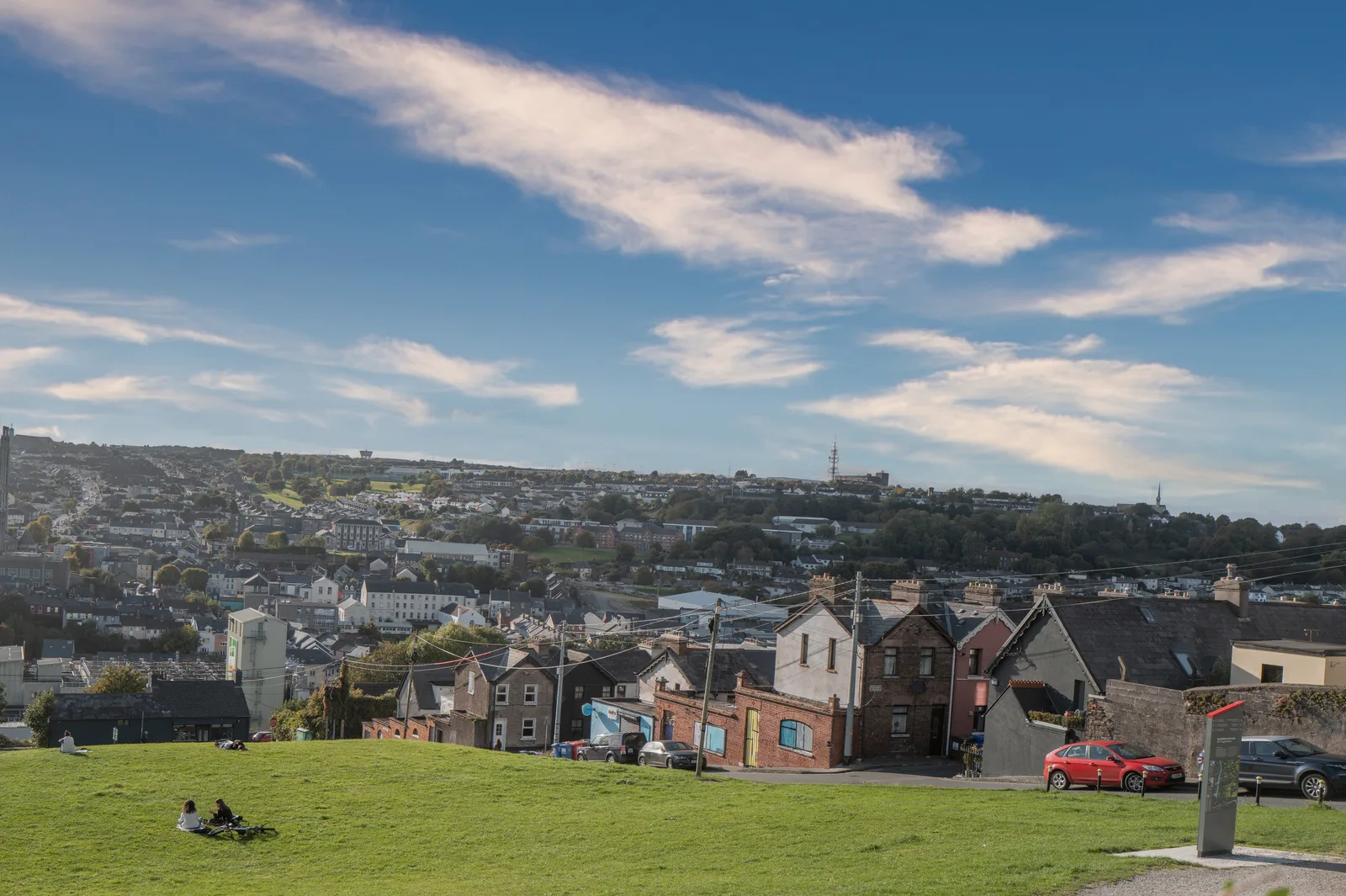
Cork is a city to explore between meals
Cork makes a persuasive case for slowing down. Its appeal is spread across a working food market, river crossings, steep streets and cultural stops that reward attention more than speed. A visit can be satisfying without a car or an expensive attraction every morning. The important decision is whether Cork is your destination or merely the base for touring the surrounding county.
For a first visit, give the city two full days before adding a regional outing. The official Pure Cork city itinerary is useful for orientation, particularly around Shandon, the Victorian Quarter and the western riverside. Check individual venues separately: older itineraries still recommend Crawford Art Gallery, whose building is currently closed for redevelopment.
People considering a move should add a working weekday. A leisurely walk through the centre tells you little about reaching a workplace outside it, finding housing or managing a household budget. Use the same map for your sightseeing and prospective commute, but allow each a different timetable.
A trading city shaped by water
The city council’s history of the English Market places food trading within a larger story of eighteenth-century commerce. Beef, pork and butter moved through Cork’s provisions trade, while reclamation and the infilling of channels helped create streets recognisable today, including Saint Patrick’s Street and Grand Parade.
The market opened in 1788. Its name reflects the Protestant corporation that established it and the later distinction from the separately established Irish Market. Understanding that history gives the building more substance than a quick photograph of attractive stalls.
Use the river and bridges to orient yourself, then notice how quickly a level central walk becomes a hill climb on the north side. Cork’s compact appearance can disguise effort. Group sights by area and put a café or indoor stop between longer walks, particularly if travelling with children, luggage or someone who needs frequent rests. There is little benefit in repeatedly retracing the same crossing to follow an overambitious list.
Choosing an area: centre, Shandon or the university side
For a short stay, compare addresses around the central shopping streets with those near MacCurtain Street in the Victorian Quarter. The latter deserves an evening as well as a daytime walk. Check the exact room location and noise arrangements if choosing accommodation above, or immediately beside, a busy venue.
Shandon is a separate uphill exploration north of the centre, with Saint Anne’s tower as its landmark. Build in time for the climb through the streets as well as any climb inside the tower. A city-centre distance shown on a listing does not describe the gradient.
The western side is worth considering when your visit centres on University College Cork, the Glucksman or the riverside around Fitzgerald’s Park. For relocation, begin with the actual campus or employment address rather than choosing a neighbourhood by reputation. Test the final walking section from the bus stop; that is often the part a broad transport map cannot explain.
The English Market: shop before you photograph
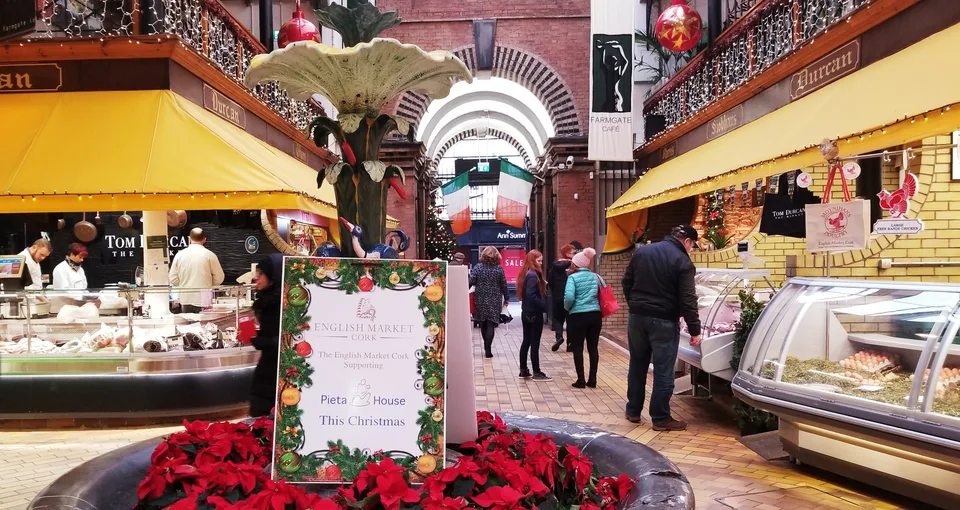
The English Market is an everyday food business as well as a visitor attraction. The council’s visiting guidance asks people to keep narrow aisles clear and respect customers and traders. Go with something you might actually buy, allow people to be served and move aside before stopping for photographs.
The published opening hours are Monday to Saturday, 08:30–18:00, with closure on Sundays and bank holidays. This matters for a weekend itinerary: do not leave the market until your final Sunday morning. Individual stalls may have their own practical availability within the building’s hours.
Look at the range of food before deciding where to spend. Compare a small purchase for later with a sit-down meal, and ask about ingredients or storage if buying something perishable. For a self-catering stay, the market can be part of the shopping plan; it does not replace checking where you can buy essentials after an evening arrival. The photograph here records a December visit in 2017, rather than today’s decorations or stall layout.
Saint Fin Barre’s Cathedral and the South Parish
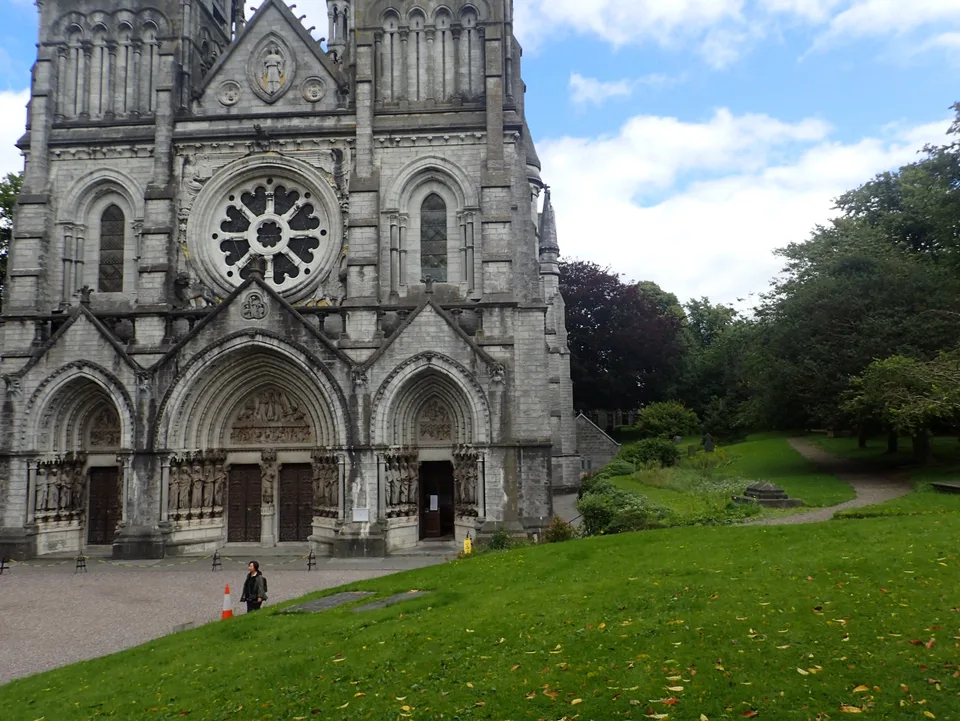
Saint Fin Barre’s Cathedral rewards a visit for its architecture as well as its place in Cork’s religious life. The cathedral’s own introduction identifies William Burges’s Gothic Revival design and its consecration in 1870. Leave time to look closely rather than treating it as a distant skyline feature.
The official visitor page lists adult sightseeing admission at €8, with accompanied children under sixteen admitted free. Its ordinary visiting hours differ on Sundays, and from November to March Sunday opening is for services. Worship and sightseeing are different purposes; check the current schedule before making the cathedral your main appointment.
The venue describes wheelchair access but has no public toilets. Plan that practical detail before arriving with a group. Combine the cathedral with the surrounding streets and Elizabeth Fort rather than crossing the city again immediately afterwards. If you want a concert or another special event, check its separate arrangements; ordinary entrance should not be assumed to include every programme on the calendar.
Elizabeth Fort: a view with a free starting point
Elizabeth Fort’s official visitor information distinguishes free general admission from paid interpretation: guided tours are €5 per person and the audio guide is €3. That gives travellers a useful choice between a brief independent visit and a more structured explanation.
The seasonal timetable matters. From October to April the regular schedule excludes Mondays; the summer schedule includes them. Verify your day before walking up Barrack Street, especially if combining this stop with a Sunday cathedral visit.
The courtyard is accessible to wheelchair users, but the walls require a small, steep stone staircase. Decide which part of the experience is realistic for everyone in your party. A free ticket does not remove an access limitation. For a relaxed morning, pair the fort with one nearby paid attraction and leave the remaining time for walking and lunch. Visitors with a particular historical interest may prefer the guided tour to adding another unrelated stop simply because it is nearby.
Shandon: check what the tower ticket includes
Saint Anne’s Shandon offers a different perspective on Cork, reached through the streets north of the centre. The operator’s current visitor page lists an adult tower-and-church ticket at €8 and describes 132 steps, with the route narrowing near the belfry. This is a climb to assess carefully, rather than a universally accessible viewpoint.
There is an unresolved detail to check before booking. On 21 October 2026, the site’s admission tab still described reduced-price, climb-to-view access without bell ringing, while other promotional text advertised ringing and repair FAQs referred to early 2026. Confirm bell-ringing availability directly if it is the reason for your visit.
The operator also restricts access for very young children and visitors whose mobility or other needs make the narrow climb unsuitable. Read the conditions for your group and note that there are no toilets on site. You can still enjoy the area’s streets and the tower’s exterior without making the climb the measure of a successful visit.

Cork City Gaol: choose the format you want
Cork City Gaol’s visitor page lists adult admission with a guidebook at €12, with an audio guide costing an additional €2 and a guided tour an additional €2.50. Decide whether you prefer reading independently or joining an English-language guided visit before choosing your arrival time.
The site tells stories of prisoners and staff in a building that first received prisoners in 1824. It is a substantial historical stop, so give it space rather than treating it as a quick addition to a full afternoon.
Accessibility is partial. Much of the exhibition is on the ground floor, but there is no lift to the upper level. Discuss the entrance route with the operator if needed. The gaol is privately operated and does not accept the OPW heritage card, a useful distinction when comparing attraction budgets. Plan any meal separately: the site has a coffee machine but no full café or restaurant. Check current winter closing time before setting out late in the day.
Art while Crawford is closed
Do not plan an ordinary gallery visit to the Crawford building. Its redevelopment update confirms the public closure, and the latest update anticipates reopening in late 2028, following building handover and installation work. That is a projected timetable, subject to progress, rather than an opening date to book around now.
For an art visit during your stay, investigate the Glucksman’s current visitor information and exhibition programme at University College Cork. Admission is free, with a suggested €5 donation; the donation is a choice, not an entrance charge. The published schedule is Tuesday to Sunday, with Mondays closed.
Use the gallery as the anchor of a western-side half-day and leave time for the campus surroundings. Check for changes between exhibitions before travelling specifically for one show. If your interests lie with a particular Crawford artwork, consult the gallery’s current off-site programmes and loans rather than assuming the collection can be seen together elsewhere in Cork.
Where to stay and what to compare
Discover Ireland’s accommodation finder lists places to stay in Cork, assessed by Fáilte Ireland for quality assurance. Check the exact address: a County Cork property can mean a different holiday from a central Cork property.
For a two-night city break, compare the total cost of a central room with an outlying property plus transport and parking. Ask whether breakfast, luggage storage and late check-in are included. If staying above a bar or near evening venues, establish what the room description says about noise rather than assuming either silence or disturbance.
Families and longer-stay visitors should check kitchen equipment, laundry and the true bed arrangement. Students travelling to inspect accommodation should prioritise their viewing and campus appointments over a scenic outlook. Keep cancellation conditions aligned with your travel plans, especially around a ticketed event. A flexible room can be worth more than a small headline saving if your arrival or appointment dates remain uncertain.
Getting to Cork: airport and Kent Station
Cork Airport’s bus information identifies routes 225 and 226 from airport Stop A towards the city and Kent Station. The airport gives an average journey of about twenty-five minutes to Parnell Place; traffic and your final destination affect the real transfer.
Check direction carefully. The opposite services use Stop B towards destinations including Carrigaline and Kinsale. The airport lists ticket machines and the TFI Go app as alternatives to cash payment to Bus Éireann drivers. Establish how you will pay before the bus arrives, and check the live departure for your date.
Irish Rail’s Cork Kent station page provides information for Intercity and commuter arrivals, including links with Dublin Heuston, Cobh, Midleton and Mallow. Kent is distinct from Parnell Place bus station. Save the arrival point as well as your accommodation address, and arrange any required rail assistance in advance. There is no reason to hire a car immediately if your first days are entirely within the city.
Local buses, Leap fares and walking
Use Transport for Ireland’s Cork network maps to understand the bus and rail system, then plan the actual journey with current departures. Maps can include future network information alongside existing services; an announced improvement is not necessarily operating on your travel date.
The Cork Leap information page records fares introduced on 20 July 2026. The adult city bus fare is €1.70, including qualifying transfers within ninety minutes on TFI Cork City bus services. Adult daily and weekly caps are listed at €5.10 and €20.40. Check the correct card, service and fare conditions rather than extending this automatically to commuter rail or every regional route.
Walking remains useful for a central visit, but allow for hills, rain and the needs of the slowest walker. For a prospective resident, compare a commute in both directions and at the relevant shift times. A convenient daytime service is only half the answer if you regularly return late.
Food, shopping and a realistic spending plan
Start your food planning with the market, then compare current menus around the centre and Victorian Quarter. Choose one meal you especially want and keep the rest flexible. A restaurant listing establishes a place to investigate, not a personal endorsement or a guarantee of today’s menu.
Separate accommodation, meals, transport and admissions when comparing the cost of Cork with another city. At the published adult rates, Saint Fin Barre’s Cathedral, Shandon’s tower-and-church ticket and the gaol’s guidebook entry total €28. Adding a €5 fort tour makes €33, before food or travel. Bell access and other conditions still need checking.
A less expensive day can combine free general admission at Elizabeth Fort, a market browse and the Glucksman. Avoid buying several interpretive extras automatically; a guidebook may suit one traveller while a guided tour suits another. For gifts or food to take home, consider baggage space and any destination import rules before buying. Perishable purchases need a transport plan as well as a price comparison.
Weather and choosing your dates
Met Éireann’s 1991–2020 Cork Airport averages give useful context: January’s mean daily maximum was 8.2°C and July’s 18.6°C. These are long-term airport-station averages, not a forecast for a city-centre afternoon. Rain occurs throughout the year, including summer.
Pack a waterproof layer and comfortable shoes, and keep an indoor option beside each longer walk. Summer can suit visitors who want to add garden or coastal time, but it should not be sold as reliably dry. Short winter days make it sensible to put outdoor viewpoints before the final indoor visit.
Check the actual event calendar before fixing a weekend. A concert or festival can be the reason to travel, while also changing the accommodation you can find. Compare the total trip cost for your chosen dates with a quieter weekday alternative. For relocation research, visit during an ordinary working period if possible; an exceptional celebration gives only one view of daily life.
A three-day itinerary with room to enjoy it
Day one: begin in the centre and visit the English Market on an open trading day. Continue to Saint Fin Barre’s Cathedral and Elizabeth Fort, allowing time for the uphill approach and any paid interpretation you choose. Spend the evening around the centre or Victorian Quarter without another distant appointment.
Day two: explore Shandon in the morning, taking the tower climb only if it suits everyone. Make the gaol your main historical visit later, or choose the Glucksman and campus surroundings for an art-focused afternoon. Retain the unchosen option for poor weather or a longer stay instead of trying to fit everything in.
Day three: choose one regional excursion, such as Cobh, Blarney or Kinsale, with both outward and return transport checked. If staying in the city, use the day for a slower western-side walk and the cultural stop you missed. With only a weekend, keep two central days and save the wider county for another visit. A Sunday arrival needs a revised plan because the English Market is closed.
Moving to Cork: secure the right kind of housing
Housing should be the first practical investigation for a move. UCC’s private rentals and StudentPad guidance distinguishes private house shares from digs in an owner-occupied home. Its StudentPad service is for prospective and current UCC students; other students should ask their own institution about support.
The distinction between accommodation types affects more than meals and house rules. An owner-occupied arrangement may not carry the same protections as a tenancy covered by the Residential Tenancies Board. Establish which arrangement you are being offered before comparing deposits, notice periods or registration.
UCC advises viewing a property before signing or handing over money and checking purported landlord information. Build time and temporary accommodation into the search rather than treating an online promise as a secured home. At a viewing, ask about heating, ventilation, laundry, bills and permission to use shared spaces. Compare the room’s total monthly cost with the commute it creates. A modest rent saving can disappear if everyday travel becomes substantially more expensive.
Tenancy costs and getting the household running
For tenancies within its remit, the RTB’s enforcement guidance says a landlord cannot request a deposit above one month’s rent or more than one month’s rent in advance to secure the tenancy. Read the applicable conditions, particularly for student accommodation and arrangements outside ordinary residential tenancy rules.
Use the RTB’s tenant checklist to organise written records, receipts and the details of the home you take over. Current rules changed in March 2026, so consult the board’s linked guidance for your tenancy instead of relying on an old summary of rent controls or notice provisions.
Agree which utilities and services you must arrange, and record meter readings and existing damage where appropriate. For healthcare, the HSE’s GP directory helps identify practices to contact; ask about taking new patients, appointments and fees. Confirm your healthcare entitlement and insurance separately. Include grocery access and the route to essential appointments when comparing addresses, rather than assessing a home only by its distance from the centre.
Irish entry, employment and study are separate decisions
Ireland has its own entry rules. The Irish Embassy in Belgium’s visa FAQ explains that Ireland is outside Schengen and a Schengen visa is not Irish travel permission. Check your own nationality and status through Irish Immigration’s visiting guidance; visa-required tourists generally need the appropriate short-stay C visa.
The official short-stay FAQ sets out conditions and limited exceptions. Do not generalise a UK-related waiver or special visa arrangement into unrestricted UK–Ireland travel. A holiday permission is also different from permission for ordinary employment or long-term residence.
For work, consult the employment-permits authority and the relevant immigration route. Non-EEA workers generally need a permit unless exempt; a job offer alone does not settle every requirement. For study, Irish Immigration’s student guidance explains course and permission conditions. Valid Stamp 2 permission can allow limited casual work, with different term-time and specified holiday limits; do not assume all student statuses permit employment or finance a course through hoped-for shifts.
Permanent settlement requires its own later assessment. VisaWand’s Ireland country guide provides broader context, while the Ireland consultant listings help compare professional support. Official authorities determine applications and eligibility.
Cobh, Blarney and other places to consider
Choose regional outings for their appeal rather than their proximity on a map. Cork’s rail connections make Cobh and Midleton worth investigating for a separate day. Check station-to-attraction walking distances and the return service before booking a timed visit.
For Blarney, the castle and gardens’ official website lists adult admission at €24. Treat the grounds and castle as the purpose of the outing. Read the booking terms before paying, including the restrictions on changes and refunds.
Kinsale is another option, with an airport-linked bus route that still requires checking against your starting point and timetable. If comparing city bases for a longer visit or move, consider Dublin as a different proposition rather than an automatic substitute. The Ireland location directory provides further destination pages to research; their depth varies. Give each additional stop enough time to justify the journey.
Official planning resources
Reviewed 21 October 2026. Use the official resources linked throughout this guide for admission, transport, housing and immigration decisions. Prices, services and rules can change; confirm the details relevant to your dates. Photography illustrates the locations and is not a live view.
View all official resources
- Pure Cork: city exploration
- Cork City Council: history of the English Market
- Cork City Council: visiting the English Market
- English Market: opening hours
- Saint Fin Barre’s Cathedral: architecture and tours
- Saint Fin Barre’s Cathedral: visitor information
- Elizabeth Fort: admission, tours and access
- Saint Anne’s Shandon: prices, tower access and notices
- Cork City Gaol: admission and accessibility
- Crawford Art Gallery: current redevelopment
- The Glucksman: visitor information
- Discover Ireland: accommodation in Cork
- Cork Airport: bus connections
- Irish Rail: Cork Kent station
- TFI: Cork bus and train network
- Leap: Cork fares updated 20 July 2026
- Met Éireann: Cork Airport 1991–2020 climate averages
- UCC: private rentals, digs and StudentPad
- RTB: deposits and advance-payment rules
- RTB: tenant checklist
- HSE: find a GP
- Embassy of Ireland in Belgium: Schengen and Irish visas
- Irish Immigration: visiting Ireland
- Irish Immigration: short-stay questions
- Enterprise department: employment permits
- Irish Immigration: study and student work conditions
- Blarney Castle and Gardens: official admission
- Blarney Castle: booking terms
Plan the next part of your journey
Explore the Ireland guide, browse other cities or compare consultants for your travel and relocation questions.