Visa
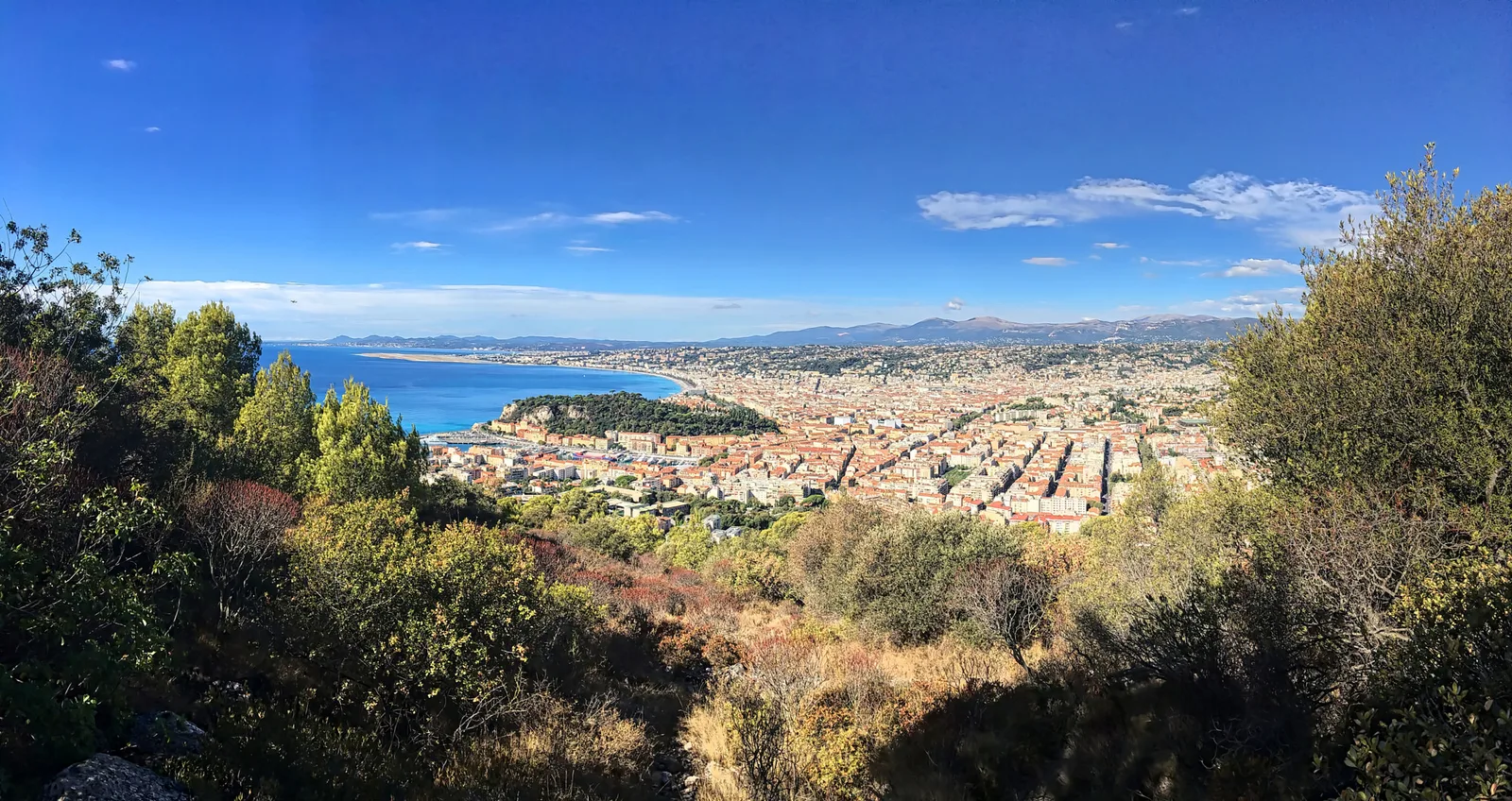
Nice works best when you look beyond the postcard
Nice gives you a substantial city beside the Mediterranean: a place where an art museum, a market morning and a swim can belong to the same visit. Its usefulness as a Riviera base is equally important. You can spend several days here without hiring a car, then use regional transport for another coastal town rather than changing hotels every night.
The choice is less obvious for someone planning to move. A holiday address overlooking the water may involve a different commute, housing contract and household budget from an apartment beside a tram stop. This guide treats both decisions seriously. Start with the geography, choose a manageable area and leave enough time to find out how the city functions between its celebrated sights.
A winter resort that became a year-round city
Nice sits on France’s southeastern Mediterranean coast, near the Italian border and below the Alps. Its international identity developed through winter tourism rather than modern beach holidays alone. From the eighteenth century, visiting families helped shape new districts, gardens and accommodation beyond the medieval town. Nice belonged to Piedmont-Sardinia before becoming French in 1860.
The UNESCO listing for Nice’s winter resort heritage, inscribed in 2021, explains the mixture of British, Italian, French and Russian influences visible in its architecture. Look beyond individual monuments: the relationship between broad streets, planted gardens, villas, hotels and sea views is part of the story. A slow walk can therefore be as revealing as another admission ticket, especially if you notice how the city changes as you leave the shore.
Choose your base by the journeys you will make
Vieux Nice suits travellers who want the historic centre close at hand. Around Jean Médecin and Place Masséna, consider addresses that make your combination of tram travel, shopping and walking straightforward. These are different holiday priorities, so compare a specific street and entrance rather than treating “central Nice” as a sufficient description.
The port is worth considering when waterfront evenings appeal more than immediate access to the principal shopping streets. Cimiez deserves attention for its heritage and green spaces, but check the uphill journey before booking there. For an initial reconnaissance visit, stay near the transport you expect to use regularly. That lets you test possible residential areas without committing your entire stay to one neighbourhood’s advantages and inconveniences.
Read the Old Town through its market
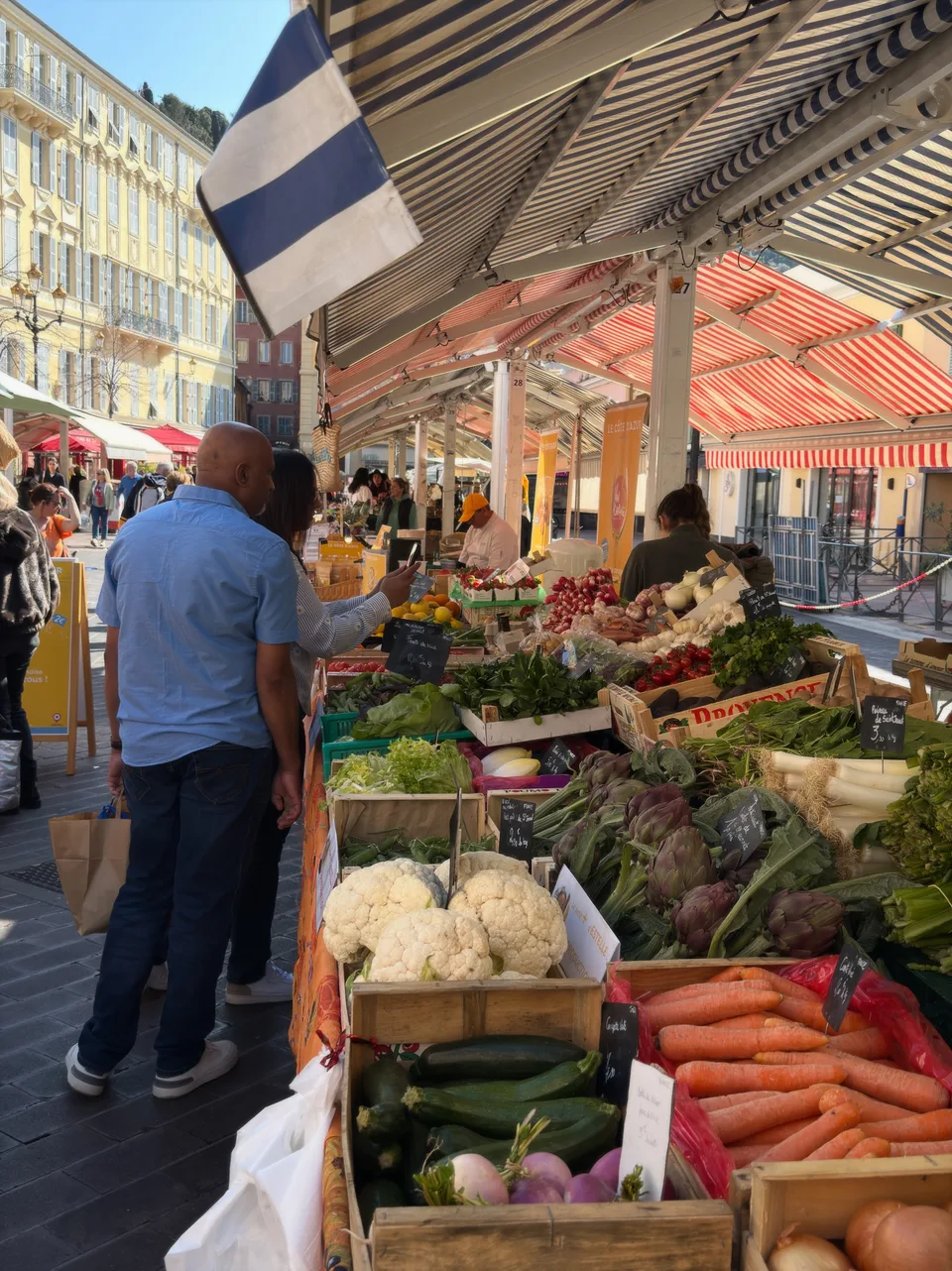
Begin Vieux Nice with time to wander rather than a checklist. Cours Saleya makes a useful anchor, with produce stalls, flowers, cafés and surrounding lanes. The tourist office’s Cours Saleya information distinguishes the regular market from Monday’s antiques market. Choose another morning if fruit, vegetables and flowers are the main reason for coming.
Browse first and decide what you actually want to buy. A small food purchase gives a market visit a purpose; it need not become a bag of souvenirs. Leave room afterwards for nearby streets and a seated break. If you are viewing accommodation here, return at another hour and listen from the actual apartment: a picturesque daytime setting tells you little about how well you will sleep above an evening terrace.
Use Castle Hill to understand the landscape
Castle Hill separates the Old Town from the port and gives the city a readable shape. The municipal park information describes viewpoints, archaeological remains, shaded paths and children’s play areas. Expect a landscape park with surviving traces of fortifications, rather than an intact castle with furnished rooms.
The city lists opening hours of 08:30–20:00 from April through October and 08:30–18:00 from November through March. Plan the descent before closing. Take water and footwear suitable for slopes and steps; do not build an accessible itinerary around an assumed working lift. Confirm the route for your particular mobility needs beforehand. One unhurried visit is more useful than repeatedly crossing the hill to connect activities that could have been grouped on the same side.
Give the port a separate afternoon
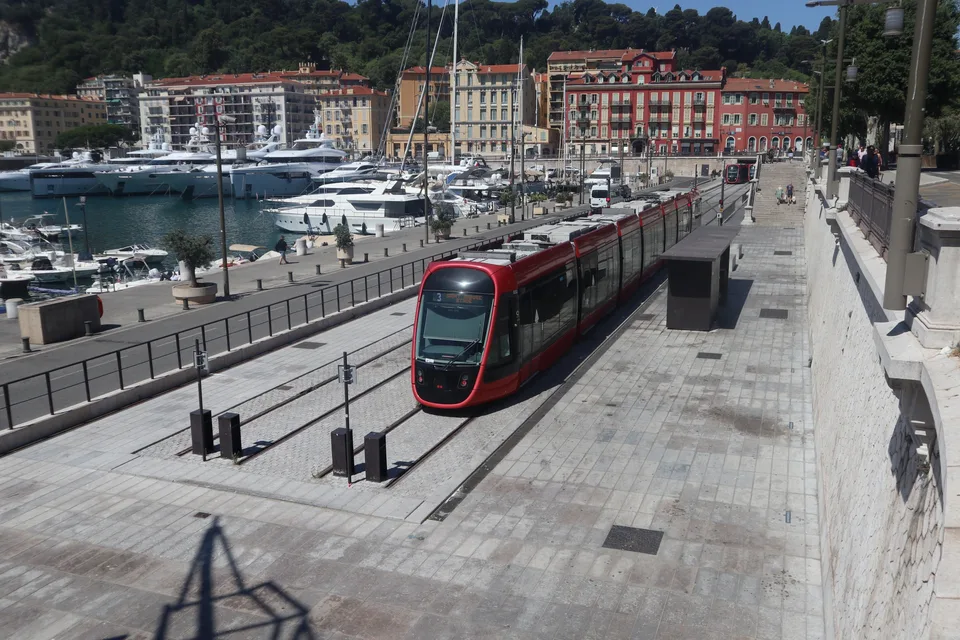
Port Lympia offers another way to spend time outdoors: follow the waterfront, look across the moored boats and choose a café stop without trying to reproduce an entire coastal excursion. The airport tram’s line 2 terminus also makes the port a practical landmark when you are learning the network.
Use the visit to judge the district as a possible base. Walk between the stop, your prospective accommodation and the places where you would eat or shop. Distance on a map does not reveal the quality of the final approach with luggage. A waterfront photograph is also only one angle on a working neighbourhood. Leave enough daylight to explore the surrounding streets before deciding whether the setting matches your plans for the rest of the trip.
Head uphill for art and another Nice
Cimiez changes the rhythm of a visit. The Matisse Museum occupies the Villa des Arènes within a wider heritage setting of olive trees, Roman remains and the monastery area. It is a sensible place to spend a substantial part of a day rather than a hurried stop between two coastal towns.
Check the city’s Matisse Museum page before travelling uphill. At this guide’s review, it announces closure from 29 September through 20 October 2026 inclusive for exhibition preparation. The normal individual ticket is €10; a four-day municipal museum pass is €15, with eligibility conditions for free entry. Once visits resume, compare the pass with museums you will actually enter. A view from Cimiez also helps prospective residents appreciate how much of Nice lies beyond its familiar seafront.
Plan museum visits around the current closures
The Marc Chagall National Museum centres on the Biblical Message cycle and also presents other media. Its current adult prices are €10 outside exhibitions and €12 during exhibitions; admission may be adjusted when rooms are closed. Tuesdays are the weekly closing day, with additional holiday exceptions.
For the remainder of October 2026, the museum lists a 13:00–14:30 closure within its 10:00–18:00 day; winter hours are shorter. Consult its current notice rather than assuming continuous opening. Separately, MAMAC remains closed for a multi-year renovation, with cultural activity continuing outside the building. Treat that closure as a reason to choose a different museum, not as a brief interruption you can solve by arriving at another hour.
A beach visit needs a few practical choices
Nice’s city beaches are pebbly, so a thick mat and suitable footwear can matter more than a perfect picnic. Start with a short visit before committing a whole day, particularly with children or anyone uncomfortable entering the sea. Swimming conditions and access should govern the plan, not the colour of the water in a photograph.
The city’s beach information distinguishes public beaches from concession-operated facilities and identifies adapted beaches at Carras and Centenaire. Confirm seasonal services and the assistance you need directly. A paid lounger or restaurant booking is a separate purchase from choosing a public stretch of shore. Compare the full price, operating dates and cancellation terms before reserving; there is no need to buy an entire beach-club package simply to enjoy the waterfront.
Book accommodation for comfort as well as location
The official accommodation directory covers hotels, residences, holiday rentals and other options across Nice Côte d’Azur. Check the municipality and exact address: a Riviera listing is not necessarily within walking distance of central Nice. For short stays, weigh the simplicity of hotel reception against the cooking and laundry facilities of a serviced apartment.
Ask about air conditioning, lift access from street level, room orientation and late arrival arrangements. “Lift available” may still leave steps before the lift or after it. Obtain the total payable amount including cleaning, deposits, breakfast and any applicable tourist tax. That tax depends on the accommodation category and relevant exemptions. Compare identical dates and cancellation conditions; an attractive nightly headline is not a reliable trip budget by itself.
For a family, request the actual bed configuration and a floor plan when space is important. For remote administration or a reconnaissance trip, ask about a usable desk and reliable internet. Before paying, save the address, reception instructions and cancellation terms somewhere available offline; that is particularly useful when arriving after a delayed flight.
Arrive from the airport on the right tram
The airport’s current public transport information lists line 2 from both terminals to Jean Médecin and Port Lympia. Line B serves CADAM; line 3 connects at Grand Arénas for Saint-Isidore and Allianz Riviera. Older instructions describing line 3 as the direct airport service can mislead.
The airport lists an AERO return ticket at €10 from terminal tram machines. That is a return product, not a €10 single. Trams are free between Terminal 2, Terminal 1 and Grand Arénas. Other tickets and rechargeable cards have different sales arrangements, so establish which product you need before boarding. For a late flight, check the actual last departure and plan a fallback rather than assuming the daytime frequency continues through the night.
Distinguish Nice-Ville from the airport railway station
Nice-Ville and Nice-Saint-Augustin serve different arrival needs. According to the airport’s railway access instructions, Grand Arénas connects with Nice-Saint-Augustin; terminal passengers can use the free tram section and then follow the station access route. A station described as serving the airport is not a platform inside the arrivals hall.
For Nice-Ville, the airport describes a line 2 connection via Jean Médecin with a walk, or a further tram connection towards Gare Thiers. Allow time for that final transfer when catching a reserved train. Check station names on every booking, including the return. With large bags or limited mobility, assess the complete journey from terminal door to platform rather than judging convenience by the rail portion alone.
Understand everyday fares before buying a pass
The current Lignes d’Azur individual-ticket page lists a Solo urban journey at €1.70 with connections during 74 minutes. It separately lists the €10 airport return and the €2.50 Ticket Azur connecting the urban network with an eligible interurban ZOU! service. These products are not interchangeable descriptions of the same trip.
For several days, compare your expected journeys with the operator’s current passes and ticket media. Card costs, loading and validation requirements also matter. Read the product rules before using a ticket for multiple people or assuming a return is included. Walking may cover much of a sightseeing day, whereas an apartment farther away can change the calculation. Use the current journey planner for your stop and travel date, particularly on holidays or during works.
Eat locally without turning every meal into an event
The regional tourist board’s Cuisine Nissarde information is a useful starting point for finding businesses associated with local culinary traditions. Socca and pissaladière offer approachable introductions. Use the current labelled selection to research an establishment, then inspect its own menu, opening day and booking arrangements.
Make one meal a deliberate choice and leave others flexible. A bakery breakfast, market purchase or simple lunch can balance a more substantial dinner without requiring a speculative daily food allowance. Ask about ingredients rather than assuming a vegetable-looking dish is vegetarian or suitable for an allergy. For a longer stay, test the ordinary food shops near your accommodation: opening times, carrying groceries and kitchen equipment influence everyday comfort far more than a list of celebrated restaurants.
Shop with a purpose and build an honest budget
Reserve space for purchases you will use: food you can transport legally, a small craft item or something you have compared carefully. Browsing around Jean Médecin and the Old Town need not occupy a whole day. Check provenance when a product’s local origin matters to you; a Nice-themed label alone does not establish where it was made.
Build your budget from confirmed accommodation, airport transfers, likely local journeys and chosen museum tickets. Add meals, insurance and an unallocated margin. Keep optional beach facilities and excursions separate so you can see what is driving the total. For relocation, use a different worksheet: monthly rent, charges, energy, insurance, commuting and initial setup costs. A few holiday receipts cannot establish a realistic household budget.
Choose the season for the trip you want
Nice’s heritage as a winter resort should encourage consideration beyond a summer beach holiday. Spring and autumn are sensible starting points for a walking-and-museum itinerary; winter can also work if swimming is secondary. Summer planning needs particular attention to shade, cooling and the balance between indoor and outdoor activity.
Météo-France’s Mediterranean climate guidance describes hot summers, mild winters and irregular rain that can be intense, especially during spring or autumn episodes. This is climate context, not a guarantee for your dates. Consult the forecast before coastal walks and excursions into the hills. Carry a rain alternative alongside the sunshine plan. If an event is the reason for travelling, verify its current official calendar before purchasing non-refundable accommodation.
A realistic three-day introduction
Day one: explore Vieux Nice and Cours Saleya in the morning, allowing for Monday’s different market. After lunch, visit Castle Hill if weather and access suit you, then finish with a manageable stretch of waterfront. Leave a museum ticket out of this day unless you particularly want one.
Day two: choose the Chagall Museum or, when open, Matisse and the Cimiez area. Respect lunch closures and allow a proper journey between districts. Spend the later afternoon around the port instead of squeezing in another distant attraction. Day three: take one nearby excursion, or remain in Nice for a beach visit and the museum you omitted. In poor weather, exchange the outdoor day with the museum day. The aim is a satisfying introduction, not maximum place names.
With only one full day, keep the Old Town, a viewpoint and a meal, then choose between art and the beach. With four or five days, add rest and a second excursion on separate days. Someone considering relocation should reserve an ordinary weekday for apartment viewings and commuting rather than filling every opening with sightseeing.
Moving here starts with the commute
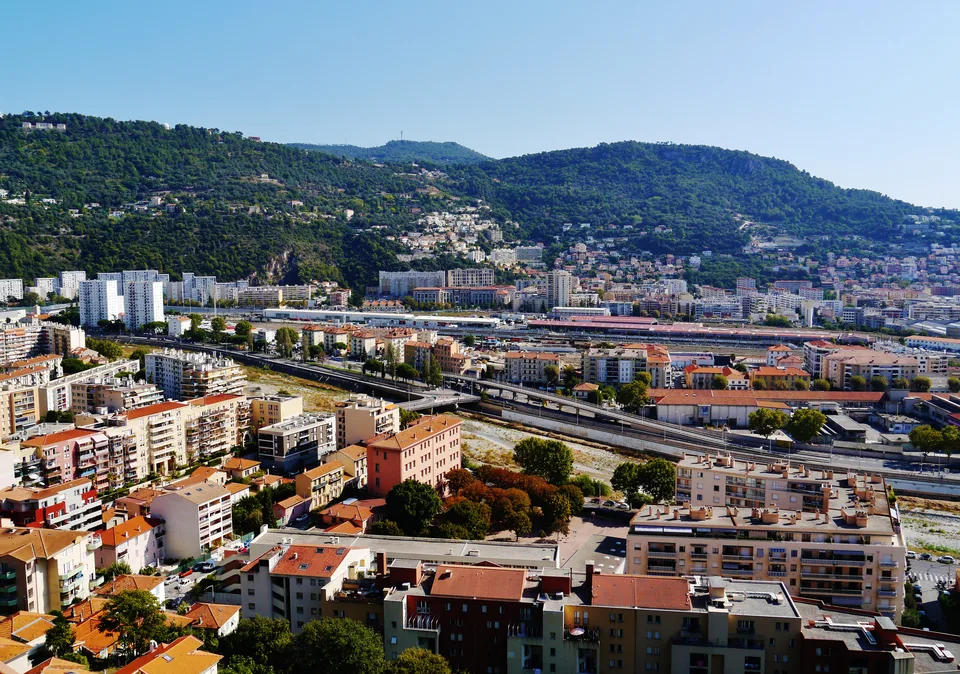
Before choosing a lease, travel from a candidate address to the actual workplace or campus at the times you will need. Repeat the return after an evening activity. A pleasant midday journey is weak evidence for a daily routine, especially if it involves several modes of transport or an uphill final walk.
Compare an urban address with an outer district using total household costs, not rent alone. Parking, a second vehicle, subscriptions and time can change the result. Keep a temporary base while viewing homes if possible. The Maison de l’habitant provides local housing information and access to specialist advice; it is an advice service, not a promise of an available apartment or a shortcut around eligibility requirements.
Read the housing contract before committing
Distinguish a holiday letting from a residential tenancy. An apartment advertised for an attractive monthly figure may have dates or conditions that do not match a permanent move. Ask for the proposed contract, included charges, inventory and any restrictions before transferring money, and verify the identity and authority of the person offering it.
The government’s residential tenancy information helps identify the rules for the relevant arrangement. Obtain advice on unclear clauses rather than treating every furnished contract alike. During a viewing, inspect ventilation, damp, heating, cooling and usable storage; photograph the agreed condition at handover. Check whether water and heating are collective or individual. These questions turn an apparently comparable rental figure into an understandable household commitment, without relying on an invented citywide average.
Set up services around your own household
For a residential tenancy, tenant insurance covering rental risks is compulsory; holiday accommodation has different rules. Arrange the necessary certificate for the handover and understand which additional cover protects belongings or damage affecting neighbours. Record meter readings and establish who is responsible for each utility account.
Check broadband availability for the precise apartment, mobile reception inside it and the space for laundry. Keep a folder of identity, address and contract documents, sharing copies only through the relevant service’s legitimate channels. Small setup delays are easier to absorb when the first week has some flexibility.
Families should use the city’s school registration procedure, which links the address to the school sector and requires a further appointment to finalise enrolment. Ask about arrangements for an arrival during the school year. For healthcare, Assurance Maladie explains eligibility and applications based on work or stable, lawful residence. Do not assume arrival immediately gives every family member full free treatment. Plan suitable interim cover and keep copies of the documents each service requests.
Tourism, employment and study require different planning
Nice uses France’s entry and residence system. For eligible short visits, France-Visas explains the Schengen limit of 90 days in any 180-day period and nationality-dependent requirements. Time elsewhere in Schengen generally forms part of that calculation. A multi-entry visa’s validity is not permission to remain throughout its entire validity period.
Tourism and private stays must be distinguished from professional activity. For a job, consult the official employment route and its work-authorisation requirements and exceptions. For education, use the student guidance and your institution’s admissions process. Short courses and longer study have different procedures. Check the current official requirements for your nationality and purpose before making irreversible plans; a city consultation can help organise questions but cannot replace the authorities’ decision.
A longer stay is a separate decision
Moving for work, study, family or a privately funded stay requires the appropriate status and any arrival formalities. A property purchase or holiday rental does not itself establish a right to reside permanently. Keep application deadlines separate from housing and travel bookings, and allow for supporting documents and processing uncertainty.
EEA and Swiss citizens have a different residence framework: a residence card is generally optional, while longer residence still depends on the applicable conditions. Family members may have different documentary requirements. Start with the VisaWand France country guide and France destination page for broader planning, then use the official resources linked here for applications. When comparing a very different French base, the Paris city guide offers another perspective on transport, accommodation and everyday life.
Nearby places without an overfilled schedule
Villefranche-sur-Mer makes a focused coastal alternative. Its municipal railway information identifies the station close to the old town and beaches. Check your return service before settling in for the afternoon. Choosing one town gives you time to explore it rather than spending the day comparing connections.
Èze requires a more careful distinction: the tourist office’s access guidance places the railway station at Èze-sur-Mer, below the hilltop village. Plan the onward bus or an appropriate walking route; do not mistake a coastal train ticket for arrival at the village entrance. Use VisaWand’s France location directory to compare further places, recognising that a directory entry may not contain a completed guide. For questions about a proposed move, review relevant consultant listings alongside the official requirements.
Official planning resources
Reviewed 15 October 2026. Use the official resources linked throughout this guide for admission, transport, housing and immigration decisions. Prices, services and rules can change; confirm the details relevant to your dates. Photography illustrates the locations and is not a live view.
View all official resources
- Nice, Winter Resort Town of the Riviera — UNESCO
- Nice: official visitor overview — France.fr
- Cours Saleya — Nice Côte d’Azur Tourist Office
- Castle Hill park: hours and access — City of Nice
- Matisse Museum: current closure, hours and tickets
- Marc Chagall National Museum: practical information
- MAMAC: renovation closure — City cultural service
- Public beaches and adapted access — City of Nice
- Accommodation directory — Nice Côte d’Azur Tourist Office
- Tourist tax — Métropole Nice Côte d’Azur
- Nice Airport: current tram and bus connections
- Nice Airport: railway connections and station access
- Lignes d’Azur: current single and airport tickets
- Lignes d’Azur: current tickets and passes
- Cuisine Nissarde — regional tourist board
- Mediterranean climate — Météo-France
- Maison de l’habitant: local housing advice
- Residential tenancy information — Service Public
- Tenant insurance obligations — Service Public
- School registration — City of Nice
- Health insurance eligibility and applications — Assurance Maladie
- Short-stay visa: official France-Visas guidance
- Tourism and private stays — France-Visas
- Salaried employment — France-Visas
- Students — France-Visas
- EEA and Swiss citizens: longer residence — Service Public
- Getting to Èze: village versus coastal station
- Villefranche-sur-Mer: official railway access
Plan the next part of your journey
Explore the France guide, browse other cities or compare consultants for your travel and relocation questions.