Visa
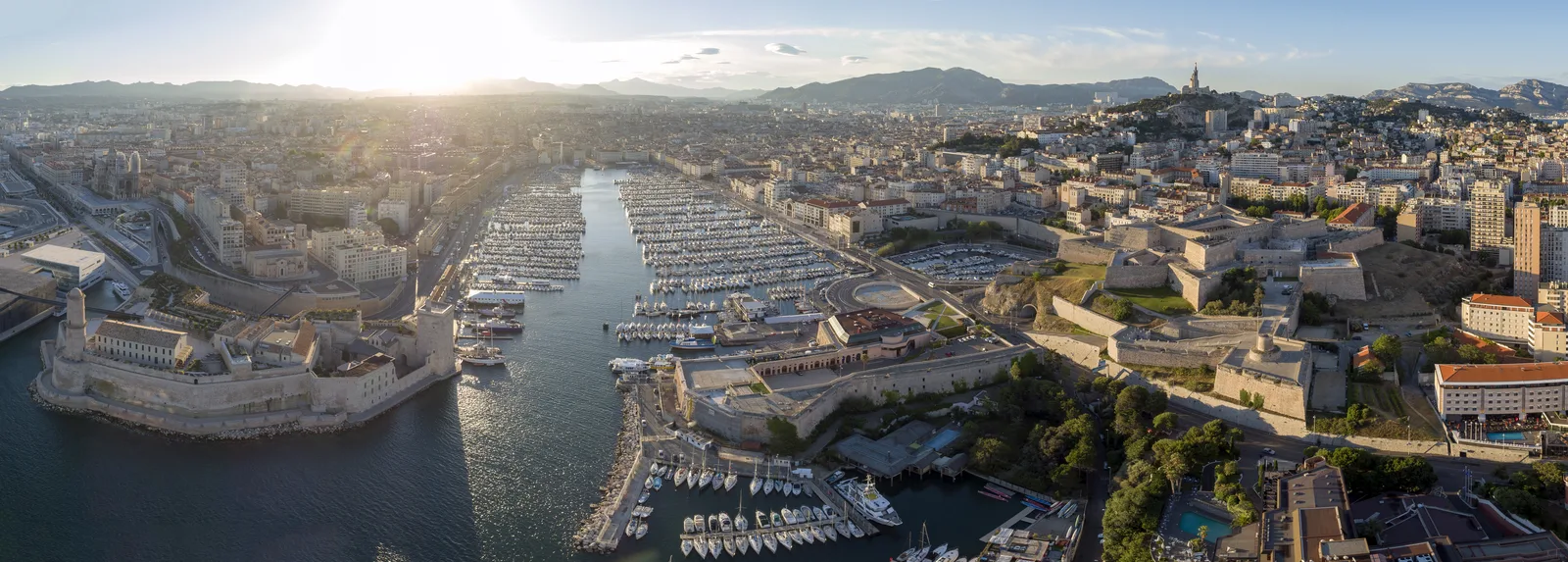
Start with the harbour, then choose your Marseille
Marseille offers several quite different trips from the same base: a harbour and museum break, an island excursion, a walk through old streets or a journey towards the Calanques. The useful decision is which of those experiences matters most to you. Trying to collect them all in one day leaves little allowance for weather, opening hours or the city's changes of level.
Begin with the Vieux-Port as an orientation point, then build a visit around a few substantial stops. Someone considering a move needs another layer of investigation: the actual workplace or campus, the journey home, the condition of a prospective apartment and the administration required for their circumstances. A waterfront photograph can introduce Marseille, but it cannot answer those questions.
Le Panier connects the ancient city with everyday streets
The tourist office's account of Le Panier places the beginnings of Massalia around 600 BC in the area of today's old quarter. Narrow streets, steps, small shops and decorated facades make this a rewarding place to explore at walking pace. Give yourself a route with room to pause rather than treating the neighbourhood as a corridor between larger attractions.
The steps matter when planning accommodation as well as sightseeing. Check the route to a particular doorway, the floor of the room and whether a lift reaches it. A map's short distance does not show the effort of carrying luggage uphill. For visitors who need to minimise stairs, ask a property for precise access information before booking. Historic character and convenient access are separate things to establish.
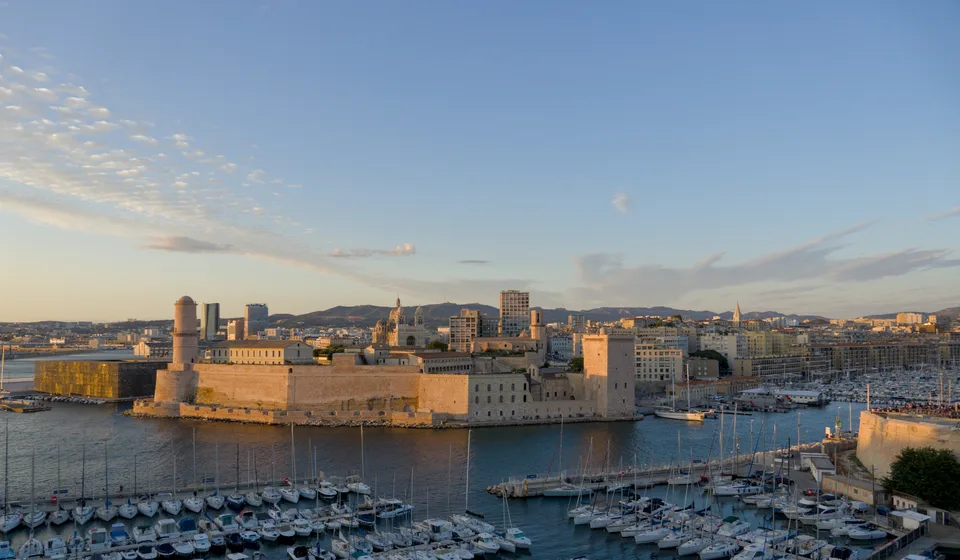
Fort Saint-Jean offers a different way into the waterfront
The Mucem's Fort Saint-Jean information distinguishes free access to the landscaped outdoor spaces from paid exhibitions. The fort connects with the contemporary J4 building and, by another footbridge, with the Panier side of the city. That relationship makes it useful for understanding how Marseille's older waterfront and its cultural buildings fit together.
Check the day's hours before setting out: the site closes on Tuesdays, 1 May and 25 December. Last admission is 30 minutes before closing, while ticket desks stop earlier. Some areas of the fort and garden have limited accessibility, so identify a suitable entrance and route for your party. Do not leave a visit until the last possible moment simply because you intend to walk through the exterior spaces. Gates, bridges and exhibition rooms have their own closing arrangements.
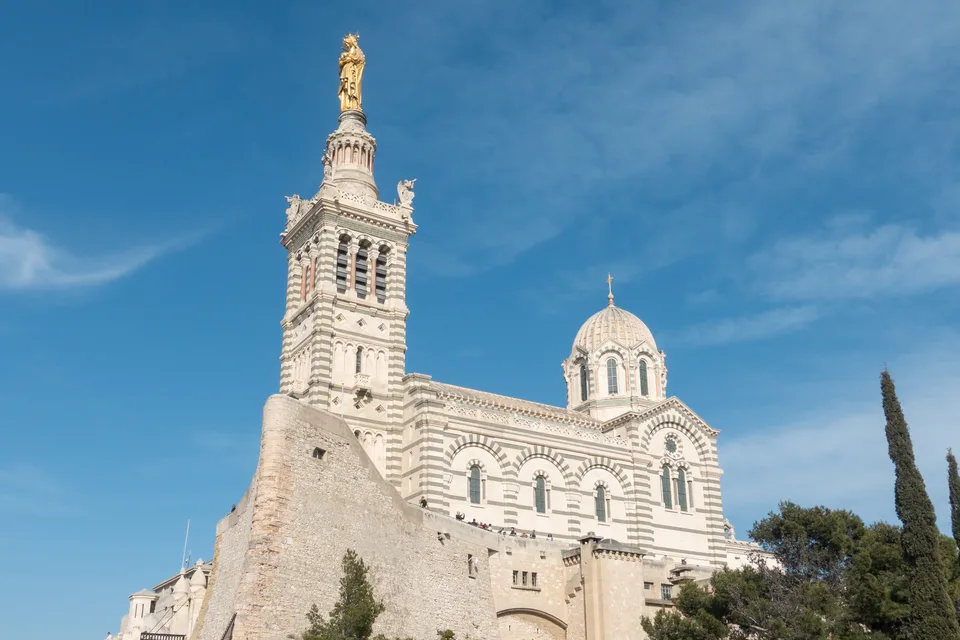
Notre-Dame de la Garde needs time above the city
The sanctuary's official access page lists daily opening from 07:00 to 18:00, with interior visits restricted during celebrations and occasionally for special events. This remains a place of worship. Plan around services, dress respectfully and allow time to appreciate the setting without assuming every interior will be available throughout those hours.
Bus 60 serves the basilica from the waterfront side of the centre; check RTM's current stops and timetable for the journey you need. Walking is another decision about the hill, your footwear and the day's conditions, rather than just the distance shown on a screen. If travelling with someone whose mobility is limited, discuss the complete route with the sanctuary beforehand. A vehicle reaching the site does not establish that every part of the visit is suitable.
Cosquer is a reconstruction with specific visitor restrictions
Cosquer Méditerranée presents a reconstructed cave, a film about its discovery and the Galerie Méditerranée. You visit the reconstruction in an exploration module; this is not access to the original underwater cave. The operator lists adult admission at €19, with separate child prices, and suggests about two hours for the complete visit.
Families should check the current restrictions before buying. The practical-information page gives a minimum height of 1.25 metres for the module and separately excludes children under three. A free child's admission category does not establish eligibility for the cave ride. Visitors must also be able to transfer independently into the module within a minute; wheelchairs cannot travel aboard it. The operator describes an alternative immersive experience. Contact the team about the arrangement that fits your needs, and check your chosen date's hours and ticket conditions before committing.
Château d'If requires two separate budget decisions
The monument's official visitor page lists €7 standard admission and explicitly excludes the sea crossing. A ferry ticket and a château ticket therefore need to be considered separately. Some concessions depend on nationality or residence as well as age; do not assume every visitor aged eighteen to twenty-five qualifies for free entry.
From 28 September to 31 March, the published hours are 10:00–17:00, with Monday closure. Bad weather can also prevent opening. Check both the sailing and monument arrangements before departure. There are many steps and uneven surfaces, and the operator does not describe the site as accessible to visitors with reduced mobility. Large backpacks and suitcases are prohibited, with no luggage storage on the island. Choose this excursion for the monument itself, leaving enough time to return without relying on the final theoretical connection.
Frioul fares distinguish visitors from residents
The ferry operator's current tariff page, effective 1 July 2026, lists €17.70 for a standard Frioul return and €26 for the two-island If-and-Frioul return. The latter is sold at the terminal on the day. A lower €11.10 Frioul fare is reserved for qualifying metropolitan residents with proof of address; it should not be used as the normal visitor price.
Decide whether you want an island outing or a combined monument trip before purchasing. Check the actual stops, sailing notices and return options, and keep an alternative city day available if conditions change. The website's discounted evening product applies to specified summer departures, so it is not a general way to reduce an October trip's cost. Leave the excursion flexible enough to enjoy the island rather than spending the visit watching the time.
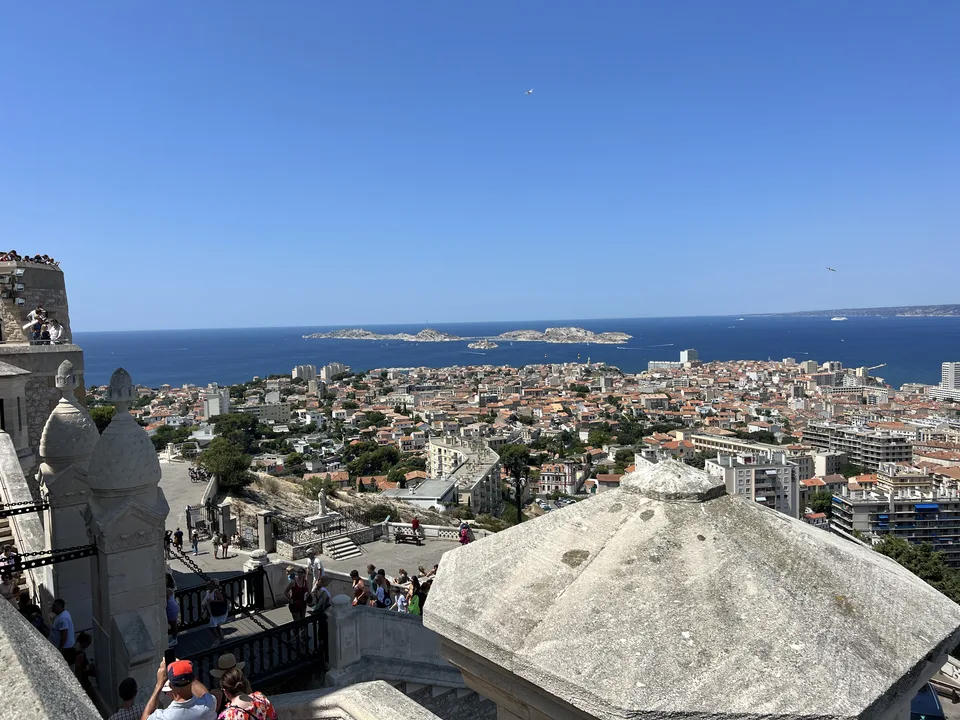
Treat the Calanques as a separate outdoor plan
The Calanques need more preparation than an extra stop after lunch. Choose a route that suits the least confident walker in the group, check access notices and carry the supplies that route requires. A photograph of a cove does not tell you about the descent, exposed ground or the effort of returning uphill. Keep the whole day available when planning a substantial walk.
The tourist office's 2026 Sugiton reservation notice required free advance bookings for Sugiton and Pierres Tombées on specified summer dates, ending with the weekend of 12–13 September. That is a seasonal scheme, not evidence of an October reservation requirement or a published calendar for every future year. Fire-risk closure overrides a booking. Consult the park again for your dates and do not treat an accommodation reservation, boat ticket or downloaded walking route as permission to enter a closed area.
Cours Julien adds shops, music and another pace
The tourist office describes Cours Julien through its artists, street art, independent shops and cultural life. It makes a useful counterpoint to a day organised around the harbour monuments. Explore with time for a bookshop, a café or a small purchase rather than expecting a formal attraction with a single entrance and fixed programme.
If this is the part of Marseille that appeals for an evening, consider the journey back before choosing accommodation. An animated street may suit someone who wants to go out and be less suitable for someone needing an early night's sleep. Ask about the actual room's position and visit the street at the hours that matter to you. Avoid applying one description to an entire district: a particular building, bedroom and route deserve their own assessment.
Choose accommodation around two or three priorities
For a short first visit, compare properties by their routes to the Vieux-Port, your chosen museums and the station connection. A harbour-facing room, a smaller guesthouse and an apartment can serve different needs without one category being automatically better. Make a shortlist using the facilities you will use: luggage storage, late arrival, breakfast, a kitchen, cooling, step-free access or a staffed desk.
Check the total for your dates, including applicable local charges and cancellation conditions. Establish whether an advertised apartment has a proper cooking area and whether the lift reaches your floor. For an early train or flight, calculate the first journey from the property itself. Staying close to a station entrance can help, but it does not remove check-in time, walking or the need to verify the first service. For a longer stay, a temporary base can give you time to inspect housing in person.
Airport arrival: follow the current A1 information
The airport's official shuttle page now identifies the Saint-Charles service as A1. Older material may still refer to line 91. Its published average journey is 25 minutes, but allow additional time for traffic, waiting and the walk between the stop and the part of the station you need. A scheduled coach journey is only one part of an airport transfer.
Use the airport's current timetable and booking information for your travel date and direction. Do not apply the first or last departure shown in a summary to both ends of the route without checking. Compare the complete cost for the ages in your party, and establish how you will continue from Saint-Charles. If arriving late, check the remaining city connection as carefully as the airport coach. Buying an airport ticket does not by itself establish that local transport is included.
Local transport has important evening differences
RTM's evening-network page currently lists the metro's last terminal departures at 21:30 from Monday to Wednesday, with replacement buses continuing until 00:30. It gives Thursday-to-Sunday metro service until 00:30. Check the operator again before travel, because work and special notices can change the pattern. These are terminal departure times, not a promise that you can board at any station at that minute.
For daytime sightseeing, the current fare grid lists a €6.70 twenty-four-hour pass and a €14 seventy-two-hour pass. The grid expressly excludes the coastal lanavette services and the specified local TER rail journeys from those products. The word ferry can also describe quite different services: a harbour crossing, a coastal shuttle and the Frioul boat should not be treated as interchangeable. Match the ticket to the actual service and validate it as required. Before a move, test the ordinary commute and its evening alternative.
Food and shopping: compare the meal you are buying
The tourist office's culinary overview introduces bouillabaisse, a fish-based Marseille speciality, alongside other local foods and the city's navette biscuits. Use those as starting points for exploring menus, rather than assuming every restaurant serves the same preparation. If a particular dish is the reason for visiting, ask whether it needs ordering ahead, how it is served and what the quoted price includes.
Food choices should also fit the day. A substantial restaurant meal can be the main event, while a bakery stop or groceries may suit a day with a museum booking. Read ingredients and ask about allergies or dietary requirements; a familiar dish name is not a reliable ingredient list. For gifts, check the maker, packaging and practicalities of the onward journey. Keep room in the budget for ordinary meals rather than spending it all on the first waterfront menu you encounter.
Navettes are traditionally associated with orange-blossom flavouring and a small boat shape, although preparations vary. They make a more portable tasting stop than a full restaurant meal. Buy an amount you can use while fresh, and ask about storage if taking a box home. If choosing food for someone else, keep the ingredient information with the gift so that the recipient can make their own dietary decision.
Build a budget from bookings, not a city-wide average
A €19 adult Cosquer visit and a €6.70 transport pass make a €25.70 basket before accommodation, food, airport travel or any other admission. A standard Frioul return at €17.70 would be another distinct expense. These examples show the building blocks; they are not a claim about a complete daily budget or the cheapest possible visit.
Start with dated accommodation quotes and your two or three priority experiences. Add local charges where applicable, meals, luggage storage and any journeys outside the ticket you intend to buy. Compare a tourist package against the visits you can realistically make during its validity, checking reservations and exclusions. Families should calculate each person's eligibility separately. An age concession at a monument, a child fare on a ferry and access restrictions at a reconstruction can use different rules. Keep a contingency for a changed sailing or a replacement journey.
Seasons matter most when the plan depends on the sea
Choose dates around the activities you want, then use the forecast and operator notices to refine the programme. For a walking-heavy summer trip, consider shade, drinking water and cooling at the accommodation. For an island outing, keep enough flexibility to move it if sailing conditions change. In shorter-day seasons, plan outdoor time around the actual opening hours rather than a summer timetable found in an old leaflet.
Spring and autumn can suit a mix of city walks and museums, but a particular day still needs its own assessment. A good-weather photograph is not evidence of reliable swimming or sailing conditions. Keep an indoor option available and verify its closing day: Tuesday closure at Mucem's fort and winter Monday closure at Château d'If can affect the order of a short stay. Plan fewer fixed commitments when several of your priorities depend on outdoor access.
A realistic three-day framework
Day one: use the Vieux-Port for orientation, continue into Le Panier and give Fort Saint-Jean or a chosen museum a substantial part of the day. Leave time for lunch and for the changes of level between stops. Check Tuesday arrangements before assigning the waterfront museum visit to that day.
Day two: visit Notre-Dame de la Garde around the sanctuary's access and services, then choose a neighbourhood afternoon or a booked Cosquer visit. Do not assume both can be added effortlessly to a late start. Day three: make an island excursion or a suitable Calanques outing the main plan, with a city alternative if conditions prevent it. This is an editorial framework, not a guarantee of access or connections. With only one day, retain the harbour, one neighbourhood and one substantial visit instead of compressing the entire programme.
Moving: start with the address that shapes your week
For a move, identify the workplace, teaching site or other regular destination before selecting a district. Aix-Marseille University operates across different locations, so the institution's name alone is not a useful commuting address. Obtain the actual building and timetable, then test the complete journey. Include transfers, the final walk and the return after an evening class or shift.
The university's housing guidance recommends beginning the search early and explains that applying for a residence does not guarantee a room. Treat its housing channels as resources to investigate, with eligibility and availability to establish. A guarantor, a deposit and home insurance are different arrangements; understand each rather than treating the terms as interchangeable. Keep an initial accommodation plan available if a permanent room is not ready. Do not commit to an inconvenient daily journey simply because a listing describes itself as near the university.
Housing comparisons need a clear basis
Use ADIL 13's rent observatory to understand the private rental market and to find more detailed evidence. Its methodology includes both recent arrivals and tenants who have stayed longer, so a published median is not automatically the asking rent for a newly advertised apartment. Marseille and the wider metropolitan area are also different geographical comparisons. Check the year, dwelling type, size and area before using a statistic in your own budget.
At a viewing, inspect ventilation, damp, heating, cooling, windows, stairs and the condition of shared areas. Ask which charges are included and how utilities are billed. Read the tenancy term, notice provisions, deposit conditions and inventory before signing. Photograph the agreed condition at handover and record meter readings. For questions about rights or a proposed contract, seek ADIL's housing advice. A holiday letting's availability is not evidence that it provides the contract or documentation needed for a longer residence.
Set up the household before the first working week
Confirm which utility accounts need opening or transfer, whether internet is already active and how waste arrangements work at the address. Obtain written details of included services and ask when each will become available. For families, investigate the appropriate school process, the ordinary journey and any separate meal or transport arrangements before choosing a home solely for its appearance.
For healthcare, Assurance Maladie's PUMa guidance links entitlement to working in France or stable, lawful residence and explains the application process. Establish which route applies to you and what documents are required. A new address does not by itself complete enrolment, and a nearby clinic does not establish that your care is covered. Plan continuing prescriptions, records and any interim insurance before arrival. Keep household, tenancy, employment and immigration documents organised, with copies available for the separate processes that may need them.
Tourism, study and employment require different permissions
Use France-Visas for the purpose and duration of your own stay. Its long-stay visitor route is for private stays exceeding three months without professional activity; applicants must establish resources, accommodation and medical cover. It should not be presented as general permission to take employment or continue any remote job. Work and study have their own routes, conditions and supporting documents.
Service Public's long-stay visa information explains the distinction between visa categories and the formalities after arrival. Follow the instructions attached to the document actually issued to you, including any validation or residence-permit application. A rental contract, university place or job offer does not replace immigration permission. EU citizens and other people with different residence rights should use the guidance that applies to their status. For personalised questions, compare the scope and fees of professional advice while relying on the authorities for decisions.
Compare Marseille with the journey you actually want
For wider planning, use VisaWand's France country guide, France location directory and France consultant listings. A location record can help you explore alternatives without being a completed travel article. Compare another base by the trips you intend to make, the arrival route and the amount of moving between accommodation that you want to do.
The completed Nice guide offers another Mediterranean city to consider for a different part of the trip. Check the actual intercity journey before combining bases, rather than assuming a shared coastline makes every transfer short.
Marseille is especially useful to consider when you want city life and waterfront experiences in the same stay. Give it enough time for a neighbourhood as well as a monument, and keep the weather-dependent part of the plan flexible. For relocation, repeat that same practical approach at a smaller scale: the particular home, the daily route and the services your household needs. Those details will have more influence on an ordinary week than the number of landmarks nearby.
Official planning resources
Reviewed 16 October 2026. Use the official resources linked throughout this guide for admission, transport, housing and immigration decisions. Prices, services and rules can change; confirm the details relevant to your dates. Photography illustrates the locations and is not a live view.
View all official resources
- Marseille Tourism: Le Panier
- Mucem: Fort Saint-Jean access
- Notre-Dame de la Garde: hours and access
- Cosquer Méditerranée: visitor information
- Château d’If: practical information
- Le bateau Frioul If: current fares
- Marseille Tourism: Sugiton seasonal access
- Marseille Tourism Cours Julien
- Marseille Provence Airport: shuttle services
- RTM evening services
- RTM: current fares and coverage
- Marseille Tourism culinary specialities
- AMU housing guidance
- ADIL 13: private rent observatory
- Assurance Maladie PUMa
- France-Visas: long-stay private visits
- Service Public: long-stay visas
Plan the next part of your journey
Explore the France guide, browse other cities or compare consultants for your travel and relocation questions.