Visa
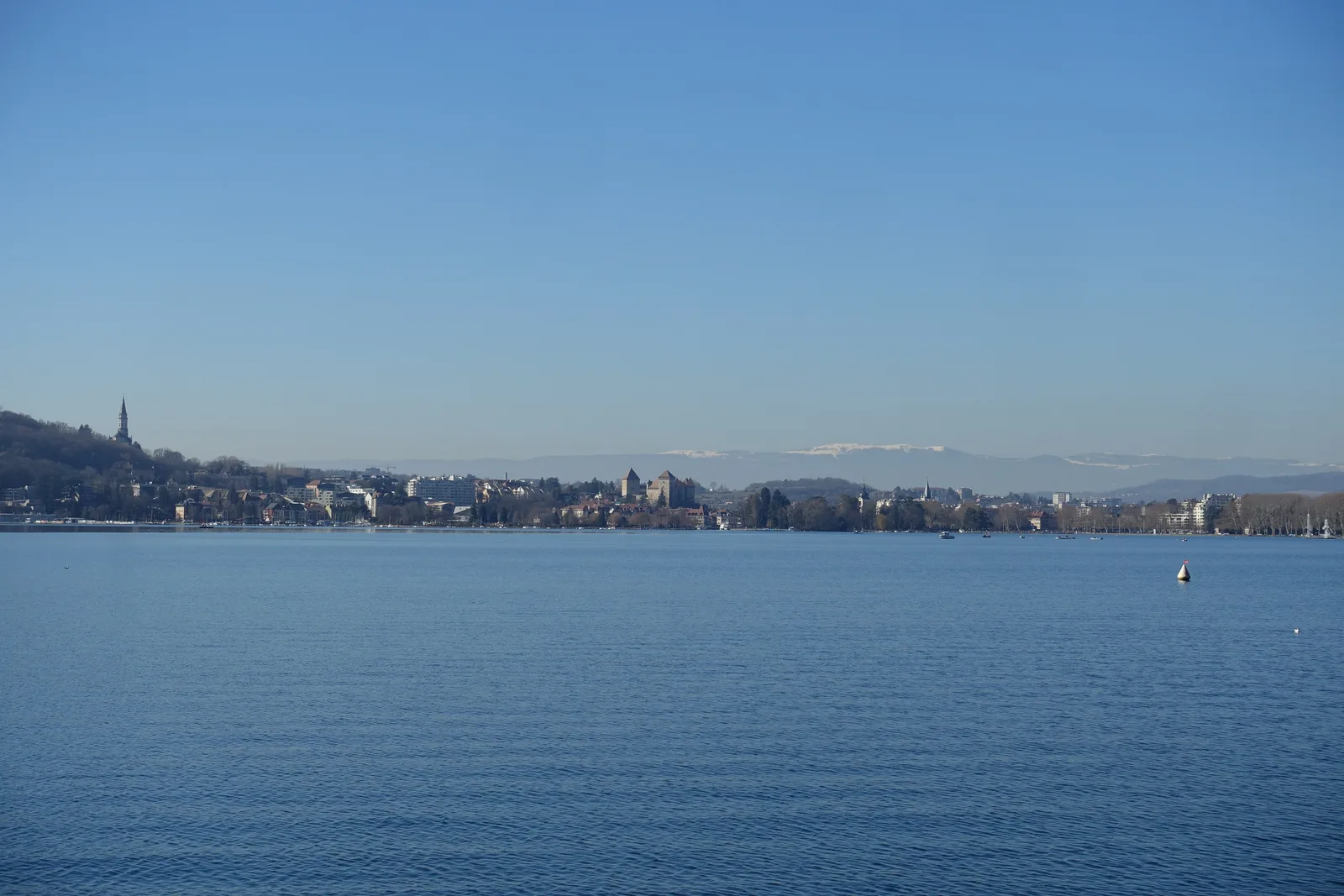
A lakeside city that works best at an unhurried pace
Annecy brings together two holidays that are easy to combine: wandering an old town beside running water and spending time around a lake framed by mountains. In Haute-Savoie, in France’s Auvergne-Rhône-Alpes region, it offers a compact historic centre without requiring every day to become an expedition. You can begin among arcades and stone buildings, reach the waterfront on foot and reserve the wider landscape for another morning.
The strongest reason to stay several nights is flexibility. Lake activities, museum opening days and mountain weather do not always fit a single tightly scheduled visit. Three nights give you room to change plans. For anyone considering living here, the same attractive setting needs a different examination: the actual commute, a suitable lease and the costs of an ordinary household. A pleasant waterfront afternoon cannot answer those questions on its own.
Travellers with different interests can share a base without sharing every reservation. One person might spend longer in an exhibition while another takes a short waterfront walk. Agree which experiences need advance planning and which can stay spontaneous. That makes Annecy easier to enjoy with children, older relatives or companions whose ideal holiday involves less walking than yours.
Understand the names before choosing an address
The old town, or Vieil Annecy, is not Annecy-le-Vieux. The latter is a different part of the present municipality, so an appealing address containing “Vieux” does not necessarily put you beside the Palais de l’Île. Check the map and the walking route rather than relying on a listing’s use of “historic” or “central”.
INSEE’s official geographical record places Annecy in Haute-Savoie and the Grand Annecy urban community. The current municipality was created in 2017, bringing together areas with different centres and daily routines. Cran-Gevrier, Seynod, Meythet and Pringy are useful names to recognise when looking beyond the visitor core. Treat them as distinct locations to investigate, not interchangeable labels for one small tourist quarter. For a longer stay, identify your workplace or campus first, then compare the journey from individual properties.
Follow the Thiou into Annecy’s working past
The water running through the old town is more than a photographic backdrop. The Thiou is the lake’s natural outlet, and its flow helped power mills and other industrial activity. The tourist office’s account of the old town connects that working history with the medieval settlement, the counts of Geneva and the territory’s subsequent relationship with Savoy.
Begin with a slow circuit rather than a hunt for one famous viewpoint. Notice the narrow passages, waterside buildings and relationship between streets and river. Give the history room alongside the cafés: the picturesque appearance grew from practical uses of water, trade and authority. Keep a little distance from busy bridges when stopping for photographs, and leave entrances clear. Returning at a different time can be more rewarding than waiting in the same crowded spot for an uninterrupted picture.
Visit the Palais de l’Île for more than its exterior
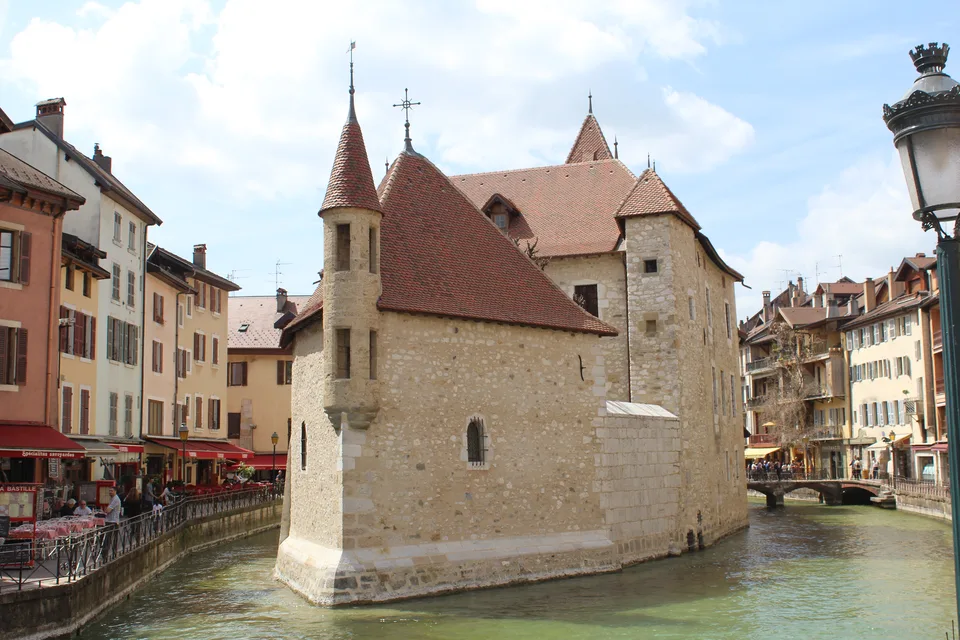
Standing on a natural rocky island in the Thiou, the Palais de l’Île began as a fortified building and served several purposes, including prison, mint and court. Its pointed outline is familiar from photographs, but entering adds a different perspective: the building’s confined spaces and administrative history explain why it mattered to the town.
The site now interprets local architecture and heritage. Plan the interior visit around its opening day rather than assuming the surrounding pedestrian area’s accessibility means the monument is always open. The official museum timetable lists Tuesday closure and seasonal hours, with last entry before closing. Ask about stairs and access before buying if mobility is a concern. Photograph the exterior from public viewpoints, then decide whether the interpretation interests your group; there is no need to turn every appealing building into an obligatory ticketed stop.
Go uphill to the Musée-Château
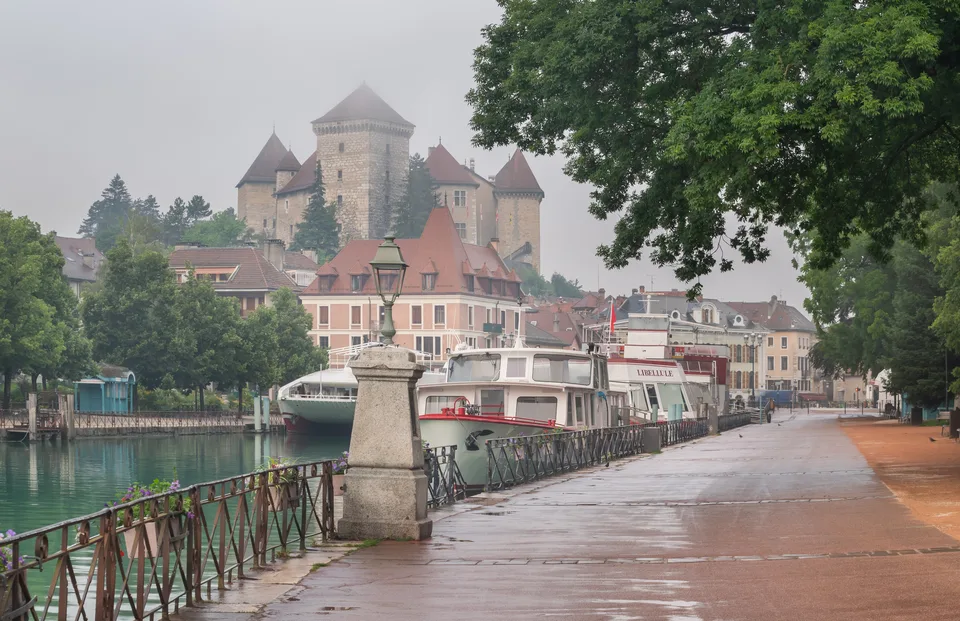
The château above the old town offers another way to read Annecy’s history. Its buildings developed over centuries, with the substantial Queen’s Tower among the oldest elements. The visit adds a museum to the architectural setting, making it a useful option when you want something more substantial than a brief exterior walk.
Allow for the uphill approach when choosing shoes and timing. Families or visitors with limited stamina can avoid placing it immediately after a long lakeside outing. Check the current exhibitions rather than assuming every gallery always presents the same material. If visiting both major monuments, the Musées d’Annecy admissions page currently lists a combined adult ticket at €8, or €9 in July and August. Separate ordinary admission is €6.50 for the château and €4 for the Palais, rising to €7 and €5 respectively in those two months.
Leave time for the waterfront without a booking
The Pâquier and Jardins de l’Europe provide a simple change of pace from the old town. Continue towards the Pont des Amours for views between the lake and the Canal du Vassé. This is an easy part of a first visit to enjoy without arranging equipment, transport or admission in advance.
Let the length depend on your group. Someone who wants a short promenade should not feel committed to a circuit of the entire lake. Find a suitable place to sit, watch the light change and keep room in the day for lunch or an exhibition. The waterfront is also a useful meeting point when members of a group want different activities. Agree a precise landmark and time rather than saying only “by the lake”, especially if children or anyone without mobile data is travelling with you.
Check the cruise departure point before leaving your hotel
A sightseeing cruise gives a wider view of the landscape, but current operating notices matter. The Compagnie des Bateaux’s one-hour Découverte cruise page says low lake levels moved sightseeing departures to Sevrier from 23 September 2026. Do not follow an old itinerary to an Annecy quay without checking your booking’s actual boarding location.
The published adult fare is €19, with a March-to-November operating season stated on the page; the booking calendar determines available departures. This particular cruise lasts one hour without intermediate stops. It is not a transport ticket that lets you disembark at a village and catch a later boat back. Arrive ahead of the stated boarding deadline and establish the return transport from Sevrier. Weather, water levels and the selected product can affect arrangements, so verify them directly before organising other reservations around a sailing.
Choose a manageable section of the cycle route
Cycling can be an enjoyable way to extend a visit beyond central Annecy, particularly along the western shore. SILA’s lake-route information distinguishes the western greenway from the eastern cycle route and the pedestrian routes. Its maps and notices are a better planning tool than a blanket promise that the whole lake circuit is identical, flat or free of interruptions.
For a first outing, select a destination and turn back while everyone still has energy. Ask the rental operator about fit, helmets, locks, punctures and the return deadline; an electric bike does not remove the need to manage distance or traffic. Observe signs at intersections and slow down around other users. Check works and diversions before setting out, and do not assume a boat can carry you and a bicycle home unless the relevant service explicitly confirms that option.
Treat beaches, reserves and mountain paths differently
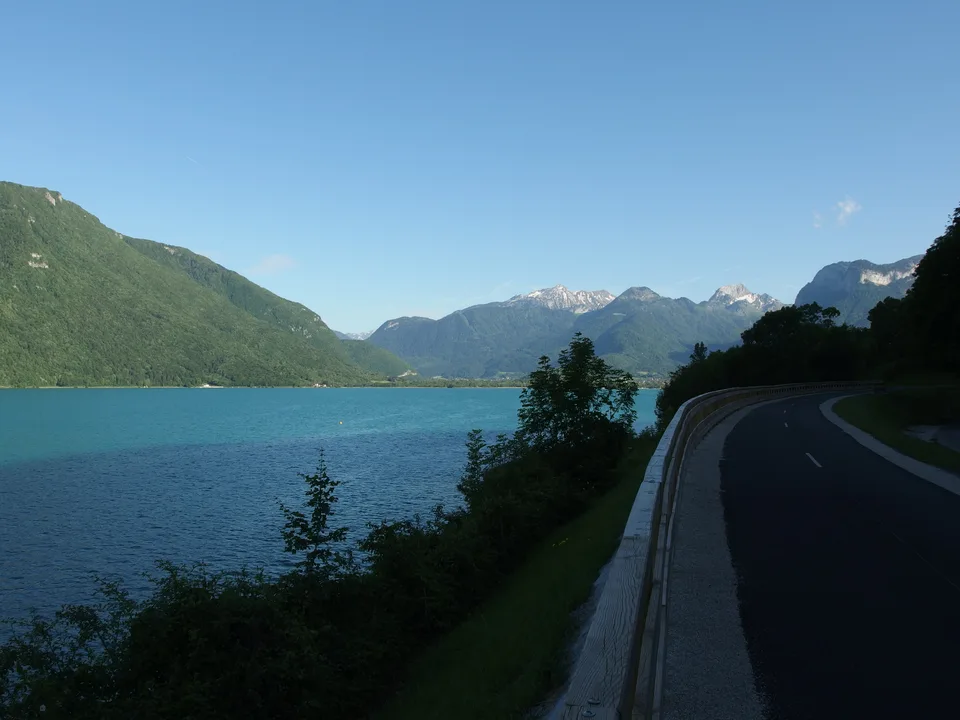
Choose a designated bathing place and check its current rules, water-quality notices and supervision dates. Clear-looking water is not a substitute for those checks, and a beach’s summer lifeguard arrangements should not be assumed to continue throughout autumn. Keep any swim within your ability and the marked conditions at the site.
The protected southern end of the lake has its own restrictions. CEN Haute-Savoie’s reserve guidance prohibits swimming and beach activities in the Bout du Lac nature reserve, including its river and lakeshore. A quiet patch of shore is therefore not automatically an alternative beach. For a mountain outing, choose a marked route matched to the least experienced walker, check the forecast and carry suitable layers and water. A pleasant morning at lake level does not establish conditions on a higher, exposed path. Respect closures and protected habitats.
Choose accommodation for the journeys you will make
An old-town or central address suits travellers who want evenings on foot and easy access to museums. Check the approach with luggage, stairs, lift access and nighttime noise before booking. A room facing a lively street may offer atmosphere at a time when you would prefer sleep. Nearby parking is a separate question from whether a property itself provides a space.
The official tourist-office accommodation directory includes hotels, furnished stays, guesthouses, campsites and other formats around the lake. A lakeside village can suit a quieter holiday, but compare the full cost of reaching town and returning after dinner. For a family, a practical kitchen, laundry and sleeping arrangement may matter more than a view. Confirm seasonal opening, heating or cooling, cancellation terms and any additional charges. A holiday apartment also needs a clear check-in arrangement if your transport arrives late.
Arrive by rail or plan the airport connection separately
Lake Annecy Tourism’s arrival information identifies direct TGV services from Paris and regional rail connections serving Annecy. Check the railway journey for your exact date, including changes and engineering works. Arriving at the central station can simplify a car-free stay, particularly when your accommodation is within a comfortable luggage-carrying distance.
Geneva and Lyon Saint-Exupéry are practical airports to compare, but the flight price alone does not settle the choice. Include the onward connection, final arrival time, luggage and the possibility of an overnight stop. Annecy’s local airport is presented as a business and private-aviation facility, not an interchangeable alternative for ordinary scheduled holiday flights. If hiring a car, confirm the pickup country, permitted border crossings, insurance and return location. A seemingly convenient Geneva booking can involve different rental arrangements depending on which side you use.
Use the right ticket for the Geneva airport coach
The TPG information for line 272 confirms a direct road connection between Annecy and Geneva Airport. The service includes different route patterns, so select the actual departure and stopping pattern you need. Check the timetable for weekends and early or late flights rather than extending a peak-hour frequency claim across the entire day.
Cross-border travel uses Léman Pass pricing. A local Annecy bus ticket is not automatically valid for that airport journey. TPG also distinguishes the rules for buying on board in Switzerland, with an exception at Geneva Airport’s bus station. Buy the appropriate ticket through an authorised channel and check the stop before travelling. The journey crosses a national border even though both countries are within Schengen; keep your travel documents available. Leave a useful margin for traffic when heading to a flight.
Make local buses part of your accommodation decision
SIBRA’s occasional-ticket information currently lists a €2 single journey bought through its digital or shop channels and €2.50 from the driver. An adult ten-journey product is €13, with an additional €0.20 for a new physical ticket where applicable. Compare the product you need rather than assuming the cheapest headline rate applies to one ride.
Tickets must be validated on boarding and at each connection. The ordinary journey permits an hour of travel, with specific connection rules explained by the operator. Local fare coverage on regional services applies within Grand Annecy; it does not turn those tickets into unrestricted regional or cross-border passes. Before choosing an outlying stay, use the Grand Annecy journey planner and transport information to check the final return service and walking distance from the stop. A convenient daytime route may not support your intended evening schedule.
Browse the market and eat beyond the postcard view
The old-town market runs on Tuesday, Friday and Sunday mornings, with the tourist office listing 07:00–13:00. Tuesday emphasises food, while Friday and Sunday add manufactured and textile goods. It makes a useful beginning to a town day, though shopping bags and a museum visit are easier to combine if you can return to your accommodation between them.
For regional food, explore the Savoie cheeses described by the tourist office, including Reblochon, Beaufort and Tomme de Savoie. Ask about origin and buy quantities you can store properly. Restaurant menus deserve the same practical attention as accommodation: check dietary requirements, opening days, reservation terms and whether a set menu suits everyone. A waterside table can be a deliberate treat rather than the default for every meal. Keep room for bakeries, groceries and a simpler lunch between activities.
If buying food to take home, check your destination’s import restrictions and the journey’s refrigeration needs first. For other purchases, compare materials, production and delivery costs instead of assuming every souvenir was made locally. A photograph or a modest purchase you can carry comfortably may be more useful than luggage filled with fragile items before a train connection.
Budget with complete costs rather than sample room rates
Build your budget around accommodation, food, arrival transport and the activities you actually want. Two ordinary adult combined museum tickets currently total €16 outside July and August; two adult one-hour cruise tickets total €38 before travel to the boarding point. These examples help compare choices without pretending that one daily allowance suits every visitor.
Check whether accommodation quotations include cleaning, parking, breakfast and any applicable visitor tax. If driving, include parking and tolls as well as fuel. If relying on buses or paid rides, calculate the journeys from the specific property. A cheaper room can lose its advantage when it adds several transfers or an expensive late return. Keep a margin for a wet-weather museum day or a changed transport plan, and read cancellation conditions before paying for activities that depend on conditions outdoors.
Visit in the season that matches your priorities
A summer holiday allows more emphasis on the waterfront and seasonal activities, but popular dates require earlier accommodation and activity decisions. Spring or autumn can suit a mixed programme of town walks, museums and landscape outings, provided you check which seasonal services still operate. The current cruise notice is a reminder that a familiar attraction can need a different plan even within its advertised season.
Winter is better approached as a town-and-region visit than as a promise of lake activities. Check daylight, surface conditions and the actual access to any mountain destination. Snow at altitude does not guarantee snow in the town, and a town forecast does not settle a mountain route’s suitability. Pack layers and waterproof clothing rather than building the whole trip around a single sunny-day activity. Reserve the least flexible bookings first and leave the rest adjustable.
A realistic three-day first visit
Spend day one on the old town, Palais de l’Île and waterfront. Begin with the market if your date matches, pause for lunch and leave the Pâquier and Jardins de l’Europe for an afternoon at your own pace. Avoid scheduling both museum interiors simply because they share a ticket; interest and energy should decide the amount you visit.
On day two, choose a lake outing: a pre-booked cruise with its confirmed departure point, or a manageable cycle excursion with time to return the equipment. Add a village stop only when the transport works. Use day three for the château and an exhibition, or a suitable outdoor route if conditions allow. Museum opening hours shift seasonally, Tuesday is a closure day, and holiday exceptions apply. The official page still contains some older dated closure information, so confirm special dates directly before fixing the sequence.
Consider everyday Annecy alongside the holiday setting
If contemplating a move, spend several ordinary weekdays doing the things that will shape your life: commuting, buying groceries, finding a pharmacy and checking the route home after work. Compare an exact address with your job or course. A place marketed by its proximity to Geneva still needs a realistic cross-border commuting calculation, with employment and tax questions considered separately.
Inspect a prospective home for storage, ventilation, noise and heating, and ask for its energy information and recent charges. Establish broadband availability at the address, not just in the neighbourhood. Check secure bicycle storage or parking if either is essential. Families should investigate school admission and travel independently, while anyone needing continuing medical care should confirm access and coverage before committing. A furnished temporary stay can provide time to investigate, but establish its permitted duration and total cost first.
Read the lease and establish who supplies each service
For a residential tenancy, Service Public’s deposit guidance distinguishes ordinary unfurnished and furnished leases: the usual maximum deposit is one month’s base rent for the former and two for the latter, excluding charges, subject to the stated conditions. A qualifying mobility lease prohibits a deposit. These are not interchangeable rules for every holiday booking.
Record the condition and contents at entry, retain payment records and clarify rent, charges, insurance and notice requirements in writing. Ask whether water is included in collective charges or needs an individual account. Grand Annecy’s water-service update explains that a departing subscriber must provide a meter reading and forwarding address for effective closure. Coordinate readings and provider arrangements when moving in or out. Add energy, connectivity, transport and initial household purchases to the rent before deciding what you can afford.
Keep tourism, employment, study and residence distinct
Use France-Visas’ short-stay guidance to establish whether you need a visa. For non-European visitors subject to the ordinary Schengen short-stay rules, the limit is generally 90 days in any 180 across the area, not a fresh allowance after a Geneva excursion. EU, EEA and Swiss citizens have a different legal framework. Nationality, existing status and travel purpose all matter.
A longer private stay is a separate route: the official long-stay visitor guidance requires resources, accommodation, medical cover and an undertaking not to undertake professional activity. Employment and study have their own procedures; consult the official salaried-employment information before accepting an arrangement. Do not assume an apartment lease permits work, remote work or permanent settlement. Plan the immigration route around what you will actually do and verify the current requirements for your circumstances before making irreversible commitments.
Compare other bases before adding more journeys
Use VisaWand’s France country guide for the wider journey and its France location directory to compare destinations. Chambéry and Lyon offer other urban bases to investigate, while Geneva involves a different country and a separate accommodation and transport calculation. A lake-focused holiday may be better served by staying around Annecy than by commuting in every morning.
For onward planning, consult the France destination page and consultant listings when professional immigration help would be useful. Keep the trip coherent: choose a few experiences you care about, verify their current arrangements and allow the time between them to become part of the visit.
Official planning resources
Reviewed 28 October 2026. Use the official resources linked throughout this guide for admission, transport, housing and immigration decisions. Prices, services and rules can change; confirm the details relevant to your dates. Photography illustrates the locations and is not a live view.
View all official resources
- INSEE Annecy geography2026
- Lake Annecy Tourism old town
- Lake Annecy Tourism Palais de l Ile
- Musees Annecy official hours and tariffs
- Compagnie des Bateaux one-hour cruise
- SILA lake cycling and walking routes
- CEN Haute Savoie reserve rules
- Lake Annecy Tourism accommodation directory
- Lake Annecy Tourist Office arrival information
- TPG Annecy Geneva airport coach272
- SIBRA occasional tickets
- Grand Annecy official mobility information
- Lake Annecy Tourism old town market
- Lake Annecy Tourism Savoie cheeses
- Service Public residential rental deposits
- Grand Annecy2026 water service update
- France Visas Schengen short stays
- France Visas long stay visitor
- France Visas student route
- France Visas salaried work
Plan the next part of your journey
Explore the France guide, browse other cities or compare consultants for your travel and relocation questions.