Visa
Give Zagreb time beyond the first square
Zagreb rewards a stay built around streets, museums and everyday routines. Croatia’s capital has a historic centre compact enough to explore on foot, but its southern districts and recreational landscapes make more sense with public transport. A couple of nights allows an introduction; three gives you room to cross the Sava and see something beyond the familiar Upper Town photographs.
Choose it for a city break with cultural stops and substantial walking, or as a place to investigate a possible Croatian move. Those are different visits. A weekend around the central squares tells you little about a school journey, winter heating bill or immigration application. This guide separates those decisions and uses information checked on 15 October 2026. Start with the Zagreb Tourist Board’s current visitor information for events and short-notice changes.
Understand the two historic centres
Zagreb grew from neighbouring settlements: secular Gradec, now associated with the Upper Town, and ecclesiastical Kaptol. The establishment of the diocese in 1094 provides an early documentary landmark; the settlements were united in 1850. Their different origins still make the walk between hilltop streets and the cathedral precinct worth following deliberately.
The tourist board’s account of Zagreb’s development also explains the nineteenth-century Lower Town and the later expansion south of the Sava into Novi Zagreb. Use that sequence as a reading of the city: older lanes, a more regular network of streets and green squares, then larger residential districts. Reconstruction can interrupt the view, so leave flexibility around individual buildings. A handsome exterior does not establish that an interior, tower or exhibition is currently accessible.
Use Ban Jelačić Square as your starting point
Begin at Ban Jelačić Square, then decide whether to climb towards the Upper Town or walk south through the Lower Town. Establish the location of your accommodation and its nearest useful stop before setting out. It is easier to understand a central meeting point in daylight than to find an unfamiliar apartment entrance after an evening arrival.
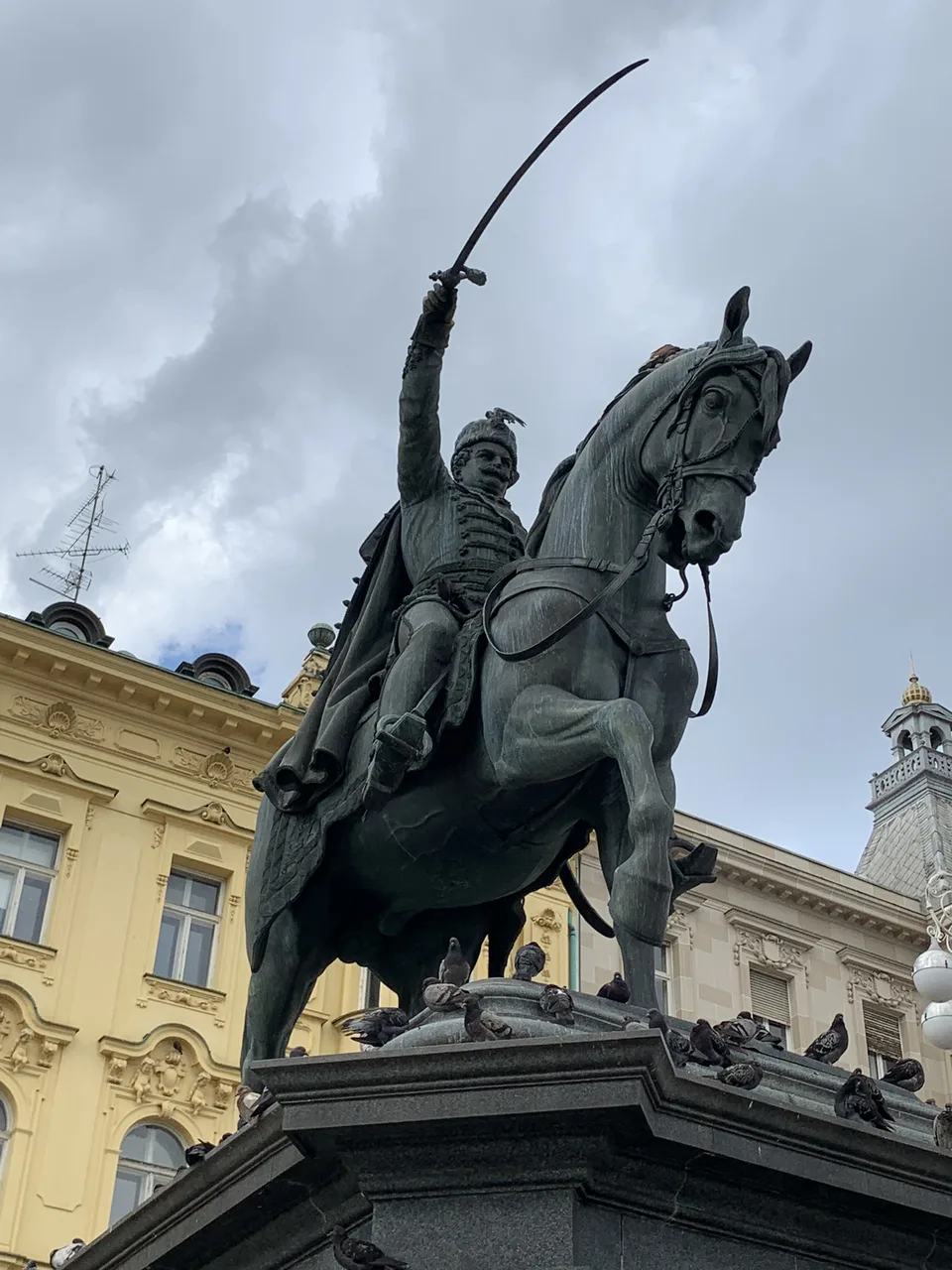
Keep the first circuit modest. Explore a few connecting streets, stop for lunch and identify a second route home. The square’s monument makes an easy visual reference, but tram tracks and moving vehicles require attention even where crowds encourage aimless wandering. For accommodation comparisons, measure the actual entrance-to-stop walk. An address described as central can still involve steps, luggage over uneven surfaces or a room immediately above evening activity.
Walk the Upper Town with a flexible route
Make the Upper Town an unhurried circuit rather than a race between façades. Combine a museum with stretches of street walking and a pause on the Strossmayer promenade. Hills and changes of level matter when travelling with a pushchair, mobility aid or heavy luggage; plan the route around the person who finds those obstacles hardest.
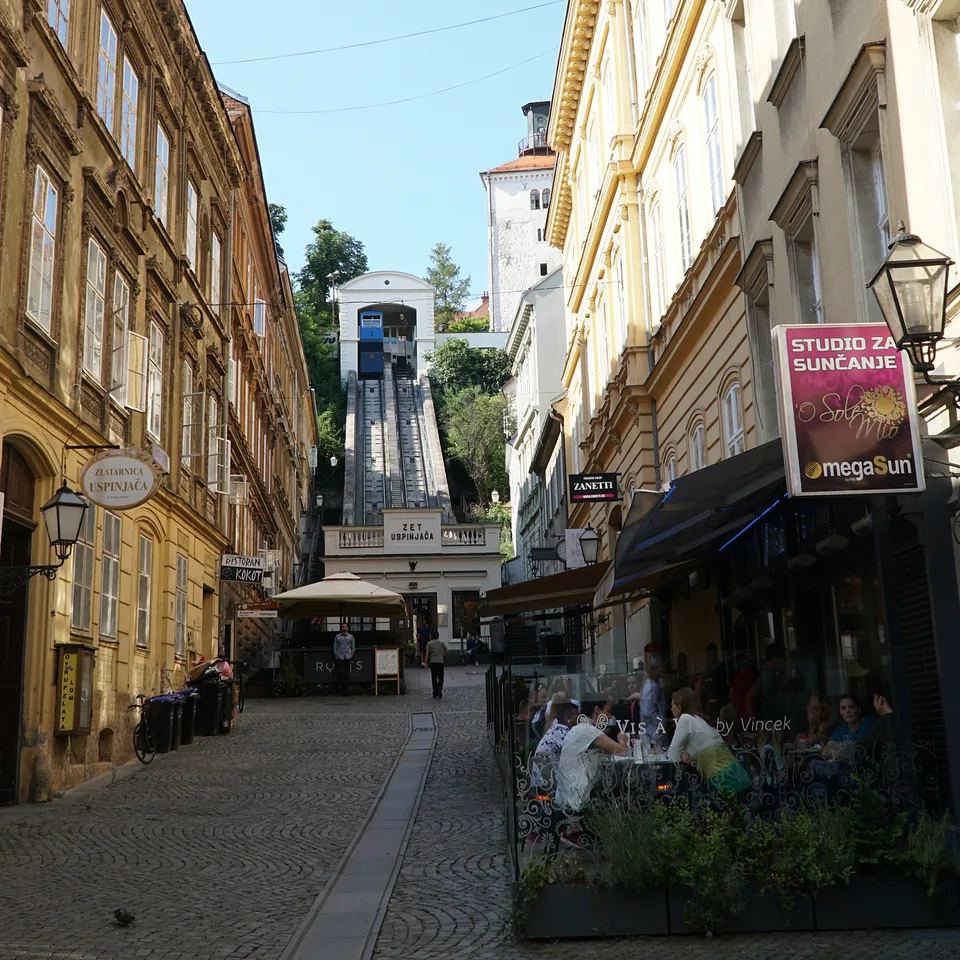
The funicular is operating again after comprehensive refurbishment, according to ZET’s reopening announcement. The work included new cabins and improved accessibility. Its separate one-way ticket is €0.66 on the current fare table. Use it when it improves your route, while checking operating arrangements on the day. The accompanying historical photograph shows the line before this refurbishment; it should not be used to identify the present cabins or assess current step-free access.
Visit the cathedral with current expectations
The cathedral is a working religious building undergoing restoration. The archdiocese’s current visiting and service information states that it opens daily from 08:00 to 19:00 for visits and prayer, with cathedral Mass at 10:00 on Sundays and holy days. Services in the separate worship space at Kaptol 28 have their own timetable.
This is more useful than older blanket descriptions of a closed cathedral, but it is not a promise that every part is available for sightseeing. A September 2026 restoration update describes continuing work on the north nave. Respect barriers, worship and instructions at the entrance. Leave a cathedral visit as a flexible stop around the surrounding streets, rather than buying an itinerary that depends on unrestricted access or an unobstructed version of an old skyline photograph.
Find Dolac’s traders during renewal work
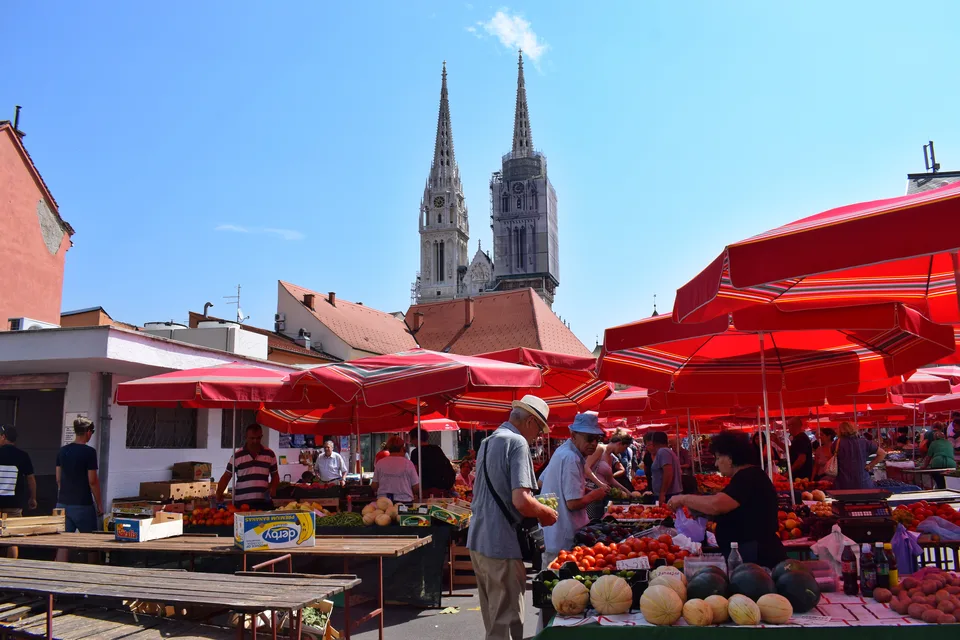
Dolac remains useful for understanding the centre’s food shopping, but the familiar photograph of its red-umbrella terrace needs context. In its notice about Dolac’s temporary trading locations, the city says outdoor traders remain around Podzidom, Tkalčićeva, Splavnica and the western side of Ban Jelačić Square during renewal work.
The same notice explains that the indoor hall reopened in December 2025 following emergency ceiling repairs, with indoor, fish and dairy trading operating. It does not announce completion of the terrace’s comprehensive renewal. Go in the morning, check the current arrangement and follow the actual stalls rather than an old map pin. For a self-catering stay, buy quantities you can use and ask vendors about storage. A market visit works best as part of breakfast or lunch planning, with time to look before purchasing.
Pick museums by subject and opening day
The Museum of Broken Relationships in the Upper Town pairs objects with stories about relationships. Standard adult admission is €9. Its published winter schedule, 1 October–31 May, is 09:00–21:00, with final admission at 20:30, subject to listed holiday closures. This makes it a possible late stop after a walking day, without assuming it opens on every public holiday.
For a different subject, the Croatian Natural History Museum’s visitor page lists adult permanent-collection admission at €15, or €18 including a special exhibition. It closes on Mondays and public holidays; Sunday hours are shorter. Check the dated notices before buying: 17 October 2026 has an exceptional 16:00 closure. Choose one museum to explore properly before adding another. Paying for several admissions can produce less understanding than giving a single collection enough attention.
Let the Lower Town provide the pauses
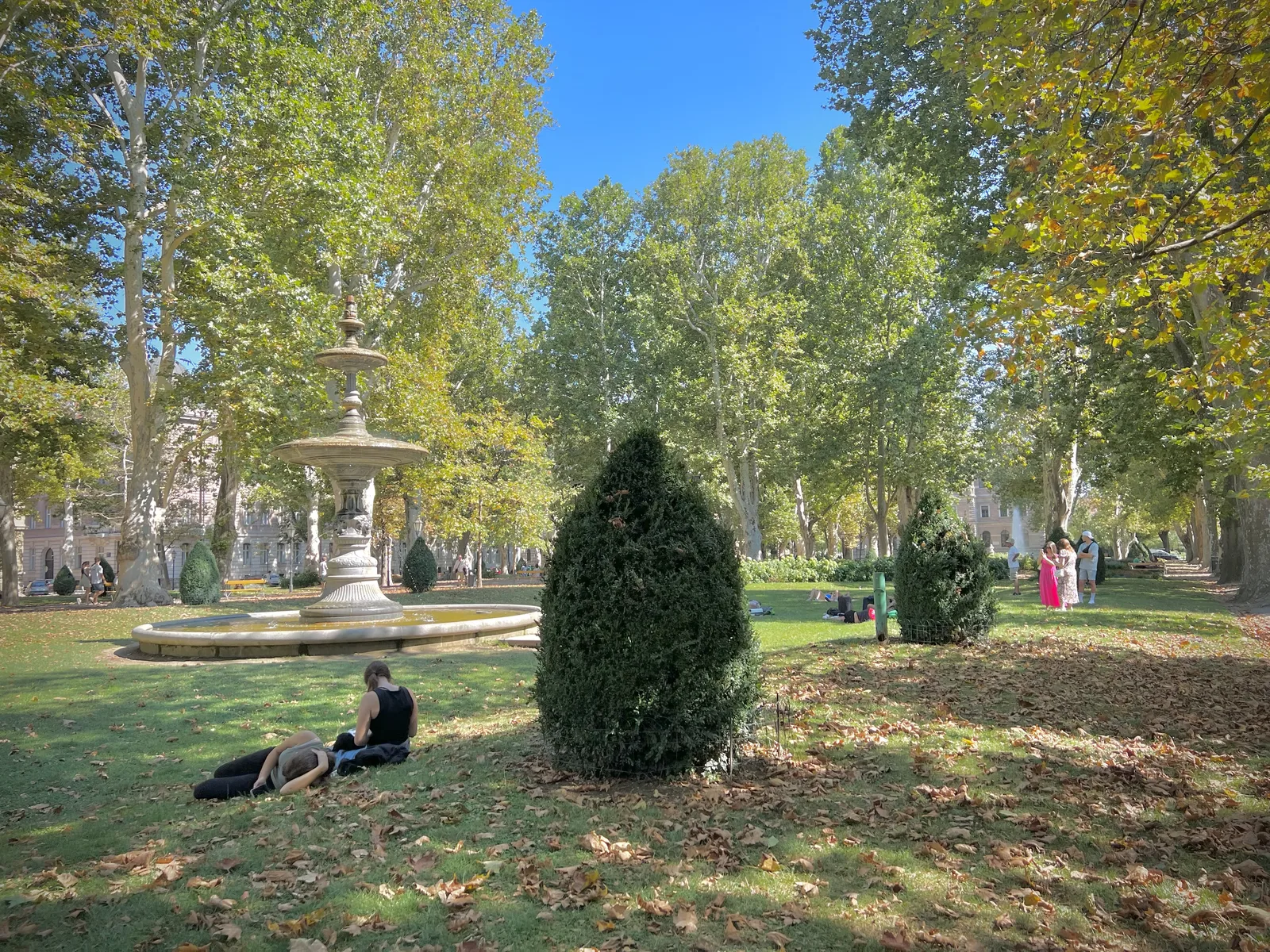
The Lower Town’s Green Horseshoe links eight green squares; Zrinjevac and the approach to the main railway station through King Tomislav Square give a useful introduction. Build a walk around these spaces without assuming every surrounding cultural building offers an open interior. The street and park sequence can be worthwhile independently of a paid attraction.
Use a park break to decide how much more walking you want. A central day can become tiring through repeated uphill returns, especially if you are carrying shopping. Keep a museum option for rain and a shorter route for a hot afternoon. When selecting a room, consider whether a quieter outlook or easier station access matters more than being beside the busiest evening streets. This is a practical choice about your particular stay, not a ranking of universally best neighbourhoods.
Cross the Sava for a broader view
Novi Zagreb changes the scale of a visit. The tourist board’s Museum of Contemporary Art listing places it at Avenija Dubrovnik 17 and describes collections including painting, photography, film and media art. Consult the visitor-information team about the current exhibition programme before organising a journey around a particular work.
Combine the area with Bundek if conditions suit an outdoor break. The official parks overview also identifies Maksimir to the east and Jarun to the west as alternatives for recreation. Choose one area rather than treating all three as brief stops between museums. A family considering relocation can use this excursion to examine ordinary streets and transport connections, while remembering that a pleasant afternoon walk cannot establish school availability or the quality of a specific building.
Choose a room around the journey you need
For a first short visit, compare Lower Town hotels and apartments against the walks you actually intend to make. Upper Town accommodation may appeal for its setting, but investigate slopes, access and luggage arrangements. A bus-station connection may be more valuable than a view if your flight requires an early departure.
Compare the final bill for identical dates and occupancy. Confirm breakfast, parking, cancellation conditions and any separately charged taxes. Ask whether air conditioning serves the bedroom, whether an advertised lift reaches your floor and whether check-in requires meeting somebody at a fixed time. Apartment guests should verify cooking equipment, laundry and the building’s entry instructions. These details affect a longer stay much more than an attractive photograph of the living room. Keep the first booking flexible if the purpose is to inspect housing or attend appointments.
If step-free access is essential, request details of the entrance threshold, lift dimensions and bathroom rather than relying on a general accessibility label. Ask where a vehicle can stop for unloading. Families should confirm the actual sleeping arrangement and cot availability; two adults and two children may not fit the room configuration shown in a headline offer. Save the host’s arrival instructions offline before leaving the airport.
Plan the airport connection by destination
Zagreb Airport lists two distinct bus options. The airport’s ground-transport page describes the Pleso shuttle to the Central Bus Station and ZET route 290 between Kvaternikov trg, the airport and Velika Gorica. They do not terminate at the same city location, and neither should be described as an airport train.
The Pleso Prijevoz timetable quotes €9 for a standard adult single. Its fixed airport-to-city timetable extends to 22:30, with arrangements for later flights until 01:00; city-to-airport departures have a different span. Check your direction and date instead of assuming a round-the-clock half-hourly service. The airport gives indicative journeys of 35–40 minutes for Pleso and 45–50 for route 290. Add waiting, traffic and the onward trip to your accommodation. Confirm the appropriate zones before using the public bus.
Buy and validate the right city ticket
ZET’s current fare table lists advance-purchase daytime singles at €0.53 for 30 minutes, €0.93 for 60 minutes and €1.33 for 90 minutes. The corresponding onboard prices are €0.80, €1.33 and €1.99. A daily ticket costs €3.98 and a three-day ticket €9.29. These published products give a firmer budgeting basis than an assumed daily taxi allowance.
Read ZET’s paper-ticket instructions before boarding. Paper singles are directional and must be validated on entry; the operator describes where validators are located. Appropriate tickets are needed for each zone. The airport bus crosses the ordinary city boundary, so do not apply the cheapest city single to the entire journey. Choose duration with room for real traffic and transfers, and consult current service notices before relying on a particular connection for a flight or appointment.
Eat locally without turning every meal into a project
Štrukli can be cooked or baked and prepared in sweet or savoury forms. Turkey with mlinci offers another regional option, while the Zagreb-style veal dish includes ham and cheese. Ask about the preparation and ingredients rather than assuming a familiar-looking menu word meets a dietary requirement. A simple lunch can leave more time for an afternoon museum than a long tasting itinerary.
Use market shopping for a self-catering meal when your accommodation makes that realistic. Check opening arrangements before leaving essential groceries until late in the day. For souvenirs, compare materials, origin and transportability before buying; museum shops can be part of that search. An evening performance is another option: the Croatian National Theatre’s ticket information is a starting point for the actual date, production and seating category. Confirm language or surtitles when those affect your enjoyment.
Build a budget from choices you can price
Two adult admissions to the Museum of Broken Relationships, two natural-history permanent-collection tickets and two ZET day tickets total €55.96 at the published rates above. That is an illustrative cultural-day subtotal, not a complete daily budget: accommodation, food, airport transfers and any extras remain separate. Removing one museum changes the total immediately without removing the possibility of a full day outside.
Price a room first, then add meals based on menus you would actually order from. Keep money for cancellation changes and an alternative airport transfer. For a couple sharing an apartment, divide the whole accommodation bill only after confirming charges for both guests. For relocation research, keep inspection travel and temporary accommodation separate from the future monthly household budget. Neither a holiday bargain nor a single advertised rent establishes what an ordinary year will cost.
When exchanging or withdrawing money, compare the complete charge and exchange rate shown before accepting. Ask small traders about payment methods before ordering, and keep receipts for accommodation deposits and separately purchased transport or attraction tickets so discrepancies can be resolved.
Choose the season for the activities
Zagreb has an inland seasonal pattern. DHMZ’s Zagreb Grič climate table shows cold winters, warmer summers and precipitation throughout the year. Its displayed historical series covers 1861–2024; it is not a forecast or a recent thirty-year normal. Use it to understand the range of conditions, then consult current forecasts and warnings for your dates.
Spring and autumn are sensible choices to investigate for long central walks, with layers and rain protection. Summer visitors should check bedroom cooling and leave outdoor plans flexible in heat or thunderstorms. Winter calls for footwear suited to wet or icy surfaces and a plan for shorter outdoor sessions. A snowy mountain photograph does not establish operating ski facilities, and an event advertised in a previous year does not establish this year’s dates. Check the current programme before booking around it.
A realistic three-day introduction
Day one: start at Ban Jelačić Square, find Dolac’s present trading locations and follow a manageable Upper Town circuit. Add the cathedral when access and worship allow, then choose the Museum of Broken Relationships if its subject appeals. Leave the evening open instead of booking another timed attraction immediately after arrival.
Day two: give the Natural History Museum a substantial morning when open, followed by the Lower Town’s green squares. Change this sequence if your visit includes Monday or a holiday. Reserve an evening performance only after checking its actual finishing time against your return journey.
Day three: choose contemporary art and Bundek across the Sava, or a longer outdoor visit to Maksimir or Jarun. These are editorial suggestions, not a tour with guaranteed connections. Travellers researching a move should substitute a housing inspection and commute trial for one sightseeing block.
Test a possible home before committing
Book temporary accommodation while comparing homes near the job, campus or services that bring you here. Inspect the full route at the time you would normally commute, including the stop-to-door walk and any transfer. A district can feel convenient on a quiet weekend while producing an awkward daily journey to a particular workplace.
Request a written lease covering rent, deposit, notice, repairs and responsibility for charges. Ask about heating, hot water, cooling, damp, internet availability and recent building work. Inspect common areas as well as the apartment. Establish what documentation the owner can provide for address or residence formalities before paying a deposit. Ask to see recent seasonal bills rather than accepting a single all-inclusive estimate. Renting or buying a home does not itself establish a right to live or work in Croatia.
For a family move, contact prospective schools directly about admission, language support, required records and the school-day schedule. Test the school journey alongside the adult commute before narrowing the housing search. Where ongoing medical care matters, identify an appropriate provider and discuss continuity before arrival. Keep a reserve for overlapping temporary accommodation and a deposit: the best date for a lease to begin may differ from the date your paperwork or employment is ready. Obtain written confirmation of arrangements that would be expensive to change.
Set up services and healthcare deliberately
Separate rent from heating, electricity, water, internet, building charges and waste arrangements. The Zagrebački Holding service portal provides municipal-service information; ask the landlord which accounts apply to the property, how bills arrive and how the building handles separated waste. Record meter readings and obtain keys or access devices at handover.
The government explains the OIB personal identification number as an identifier used in official registers and everyday operations. Check your administrative requirements alongside your residence process. Arrange healthcare using HZZO’s insurance guidance, since coverage depends on status and applicable coordination rules. Eligible visitors can consult HZZO’s EHIC and GHIC information for necessary care with contracted providers; patient contributions may still apply. For an emergency requiring medical, fire or police assistance, the official Croatian emergency number is 112.
Separate a holiday from permission to stay
Use the Croatian Foreign Ministry’s nationality-based visa information before travelling. For third-country visitors subject to the Schengen short-stay limit, the allowance is generally 90 days in any 180 across the Schengen area together. Days elsewhere in Schengen count; Croatia does not provide a fresh allowance on arrival from another member country.
Longer residence requires a separate assessment. The Interior Ministry’s EEA and Swiss guidance covers work rights and registration for stays exceeding three months. Other nationals should examine temporary residence by purpose and the government’s foreign-employment guidance. Study, local employment, family residence and permanent settlement have different conditions. VisaWand’s Croatia country guide provides wider context; the consultant directory can help identify support for an individual case. Check the provider’s relevant experience before relying on advice.
Check the remote-work route before moving
Croatia’s digital-nomad temporary-stay rules apply to qualifying third-country remote workers, with restrictions on work for Croatian employers or businesses. The ministry currently states a maximum of 18 months, subject to the route’s conditions. Do not plan from older descriptions that still state a universal twelve-month maximum.
An online application does not itself extend an allowed tourist stay. Visa-required applicants also need to follow the appropriate application and entry procedure; approval of residence and obtaining any necessary visa are distinct steps. Establish eligibility, insurance, financial evidence and housing documentation before making commitments. A visitor’s ability to use a laptop is not a reliable test of immigration permission. If permanent relocation is the objective, assess that route separately instead of assuming temporary nomad status leads automatically to settlement.
Leave room for another destination
Samobor’s tourist board introduces a nearby town with its own centre and surrounding hills, making it a possible separate excursion when you have an additional day. Check the outward and return transport before setting off, particularly if combining a town visit with walking. Medvednica also deserves weather-aware planning rather than being squeezed into an already full central sightseeing day.
For a longer Croatian trip, compare VisaWand’s Split city page and Dubrovnik city page when deciding whether to add a coastal destination. The Croatia location directory and Croatia destination page provide other browsing routes; a directory entry should not be mistaken for a completed travel guide. Keep transfer days visible in the itinerary. Zagreb works best when the time assigned to it matches your interests, rather than serving only as the hours left between an arriving flight and the next booking.
Official planning resources
Reviewed 15 October 2026. Use the official resources linked throughout this guide for admission, transport, housing and immigration decisions. Prices, services and rules can change; confirm the details relevant to your dates. Photography illustrates the locations and is not a live view.
View all official resources
- Zagreb Tourist Board: current visitor information
- ZET: fares, ticket sales and payment
- ZET: funicular reopened after reconstruction
- Zagreb Airport: bus connections
- Pleso Prijevoz: Zagreb airport shuttle
- Museum of Broken Relationships: Zagreb visit
- Croatian Interior Ministry: digital-nomad temporary stay
- Croatian government: foreign-national employment
- Zagreb Tourist Board: history, districts and local food
- City of Zagreb: Dolac temporary trading locations
- Zagreb Archdiocese: cathedral visits and services
- Zagreb Archdiocese: north-nave restoration
- Zagreb Tourist Board: parks and recreation
- Zagreb Tourist Board: Museum of Contemporary Art
- Croatian Natural History Museum: plan your visit
- DHMZ: Zagreb Grič historical monthly climate
- Croatian Foreign Ministry: visa requirements
- Croatian Interior Ministry: EEA and Swiss residence
- Croatian Interior Ministry: third-country temporary stay
- HZZO: health insurance in Croatia
- HZZO: necessary care with EHIC and GHIC
- Croatian government: personal identification number
- Zagrebački Holding: household and municipal services
- Croatian Civil Protection: emergency number 112
- Samobor Tourist Board: town and surrounding hills
- ZET: paper tickets and validation
- Croatian National Theatre Zagreb: tickets
Plan the next part of your journey
Explore the Croatia guide, browse other cities or compare consultants for your travel and relocation questions.