Visa
A capital best understood on both banks
Ottawa combines a national capital’s institutions with neighbourhood streets, a working canal and a river that marks a provincial boundary. People come for Parliament, major museums and the pleasure of moving between water, parks and cafés without spending every hour inside an attraction. It rewards a stay with room for ordinary city life alongside the ceremonial buildings.
Geography matters immediately. Ottawa is in Ontario; Gatineau, directly across the Ottawa River, is in Quebec. They share a visitor landscape but have different provincial systems. A museum across a bridge can be an easy excursion while a home across that same river requires a separate assessment of healthcare, schooling and tenancy rules.
For national planning, start with VisaWand’s Canada country guide. The Canada destination directory helps locate other places; this article focuses on choices within the capital region, from an efficient first visit to the practical groundwork for a longer stay.
Read the history beyond Parliament Hill
The City recognises Ottawa as being on unceded Anishinabe Algonquin territory. That acknowledgement describes a continuing relationship with the land, rather than an introductory chapter that ended when the capital developed. Allow space for Indigenous histories when choosing exhibitions and interpreting the river landscape.
The canal provides another way into the city’s past. Parks Canada’s Rideau Canal history dates construction from 1827 and its official opening to 1832. The engineering relied heavily on French Canadian and Irish labourers, with dangerous conditions and malaria among the human costs. Its surviving structures are more revealing when viewed as infrastructure built by people, rather than picturesque scenery alone.
The complete Rideau waterway extends far beyond central Ottawa. Do not mistake its roughly 202 kilometres for a city walking route. For a short visit, the downtown locks give a concentrated introduction to the larger system and the settlement that grew around it.
Choose a neighbourhood to suit your days
Use Ottawa Tourism’s neighbourhood overview to separate the compact visitor core from the much larger municipality. ByWard Market and Rideau Street put food, shops and evening activity close to several principal sights. Sparks Street and the parliamentary area favour institutional visits and central sightseeing, though the precise hotel address still determines your walking route.
Centretown, Elgin Street and the Golden Triangle offer another base for combining restaurants with canal walks. The Glebe and Old Ottawa South suit time spent around neighbourhood businesses and parks. Wellington West and Westboro are useful areas to investigate when everyday shopping and a residential setting matter more than immediate proximity to Parliament.
Kanata, Orléans and Barrhaven belong in a different accommodation calculation. A room near an employer or relative may make sense there; it should not automatically be treated as a convenient sightseeing base. Compare actual journeys at your intended hours before accepting a cheaper nightly rate.
For visitors considering a move, neighbourhood exploration should include a second visit outside sightseeing hours. Walk the route to everyday shops, look at the distance from transit to the prospective front door and consider how the same journey would feel while carrying groceries in winter.
Visit Parliament with the closure in mind
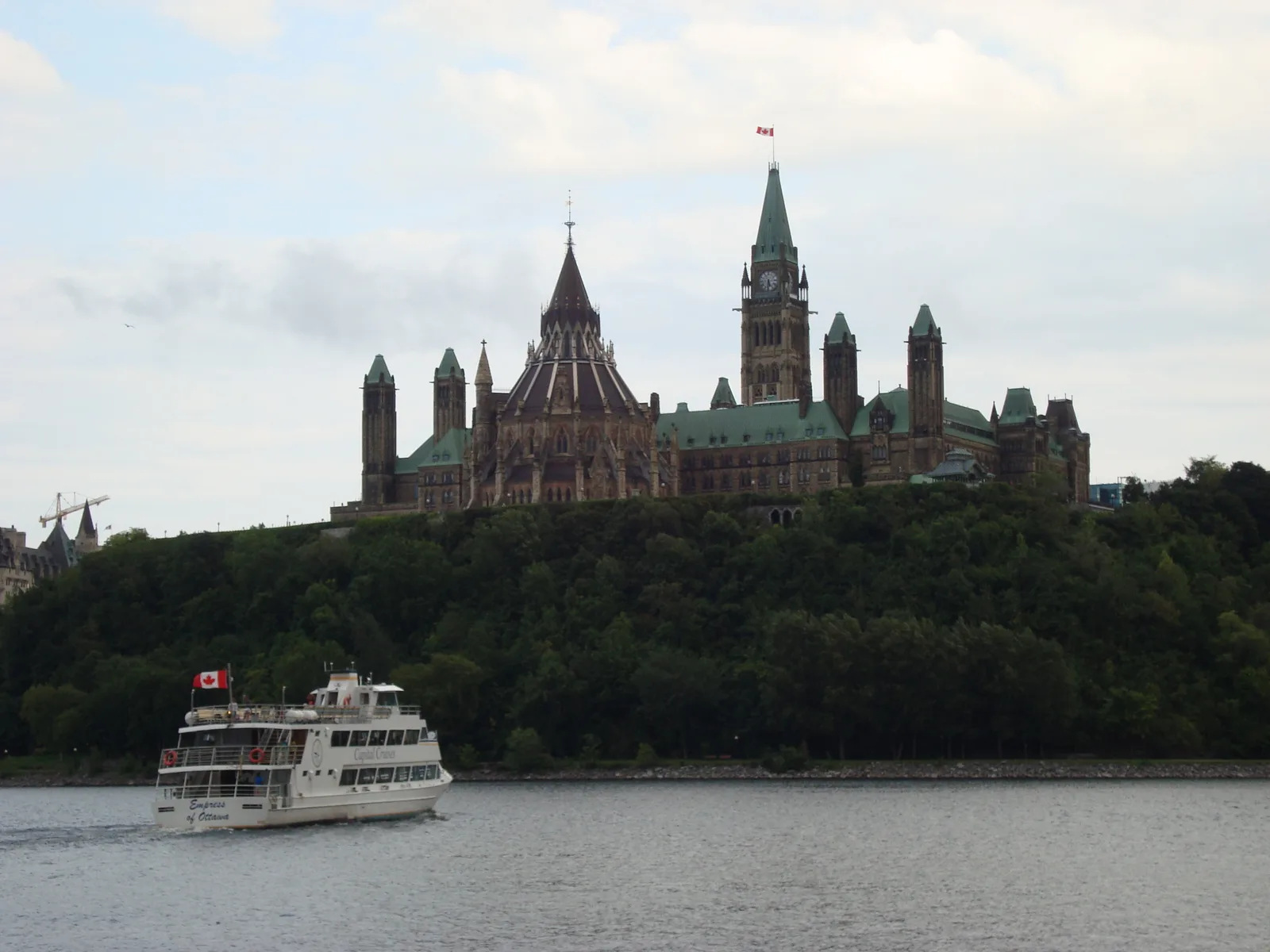
The familiar Centre Block and Peace Tower remain important landmarks, but the Centre Block rehabilitation project means the building, including its Library, is closed to visitors. Do not build an itinerary around entering the tower or touring the historic interiors shown in older photographs. The banner image above predates this work.
There are alternatives for understanding Parliament. Check the current programme for the House of Commons in West Block and the immersive experience at 211 Sparks Street. The Senate’s official visitor information describes free guided tours in English and French at its temporary home at 2 Rideau Street, a former railway station.
Reserve through the official visitor arrangements and read the entry instructions before arrival. Keep time around a booking for security and finding the correct entrance. A pleasant walk through the surrounding district is a separate experience from a reserved interior tour; having one on your plan does not secure the other.
Language choice can help shape the visit. Check which language a particular guided departure uses before reserving, especially when travelling with children or relatives who would struggle to follow the other option. A bilingual institution does not necessarily deliver every individual tour in both languages simultaneously.
Follow the canal from locks to neighbourhoods
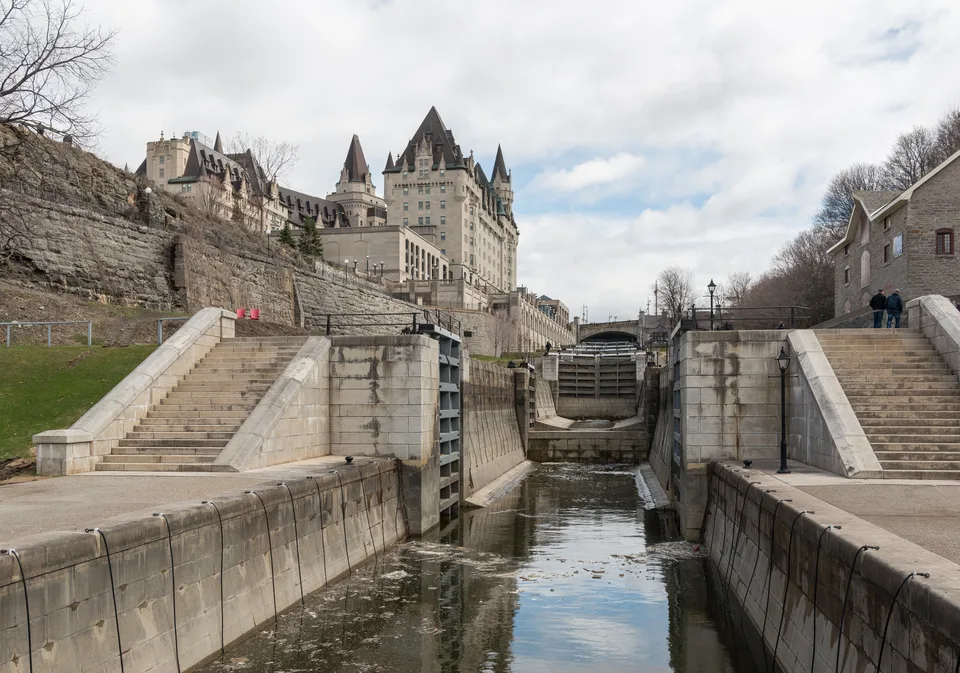
The Ottawa Locks form an eight-lock staircase linking the canal with the river below. Their changing levels and stonework make the canal’s purpose legible without requiring a long excursion. Look at the locks from public viewpoints and use permitted paths, keeping clear of operating equipment and waterside edges.
A canal walk can connect this historical stop with a slower afternoon elsewhere in the city. Choose the distance around your energy, weather and return transport rather than assuming the entire waterfront must be covered. Check temporary path arrangements locally, particularly where maintenance changes access.
The locks also offer a useful lesson in pacing: a visitor who wants to watch activity and take photographs needs longer than someone simply crossing the area. Place this stop between timed attractions with enough flexibility to linger, and keep an indoor alternative for heavy rain or uncomfortable temperatures.
Make time for the National Gallery
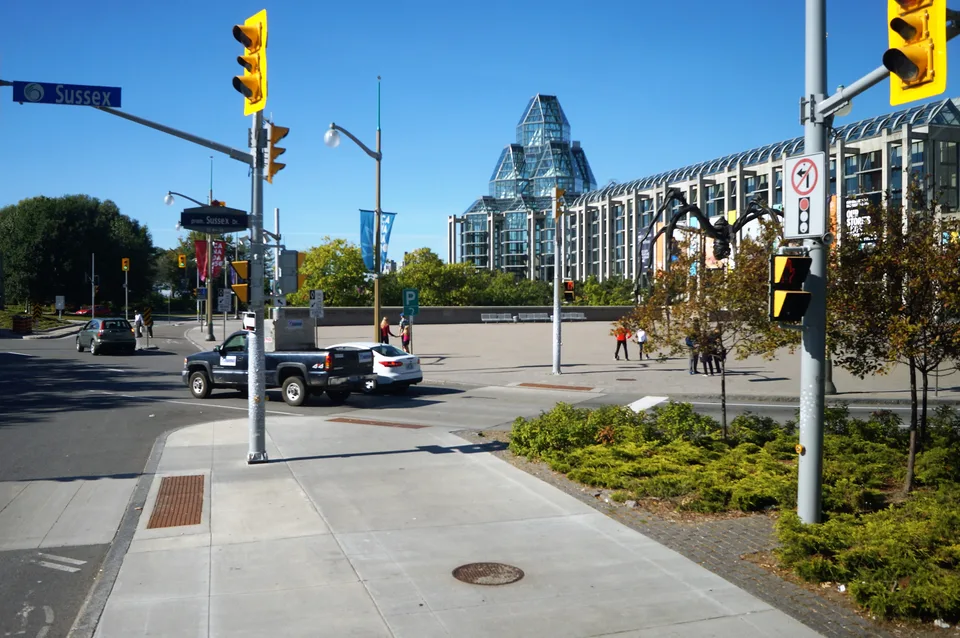
The National Gallery of Canada’s admission page is the place to check exhibition access and ticket conditions. At review, adult admission was CAD22 before tax, with CAD3 off for online purchase. Children aged eleven and under were free; concession eligibility and identification requirements should be checked for your party.
Thursday admission from 5pm to 8pm was free, but a ticket was still required. Treat this as a bookable opportunity, not a guarantee that any arrival will secure entry. Choose an exhibition or collection focus in advance rather than expecting to absorb the entire institution between other appointments.
This is also a useful weather anchor. Put the gallery on a day when outdoor plans can move around it, and leave time afterwards for the surrounding streets. If travelling with people who have different interests, agree on a meeting time so the visit remains enjoyable without requiring everyone to move at the same pace.
Cross to Gatineau for Canadian history
The Canadian Museum of History is in Gatineau, Quebec. Its location across the river makes it a natural complement to an Ottawa itinerary, but remember the crossing when arranging transport and meal plans. Check the exhibition programme to decide how much of a day to allocate.
At review, adult admission was CAD25 before tax, with a ten per cent online discount. Free Thursday admission ran from 5pm to 7pm and required a timed ticket. The museum specified that the Napoleon exhibition required an additional ticket; avoid assuming every temporary exhibition is included in a general or free admission arrangement.
Seasonal promotions need particular care. The summer 2026 Canada Strong Pass offer had ended by this guide’s review date. An old social post about free youth admission is therefore insufficient evidence for a current booking. Check the live ticket page for the visit date and each traveller’s eligibility.
If your party has limited stamina, avoid treating the river crossing and a large museum as a minor addition to an already full day. Decide where you will rest and how you will return before leaving your accommodation. The most attractive walking route may not suit everyone after several hours indoors.
Explore ByWard Market without rushing dinner
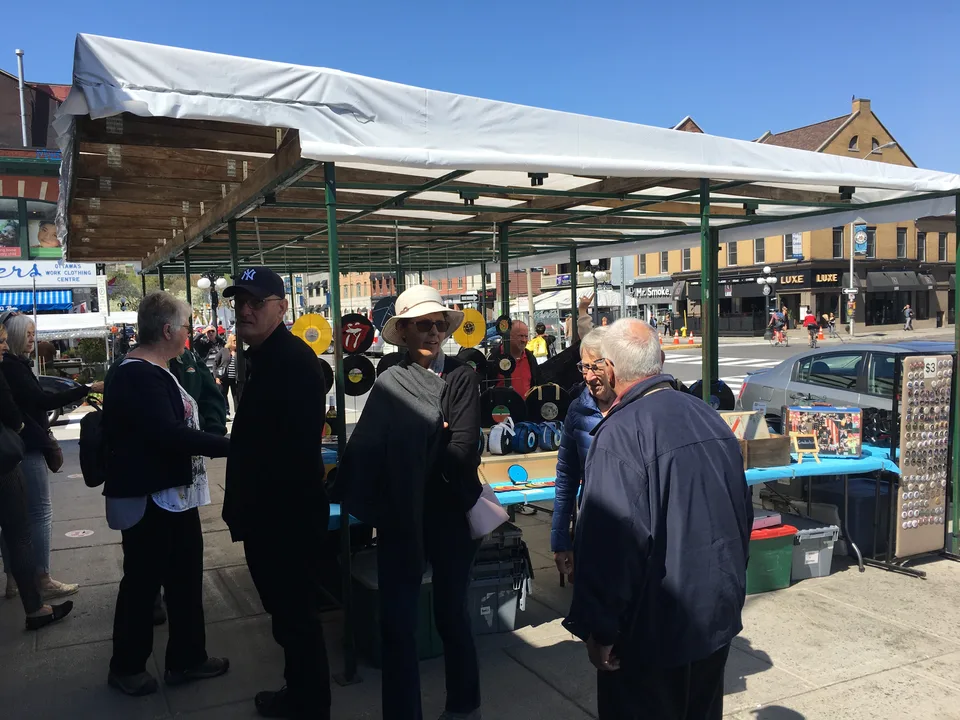
The ByWard Market and Rideau Street district brings shopping, food and evening activity into a practical walking area. Come with time to browse rather than treating it solely as a meal stop between museums. Historic photographs illustrate the setting, not a promise that individual stalls or businesses remain unchanged.
Ottawa’s food choices include shawarma, poutine, butter tarts and BeaverTails alongside many international cuisines, as the tourism board’s restaurant overview explains. Choose according to appetite and budget rather than turning a list of regional favourites into compulsory purchases. A bakery stop and a more substantial meal can be more useful than several rushed tastings.
For shopping, distinguish an immediate souvenir purchase from household provisioning. Check opening hours for the specific business, and compare grocery access when evaluating accommodation. A visually appealing district can still require an extra journey for the particular everyday supplies your household needs.
Book accommodation around the whole journey
A central hotel can save transfers on a short visit, particularly when the plan combines Parliament, the gallery and ByWard Market. Compare the actual entrance location, room configuration, cancellation terms and final price. A listing’s neighbourhood name is less useful than the walk from its door to your first appointment.
Apartments and suite hotels can suit families or longer stays where cooking and laundry reduce daily friction. Ottawa Tourism identifies options with kitchen and laundry facilities in its market-area accommodation coverage. Confirm the facilities attached to your room category; a property offering some suites does not mean every booking includes a usable kitchen.
For a stay across the river, calculate both the accommodation saving and repeated crossings. For an outer district, calculate transport after an evening meal as well as the morning trip. Request accessibility details directly if stairs, bathroom layout or distances through a large property could affect the stay.
Reach Ottawa by air or intercity train
Ottawa airport has a rail connection, but reaching downtown involves transfers. The official Line 4 route map shows Airport, Uplands and South Keys. From South Keys, use Line 2 towards Bayview and connect with Line 1 for the downtown journey. Check service status and your hotel’s nearest stop before departure.
OC Transpo’s O-Train extension information confirms that the southern Lines 2 and 4 operate seven days a week. That does not establish every departure time or guarantee a particular connection. With children, several bags or a late arrival, compare the transfer sequence with a direct vehicle journey using a current quotation.
Intercity rail passengers arrive at VIA Rail’s Ottawa station, at 200 Tremblay Road. It is outside the parliamentary core, so include a local connection in the booking plan. Request assistance in advance where needed and leave enough margin if a delayed arrival could affect another reservation.
A train reservation and an attraction reservation should be assessed together. Compare the station arrival, local connection, bag storage and admission deadline before booking them back to back. An inexpensive fare loses its appeal if the onward plan depends on an unrealistically short interval and leaves no workable alternative.
Use transport fares as a dated benchmark
Walking can work well between central sights, but the city’s size makes transit relevant once accommodation, a campus or an employer lies farther out. Build a route from the actual address, checking the final walk as well as the train or bus segment. A nearby station is only part of a useful journey.
OC Transpo’s 2026 fare documentation records an adult Presto e-purse fare of CAD4.10 per ride. This is a specific payment benchmark, not a claim that every cash payment, concession or pass costs the same. Check the current fare product and transfer conditions before choosing how to pay.
When comparing a car with transit, include parking at both ends and the needs of every traveller. For a prospective move, test a weekday commute at the hour you would actually travel. Weekend sightseeing gives a limited picture of reaching an office, class or childcare appointment reliably.
Build a budget from choices you can verify
All amounts here are Canadian dollars. For two paid cultural stops, the published adult gallery and history museum prices total CAD47 before tax at the undiscounted rates recorded above. Online discounts, free evening sessions and special exhibition charges change that calculation, so price the actual combination you intend to book.
Accommodation and dining vary too much by date and requirements for a single nightly allowance to be useful. Compare complete hotel quotations for identical dates, then add transport, meals and any parking. For a family, check whether a larger room with cooking facilities changes the overall cost more than a small reduction in its headline rate.
Keep paid reservations concentrated around your strongest interests. Parliament-related experiences, waterside walks and neighbourhood browsing can balance museum admission without filling the schedule with purchases. A modest contingency is more useful than assuming every meal, transfer and activity will follow the cheapest advertised option.
Check whether hotel quotations include the same number of occupants and the same cancellation rights. Breakfast, kitchen access or laundry can affect a longer stay, but only if you would use them. Keep booking confirmations available offline so a lost mobile connection does not prevent finding the property or proving a reservation.
Choose a season around the experience
Environment and Climate Change Canada’s 1991–2020 Ottawa City normals show a January mean temperature of about minus 9.6°C and a July mean of about 21.3°C. These are historical monthly averages, not forecasts or descriptions of every day. Plan clothing around the expected conditions and check the forecast close to departure.
Winter requires suitable footwear and practical arrangements for moving between indoor stops. Summer supports longer outdoor days, but water, shade and rest remain relevant. In spring and autumn, keep outdoor and museum plans interchangeable rather than attaching the success of a short visit to one clear afternoon.
The Rideau Canal Skateway is a weather-dependent attraction. The National Capital Commission describes a 7.8-kilometre route, generally associated with January to early March, with free access when open. Check the official ice and opening information before setting out; a winter date alone never guarantees safe skating.
Spend three days with room to adapt
On the first day, orient yourself around Parliament and the downtown canal locks. Place a reserved parliamentary experience at the centre of the day, then leave time for the surrounding streets. Finish around ByWard Market if that suits your accommodation and dinner preferences, rather than adding another distant attraction.
Use the second day for the National Gallery and a neighbourhood afternoon. Choose the Glebe, Elgin Street or Wellington West according to what interests you, allowing for transport between them. A Thursday free session can change the order, but avoid collecting reservations that make meals and unhurried walking impossible.
Devote the third day to the Canadian Museum of History and the river crossing. Alternatively, make it an outdoor day if conditions and transport suit your party. In poor weather, keep the museum plan. Travellers with only two days should remove a major stop rather than compress all three days into an exhausting checklist.
Take Gatineau Park as a separate outing
Gatineau Park offers a different landscape from central sightseeing. Managed by the National Capital Commission, it is a conservation park covering more than 361 square kilometres. It should not be described as a Parks Canada national park, nor treated as one small attraction with a single convenient arrival point.
Choose the sector and activity before arranging transport. Check trail conditions, parkway access, seasonal restrictions and the return journey. An advertised seasonal shuttle needs a current operating date; the autumn programme ending on 25 October 2026 cannot support a promise of service later in the season.
For another urban destination, compare the Gatineau destination page or the Montreal destination page with your available time. These links help locate places within VisaWand. Check the content and transport needs for each destination rather than assuming every location page supplies a completed itinerary.
Assess housing with an ordinary weekday in mind
For a move, begin with the workplace, campus or other fixed destination and work backwards to a housing search area. Compare an address’s commute, grocery access, laundry, storage and household space. A central visitor base can be useful temporarily while you inspect homes and learn which daily journeys matter.
Ontario’s standard lease guidance applies to most residential tenancies, with exceptions. Read the proposed agreement and clarify utilities, parking, appliances and included services before signing. The provincial guide to rental housing leases explains limits on rent deposits and refundable key deposits; covered tenancies do not permit separate damage or pet deposits.
These are Ontario rules. A home in Gatineau requires Quebec-specific research rather than applying Ottawa tenancy assumptions across the river. Avoid committing to an unseen property solely because photographs look convincing. Establish the property, landlord or authorised agent’s identity and obtain a clear written record of payments and terms.
Students should compare the exact teaching location with accommodation, rather than selecting housing from the institution’s name alone. Ask which campus hosts the course and whether required placements create additional travel. For workers, check whether the stated office location matches the place where regular attendance will actually be expected.
Set up services and realistic healthcare cover
The City’s first-days guidance for newcomers provides a starting point for banking, identification, housing and settlement support. Turn it into a household-specific list: confirm utility responsibilities, arrange communications and identify nearby groceries, pharmacies and transport. Families should investigate the relevant school or childcare arrangements before selecting a long lease.
Ontario’s OHIP guidance states there is no waiting period for eligible people, but eligibility still depends on immigration and residence requirements. Do not assume arrival, a hotel booking or every permit automatically provides provincial health coverage. Arrange suitable cover for any period or circumstance outside your eligibility.
At the University of Ottawa, UHIP information lists CAD948 including tax for single coverage from September 2026 through August 2027, subject to its enrolment and exemption rules. Students should verify their own institution’s arrangements and supplementary benefits. For an emergency requiring police, fire or ambulance, Ottawa’s settlement guidance identifies 911; a free emergency call does not establish free treatment.
Separate entry documents from permission to stay
Use the official Canadian entry requirements checker for your nationality, travel document and method of arrival. Some travellers need a visa, others an electronic travel authorization, and exemptions depend on circumstances. An eTA costs CAD7 through the official process; approval is not permission to work and does not guarantee admission at the border.
For a longer stay, investigate Canadian work permits and study permit requirements separately. Employer-specific and open work permits have different conditions, while study rules include exceptions that need checking against the actual course. Compare any application with the official IRCC fee list, allowing for additional charges where applicable.
Permanent relocation is another decision. Express Entry involves eligibility, a candidate process and, where invited, a residence application; choosing Ottawa does not confer status. VisaWand’s Canada consultant listings can help you explore professional support. Verify the adviser’s credentials and use official requirements to assess any proposed route before making financial commitments.
Official planning resources
Reviewed 26 October 2026. Use the official resources linked throughout this guide for admission, transport, housing and immigration decisions. Prices, services and rules can change; confirm the details relevant to your dates. Photography illustrates the locations and is not a live view.
View all official resources
- City of Ottawa: recognition of territory
- Parks Canada: Rideau Canal history
- Ottawa Tourism: neighbourhoods
- Government of Canada: Centre Block rehabilitation
- Senate of Canada: visiting the Senate building
- Parks Canada: Ottawa lockstation
- National Gallery of Canada: admission
- Canadian Museum of History: plan your visit
- Ottawa Tourism: ByWard Market and Rideau Street
- Ottawa Tourism: food and restaurants
- OC Transpo: Line 4 map
- OC Transpo: O-Train extensions
- VIA Rail: Ottawa station
- OC Transpo: 2026 standard fare reference
- Environment Canada: Ottawa climate normals
- NCC: Rideau Canal Skateway
- NCC: Gatineau Park
- Ontario: standard lease guide
- Ontario: standard lease and deposits
- City of Ottawa: first days after arrival
- Ontario: OHIP eligibility
- University of Ottawa: UHIP
- City of Ottawa: essential services
- IRCC: what you need to enter Canada
- IRCC: official eTA
- IRCC: temporary work
- IRCC: study requirements
- IRCC: application fees
- IRCC: Express Entry
Plan the next part of your journey
Explore the Canada guide, browse other cities or compare consultants for your travel and relocation questions.