Visa
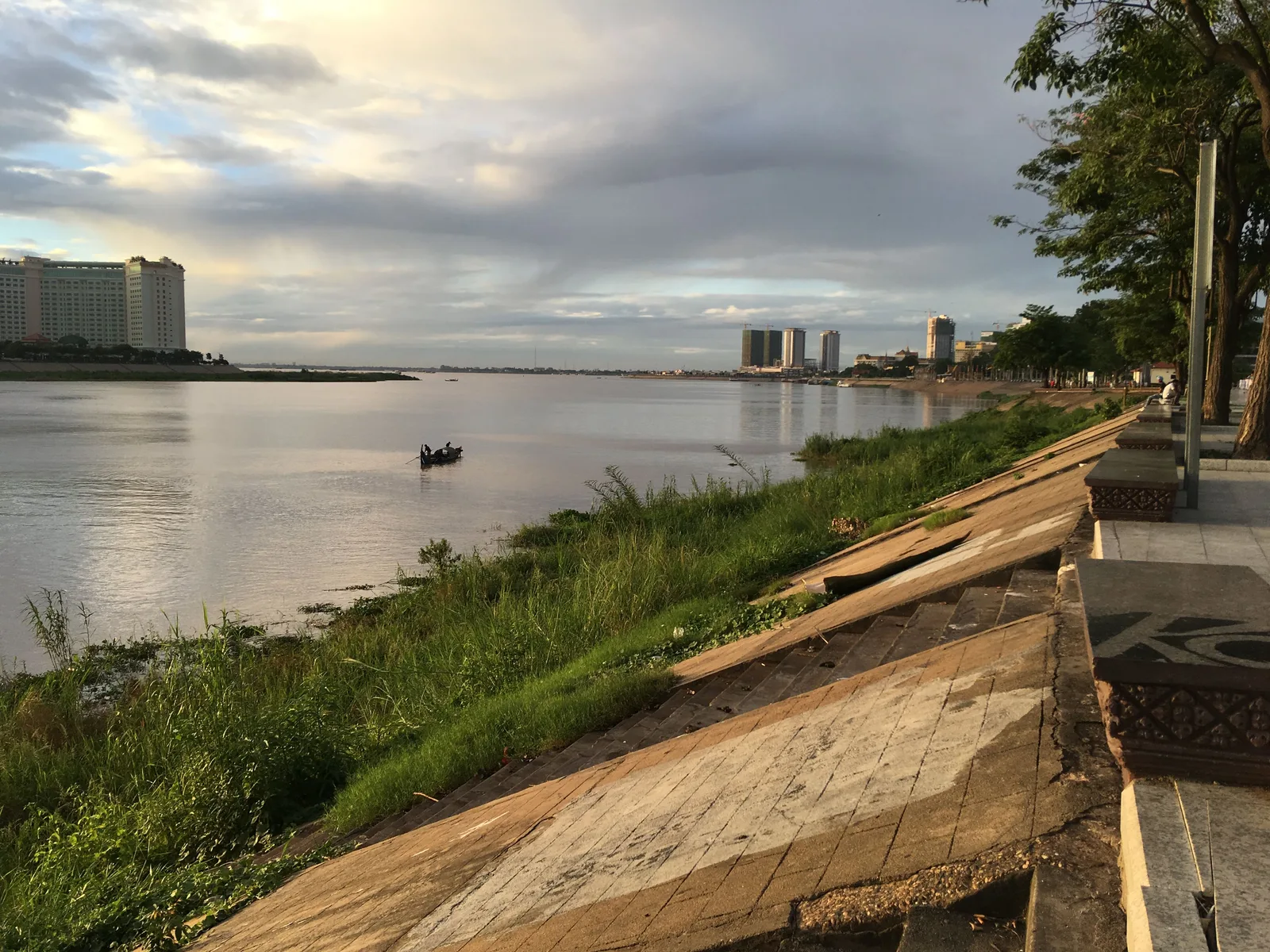
Give Cambodia’s capital time beyond a transfer
Phnom Penh brings royal buildings, major collections of Khmer art, working markets and riverside evenings into one busy capital. It also holds places where the country confronts the violence of its recent past. A good visit leaves room for both: not every morning needs to be a sightseeing sprint, and a memorial visit deserves more thought than an empty slot between lunch and shopping.
Allow three full days for a first stay, with additional time for an excursion or appointments. Travellers considering a move should add ordinary working days to test housing, transport and household needs. The city is a useful introduction to contemporary Cambodia, but its opportunities and inconveniences become clearer when you travel beyond the hotel-to-attraction circuit. Start with VisaWand’s Cambodia country guide for the national context.
Understand the rivers and the layers of history
The tourism authority’s Phnom Penh overview places the capital at the meeting of the Mekong, Tonle Sap and Bassac waterways, the setting known as Chaktomuk. That geography helps explain the prominence of the riverfront and the relationship between trade, settlement and the royal city. A map is more useful here than imagining the capital as a single neighbourhood around the palace.
Royal compounds, religious buildings, colonial-era streets and much newer development sit alongside each other. The National Museum’s account of its own history records its inauguration in April 1920, closure during Khmer Rouge rule and reopening in April 1979. Such dates give tangible shape to the city’s disruptions and rebuilding. Look for continuity in institutions and everyday life as well as dramatic changes in the skyline.
Choose between the riverside, BKK1 and a longer commute
For a short cultural visit, Daun Penh puts the palace, museum and riverfront within the same broad area. A riverside address suits evening walks, but investigate noise and the specific room’s position before booking. BKK1 is another area to compare for accommodation and dining, especially when your plans extend beyond the royal and museum precinct.
For a longer stay, include the Tuol Tompoung area and districts near your actual workplace or school in the search. These are starting points for investigation, not promises that every street has identical facilities or atmosphere. Calculate the journey to essential destinations before deciding that a larger home farther out represents better value. VisaWand’s Cambodia location directory helps identify other places; individual pages vary in the amount of guide content available.
Book the room that supports your daily routine
Compare guesthouses, boutique hotels, larger hotels and serviced apartments according to how you intend to use them. A short stay needs reliable check-in, a comfortable night and straightforward transport. Several weeks may make a usable kitchen, laundry, desk and grocery access more valuable than a dramatic lobby or rooftop photograph.
Ask about air conditioning, hot water, windows, lift access, construction nearby and the cost of breakfast or additional guests. Confirm taxes, cancellation terms and the airport-transfer price in writing. An apartment advertisement should specify electricity, cleaning, internet and linen arrangements; a lower nightly figure can conceal separately billed services. Save the address and arrival instructions offline, and arrange a meeting point that the driver and property can both recognise.
For limited mobility, request photographs of the entrance, bathroom and lift approach rather than relying on an accessibility label. Check whether an arrival after reception closes changes the check-in procedure or requires advance arrangements.
Visit the Royal Palace as a working institution
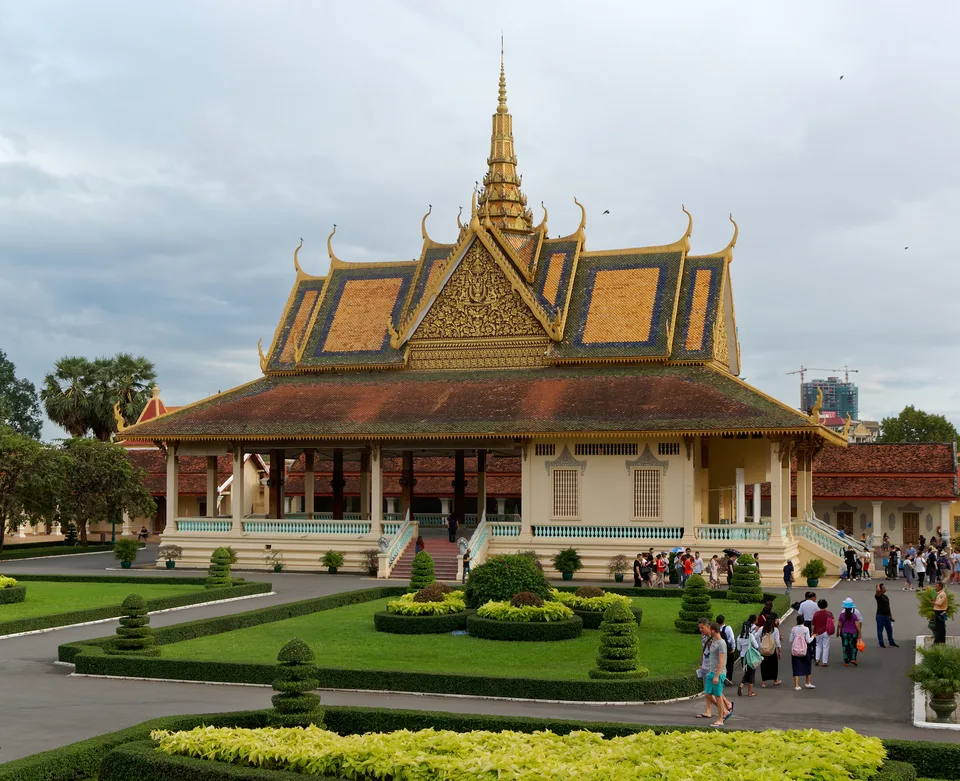
The tourism authority’s Royal Palace description distinguishes the ceremonial visitor areas from the monarch’s private residence. The Throne Hall and Silver Pagoda complex provide an introduction to royal architecture and religious display; a visitor ticket does not open the entire compound. Keep that distinction in mind when interpreting maps and promotional photographs.
Check the current visiting sessions and ticket price before setting off, since ceremonies can affect access. Wear clothing covering shoulders and knees and follow instructions about shoes and photography at each building. Leave time to appreciate rooflines, courtyards and the different functions of the structures rather than searching only for a single viewpoint. The accompanying photograph shows the Phhochani pavilion in 2017 and is historical context, not proof of today’s access or landscaping.
Make the National Museum more than a palace add-on
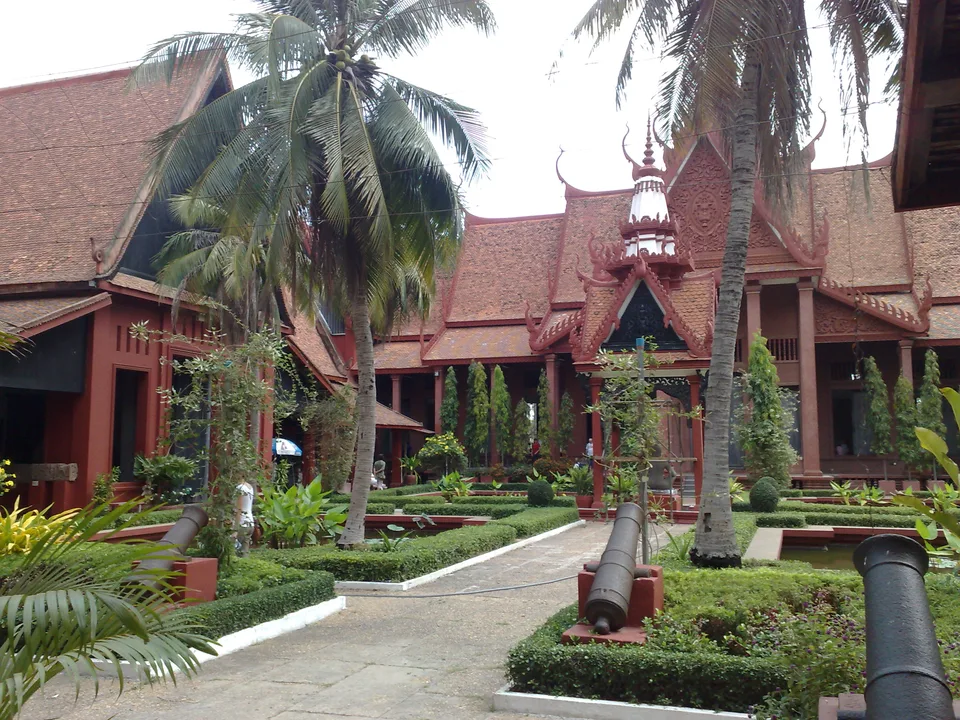
The National Museum of Cambodia’s visitor page lists daily opening from 08:00 to 17:00, with the last tickets sold at 16:30. Its entrance is at Streets 13 and 178, near the palace. Published foreign-adult admission is US$10; the site lists US$5 for ages 10–17. Confirm eligibility at the counter rather than assuming every child or student category follows one rule.
The collection merits an unhurried visit of its own. Read labels and choose several objects to examine closely, using the courtyard as a pause between galleries. Photography is prohibited inside the galleries, while the exterior and courtyard may be photographed. A camera full of roof details is therefore compatible with respecting the collection’s restrictions. Ask about guides at the entrance if interpretation matters more to you than moving independently.
Approach Tuol Sleng with attention and preparation
Tuol Sleng Genocide Museum preserves the former S-21 prison. The experience concerns people and a system of persecution, not spectacle. Allow time to listen and read, keep conversation considerate and avoid turning rooms or victims’ portraits into backgrounds for posed photographs. Families should consider the material before deciding how to visit with children.
The museum publishes daily hours of 08:00–17:00, US$5 admission for international adults and a separate US$5 foreign-visitor audio guide. Tickets are sold at the entrance and payment is in cash, riel or US dollars. Cover arms and legs. The website contains differing concession wording, so confirm reduced or free admission directly with identification. Check specific access needs in advance: authentic buildings and uneven surfaces can create difficulties even where the grounds are accessible.
Give Choeung Ek and remembrance their own space
UNESCO’s Cambodian Memorial Sites entry includes Tuol Sleng, Choeung Ek and the former M-13 prison in a serial property inscribed in 2025. Choeung Ek was associated with S-21 as an execution site. The three components are distinct locations; their shared designation does not mean they form one walkable attraction or share a visitor ticket.
If you visit Choeung Ek, arrange transport and agree waiting and return arrangements before departure. Confirm current admission and interpretation on the day rather than relying on an old package price. You may prefer it on a different day from Tuol Sleng, with something quiet afterwards. There is no obligation to compress both into a single morning. Follow marked paths and staff directions, and treat the site as a place of remembrance.
Use Wat Phnom to connect a place name with a living temple
Wat Phnom’s visitor description relates the city’s founding legend to Daun Penh and a hilltop shrine. Presenting that story as a legend preserves the distinction between tradition and verified chronology. Today the pagoda and its surrounding greenery offer a change of scale from broad roads and the riverfront, while remaining a religious place rather than simply a landscaped viewpoint.
Dress modestly, ask before photographing worshippers and allow people to make offerings without obstruction. Take your time on steps, especially in heat or after rain. Pair the visit with a manageable section of the northern centre rather than walking farther merely to complete a route. A short temple visit with time to observe respectfully can be more rewarding than another hurried stop between vehicle journeys.
Add SOSORO for a different reading of Cambodia
SOSORO, the National Bank of Cambodia’s museum, examines history through money, economics and politics. It offers a useful complement to the National Museum’s artistic focus and the memorial sites’ testimony. Interactive displays and films can make this a substantial visit rather than a brief alternative when it rains.
The museum lists opening Tuesday–Sunday, 09:00–18:00. Foreign admission is 20,000 riel, or 32,000 riel with an audio guide; check concession categories separately. Its website describes entrance ramps, lifts and adapted toilets, useful information for visitors comparing accessibility. Monday closure should shape your itinerary. Leave room to sit and absorb the material, and use the museum’s current information for temporary displays instead of expecting everything mentioned in an older article to remain on show.
Explore markets with a purpose and a spending limit
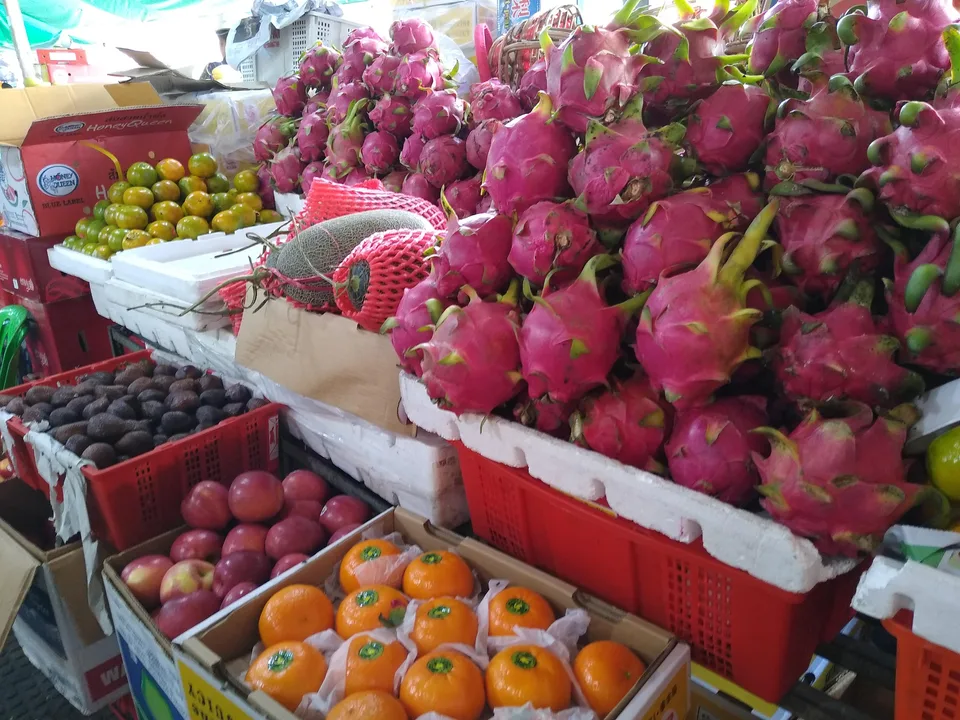
Central Market, also called Phsar Thmey, is an architectural stop as well as a place to browse. The tourism authority’s market description highlights its distinctive domed form. Look up and around the building before concentrating on individual stalls. The photograph here shows a fruit display in January 2020; stock, vendors and arrangements change.
Tuol Tompoung, commonly called the Russian Market, provides another market outing. Choose one first if your time or heat tolerance is limited. For textiles, jewellery or household items, ask about materials and inspect the object before agreeing a price. Do not interpret a seller’s description as independent proof of origin or quality. Keep purchases manageable and establish any delivery arrangements in writing. Check your home country’s import rules before buying antiques, wildlife products or other restricted goods.
Find meals through ingredients rather than rankings
The government’s visitor-information guide introduces Cambodian cooking through rice, soups, vegetables and kroeung, the aromatic spice paste used across many preparations. Prahok, fermented fish paste, and kapi, fermented prawn paste, are important ingredients to recognise. They also explain why a vegetable dish may require a specific question about animal ingredients rather than a simple glance at its name.
Try different styles across the visit: a soup-based meal, rice with several dishes and a carefully chosen market snack. Ask what is freshly prepared, establish prices before ordering and explain allergies clearly, including sauces and garnishes. Choose preparation and hygiene you are comfortable with. A restaurant’s suitability depends on your dietary needs and the meal being served, not only its position on a list or proximity to a monument.
Arrive at Techo rather than planning around the old airport
Techo International Airport’s first-anniversary statement confirms operations began on 9 September 2025. Check that your booking and transfer specify Techo, code KTI. Some tourism pages still describe Phnom Penh’s former airport, code PNH, and distances measured from it. Those instructions should not determine your arrival meeting point or how much time you leave for departure.
Compare the airport bus with an authorised taxi or confirmed hotel transfer according to arrival time, luggage and the final journey from the stop. Get a full vehicle price, passenger capacity and meeting instructions before accepting a private booking. Avoid promising yourself a fixed road journey time: leave margin for traffic and the actual location of your accommodation. Keep your first evening simple when arriving after a long flight.
Check the airport express route against your hotel
The airport’s public-transport page lists the Airport Express Bus daily from 05:30 to 23:30 between Techo and Kouch Kanong Circle, using Monivong Boulevard and Samdech Techo Hun Sen Boulevard. Listed stops include Canadia Garden near the railway, the Royal University of Law and Economics, Bred Bank and AEON Mall Mean Chey.
Check the boarding direction and the best stop for your hotel, including any onward ride. The operator page reviewed does not publish a fare, so confirm that directly rather than budgeting from an undated social-media figure. Operating hours describe the service window, not a guarantee that a bus will meet a delayed flight. For the return journey, work backwards from airline check-in requirements and allow for both waiting and road conditions.
Use short walks and planned rides around the city
Group nearby sights rather than spending the day repeatedly crossing the capital. Walking works best as a considered local route, with attention to crossings, available footways, shade and places to rest. A distance that looks modest on a map can feel different in humidity or when a pavement is interrupted.
For tuk-tuks, taxis or app-booked rides, confirm the destination, price and whether waiting is included before setting off. Keep a map pin for the entrance you need, not merely the attraction’s approximate centre. Secure bags and put your phone away near moving traffic. If hiring a driver for several stops, agree the complete itinerary and finish time. Renting a motorbike should follow a separate check of licence requirements, insurance and your ability to handle local conditions.
Budget in the currency actually being charged
Riel is Cambodia’s national currency, while US dollars are also widely accepted. Establish which currency a menu, transfer quote or apartment listing uses. If paying one currency for a price quoted in another, check the conversion and the change before completing the transaction. Carry useful small denominations and retain a payment method independent of your phone.
Known attraction costs offer anchors: the National Museum publishes US$10 for a foreign adult, while Tuol Sleng publishes US$5 plus an optional US$5 audio guide. SOSORO lists its admission in riel. These are individual prices, not an all-inclusive sightseeing allowance. Add room costs, meals, drinking water, transfers, laundry and any guide to a dated budget. For cashless options, consult the National Bank’s Bakong information and verify current tourist eligibility and fees.
Choose weather you can comfortably work around
The WMO-hosted Phnom Penh climate record, supplied by Cambodia’s meteorological service, shows substantially wetter conditions from May to October, with the largest monthly rainfall averages in September and October. December–February are much drier, while April’s mean daily maximum approaches 35°C. These station averages, covering 1982–2024, describe a pattern rather than predicting your dates. Rainy-season visits need flexible plans, not the assumption that every shower will be brief or arrive at a convenient hour.
Schedule outdoor walks early, use indoor visits deliberately and keep water and sun protection accessible. During heavy rain, allow more transfer time and avoid flooded roads or footways. Check current forecasts and local advice before an excursion. For longer stays, weather becomes a housing and commuting question too: examine drainage, covered access and the effect of a downpour on the route you expect to use daily.
A three-day itinerary with room to reflect
Day one: make the Royal Palace and National Museum the main cultural pair, checking palace sessions first. Take a proper break between them, then choose a short riverside walk and dinner. Do not make this the default plan immediately after an exhausting overnight arrival.
Day two: allow an unhurried visit to Tuol Sleng. Decide beforehand whether Choeung Ek belongs on the same day or another one; arrange transport accordingly. Keep the rest of the day light. Day three: combine Wat Phnom, SOSORO and a market visit in a sequence that avoids unnecessary journeys. Move SOSORO to another day if Monday intervenes. Add an excursion only with extra time; three days already provide enough material without turning every available hour into a booking.
Treat a possible move as a separate investigation
Before choosing a long lease, test ordinary weekdays in the area you are considering. Time the journey to work or school, locate groceries and laundry, and inspect the route after dark. Ask how deliveries reach the building and where vehicles can wait. A furnished room that works for a holiday may lack the storage, cooking space or quiet needed for a household.
Knight Frank Cambodia’s tenant-services page describes support for property searches, viewings and lease negotiations; it is a commercial option to compare, not a guarantee of suitability. Establish an agent’s scope and fees before engaging them. View the actual property where possible and verify who can grant the tenancy. Renting a home, buying property and securing permission to live or work in Cambodia are separate decisions requiring different checks.
Inspect the whole housing cost and essential services
Request a written inventory, deposit terms, notice period, maintenance responsibilities and a complete schedule of service charges. Check electricity and water billing, meter readings, internet, air-conditioning maintenance and any cleaning or building fee. Inspect ventilation, damp, pests, windows, locks and fire escape arrangements, including how you would leave during a power failure.
Test the internet in the room where you would work and confirm mobile reception as a backup. The government visitor guide specifies 220 V, 50 Hz electricity and notes that socket styles vary. Check appliance compatibility before shipping household equipment. Families should verify school admissions, transport and daily supervision directly; a nearby school is useful only if a suitable place is actually available. Budget insurance, healthcare, commuting and replacement household items alongside rent.
Identify healthcare before you need it
Royal Phnom Penh Hospital’s emergency department publishes a 24-hour service and emergency numbers +855 23 991 222 and +855 99 991 222. Save the location and confirm your insurer’s requirements for direct billing, deposits and referral. A hospital’s range of services does not establish that your particular policy or treatment is covered.
If you have an ongoing condition, check medicines, specialist access and follow-up arrangements before travel or relocation. Keep prescriptions and relevant records available and discuss vaccination needs with an appropriate clinician. Ask your accommodation or employer how urgent transport would be arranged from the actual address. This preparation matters more than assuming that a capital-city location makes every service convenient. For a longer stay, establish routine primary care as well as an emergency plan.
Separate a tourist visit from work, study and residence
The official Cambodian e-visa portal lists tourist Visa T at US$30, single entry, valid for entry within three months and permitting a one-month stay. Those are different time periods. Check nationality eligibility, passport requirements and permitted entry points before paying. Techo KTI is listed; land-border acceptance and temporary restrictions need a fresh check for your route.
Complete the separate, free Cambodia e-Arrival within seven days before arrival, as directed by the official service. For employment, confirm the appropriate visa and work permit with your employer and the authorities; an electronic application or an ordinary visa is not itself employment permission. Formal study and permanent residence also require their own assessment. The UK government’s entry guidance explains accommodation registration through FPCS; make sure your hotel or landlord handles the relevant registration. Use VisaWand’s consultant directory to compare appropriately qualified assistance.
Extend the trip selectively rather than collecting destinations
The Cambodian submission for Oudong on UNESCO’s Tentative List describes a former royal capital north of Phnom Penh. Tentative listing is not World Heritage inscription. If the royal history interests you, arrange an excursion with realistic transport time and ask about steps, heat and the particular sites included rather than accepting a vague “Oudong tour” description.
For a longer Cambodian journey, compare Siem Reap’s location page and Battambang’s location page, allowing proper travel and visiting time rather than treating either as a casual capital-city day trip. VisaWand’s Cambodia destination overview provides another route into planning. Choose the additional destination that develops your interests, and leave Phnom Penh enough time to register as a living city rather than only an airport and a few solemn stops.
Official planning resources
Reviewed 15 October 2026. Use the official resources linked throughout this guide for admission, transport, housing and immigration decisions. Prices, services and rules can change; confirm the details relevant to your dates. Photography illustrates the locations and is not a live view.
View all official resources
- Cambodia Tourism: Phnom Penh overview
- Cambodia Tourism: Royal Palace
- National Museum of Cambodia: institutional history
- National Museum of Cambodia: visitor information
- Cambodia Tourism: Wat Phnom
- Tuol Sleng Genocide Museum: visitor information
- UNESCO: Cambodian Memorial Sites
- SOSORO Museum: tickets, opening and access
- Techo International Airport: first anniversary, September 2026
- Techo International Airport: Airport Express Bus
- Cambodia government: practical visitor information
- WMO World Weather Information Service: Phnom Penh climate
- Cambodia Ministry of Foreign Affairs: official e-visa portal
- Cambodia Immigration: e-Arrival
- UK government: Cambodia entry, work and registration guidance
- Knight Frank Cambodia: residential tenant services
- Royal Phnom Penh Hospital: emergency and trauma
- Cambodian submission to UNESCO: Ancient City of Oudong
- UN Tourism and Cambodia Ministry of Tourism: Phnom Penh visitor briefing, 2023
- National Bank of Cambodia: Bakong payment information
Plan the next part of your journey
Explore the Cambodia guide, browse other cities or compare consultants for your travel and relocation questions.