Visa
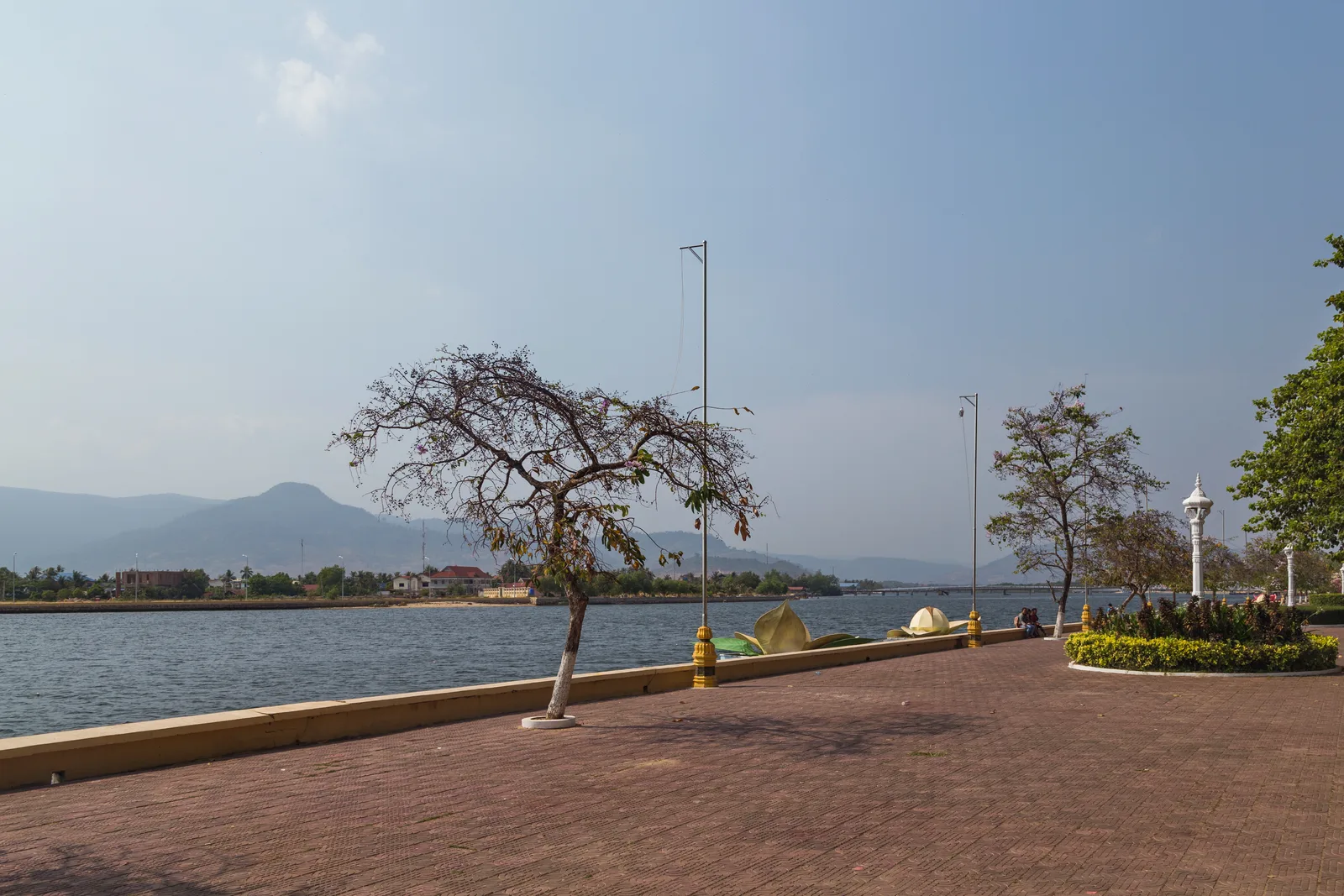
A river town with countryside on its doorstep
Kampot is a place to organise a slower journey through southern Cambodia: a town walk, a pepper-farm visit, a meal overlooking the river and a separate day in the hills. The riverfront gives the centre its focus, while the wider province supplies many of the experiences sold under the Kampot name. Understanding that difference will improve both your accommodation choice and your itinerary.
This guide covers the provincial capital beside the Praek Tuek Chhu. Kampot province reaches well beyond the town: a property described as being in Kampot may be a rural retreat requiring transport for every meal out.
Three nights allow a comfortable introduction. Two can work if you choose one major excursion. Use the VisaWand Cambodia guide for the wider journey and entry context, then plan each day around your chosen base.
Read the old town beyond its attractive facades
The older central streets retain shophouses and buildings from the French colonial period, with domestic and commercial uses continuing behind their fronts. Walk slowly enough to notice balconies, shutters and the relationship between narrow premises and the street. These are inhabited buildings, so keep entrances clear and ask before photographing people at close range.
For historical context, start with the Kampot Provincial Museum. Its own account describes the conversion of the former governorate building on Sala Khet Street 735, Kampong Bay, into a museum. The displays include historical panels, photographs and archaeological pieces from the region, providing a perspective that extends beyond colonial architecture.
Treat the museum as an introduction to a layered regional history, rather than evidence that the whole town belongs to one era. The older buildings are worth looking at, but an attractive facade alone cannot tell you who lived or worked there, or how its use has changed.
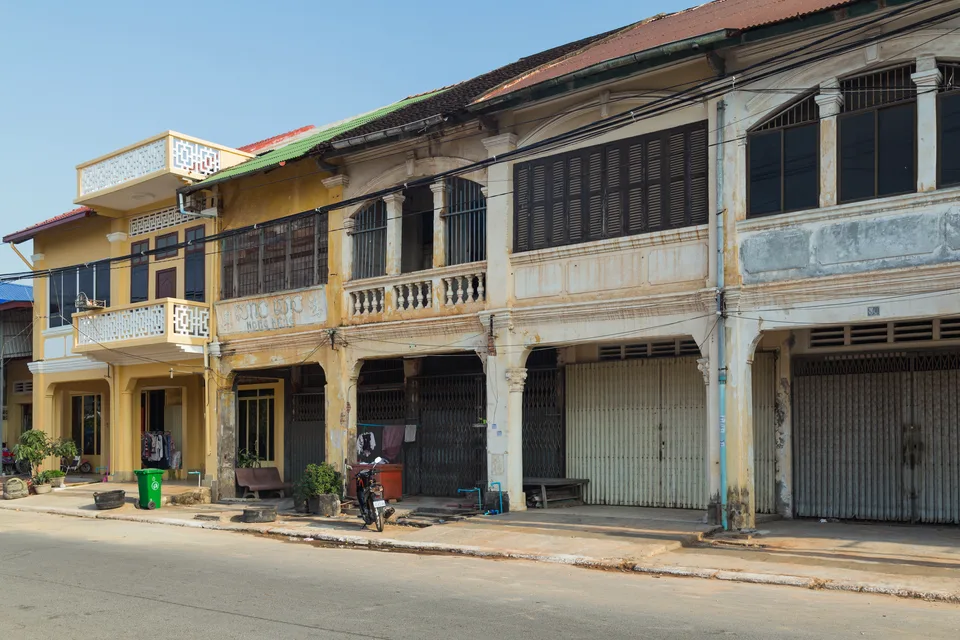
Divide your stay between three distinct areas
The central streets around the old market and riverfront suit visitors who want to walk between restaurants and accommodation. Choose this area when you value an easy evening meal more than a private garden. Check the room's position as well as the address: facing a busy road or an entertainment venue can affect a night's sleep.
Upriver accommodation offers a different arrangement, often built around the water or a quieter setting. Ask how far it is from town, what the last part of the approach is like and whether food is available when you arrive. A riverside name does not establish safe swimming, reliable boat access or a walkable route into the centre.
Rural properties towards the pepper-growing areas are best chosen deliberately for the countryside. They can be rewarding for a longer pause, but transport costs and meal choices need more attention. Compare the total stay, not simply the nightly room price.
Make the riverfront part of an ordinary day
The river is most useful as a recurring part of your visit, rather than an attraction to complete in one stop. Walk a manageable stretch early, then return later when the light and activity have changed. Leave time to sit, watch passing traffic on the water and orient yourself towards the hills.
The government's Kampot environmental examination places the city in the floodplain and estuary of the Praek Tuek Chhu. That setting helps explain both its appearance and the importance of drainage. A picturesque waterfront should not be read as proof that every neighbouring lane stays dry during heavy rain.
When comparing river trips, ask about the exact departure point, duration, vessel, available life jackets and return arrangements. Confirm what the ticket includes before boarding. A sunset or wildlife-themed trip depends on conditions; neither a particular sky nor an animal sighting can be guaranteed. Keep valuables secure and follow the operator's safety instructions.
Give the provincial museum a considered hour
The museum's published information lists admission at US$2 and daily visiting hours of 8–11am and 2–5pm. Because the page does not display a clear update date, confirm those arrangements before making a special journey. The midday break is particularly relevant if you are trying to fit the visit between buses.
The collection offers a useful counterweight to a trip devoted entirely to restaurants and scenery. Read the historical panels, then choose a few photographs or objects to study closely. The museum identifies archaeological material from different periods and locations around the province; it is not simply a display about the building itself.
For families, investigate one or two questions instead of reading every label. Ask about stairs, seating or a step-free entrance if these matter to your group.
Understand why Kampot pepper has a name to protect
Pepper is a practical reason to travel beyond town. The World Intellectual Property Organization's account of Kampot Pepper's registration explains its geographical-indication status, linking the product's identity to its origin and qualities. That is a more useful distinction when shopping than an unsupported claim that every locally sold pepper is the world's best.
At a farm, follow the progression from growing vines to harvesting, processing and sorting. Ask how different products are produced and how they should be used in cooking. A tasting can help you choose a small quantity you will actually enjoy at home, instead of buying a large souvenir pack on reputation alone.
Check the producer, packaging and labelling when comparing purchases. Ask about storage and any restrictions at your next destination, especially for fresh agricultural products. A shop purchase and a farm visit serve different purposes: one is convenient for gifts, while the other needs time and transport to explain the cultivation.
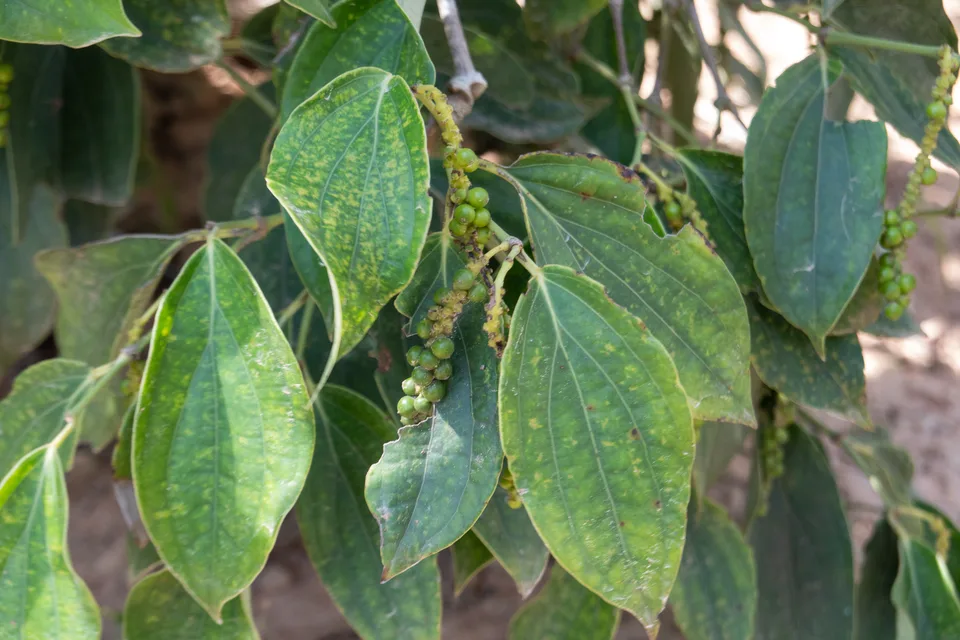
Book the pepper-farm experience you actually want
La Plantation's current visitor information makes an important distinction between self-guided entry and paid guided tours with tastings. Older accounts describing every visit as free should not be used as a current budget. The published self-guided entrance fee is US$2.50 per adult and US$1.25 per child, with its value redeemable in the farm's shop, restaurant or spice bar.
The farm lists daily opening from 9am to 6pm, with the last visit at 4pm. It asks visitors to book a visiting slot from November to March; April to October visits can be arranged on arrival. Cooking classes require advance booking, with at least a day's notice. Check the current booking page for the price and inclusions of the guided option you choose.
Arrange the return journey before leaving town. Add transport, lunch and purchases to the activity cost, and distinguish a transfer-only quotation from one that includes a guide or other stops.
Treat Bokor as a separate mountain outing
The government's Kampot tourism overview identifies Bokor among the area's major attractions, alongside caves, salt fields and agricultural visits. For a first stay, it is better to give the mountain its own day than to bolt it onto the end of a pepper-farm excursion.
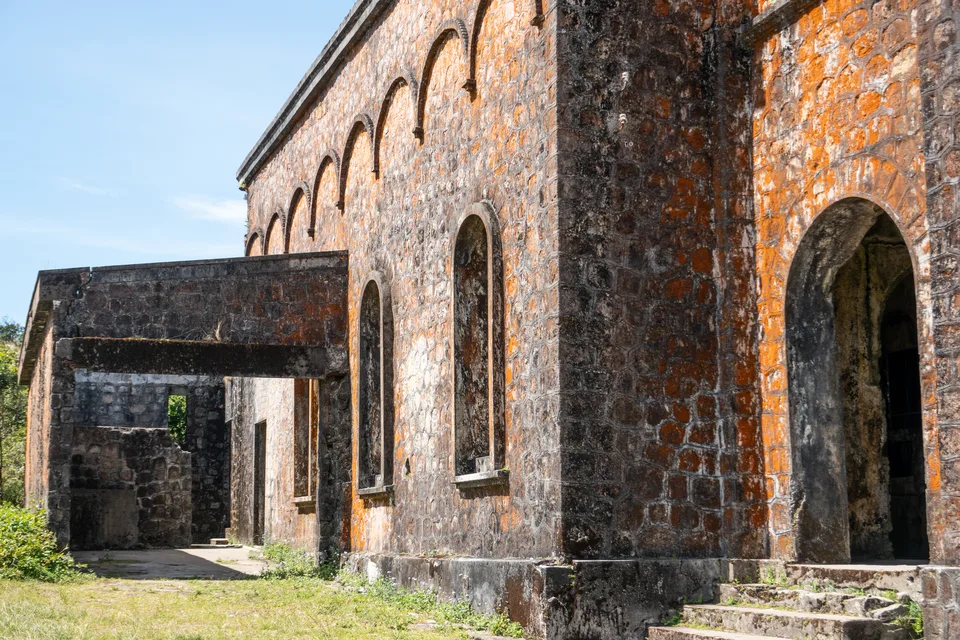
Agree on the route and stops before setting off. The former church and other historic remains are different experiences from a guided nature walk or a visit to a modern development. Ask what you will actually see, how much walking is involved and whether any admission or transport charges are additional.
Weather can change the value of a viewpoint quickly. Take rain protection and something warmer than your town clothing, and accept that cloud may obscure the coast. Keep to permitted routes and follow local restrictions. An old building's appearance does not establish that every interior, stairway or edge is safe to explore. Choose transport appropriate to your experience rather than hiring a scooter simply because others do.
Use the countryside without treating it as a backdrop
Salt production, farms, riverside villages and caves broaden a Kampot stay beyond the central streets. Pick one theme and give it enough time. A driver offering many stops in a single day may be describing a sequence of photographs rather than meaningful visits.
At working salt fields, ask where visitors may stand and whether photography is welcome. Production depends on weather and the stage of work, so a photograph of a salt harvest does not promise active harvesting on your date. Stay out of work areas and avoid damaging surfaces or equipment.
For a cave visit, establish access conditions, the need for a guide, suitable footwear and whether the route includes slippery or confined sections. Religious sites require respectful clothing and behaviour. Travellers who dislike enclosed spaces or have mobility limitations can choose a different outing without losing the main character of the region. A well-matched half day is more useful than an exhausting circuit.
Choose a room around evenings and access
Compare central guesthouses, small hotels and upriver stays by the journeys you will repeat. A central room can reduce the need for evening transport; a rural property may offer the setting you want but require more meals on site. Confirm air conditioning, bathroom arrangements, mosquito protection and the exact bed configuration.
Rikitikitavi's official accommodation information provides one central riverside option to compare. The operator describes rooms in a historic timber-framed rice-barn setting and a terrace restaurant overlooking the river. Those features help explain the property; they are not a guarantee that every room has a river view or suits every traveller.
Request specific access information where necessary, including stairs, thresholds and bathroom layout. For an extended stay, ask about laundry, workspace, refrigeration and a longer-stay rate. Check cancellation conditions before paying, particularly when your plans depend on weather or an onward connection. A short initial booking can be useful while you decide whether the setting works for you.
Eat with the ingredients and the enterprise in mind
Pepper is worth exploring at the table as well as at a plantation. Ask which dishes use fresh green pepper and which use dried peppercorns. If you need vegetarian food or have an allergy, discuss stocks, sauces and preparation rather than relying on a dish's headline ingredient.
Epic Arts Café's own information describes a not-for-profit social enterprise providing employment opportunities for people with and without disabilities and supporting inclusive programmes. It publishes daily hours of 7am–6pm. Use its current map: the organisation says the café has relocated, so older street directions may be misleading.
The café asks customers to use order forms that support communication with deaf team members. Follow the staff's approach and allow time to order clearly. This is a concrete way to choose a business for what it does, without inventing a personal recommendation or assuming that charitable purpose establishes every aspect of a meal.
Budget from real bookings rather than a daily average
The important variable in Kampot is often your choice of excursions and accommodation. Build a budget with separate amounts for the room, meals, arrival transfer, local journeys and activities. A quiet upriver room can cost more overall than a central alternative once repeated rides are added.
Two adults choosing the museum at its published US$2 admission and La Plantation's self-guided US$2.50 entry would initially spend US$9 on those admissions. That example excludes transport, food and guided activities; the farm's voucher arrangement should be understood separately. It is not a complete sightseeing-day budget.
Confirm whether each quotation is in US dollars or Cambodian riel and how payment will be handled. Keep small denominations for ordinary purchases and establish the price before a ride or service begins. For longer stays, include insurance, visa-related costs, utilities and trips to other cities. Current comparable rental and restaurant averages were not reliably established for this guide, so no fixed city-wide daily allowance is presented.
Arrive through the correct airport and terminal
For arrivals through Phnom Penh's main gateway, use Techo International Airport's current transport information. The airport is south of the capital. A transfer advertised between the airport and Phnom Penh is not automatically a transfer to Kampot; they are different destinations with different distances and prices.
Compare a direct road transfer with a journey via a Phnom Penh bus departure point. Ask about the meeting place, luggage, vehicle capacity, delays and the total charge. A connection that appears inexpensive can involve an additional city transfer and waiting time. Give a late arrival enough margin rather than building the plan around a tight onward departure.
Keep the destination and accommodation address available offline, together with a contact number. For the return trip, allow for road delays and the airline's check-in requirements. Do not use an old Phnom Penh airport location or code copied from a previous itinerary without checking your current ticket.
Use operator information for buses and trains
Royal Railway's passenger information places Kampot on the southern route linking Phnom Penh, Takeo, Kep and Sihanoukville. Check the available service and fare for your date through the operator's booking channel. Published office hours describe when staff work, not a train departing at every hour during that period.
For buses, verify the actual boarding and arrival points. Giant Ibis's official branch list, for example, places its Kampot office on Street 724, opposite Kampot Park near ABA Bank. That is an operator-specific location, not evidence that every bus company uses the same terminal.
Arrange the final journey from your arrival point to your accommodation, particularly if it is upriver or rural. In town, combine manageable walks with an agreed tuk-tuk or available app-based ride. Confirm the destination and fare before setting off. If considering a motorbike, establish legal licence requirements and insurance coverage first; familiarity with a bicycle is not equivalent to experience on a motorbike.
Match the season to your preferred days
Southern Cambodia's broad pattern is a drier period around November to April and a wetter period around May to October. These are seasonal tendencies rather than a guarantee for an individual week. For a first visit focused on town walks and countryside outings, the drier months are a useful starting point.
Rain changes more than the colour of the landscape. It can affect road approaches, exposed walks, cave access and the reliability of an ambitious day with several stops. Check forecasts and local conditions before departure, and keep room to exchange an outdoor outing for a slower town day.
During warmer weather, do the longest walk early and reserve a proper pause around midday. At higher elevations, take clothing for conditions different from those beside the river. If a farm, waterfall or salt-field photograph is the main reason for your trip, ask the relevant operator what is realistically likely during your chosen month instead of relying on an undated image.
A three-day programme with room to enjoy it
Spend the first morning in the old town and along the riverfront. Visit the provincial museum during one of its published sessions, then leave time for lunch and a rest. In the later afternoon, choose another walk or a river trip whose departure and safety arrangements you have checked.
Use the second day for a pepper-farm visit, selecting your preferred tour and booking where required. Allow time for tasting and lunch rather than adding every nearby cave and salt field. Return with enough time for a relaxed evening meal.
Give Bokor the third day if it interests you and conditions are suitable. Otherwise choose a more focused countryside outing or a visit towards Kep. With only two days, retain the town day and choose between pepper country and the mountain. For children or travellers with limited stamina, fewer transfers and a reliable meal break are more valuable than a long list of completed stops.
Assess a home through the journeys you will repeat
Start a relocation assessment with a temporary stay. Visit possible neighbourhoods in daylight and after dark, test the commute and identify where you would buy groceries, do laundry and obtain household supplies. A pleasant holiday location upriver may not support your daily working routine.
Inspect drainage, damp, ventilation, cooling, water pressure and insect screens. Ask about past flooding and how the approach road behaves after rain. The government's earlier environmental assessment documents flood exposure in the city; it does not establish the present condition of a particular house. Inspect that property and ask specific questions.
Obtain written tenancy terms covering rent, deposits, repairs, notice and furnishings. Record the condition and meter readings at handover, and verify the person entitled to let the home. Ask which charges are included and how electricity and water are calculated. Test internet and mobile reception at the actual address before committing to a work-dependent tenancy.
Prepare services and registration for a longer stay
Check accommodation registration before agreeing to a long tenancy. Cambodia's General Department of Immigration FPCS application supports the Foreigners Present in Cambodia System. Ask your host or property owner how your stay will be recorded and retain the relevant details. Registration, immigration permission and a tenancy agreement perform different functions.
Identify suitable medical care and the arrangements covered by your insurance before you need them. Keep the hospital's direct contact details: the Australian government's Cambodia advice warns that the medical emergency number 119 is for Phnom Penh, while outside the capital travellers need to contact a hospital directly. Do not assume the same ambulance arrangement applies in Kampot.
Families should establish school availability, fees, teaching language and the daily journey before choosing a home. For any household, confirm the practical routine behind the attractive setting: rubbish collection, water supply, shopping access, reliable communication and a way home when the weather turns.
Keep entry, employment and residence decisions separate
The Royal Embassy of Cambodia's tourist-visa information distinguishes three-month validity for using a single-entry visa from the permitted 30-day stay after entry. Check requirements for your nationality and circumstances; the official Cambodian e-Visa portal is an application resource, not a promise that every border accepts every visa type.
For covered air arrivals, complete the official Cambodia e-Arrival process within seven days before arrival. The General Department of Immigration confirms that submission is free. It does not replace a required visa or establish permission to work.
Local employment requires separate consideration of the foreign work-permit and employment-card procedure. For study or a longer residence plan, obtain current instructions from the institution and immigration authority before paying substantial fees. Neither a tourist stay nor renting a home guarantees permanent residence. Use VisaWand's consultant listings for Cambodia to compare professional assistance, then verify the proposed route with the responsible authority.
Continue along the coast or towards the capital
Kep's destination page is a useful starting point for a separate coastal stay. Sihanoukville serves a different type of coastal journey, while Phnom Penh offers a larger urban base and national institutions. For the major temple journey, compare Siem Reap rather than treating it as another short outing from Kampot.
If continuing internationally, check current border conditions before booking an overland route. Government advice reviewed for this guide reports closed Cambodia–Thailand land crossings amid the border dispute; that is a specific travel-planning issue, not a claim that Kampot is itself within the border warning zone. Review the advice again close to departure.
The Cambodia destination directory can help compare the remaining route. Kampot works best when you choose a few experiences well and leave time between them: the town, river, pepper country and mountain each deserve a different pace.
Official planning resources
Reviewed 28 October 2026. Use the official resources linked throughout this guide for admission, transport, housing and immigration decisions. Prices, services and rules can change; confirm the details relevant to your dates. Photography illustrates the locations and is not a live view.
View all official resources
- Kampot Provincial Museum visitor information
- Ministry of Public Works and Transport: Kampot environmental examination
- WIPO: Kampot Pepper geographical-indication registration
- La Plantation current farm visits and admission
- Cambodia MPSEZ Kampot tourism
- Rikitikitavi official rooms and restaurant
- Epic Arts Cafe social enterprise
- Techo International Airport transportation
- Royal Railway passenger trains
- Giant Ibis official terminals and offices
- General Department of Immigration FPCS application
- Australian government Cambodia travel advice
- Royal Embassy of Cambodia tourist visa
- Cambodia official e-Visa portal
- Cambodia official e-Arrival
- Cambodia General Department of Immigration
- Cambodia National Trade Repository work-permit procedure
Plan the next part of your journey
Explore the Cambodia guide, browse other cities or compare consultants for your travel and relocation questions.