Visa
Decide between a city stay and an island journey
Sihanoukville is a working coastal city, an international gateway and the mainland departure point for some of Cambodia's best-known islands. Those roles overlap, but they produce very different holidays. A room beside a mainland road, a beach resort around Otres and a bungalow reached by ferry are not interchangeable versions of the same booking. Start with the experience you want, then choose the location that supports it.
For a first visit, two mainland nights can accommodate a beach outing, a market visit and time to understand the city beyond its transport terminals. Add separate nights if Koh Rong or Koh Rong Sanloem is the main attraction. For a possible move, stay long enough to experience ordinary working days. A sunset view tells you little about commuting, building maintenance or the services your household will need.
Read the port city behind the holiday images
The Sihanoukville Autonomous Port describes its development from 1956 onward and its role as a gateway for Cambodia's economy. This industrial and commercial identity helps explain why the city cannot be understood solely through photographs of sand and fishing boats. Freight, urban development and leisure all belong to the same coastal landscape, although their facilities serve different purposes.
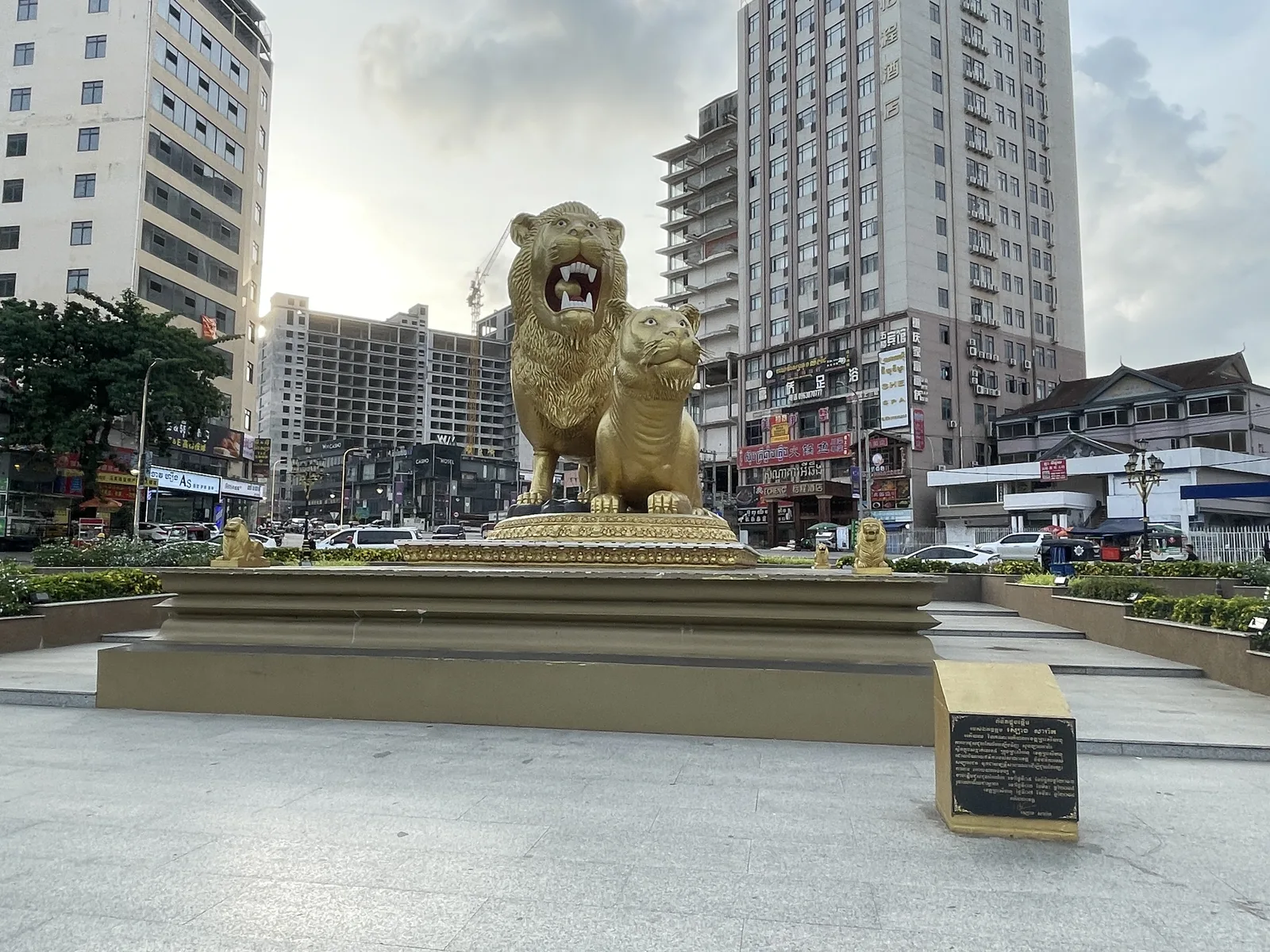
The Golden Lions roundabout is a useful visual landmark, with large buildings around it illustrating a more urban setting than older beach-town imagery suggests. Neither nostalgia nor a skyline photograph provides a complete assessment of today's city. Look at the particular streets around your accommodation and the journeys you intend to make. The commercial port is an operating facility; a view of cranes does not imply that visitors can enter or wander around its working areas.
The two city photographs in this guide deliberately show different periods. The elevated view dates from 2014; the roundabout photograph is from 2023. They help explain why image dates matter here. When judging a property, request recent views of its entrance and surroundings as well as the room, especially if convenient access is an important reason for booking.

Choose an area before choosing a room
For a short mainland stay, compare accommodation around your preferred beach with properties offering a simpler connection to your arrival or departure point. Ochheuteal and the Serendipity area, Otres, Independence Beach and the northern port side are useful names to recognise when reading maps. They cover different parts of the coast rather than a continuous strip where everything is equally convenient.
The CDC and JICA's older provincial background records several of these beach areas, but its 2013 prices and business listings are historical material. Use a current property location and recent photographs for booking decisions. If you want an island stay, establish the island and beach before comparing room rates. A mainland hotel described as convenient for Koh Rong is still a mainland hotel, with a boat journey between you and the island.
Make beach time specific
Cambodia Airports' regional introduction identifies Otres and Ream among the mainland beach options and distinguishes nearby islands. Choose one stretch for a relaxed outing instead of trying to collect every beach name in a day. A simple lunch and an unhurried walk can be more rewarding than repeated transfers, particularly when heat makes the middle of the day tiring.
Assess conditions when you arrive. Sand, sea state, boat movements, shade and the route back to your accommodation matter more than an undated claim that a beach is pristine. Do not infer safe swimming from a photograph or from other people entering the water. Ask about local conditions and respect warnings. If a hotel advertises beach access, establish whether that means direct access from the property, a road crossing or an arranged transfer, and whether any facilities cost extra.

Give the market and a pagoda their own time
Phsar Leu offers a way to see the city's food trade, while hilltop Wat Leu provides a different perspective over the town and coast; both appear in the airport's regional visitor information. Arrange them as separate stops with transport between them, rather than assuming a market-and-temple label describes a short, level walk.
At the market, let working stalls guide the pace. Keep clear of deliveries, ask before photographing a person closely and buy something because you want it rather than treating a trader's workplace as a backdrop. At a pagoda, dress respectfully and check which areas welcome visitors. Be prepared to remove shoes where requested. If steps or steep approaches are difficult, ask about the actual drop-off and entrance before setting out; a hilltop view is not evidence of an accessible route.
Plan an island stay around the arrival beach
Koh Rong and Koh Rong Sanloem are separate islands. Even after choosing between them, the landing point matters: the name on a ferry ticket should work with the accommodation you have booked. Ask the property which pier serves it and what happens after disembarkation, including any additional boat, road transfer or walk with luggage.
Use the operator's sailing search for your date rather than relying on a timetable reproduced in an old article. Compare the whole transfer, including reaching the mainland pier and the final island connection. A cheap room can become a complicated choice if its transport arrangements do not match your arrival. For a first island visit, staying overnight usually gives more flexibility than fitting a brief beach stop between two sailings. Keep an alternative mainland night available when arrival timing is uncertain.
Separate ferry check-in from departure time
Island Speed Ferry's contact page gives its main office at Sihanoukville Autonomous Port and says check-in opens 45 minutes before departure. Its ticket conditions require check-in at least 30 minutes before departure, with boarding closing ten minutes before. Bring identification and booking confirmation; do not treat the printed sailing time as the time to arrive at the counter.
The stated allowance is one carry-on and one checked bag up to 20 kilograms, with possible charges for excess or oversized items. Tickets apply to the specified date, time and route. Weather or operational cancellations may permit rescheduling or a refund, while passenger changes within 24 hours are excluded under the published terms. Read the conditions attached to your booking and leave space between an island return and an expensive onward connection. A ferry refund would not replace a missed flight.
Keep nature outings flexible
Kbal Chhay waterfall and the Ream area offer alternatives to another beach session, but they require a separate journey and current access information. Decide whether you want a waterfall visit, a guided nature excursion or simply time by the coast. Ask an operator to name the actual route and activities, rather than selling an unspecified “national park tour”.
Conditions determine what is worthwhile. Heavy rain can change access and water levels, and a promise of dramatic water is not a reason to enter a hazardous area. For any boat or forest outing, establish the return arrangements, equipment and cancellation policy before paying. Do not assume wildlife sightings, swimming access or a particular trail will be available. If those details cannot be confirmed, keep the day on the mainland coast or choose an activity with clearer arrangements.
Book accommodation for the stay you will actually have
Mainland hotels, larger resorts, guesthouses and apartments offer different advantages. For a single night between transport connections, reliable check-in, luggage storage and the correct location may matter more than a pool. For several days, compare cooling, usable indoor space, laundry options and access to meals when you do not want another vehicle journey.
Read the final price and cancellation deadline alongside the room photographs. Establish taxes, deposits, extra-person charges and whether breakfast or transfers are included. Ask about building work nearby if quiet matters, and request the precise room category rather than assuming all rooms share the advertised view. Families should check sleeping arrangements and pool supervision directly. A property that suits a late mainland arrival may be a sensible first-night choice even when the rest of the holiday is booked elsewhere.
Arrive through the airport with the final transfer planned
Sihanouk International Airport's transfer page places the airport about 20 kilometres southeast of the city centre, beside Ream. It identifies Friendship Taxi Association vehicles with green labels and Tourist Small Car Association vehicles with yellow labels outside the terminal, alongside the option of arranging transport through your accommodation. Confirm the destination and complete price before departure.
Use the airport's current flight information and your airline's booking system to check services for your date. An airport's existence does not establish a direct flight from your origin or a daily frequency. For an island connection, allow time for immigration, baggage, the road transfer and ferry check-in. If arriving through Techo International Airport near Phnom Penh instead, price and time the onward journey separately; a flight into Cambodia is not automatically an arrival near Sihanoukville's beaches.
Compare road and rail by the complete journey
The Phnom Penh–Sihanoukville expressway has changed the road connection, with JICA's transport study recording its opening in 2022. That does not make a promotional highway driving time a reliable hotel-to-hotel promise. City traffic, the pickup point, stops and the final transfer still belong in the calculation.
Giant Ibis lists its Sihanoukville branch on Phe Street, Sangkat 3, next to the Autonomous Port. Other operators may use different locations, so read the address on your own ticket. Royal Railway's passenger page lists Sihanoukville on its southern line with Phnom Penh, Takeo, Kep and Kampot. Consult the linked booking service or railway directly for departures and fares. The page's office hours are not a train timetable, and historic trial-service prices should not be treated as current tickets.
Use local transport without assuming constant availability
Grab's Cambodia location list includes Sihanoukville. Check the app for the actual pickup, vehicle options and quote when you need to travel; a city appearing in a service list does not guarantee a driver at every beach or airport arrival. For an arranged taxi or other vehicle, agree the destination, waiting time and return arrangements explicitly.
Keep the property's map pin and address available offline. If two places use similar English spellings, confirm the location rather than relying on pronunciation alone. Walking makes sense for a particular beach or local cluster, but heat, road crossings and luggage can make a seemingly modest distance uncomfortable. Anyone considering a move should test the real work or school journey at the relevant hour. A pleasant sightseeing ride is a weak basis for estimating a daily commute.
For a group, count both passengers and bags when choosing a vehicle. An apparently economical ride can become impractical if everyone cannot travel safely together. For a half-day hire, agree which stops are included, whether waiting is charged and where the hire ends. Keep the driver's contact details available if the plan involves leaving you at a dispersed attraction.
Food, market snacks and shopping
Seafood, market snacks and beachfront meals give food a natural place in a coastal visit. Start with what is being prepared and the price displayed, then ask how the order is measured. A fish sold by weight and a fixed-price plate are different purchases. Establish the total and any cooking charge before agreeing to an order that cannot easily be returned.
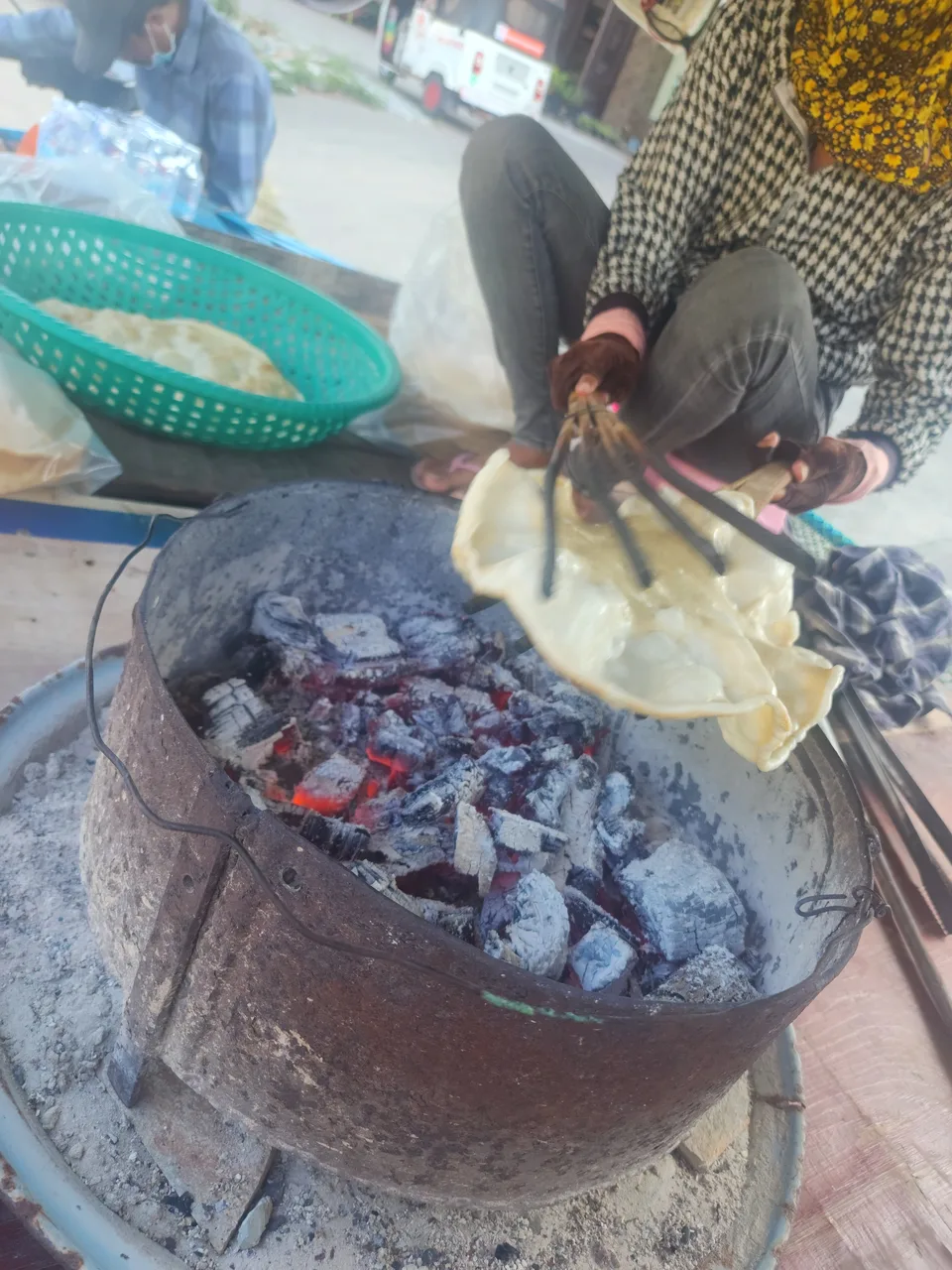
The photograph here shows nom kreab being grilled by a Sihanoukville street vendor in 2024; it illustrates food preparation rather than recommending a business that may have moved or closed. Ask about ingredients if you have dietary restrictions, especially sauces, seafood and shared cooking equipment. For shopping, compare ordinary groceries with souvenirs and packaged food. Check storage needs before taking something onto a ferry or leaving it in a hot room for the afternoon.
Leave room for an ordinary meal near your accommodation instead of making every dinner a destination across town. For groups, agree whether dishes are shared and how many portions are needed before ordering. If a menu lacks a price for a special item, ask first. A clear order makes the bill easier to understand without turning dinner into a negotiation afterward.
Budget in the currency actually being quoted
The National Bank of Cambodia's currency FAQ (source unavailable) explains that the riel is the national currency and that US dollars remain widely used, particularly for larger urban transactions. Check which currency a menu, room quote or transfer price uses. Ask how a business converts between currencies instead of assuming one fixed retail exchange rate throughout the city.
A useful budget separates mainland accommodation, island accommodation, transfers, boat tickets and everyday spending. Compare the complete itinerary before deciding that one location is cheaper. Keep a payment backup and establish card or app acceptance before ordering. Room and rental quotes depend on dates and inclusions, so this guide does not offer an unsupported universal daily allowance. Record your own current quotes, including a contingency night and an extra transfer if weather interrupts an island stay.
For a couple or family, compare shared transport costs with per-person tickets explicitly. Add luggage charges only where the operator actually requires them, and keep refundable deposits separate from final spending. This gives a clearer comparison between an independent transfer and a bundled hotel offer. Save the quoted inclusions so you can identify what has changed if the final bill differs.
Choose the season with your transport in mind
For a trip centred on boats and outdoor time, weather flexibility matters as much as the month. Consult forecasts and operator notices shortly before travel, then keep the least flexible onward connection protected. A dry-looking morning does not establish what sea conditions will be later, and a departure advertised for sale is not an independent safety assessment.
FCDO's Cambodia safety guidance describes June–October monsoon disruption and warns that tourist boats sometimes operate despite weather warnings, particularly between Sihanoukville and nearby islands. It also highlights flash-flood risks around waterfalls. Build the itinerary so that changing a water-based outing does not spoil every remaining day. Pack rain protection for luggage as well as clothing, and choose accommodation where an indoor afternoon would be comfortable. Avoid treating a low-season discount as compensation for a connection you cannot afford to miss.
A realistic three-day mainland introduction
Use day one to arrive, settle in and explore one nearby coastal area. Keep the evening simple, especially after an international flight or a long road journey. On day two, combine a market visit with a respectful pagoda stop and a substantial break before dinner. Arrange transport between those activities rather than filling the gaps with optimistic walking estimates.
On day three, choose a confirmed nature outing or another beach area, leaving enough time for departure. If the islands are your priority, use the mainland primarily as an arrival base and allocate separate island nights instead of squeezing a round trip into this plan. For a family or a slower traveller, removing one outing can improve the whole stay. Keep the final morning light: breakfast and a short local walk are easier to shorten than an excursion when departure time approaches.
Treat relocation as a different decision
A coastal holiday can help you identify preferences, but moving requires a different set of checks. Start with the location and legitimacy of work, study or family commitments. Visit housing in person, inspect the route at ordinary commuting times and compare groceries, healthcare and other daily needs before choosing a neighbourhood for its view.
Check cooling, water pressure, drainage, ventilation, noise and the condition of appliances. Establish responsibility for repairs, meter readings, utility rates, building charges and deposit return in writing. Test internet where you would actually work, and inspect access after dark without relying on a sales photograph. Verify the landlord or agent's authority before transferring money. For a purchase, obtain independent legal advice on eligibility and title; the ability to rent a room does not establish a right to buy land or settle permanently.
Ask to see how a monthly household bill is calculated, including any charges added by a building manager. Record opening meter readings and the furniture inventory with dated photographs. Compare the written notice period and early-termination conditions with the likely length of your stay. A lower advertised rent is less attractive when leaving early would forfeit a substantial deposit.
Arrange communications and healthcare before relying on them
For a longer stay, distinguish a working internet connection from a listing that merely includes Wi-Fi. Check coverage inside the property and agree who pays for installation or replacement equipment. Smart Axiata's registration guidance uses identity verification for SIM ownership; use an official provider channel and bring the relevant identification rather than buying an unexplained pre-registered number.
The official Cambodia health advice recommends checking that appropriate healthcare and insurance are available, including unexpected medical evacuation. Establish where you would seek treatment and how the insurer authorises it. For continuing medication, investigate lawful supply before travelling. Families should confirm school places and the practical school run before committing to a lease. These decisions can outweigh a modest difference in rent, particularly when a household has needs that cannot be met by a holiday hotel's reception desk.
Distinguish a visitor visa from permission to work or study
The official Cambodian visa table lists the tourist e-Visa at US$30, single entry, with a one-month stay and three-month validity from issue. The validity is the entry window, not permission to stay for three months. It gives an estimated processing time of three business days and requires more than six months of passport validity at entry. Check nationality-specific eligibility before applying.
The government e-Visa portal lists Sihanoukville's KOS airport among accepted entry points. Complete the separate Cambodia e-Arrival declaration as directed; the portal calls for submission within seven days before arrival, including for visa holders. Work, business, volunteering and study require their own appropriate arrangements. Consult the institution, employer and Cambodian authorities before making commitments, using the embassy's living guidance as background. A tourist document, an E-category label or repeated visits should never be treated as automatic work permission or permanent residence.
Check the wider route and consider alternatives
The current official travel advice distinguishes regional restrictions from the rest of Cambodia. At review, it warns against non-essential travel within 20 kilometres of the land border with Thailand and reports suspended land crossings. Verify any overland approach rather than assuming a familiar border route still works. The safety guidance also warns about fraudulent high-pay jobs and trafficking around Sihanoukville: verify employers independently and retain control of your passport.
For a wider journey, compare Kampot, Kep and Phnom Penh city pages with the Cambodia location directory. Those pages help locate alternatives; a directory entry is not itself a completed travel guide. Use VisaWand's Cambodia guide, destination page and consultant directory to prepare broader travel and immigration questions. Choose additional bases because their activities suit you, then allow genuine travel time between them.
Official planning resources
Reviewed 17 October 2026. Use the official resources linked throughout this guide for admission, transport, housing and immigration decisions. Prices, services and rules can change; confirm the details relevant to your dates. Photography illustrates the locations and is not a live view.
View all official resources
- Sihanoukville Autonomous Port: introduction and development
- CDC and JICA: 2013 provincial background, pages 96–97
- Cambodia Airports: Sihanoukville and its area
- Island Speed Ferry: sailing search
- Island Speed Ferry: port address and check-in opening
- Island Speed Ferry: ticket, baggage and cancellation terms
- Cambodia Airports: airport–city transfers
- Cambodia Airports: Sihanouk International Airport
- JICA and MPWT: Cambodia logistics study, May 2023
- Giant Ibis: branch addresses
- Royal Railway: passenger services
- Grab Cambodia: service locations
- National Bank of Cambodia: currency FAQ (source unavailable)
- FCDO: Cambodia safety, boats and employment scams
- Smart Axiata: SIM registration
- FCDO: healthcare and medical evacuation planning
- Cambodian MFAIC: visa types and requirements
- Cambodian MFAIC: official e-Visa portal and accepted entry ports
- General Department of Immigration: Cambodia e-Arrival
- British Embassy: living in Cambodia
- FCDO: current regional travel warnings
Plan the next part of your journey
Explore the Cambodia guide, browse other cities or compare consultants for your travel and relocation questions.