Visa
Choose your base before choosing your beaches
Florianópolis rewards a trip planned around geography. Santa Catarina’s capital occupies part of the mainland and Santa Catarina Island, bringing urban streets, fishing communities and Atlantic beaches into one municipality. Its appeal lies in combining them, rather than treating every day as another excursion from a single central hotel. The national tourism board’s Florianópolis destination overview introduces that variety.
For a first visit, choose between a city-focused stay with selected beach days and a beach-focused stay with a deliberate trip into the centre. A longer visit can justify two bases. Moving every night usually costs more time in packing, transport and check-in than it saves. Decide which activities matter most before comparing room prices.
Someone considering relocation should approach the same map differently: start with work or study addresses, then test ordinary journeys and services. A beautiful holiday address is only one ingredient in a workable household. VisaWand’s Brazil country guide supplies national context alongside the local decisions below.
Understand the bridge and the older city
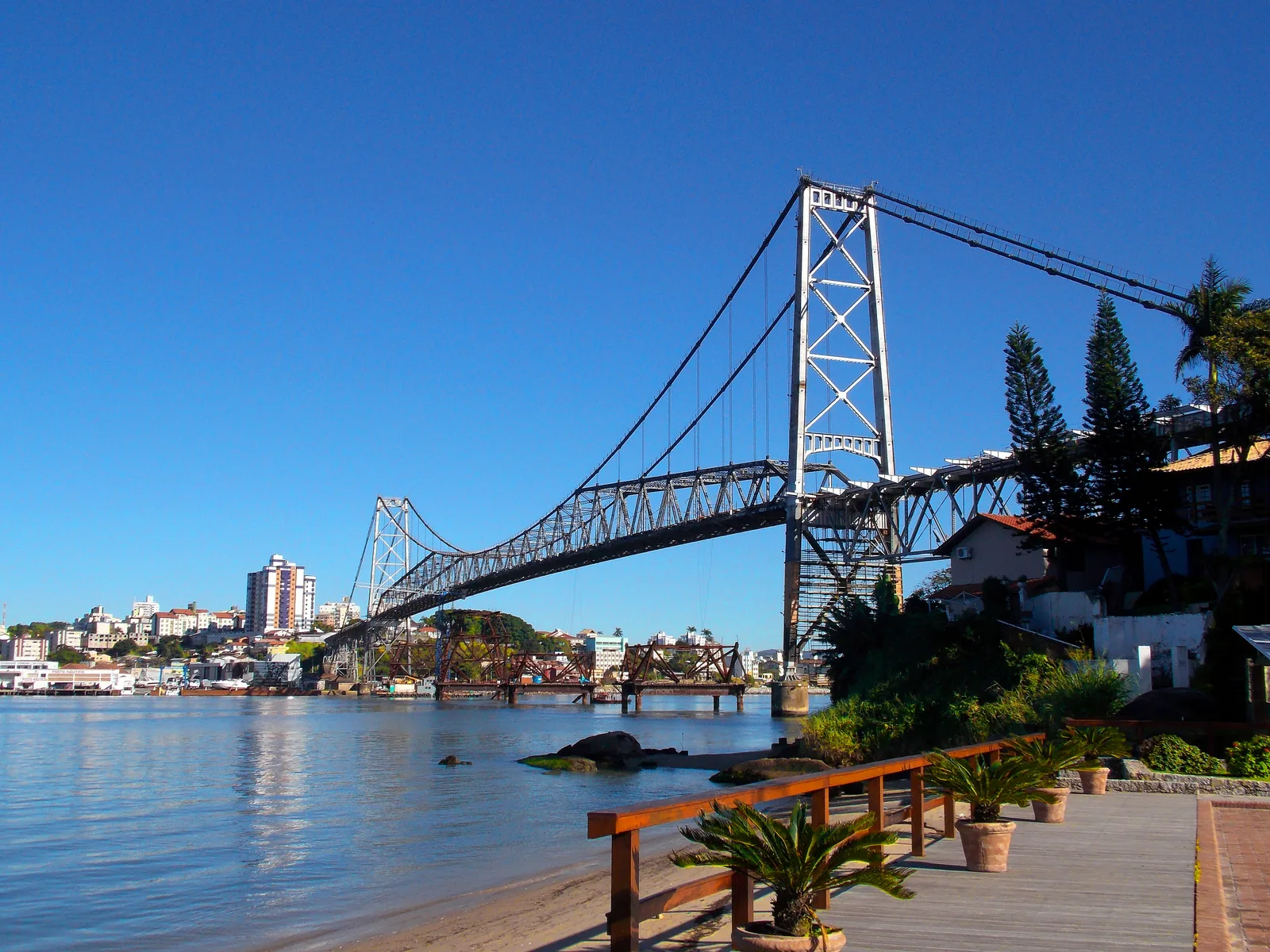
Hercílio Luz Bridge explains something essential about Florianópolis: the relationship between island and continent. Opened on 13 May 1926, it provided the first road connection between them. After prolonged closures and restoration, it reopened to traffic in December 2019. The Santa Catarina legislature’s centenary account records that history; 2026 marks its hundredth anniversary.
See the bridge as part of the waterfront landscape rather than simply a photograph to collect. Leave time to notice how the city occupies both shores. Check local access arrangements before deciding on a crossing; a historical image cannot tell you which lanes or approaches are available on your travel date. The banner photograph predates the reopening.
For another perspective, the Santa Catarina Historical Museum occupies Palácio Cruz e Sousa at Praça XV de Novembro, 227. Founded in 1979, the museum moved permanently into the palace in 1986. The building’s name honours the Symbolist poet Cruz e Sousa. It offers a useful counterweight to an itinerary dominated by coastlines.
Official museum listings give inconsistent visiting hours and admission information, so confirm these directly before travelling. Treat the palace as the centrepiece of a flexible central outing, with time for the surrounding streets, instead of attaching a tightly timed onward excursion to an uncertain opening schedule.
Read neighbourhood names as different starting points
The municipal neighbourhood map groups Florianópolis into central, continental, northern, southern and eastern regions. Centro and Trindade belong to the central region; Coqueiros and Estreito are on the mainland. In the north, look for Canasvieiras, Ingleses, Jurerê and Santo Antônio de Lisboa. Campeche, Ribeirão da Ilha and Armação are southern choices, while Lagoa da Conceição and Barra da Lagoa sit in the east.
Use that map when shortlisting accommodation. Compare the exact street with your intended outings, rather than assuming all addresses labelled Florianópolis are interchangeable. Check the walk from the property to a bus stop or restaurant, including the return after dark. If travelling with children, older relatives or heavy luggage, a short but awkward approach can matter more than the headline distance.
For a scouting trip, book somewhere you can leave without a long commitment. Keep notes on what works for your own routine: groceries, noise, walking surfaces, daylight and transport options. These observations are more useful than a sweeping claim that one district is best for everyone.
Give the Public Market an unhurried visit
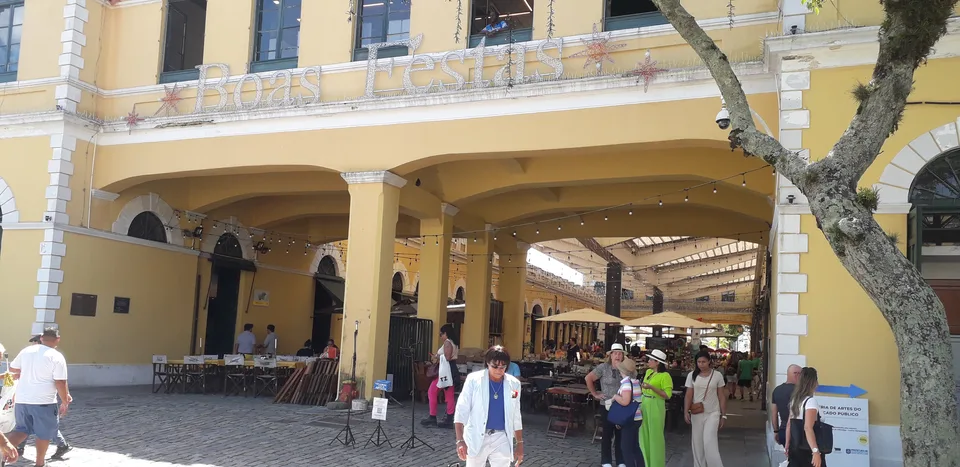
The Public Market is a useful anchor for a central day. The historic building dates from 1899, according to the national tourism board. Approach it as a working place to look around and choose a meal, allowing the visit to develop around what is actually open. Individual stalls and menus can change.
Before ordering, establish whether seafood is priced by weight, portion or person, and whether accompaniments are included. A dish described as suitable for sharing may be generous for one traveller and insufficient for a family. Ask about preparation and ingredients rather than relying on an English translation of a dish’s name.
The courtyard photograph shows the market in December 2023, not a promise of today’s restaurant line-up. For shopping, prioritise something you can identify and transport legally. Check the materials used in craft items and your destination’s food-import rules before buying edible souvenirs. Keep any fragile purchase for a day when it will not spend hours beside you on a beach.
Plan coast days around conditions
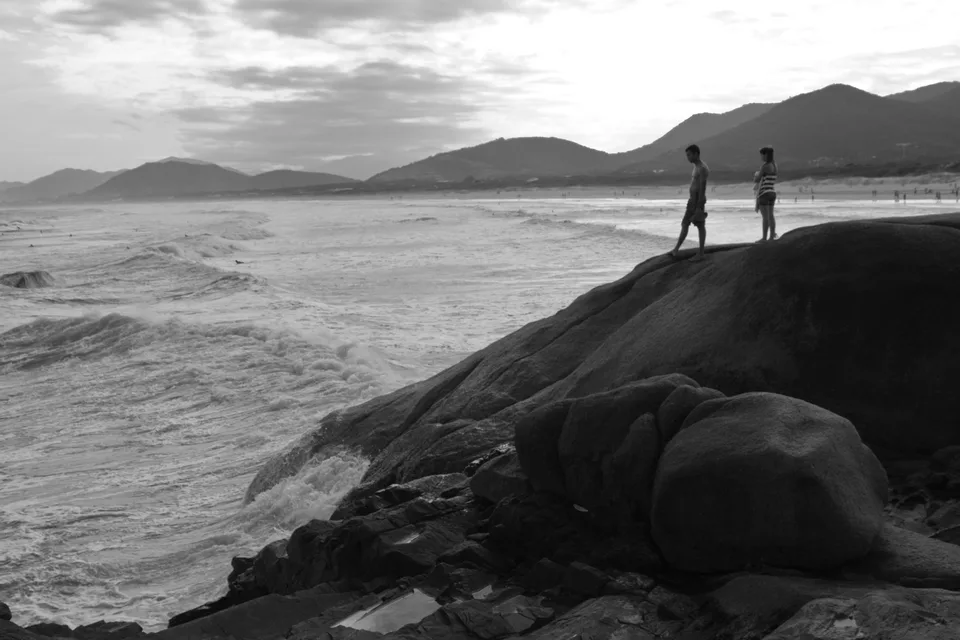
Joaquina, Mole, Campeche and Jurerê are among the beaches highlighted by Embratur. Select one principal coast outing for a day rather than promising yourself a circuit of them all. Allow room for lunch and the journey back; a sequence of short stops can turn the shore into a succession of parking or pickup arrangements.
Before swimming, consult IMA’s beach-water monitoring map. Select the relevant municipality and sampling point, and read the report date. Results concern particular places and sampling periods. A photograph, a beach’s reputation or the condition reported for another stretch of shoreline cannot establish the water quality where you intend to enter.
Water-quality monitoring also answers a different question from whether the sea is suitable for your abilities. Seek current local guidance about conditions and follow posted instructions. If the day is unsuitable for swimming, keep the outing useful through a walk, a meal or a shorter visit. There is no need to enter the water to justify the journey.
Choose footwear and a bag that suit your actual plan. Rocks, sand and an urban lunch make different demands. Keep documents and valuables to what you need, arrange a meeting point for your group and settle your return plan before phone batteries become low.
Book Campeche Island as a separate excursion
Campeche Island is not simply another name for staying near Campeche beach. The municipal island reservation portal sets out a distinct booking process, with registration, a transport choice, a date and payment. Foreign visitors have a separate document field rather than needing to assume the Brazilian CPF field applies to them. Read the current instructions before purchasing.
The portal states that a voucher is released 24 hours after payment clears. It also states that bookings cannot be rescheduled or refunded, and that the municipality is not responsible for weather or navigability cancellations. Do not interpret a paid reservation as a guarantee that a boat will operate. Clarify the boat provider’s separate terms as well.
The island visitation programme’s access guidance explains another practical detail: there is no jetty for a dry arrival. Passengers land close to the beach and come into contact with water. Discuss boarding and landing with the operator if you have limited mobility, balance concerns or equipment that must stay dry. Wear the required lifejacket and follow crew instructions.
Keep this excursion away from a tightly connected departure flight. Ask what the quoted transport covers, where you must meet and how the return works. Pack so you can manage your own belongings during a wet landing. A waterproof pouch is useful only when properly closed; test it before trusting it with a passport or phone.
Choose between land-access and boat-access fortresses
The UFSC-managed fortresses offer a different reason to spend time around the bay. UFSC’s visiting information distinguishes São José da Ponta Grossa, reached by land at Praia do Forte, from Santa Cruz de Anhatomirim and Santo Antônio de Ratones, on offshore islands. The latter require separately arranged nautical transport. UFSC does not provide those transfers.
The published schedule is Tuesday to Sunday, 08:30–18:30, with entry until 18:00, including holidays. Recheck it before setting off, especially if booking a boat. A late admission cut-off should not become your target arrival time: leave enough time to look around and meet the operator’s return arrangements.
Under the current fortress admission schedule, full admission costs R$20, with a R$30 full-price double ticket for Ratones and Anhatomirim. Qualifying reductions require the relevant evidence. Admission is free on the last Sunday of each month from March through November; this does not make boat transport free.
Online advance payment is available. At the gates, Anhatomirim and Ratones accept cash, while Ponta Grossa accepts cash or Pix. These rules matter if you cannot use Brazilian payment services. Establish the complete excursion cost before booking, including admission, boat fare and any optional meal. Choose the land-access fortress if you prefer to avoid organising an island crossing.
Find time for the bay and its food traditions
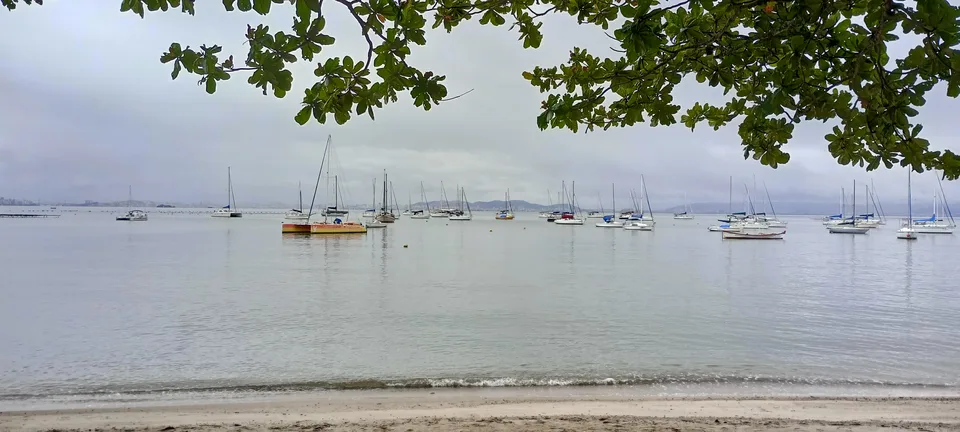
Santo Antônio de Lisboa and Ribeirão da Ilha feature in the tourism board’s account of the city’s fishing communities and traditions. Give one of these outings breathing space instead of adding both to an already crowded beach day. The quieter pace of a meal and a waterfront stop can provide a useful change from a schedule built around attractions.
Oyster farming is an important local activity. Embratur’s guide to oyster-farm experiences describes visits that explain cultivation from seeding to harvest, sometimes including supervised opening and tasting. It is a useful starting point for enquiries, rather than confirmation that a particular departure, language or menu will be available on your dates.
Ask the provider what happens in poor weather and whether the experience suits everyone in your party. Tell them about allergies and dietary requirements before paying. Someone who does not eat oysters may still enjoy learning about production, but should know what alternative food, if any, is included. Request a complete written price rather than assuming a tasting replaces lunch.
Compare accommodation by the complete stay
For a concrete central option, ibis Florianópolis lists its address as Avenida Rio Branco, 37, with air conditioning and Wi-Fi. Its published information identifies buffet breakfast and parking as additional charges. Accessible room categories are listed, but confirm the specific room and the route through the property for your requirements. This is a verified example, not a personal endorsement or a promise of availability.
Apply the same comparison to every shortlist: room, breakfast, parking, cancellation terms and the transport needed for your intended days. An inexpensive room can be a poor overall choice if its location repeatedly requires journeys you did not budget for. Conversely, a higher nightly rate needs to buy something you will actually use.
For an apartment or small guesthouse, ask about check-in arrangements, cooking equipment, laundry and bedding. Request the total for your dates and party size, including cleaning charges. If reliable internet matters, ask for evidence from the specific unit and discuss a backup. A property advertising Wi-Fi does not establish performance for video calls.
Arrive with a workable onward journey
Floripa Airport’s access page places the terminal in Carianos, in the southern part of the island. It lists conventional routes 431 to TICEN, 477 between TIRIO and the airport via Tapera, and V468 between TIRIO and the Multihospital via the airport. Check the operator’s timetable for your arrival day rather than treating a route listing as a departure schedule.
The airport identifies designated app-based pickup arrangements and a 24-hour taxi rank. Follow the terminal’s signs to the correct pickup point. For any prearranged transfer, confirm the terminal meeting place, waiting policy and capacity for luggage or child seats. Compare the whole journey to your accommodation, including any connection after the first bus.
Consórcio Fênix publishes a conventional fare of R$7.70 for ticket-office cash, QR code or Pix payment, and R$7.20 with the tourist card. Its R$6.20 resident-card fare should not be used as a visitor budget assumption. Executive service is listed at R$20. Cash at a ticket office does not establish that a driver will accept cash onboard; settle your payment method before boarding.
For repeated journeys, check both directions and the final useful departure. Save your accommodation address offline and retain enough money for a fallback. On departure day, work backwards from the airline’s required arrival time and add a sensible margin for the road journey; a hotel’s advertised driving time is not a guarantee.
Budget for your own choices
Build your budget in reais with separate lines for accommodation, food, ordinary transport and excursions. The published bus and fortress prices above provide a few verified anchors. They do not justify inventing a single daily cost for all visitors. Room rates, restaurant orders, party size and boat arrangements can change the total substantially.
Request live quotations for the items you most want to do, then calculate a comfortable version and a reduced version of the trip. Decide beforehand which optional activity you would drop if costs rise. For a family, multiply admission and transport correctly rather than applying a solo traveller’s estimate to the whole group.
Keep spending money separate from an emergency reserve and check your card issuer’s conversion charges. Before paying, confirm the currency shown on the terminal and keep receipts for larger purchases. If a payment option depends on Pix or another service you cannot access, ask about alternatives before ordering or committing to an excursion.
Choose a season and keep a weather alternative
Embratur identifies November through March as the main visitor season. Those dates are useful for thinking about demand, but do not promise sunshine for a particular week. If the main purpose of your trip is swimming, make that explicit when choosing dates; if it is city exploration and food, you have more flexibility.
June begins the Southern Hemisphere winter. Epagri/Ciram’s explanation of Santa Catarina’s winter conditions describes stronger, more persistent southerly winds and coastal navigation hazards. Its specific forecast concerned 2025, not your travel dates, but the seasonal distinction matters: a winter waterfront break needs different expectations from a summer swimming holiday.
Use Epagri/Ciram’s weather service for municipal forecasts and weather or maritime warnings as the trip approaches. Check again before a water-based excursion. Keep the museum and a central meal as possible alternatives, subject to confirmed opening arrangements, rather than filling every day with prepaid outdoor activities.
For packing, allow for sun, rain and a change in conditions during a long outing. Carry a light extra layer and protect electronics. Choose flexible reservations where that flexibility has real value to you. An apparently cheaper non-refundable activity can be poor value if its usefulness depends entirely on one afternoon’s weather.
A realistic four-day first visit
Day one: settle in and make the centre your main outing. Pair the market with the palace if the museum confirms access, then leave room for the waterfront and the bridge landscape. Keep arrival day flexible if you have a long flight or an uncertain check-in time.
Day two: select one beach outing, checking the relevant water-quality point and local conditions first. Take lunch at a pace that leaves time for the return. If swimming is unsuitable, shorten the stop and use the remaining time near your accommodation rather than forcing a second distant beach into the day.
Day three: choose a fortress visit. A land-access outing needs less boat coordination; an offshore excursion needs a confirmed meeting point and return plan. Check the visiting day and complete cost before committing. Leave dinner unbooked if your return timing is uncertain.
Day four: choose a bay-side meal or a prearranged food experience. Substitute Campeche Island only if you have understood the reservation conditions and arranged suitable transport. It deserves its own day’s attention. With an extra day, retain that choice as a separate outing instead of compressing both into the same afternoon.
Test daily life before signing a lease
For a potential move, use an initial stay to test the exact commute you expect to make, at the time you expect to make it. Include the walk to transport, connections and the journey home. Compare mainland and island addresses against the real destination rather than treating a municipal boundary as evidence of a convenient commute.
Ask for a written breakdown of rent, building charges, utilities, parking and maintenance responsibilities. Inspect ventilation, signs of damp, water pressure and the condition of appliances. Photograph the inventory with permission and record existing defects. Confirm who can authorise repairs and how problems should be reported.
Brazil’s tenancy law distinguishes ordinary rentals from seasonal arrangements. It prohibits combining multiple forms of rental security in the same contract; a cash security deposit is capped at three months’ rent. Seasonal rentals have separate provisions. Get advice on the actual contract, particularly if you are being asked to pay substantial sums before viewing the property.
For household administration, start with the official CASAN water-service portal and Celesc’s electricity service. Confirm the account arrangements for the exact property and who pays outstanding bills. Also test mobile reception, identify a nearby grocery shop and pharmacy, and establish school or childcare arrangements before a family commits to an address.
The Ministry of Health’s migrant primary-care guidance explains access within SUS. Locate the appropriate local service and ask how registration and appointments work. Bring necessary medical information and consider how your insurance covers the transition; access to the system does not establish an immediate specialist appointment.
Separate a visit from permission to live and work
Check Brazil’s requirements for your nationality and purpose before booking. The Ministry of Labour’s visa and migration guidance distinguishes short visits from temporary routes for activities such as work and study. Visitor status does not authorise paid employment. Neither a rented home nor an attractive remote-working setup settles your immigration position.
For work, study or a longer residence, identify the correct category through the official immigration portal and the relevant Brazilian consular instructions. Confirm any approval needed before travel, required documents and subsequent registration obligations. Do not assume that permission for one activity automatically covers another, or that temporary residence becomes permanent without a further process.
The Receita Federal CPF service concerns tax identification, available to foreigners under its published procedures. A CPF is distinct from a visa or residence permission. Organise the applicable immigration route first and treat tax registration, housing and banking as related but separate tasks. VisaWand’s consultant directory can help you find professional assistance for a specific case.
Consider the wider trip before extending your stay
Allow time between destinations instead of turning the final day into a race back from an outing. If you want to add another Brazilian city, compare the change in travel time and purpose: the existing Rio de Janeiro city guide and São Paulo city guide provide different urban options, each requiring its own transport plan.
For closer alternatives, use VisaWand’s Brazil cities and settlements directory to identify places for further research; a directory entry is not evidence of a completed travel guide. The Brazil destination and consultant page provides another route to national information. Extend the itinerary only when the extra location adds something you want and leaves enough time to enjoy it.
Official planning resources
Reviewed 16 October 2026. Use the official resources linked throughout this guide for admission, transport, housing and immigration decisions. Prices, services and rules can change; confirm the details relevant to your dates. Photography illustrates the locations and is not a live view.
View all official resources
- Embratur: Florianopolis geography and visitor overview
- Santa Catarina Assembly: Hercílio Luz Bridge centenary
- Ibram: Santa Catarina Historical Museum
- Florianópolis municipal planning: official neighbourhood regions
- Santa Catarina IMA: beach-water reports and point histories
- City of Florianópolis: Campeche Island reservation portal
- Campeche Island visitation programme: access and landing
- UFSC: fortress visiting hours and land or boat access
- UFSC: current fortress admission and payment rules
- Embratur: oyster-farm visitor experiences
- Accor: ibis Florianópolis facilities and charges
- Floripa Airport: current access and public transport
- Consórcio Fênix: published fares
- Epagri/Ciram: seasonal winter conditions in Santa Catarina
- Epagri/Ciram: weather forecasts and warnings
- Brazilian tenancy law: rental guarantees
- CASAN: water and sanitation services
- Ministry of Health: primary care for migrants
- Brazilian Ministry of Labour: visas, work and migration permissions
- Ministry of Justice: immigration routes and applications
- Receita Federal: CPF services
Plan the next part of your journey
Explore the Brazil guide, browse other cities or compare consultants for your travel and relocation questions.