Visa
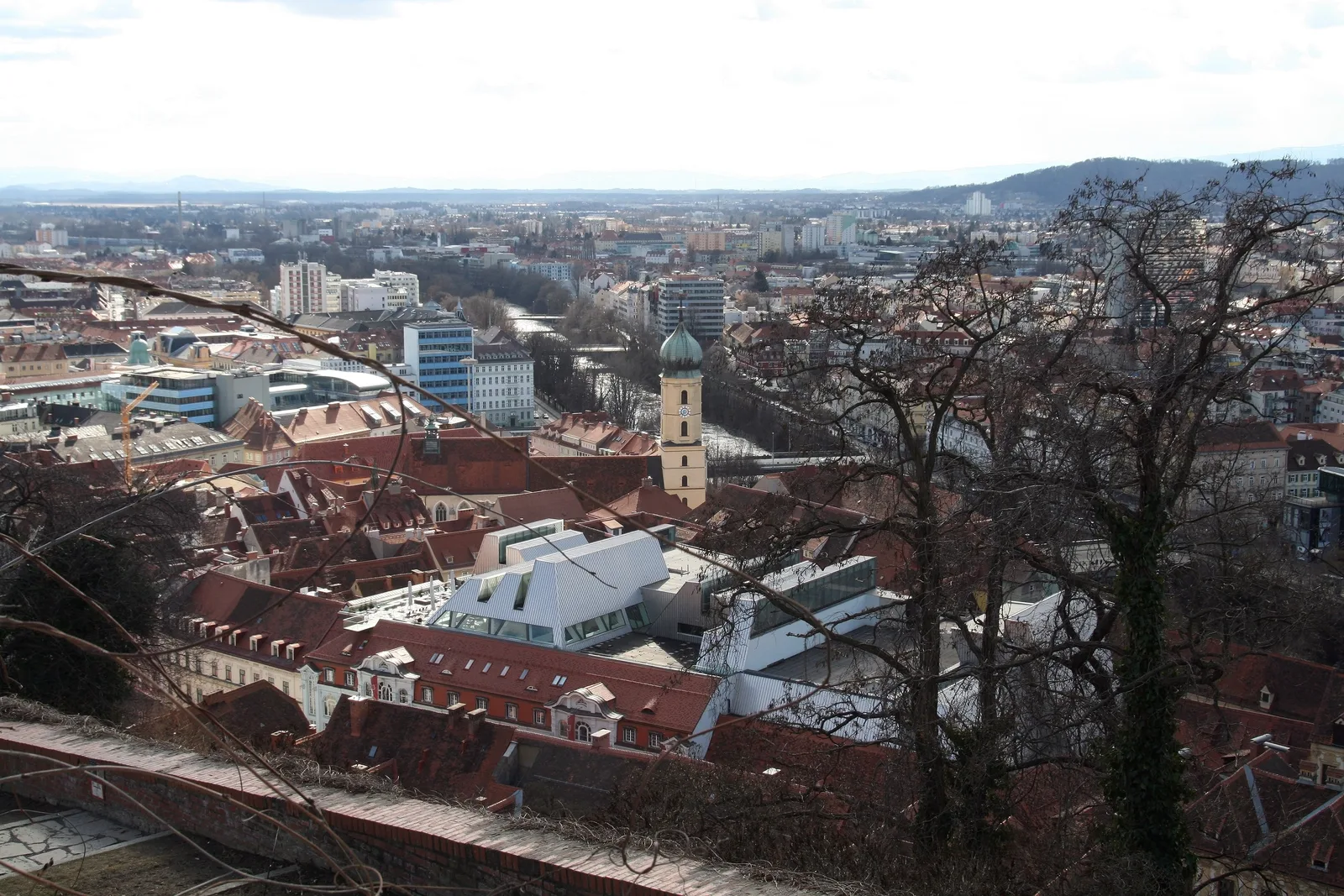
A city break with room for everyday life
Graz is particularly rewarding when you resist treating it as a quick stop between larger capitals. Its historic streets, hillside viewpoints and contemporary art sit close enough together to leave time for a market breakfast or an unscheduled courtyard. A short visit can feel varied without requiring a car or a different hotel every night. The most useful plan combines a central walking day with one more deliberate museum or palace outing.
This is the capital of Styria in southeastern Austria, on the River Mur. The city belongs in an Austrian urban itinerary rather than a mountain-resort itinerary: book the scenery and activities you actually want, not an assumption that every Austrian destination provides the same Alpine experience. VisaWand's Austria city and settlement directory helps identify other destinations when shaping a wider journey.
Allow two full days for an introduction, or three for Eggenberg and a less hurried pace. A longer stay makes sense for people who enjoy returning to a neighbourhood café, comparing exhibitions and using public transport for ordinary journeys. Anyone considering relocation should test a working week separately from the holiday: a convenient old-town room and a suitable long-term home solve different problems.
Understand the historic centre before collecting landmarks
UNESCO's City of Graz historic centre and Schloss Eggenberg record describes a living urban ensemble shaped by Habsburg influence and exchanges across Central and Mediterranean Europe. Buildings bring together styles from the Middle Ages through the eighteenth century. The value lies in their relationships as much as in individual façades, so give yourself time to look along streets and into accessible courtyards rather than moving only between ticketed interiors.
Begin around Hauptplatz and Herrengasse, then let a side street interrupt the route. The official Graz tourism portal connects central sights with museums, food and cultural events. Use it to choose a few interests rather than making its entire list your day's programme. Churches and working buildings have their own access arrangements; an open doorway is not permission to wander into every room.
The contrast with modern Graz is part of the appeal. Cross the Mur after exploring the older centre, and the Kunsthaus gives the city a very different silhouette. A useful first-day question is how these places coexist: historic architecture, contemporary institutions, businesses and homes share a city rather than occupying separate visitor zones.
Pick a base on the route you will use
For a short stay, an address around the historic centre makes it easy to return to your room between sightseeing and dinner. Compare the exact location with your arrival point, not simply the word central. A courtyard room may feel different from a street-facing one in the same building. Ask about stairs, lift access, evening noise and where a taxi can actually stop with luggage.
Across the river, Lend and Gries provide another perspective. The tourism board's guide to the right bank of the Mur identifies design shops, studios, cafés and cultural activity around Lendplatz, Mariahilferplatz and Mariahilferstraße. These streets are worth exploring even if you sleep elsewhere. An area's creative reputation does not tell you whether an individual apartment is quiet or well suited to your needs.
Staying near Hauptbahnhof can simplify an early train or a visit built around regional rail journeys. For a university, hospital or workplace stay, begin with that destination and test its actual connection. A slightly longer journey to the old town may be a sensible trade for a simpler daily commute. Do not infer travel times from straight-line distance across a city map.
Reach the Schlossberg in the way that suits you
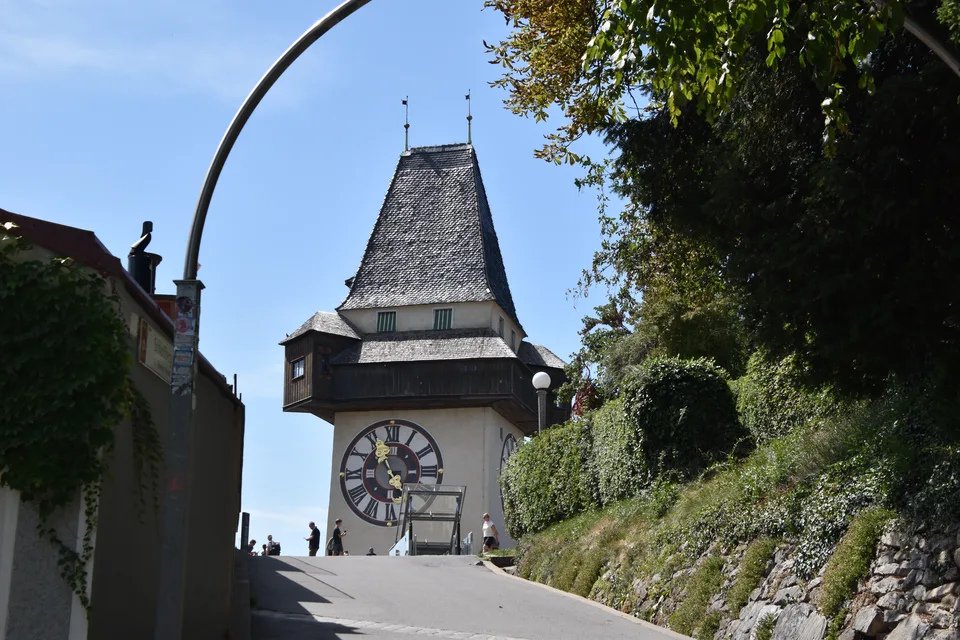
The Schlossberg is the natural place to establish Graz's shape: roofs below, the Mur through the city and the clock tower as a familiar point of reference. You can walk up, take the funicular or use the lift inside the hill. These are different approaches with different starting points, so decide which works with your route and mobility rather than arriving at the nearest entrance by chance.
Holding Graz's Schlossberg lift information lists an adult single journey at €2.60 and a return at €5.20. Its combination ticket for one funicular journey and one lift journey is €4.90. The lift's published daily hours are 08:00–00:30, subject to maintenance and operational changes. Check the operator before an outing that depends on a late return or step-free access.
Allow time at the top instead of using the viewpoint only as a photograph stop. If you walk, assess the descent as carefully as the ascent, especially when surfaces are wet. Families and mixed-mobility groups can choose different ways up and agree a meeting place. A ticket for the lift does not establish access arrangements for every attraction or path on the hill.
Visit the Kunsthaus for the exhibition as well as the building
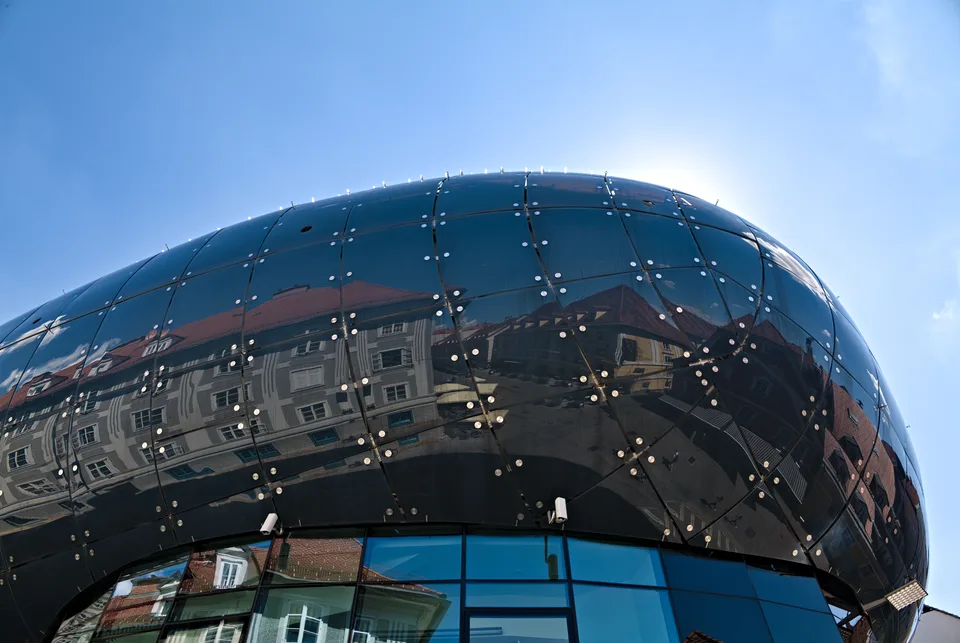
The Kunsthaus is worth seeing from outside even if contemporary art is not your main interest. Its curved blue form deliberately changes the visual conversation across the river. The museum's account of its architecture credits Peter Cook and Colin Fournier and explains its creation for Graz's 2003 European Capital of Culture programme. The BIX media façade adds another layer to the exterior; it should not be mistaken for a conventional permanent display of pictures.
Before buying entry, look at the current programme and decide whether the exhibition interests you. The Kunsthaus visitor page lists Tuesday to Sunday and public-holiday opening from 10:00 to 18:00, with specified exceptions. Adult single admission is €13; the listed Joanneum museum passes are €20 for 24 hours and €26 for 48 hours. Guided programmes and the multimedia guide can cost extra.
That makes the museum a useful indoor option, but not an interchangeable filler for any rainy afternoon. Check closure days and exhibition changes before assigning it a slot. If access, seating or sensory conditions matter, ask about the particular exhibition layout rather than assuming that a modern exterior guarantees the same experience throughout the building.
Give the Styrian Armoury a distinct place in the plan
The Styrian Armoury offers a different encounter with material history from either a palace or an art exhibition. Choose it because the collection interests you, rather than assuming that every museum included in a pass must be visited. Leave enough time to follow an explanation of what you are seeing; an hour of attentive looking can be more valuable than a hurried sequence of included admissions.
The Armoury's official admission page lists adult single admission at €13. Its published 2026 summer season runs from 1 April to 31 October, generally Tuesday to Sunday and public holidays, 10:00–18:00. Winter access normally depends on guided tours, with certain dates allowing independent visits. Consult the dated programme for the language and time you need rather than carrying summer arrangements into a winter itinerary.
If travelling with children, decide in advance whether this subject suits their interests and attention span. Ask about the route and any relevant accessibility limitations before booking. Leave a gap for lunch or a riverside walk afterwards, especially if another museum is already planned for the same day.
Separate Eggenberg's gardens from its state rooms
Schloss Eggenberg deserves a dedicated part of the day rather than an optimistic addition after several central museums. Its formal interiors and surrounding park offer different experiences. Someone interested in decoration may prioritise a state-room tour; someone seeking time outdoors may prefer the grounds. Confirm which admission you are buying and how it fits the season before travelling there.
The palace operator's visitor information states that the state rooms are accessible only on a guided tour, lasting approximately 50 minutes. The published 2026 interior season is 28 March–31 October, generally Tuesday to Sunday, with specified exceptions. Official pages show differing tour-departure lists, so confirm a dated slot rather than relying on an assumed hourly service. Capacity is limited.
Listed adult park admission is €3. The park has its own longer calendar, with seasonal closing times and exceptions. The €20 state-room admission shown with 24-hour Joanneum access includes the tour; it is not simply a €3 garden ticket with an optional room added at the door. Check current inclusions if combining several museums, and keep enough time for the journey back.
Make a morning of the markets
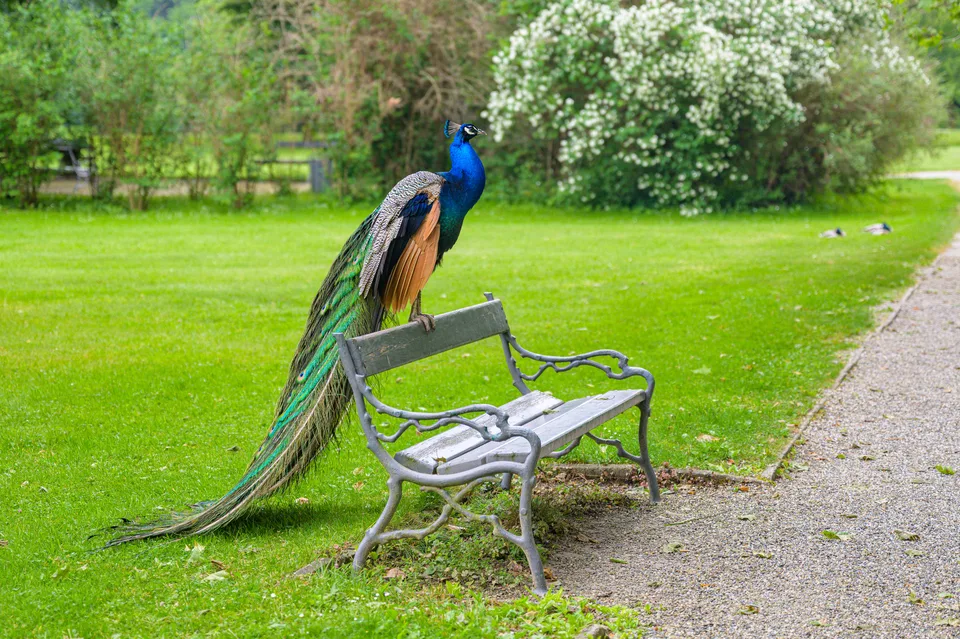
Graz's markets give food a geographical context. Pumpkin seed oil, scarlet runner beans, regional bread and seasonal produce appear in the tourism board's farmers' market guide. Choose a few things you can use or carry home, asking about ingredients, origin and storage. A small purchase discussed properly often teaches more than a shopping bag filled without questions.
Kaiser-Josef-Markt and the farmers' market at Lendplatz are listed Monday to Saturday, 06:00–13:00, closing on Sundays and public holidays. Go in the morning if the stalls are your purpose. Food and drink establishments around Lendplatz can have different Sunday arrangements; an open café does not mean the farmers' market is operating.
For meals, compare actual menus and portion sizes rather than budgeting from the city's culinary reputation. Ask about ingredients if you avoid meat, dairy or particular allergens, and clarify any tasting or sharing arrangement before ordering. Self-catering visitors should buy for the kitchen they have: a room with a kettle is different from an apartment with a hob, refrigerator and utensils. Check destination import restrictions before purchasing food gifts.
Arrive by train or airport with the final connection planned
For a rail arrival, confirm whether your service calls at Graz Hauptbahnhof and plan the onward journey to the accommodation. Use the train operator's current booking information for your date, including any replacement transport or reservation conditions. A cheap fare is only useful if its restrictions and arrival time suit the rest of the trip.
The Graz Airport ground-transport page places the railway station about 300 metres from the terminal, with trains towards Graz Main Station. That walk matters with luggage or limited mobility: compare the complete journey, not just the train segment. Check the current departure information and your onward connection before choosing rail for a late arrival.
The airport also lists bus 630 from outside the terminal, travelling via Puntigam to Zentralfriedhof for a change to tram 5 towards the centre. Taxis wait outside arrivals, and a shuttle operator is linked. Confirm your exact route, current fare and last useful departure. Do not assume the airport bus terminates at your hotel or that a flight delay leaves public transport options unchanged.
Know where the free tram zone ends
The Holding Graz mobility portal provides a route planner, network information and ticket options. Use the specific stop nearest your destination, then check the return journey. This is particularly important for a home outside the centre or an excursion after a late meal. A line appearing on the map does not establish its evening frequency or operating hours.
Graz's Altstadtbim free central tram scheme covers specified central stops and tram replacement services throughout operating hours. It does not make the entire city free to travel, and ordinary bus routes are excluded. Stops in the free area are marked. Read the route-specific boundaries before boarding for a journey that continues beyond them, including travel towards the station.
The current operator fare table lists a full-price hourly ticket at €3.30 and a 24-hour ticket at €7.20. A one-zone weekly ticket is €20.80, starting on the chosen day. Compare those options with the journeys you will actually make, check activation requirements and carry the required identification when using a personal mobile ticket. Wider journeys can involve additional zones.
Compare museum passes against a real itinerary
The official Graz Card comparison lists full cards at €32, €42 and €47 for 24, 48 and 72 hours. Graz Card Light costs €24, €30 and €35 for those periods. The full version includes zone 101 public transport, the Schlossberg funicular and lift. Light omits public transport and the funicular but includes the lift. Check the participating attractions and exceptions before buying.
Timing matters as much as the headline price. Start a pass when you can use it, and account for closed museums or limited winter tours. A pass cannot create an available tour slot. Personal cards require photo identification and are not transferable; family arrangements need the correct children recorded when purchasing, rather than assumed inclusion afterwards.
For a simple adult cost comparison, separate €13 entries to the Kunsthaus and Armoury total €26, while the listed Joanneum 24-hour ticket is €20. A full Graz Card adds transport and other benefits at a different price. Compare inclusions carefully rather than buying several overlapping products. Accommodation, food, extra tours and transport beyond the relevant zone still require their own budget.
Choose accommodation for the room and the season
The official Graz hotels and apartments directory lets you filter for facilities such as cooking equipment, a lift, air conditioning, washing machines and accessible accommodation. Use those filters to make a shortlist, then confirm the details directly. A property appearing under a facility category does not guarantee that every room has it or that it meets your particular accessibility requirements.
For a two-night visit, a hotel with breakfast and luggage storage can make arrival and departure easier. For a longer stay, an apartment may make laundry and regular meals more manageable. Ask about the final price, cleaning, deposits, cancellation conditions and check-in procedure. A station location may simplify transport while a central address may reduce the need for it.
Consider comfort at the time of year you will be there. Ask about cooling, ventilation and window orientation for summer; heating controls and what is included matter for colder months. If noise affects your sleep, request a particular room position rather than accepting a broad description of the neighbourhood. Room photographs should support practical questions, not replace them.
Let weather and opening calendars shape the visit
Summer suits an itinerary with outdoor meals, riverside walks and longer time on the Schlossberg, but heat can change the pace. Put exposed walking earlier in the day and retain an indoor option. The tourism board's summer planning page outlines the mix of walking, hillside transport and city activities; it is inspiration rather than a forecast for your arrival date.
For seasonal context, GeoSphere Austria's official climate-normal information explains the difference between long-term averages and current conditions. Consult a current local forecast before travelling and before any outdoor excursion. Pack layers, sun protection and a rain option appropriate to that forecast. Do not plan a winter city break on the assumption that snow will provide the scenery you want.
Spring or autumn can work well for a combination of streets and museums, provided the attraction calendar matches your dates. Winter visitors should focus on the interiors and events actually operating, with shorter outdoor visits between them. Check the year's Advent programme if that is your reason for travelling. Palace and open-air museum seasons matter more than a generic claim that every month is equally convenient.
A three-day itinerary that leaves time to look
On day one, begin with a central orientation around Hauptplatz and Herrengasse, then choose either the Armoury or a longer unhurried walk. Head to the Schlossberg when visibility and energy are suitable. Have dinner near the accommodation rather than building the first evening around another long journey. If arriving after lunch, shorten the plan instead of rushing the museum.
On day two, visit a morning market on an operating day, then cross the Mur for the Kunsthaus and the streets around Mariahilferplatz and Lendplatz. Leave space for lunch and shopping without treating every design shop as a scheduled stop. If the museum is closed or changing exhibitions, exchange this day with another part of the itinerary.
Dedicate day three to Eggenberg when the desired interiors are open and a tour is available. Include the park, then return for whatever central place you particularly wanted to revisit. With two days, choose between Eggenberg and the more museum-heavy central plan. Stübing belongs in an extended stay or as a deliberate substitution, not as another compulsory attraction squeezed into the same afternoon.
Moving to Graz starts with the actual household
Before signing a lease, test the commute at the time you will make it and inspect the building itself. Check heating, ventilation, internet, laundry, storage and any stairs between the street and the flat. Ask for the full monthly calculation: base rent, building operating costs, heating, electricity and other services may be presented separately. Obtain written deposit and inventory arrangements.
The city's Wohnungsinformationsstelle housing advice service offers impartial, free advice on tenancy and other housing questions. Use it to understand a proposed agreement or disputed charge rather than assuming all properties have the same legal conditions. Holding Graz household water services provide account and billing information; clarify which services your landlord manages and which you must arrange yourself.
Graz's address-registration instructions require registration within three days of actually moving into accommodation, rather than signing the lease. The Meldezettel needs the relevant signatures, including the accommodation provider's, and each household member requires a form. This registration is separate from immigration permission. Families should also confirm school places, healthcare access and insurance for their own circumstances before committing to a moving date.
Separate visitor entry from study and employment
Austria's Foreign Ministry visa guidance describes Schengen short visits for tourism, visiting and business without gainful employment, normally within the 90-days-in-180 framework. Nationality, existing status and the purpose of travel determine the requirements. Count relevant time across Schengen and check current rules before booking. Visiting Graz does not itself establish permission to take a local job or work remotely there.
For qualifying EU, EEA and Swiss citizens staying beyond three months, official residence-certificate guidance explains the conditions and application within four months of arrival. This is a different procedure from the three-day address registration. Non-EU applicants should consult the official Austrian immigration portal: the Red-White-Red Card is one route for qualified employment and is initially a fixed-term permission tied to the specified employer, not automatic permanent residence.
The Interior Ministry's student residence information also distinguishes study permission from employment authorisation. Discuss the correct route with the institution and responsible authority before relying on an offer of admission. VisaWand's consultant directory can help you compare professional assistance; confirm credentials, scope and fees. Longer residence and permanent status have separate requirements that a holiday booking does not satisfy.
Extend the trip with a purposeful excursion
For a contrast with urban architecture, the Austrian Open-Air Museum Stübing presents historic dwellings, farm buildings, mills and other structures from across Austria. It rewards time outdoors and an interest in how buildings supported everyday work. Check the operator's seasonal admission information and arrange both outward and return transport before setting aside the day.
For a wider Austrian itinerary, compare VisaWand's Vienna city guide and Salzburg city guide with the Austria destination page. Choose extra places for the experience they add rather than the number of names on the route. Graz works particularly well when its markets, contemporary art and historic streets receive enough time to become parts of one stay.
Official planning resources
Reviewed 16 October 2026. Use the official resources linked throughout this guide for admission, transport, housing and immigration decisions. Prices, services and rules can change; confirm the details relevant to your dates. Photography illustrates the locations and is not a live view.
View all official resources
- UNESCO City of Graz historic centre and Schloss Eggenberg
- Official Graz tourism portal
- Graz tourism Lend and Gries shopping districts
- Holding Graz Schlossberg lifts
- Kunsthaus Graz architecture
- Kunsthaus Graz admission and opening hours
- Styrian Armoury admission and seasonal access
- Schloss Eggenberg visitor arrangements
- Graz tourism farmers markets
- Graz Airport ground transport
- Holding Graz public transport information
- Holding Graz free central tram zone
- Holding Graz current fares
- Official Graz Card and Graz Card Light comparison
- Official Graz hotels and apartments directory
- Graz tourism summer planning
- GeoSphere Austria 1991–2020 climate normals
- Graz municipal housing information office
- Holding Graz water and household services
- City of Graz address registration
- Austrian Foreign Ministry visa guidance
- Austria EU EEA Swiss residence registration
- Austria official immigration and Red White Red Card
- Austrian Interior Ministry student residence permit
- Austrian Open Air Museum Stuebing collections
- Austrian Open Air Museum Stuebing admission
Plan the next part of your journey
Explore the Austria guide, browse other cities or compare consultants for your travel and relocation questions.