Visa
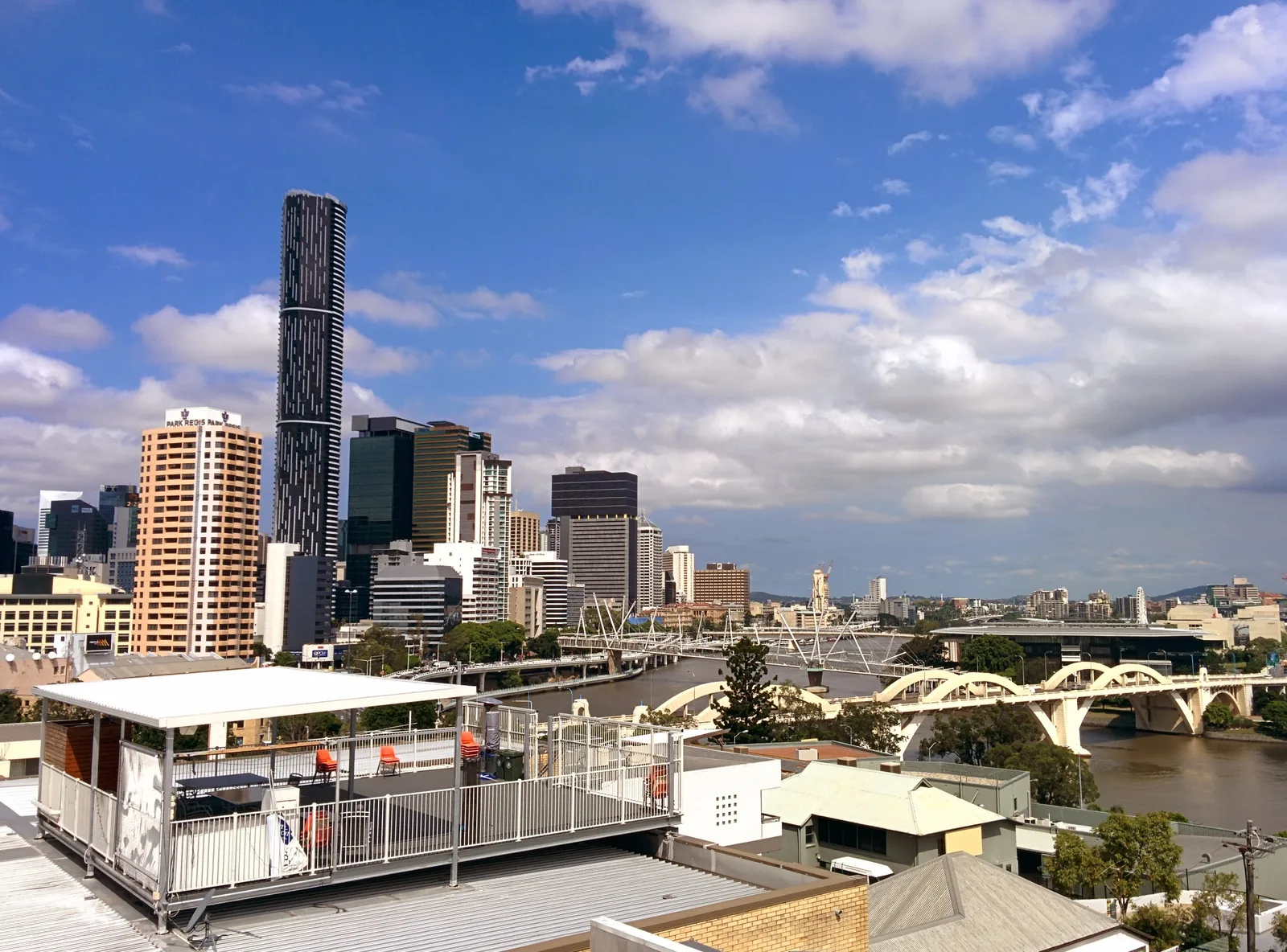
A river city that rewards a longer pause
Brisbane’s appeal becomes clearer when you stop treating it as an airport between other Queensland holidays. A morning in a city museum, an afternoon beside the water and an evening in a different neighbourhood make a satisfying day without an expensive excursion. The river gives the centre its shape, but it also makes a map deceptive: somewhere across the water may require a considerable detour.
This is Queensland’s capital, with a metropolitan scale well beyond the central business district. The Australian Bureau of Statistics estimated Greater Brisbane’s population at approximately 2.83 million in June 2025. That statistical area is broader than Brisbane City Council’s jurisdiction; neither figure describes the compact visitor centre alone.
Allow three full days for an introduction, or longer if you want an island outing and time to consider residential areas. Use VisaWand’s Australia country guide for national context, then plan this city around your actual accommodation address and interests.
History beneath the modern skyline
Brisbane’s history begins long before the colonial settlement. The National Museum of Australia’s account identifies Maiwar as a local name for the river and Meeanjin as the place name used by local Turrbal people for the site selected for Brisbane Town. These connections belong within an understanding of the contemporary city, alongside its colonial buildings and recent development.
The British penal settlement initially established at Redcliffe in 1824 moved to the river in May 1825. The museum notes that its precise founding day is uncertain. Convict labour and punishment shaped the early settlement; presenting that period simply as architectural heritage misses its harsh purpose. The penal establishment was formally abolished in 1842, and Brisbane became the capital when Queensland became a separate colony in 1859.
Start your historical exploration with interpretation rather than a checklist of old façades. It gives later walks through the centre more meaning and helps distinguish surviving buildings from sites transformed completely.
Find your bearings before choosing a neighbourhood
The CBD is the straightforward starting point for shopping and central appointments. Across the river, South Bank groups parkland and visitor attractions. Fortitude Valley suits an entertainment-focused evening, while New Farm and Teneriffe offer another perspective on riverside neighbourhood life. West End adds a multicultural district to the mix. The official Visit Brisbane neighbourhood directory is useful for comparing their character.
Treat those descriptions as a shortlist, then investigate individual streets. For a quiet stay, check the position of a room relative to venues and busy roads. For an evening out, calculate the journey home before committing to a distant restaurant. Accommodation described as central may still leave you with an inconvenient walk from the transport you use most.
Choose one or two districts beyond the CBD rather than crossing the whole city repeatedly. A leisurely neighbourhood visit usually reveals more than an itinerary assembled from widely separated map pins.
City Hall and a museum with local perspective
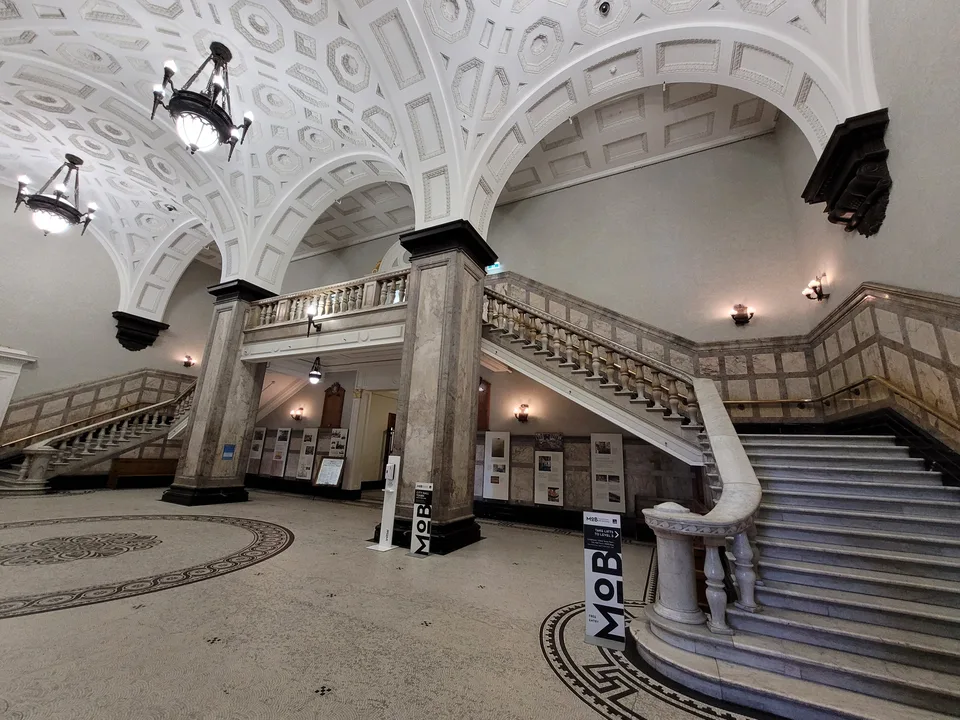
The Museum of Brisbane occupies Level 3 of City Hall in King George Square. Entry is free, and normal opening hours are 10am–5pm daily, with public-holiday exceptions. Its focus on Brisbane’s histories, art and contemporary cultures makes it a useful first stop before you explore further.
Enter through the King George Square foyer and use the lifts to the museum; the operator states that visitors cannot reach it via stairs. Read its access information if you need a sensory map or other assistance. Contact the venue before travelling if the availability of a particular facility will determine whether you can visit.
Leave large suitcases at your accommodation or suitable luggage storage: the museum says its lockers do not fit them and staff cannot mind them. That makes checking in, or arranging a bag drop, worth doing before the visit.
Allow room for whatever exhibition interests you rather than trying to absorb everything. Follow the visit with an unhurried walk and lunch in the centre. This combination works especially well on an arrival day when you want something worthwhile without committing to a distant booking or a demanding outdoor schedule.
Art and swimming on the South Bank side
At Queensland Art Gallery and Gallery of Modern Art, general admission covers most exhibitions, screenings and programmes, although some exhibitions and events require paid tickets. Normal opening is 10am–5pm, with holiday exceptions. Check the programme before arriving: choosing a particular exhibition gives the visit a clearer focus than simply wandering between buildings.
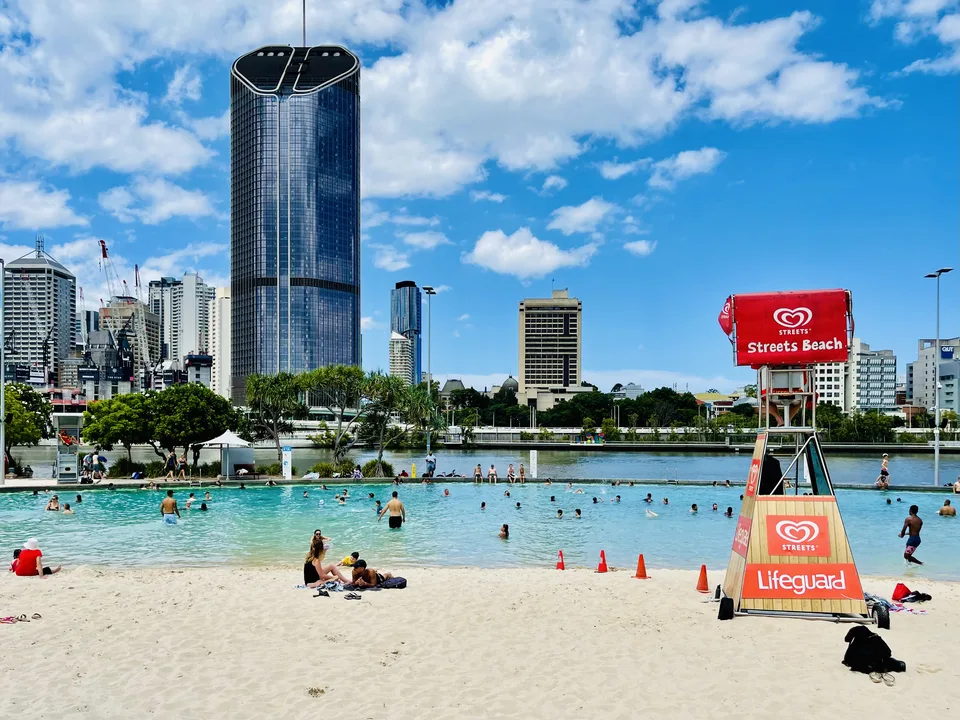
South Bank also offers a swimming break close to the city. Its official swimming and facilities information lists Streets Beach and the Boat Pool as free, with lifeguards during operating hours. Pool hours vary seasonally and differ from the wider park’s hours. As checked in October 2026, Aquativity is temporarily closed for maintenance while the beach and Boat Pool remain open.
For accessible swimming, South Bank lists a ramp beside the Boat Pool and purpose-built pool and beach wheelchairs through its visitor centre. Wheelchairs are free for up to two hours, with photo identification and a refundable A$50 deposit required. Confirm availability ahead of your visit.
Bring suitable swimwear and check the day’s conditions. A photograph of an open pool cannot confirm current access. Families should build the afternoon around one substantial activity, leaving room for changing, food and the journey back.
Gardens, riverside walks and an evening view
The City Botanic Gardens at 147 Alice Street offers a useful outdoor counterpoint to galleries and shopping. Council lists the grounds as open around the clock, while facilities keep their own hours. This is the central riverside garden; do not confuse it with the separate Brisbane Botanic Gardens Mt Coot-tha.
Use a garden walk as part of a day in the centre, rather than adding it after you are already exhausted. Its river frontage makes a natural pause between other activities. Wear shoes suited to the distance you actually intend to cover, carry water and shorten the route if the weather becomes uncomfortable.
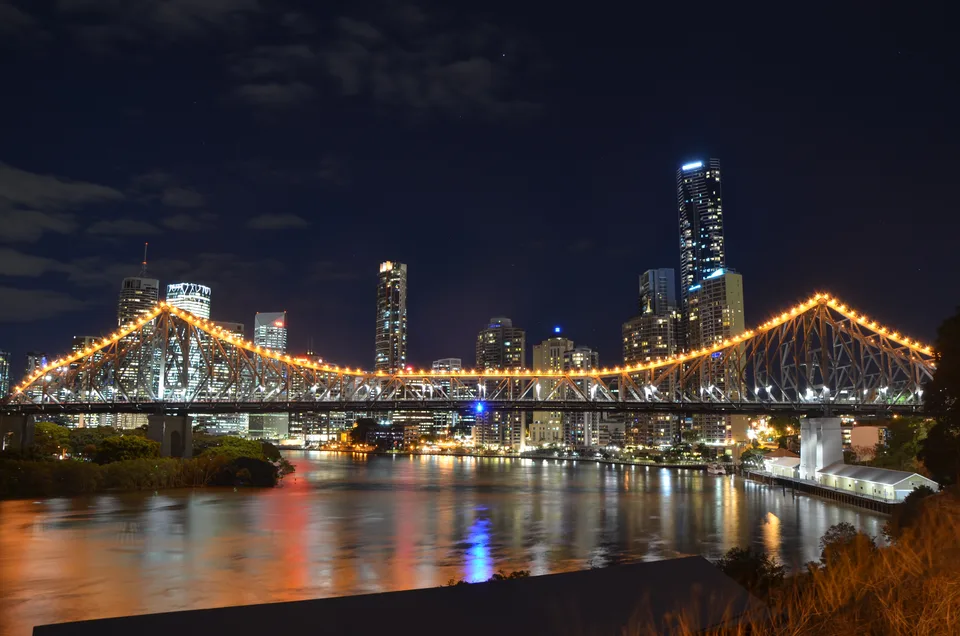
For an evening change of scene, Howard Smith Wharves sits beneath the Story Bridge. Consider it a place to spend time over a drink or meal if the current menus suit your budget. The view is a reason to visit; it does not require turning every stop into a premium dining booking.
Accommodation: choose the journey as carefully as the room
For a first visit, compare a CBD hotel with a South Bank base using the exact journeys in your itinerary. A slightly dearer room can make sense if it removes inconvenient transfers, while a lower nightly rate loses some appeal when every outing starts with a long trip. Verify the entrance address rather than relying on the suburb name.
The South Bank accommodation directory includes hotels such as Novotel, Rydges, Mantra and Emporium. It provides a starting list, not a guarantee that any particular room includes parking, breakfast or kitchen facilities. Check the selected room category and booking conditions directly.
For a longer visit, compare an apartment’s cooking and laundry arrangements with the hotel services you would otherwise use. Ask about cleaning frequency, lift access, luggage storage and late arrival. Review the full payable amount for your dates, including any parking or optional extras, before comparing properties.
Getting from the airport into the city
Airtrain’s Brisbane City route information advertises approximately 20 minutes to the CBD. Treat that as the operator’s rail journey claim, allowing additional time for airport formalities, waiting and the final walk or onward connection. Select the station that works for your actual destination; Central, Roma Street and South Brisbane are different arrival points.
The advertised A$17 city fare needs careful reading. It requires at least two adults travelling together for the full journey and is not a universal solo-traveller fare. Check the offer’s station list and current conditions before buying. Its refund conditions also matter: the advertised group offer does not allow a refund on or after the travel date. Read those terms if your flight arrangements are still uncertain. South Brisbane appears in that offer; do not assume the similarly named South Bank station is interchangeable.
For a group with luggage, compare the total train cost and onward journey with a current taxi or rideshare quote. For a late arrival, check the actual train timetable before booking accommodation around a rail connection. Keep airport transfers separate from your ordinary city transport budget. Book flights into Brisbane with the ground journey in mind: an earlier arrival can be worth more than a small airfare saving if it avoids an awkward late check-in. For an onward flight, work backwards from the airline’s required arrival time instead of simply adding the advertised train journey to your hotel departure time.
Local transport is inexpensive, but payment still matters
Translink’s 50-cent fares apply across its network, including South East Queensland buses, trains and ferries. Airtrain is excluded. That distinction makes everyday exploring inexpensive without making the airport railway a 50-cent trip. Check service updates and the journey planner before a time-sensitive appointment.
When using contactless payment, Translink requires the same card or device for tapping on and off, including transfers. A physical bank card and its phone-wallet version count as different payment methods. Each traveller needs a separate payment method; missing a tap can lead to a default fare.
Brisbane Metro is a bus rapid transit system, rather than an underground railway. M1 links Eight Mile Plains and Roma Street; M2 links UQ Lakes and Royal Brisbane and Women’s Hospital. Choose accommodation near the service you actually need, and test the journey at the time you expect to travel.
Food and shopping without an expensive checklist
Leave some meals unplanned so you can choose according to appetite, opening hours and the day’s location. Compare menus before sitting down, particularly when ordering drinks or several shared dishes. If dietary restrictions are important, speak directly with the kitchen instead of treating a neighbourhood’s reputation as evidence that a suitable meal will be available.
On Saturdays, West End Markets in Davies Park combines produce, prepared food, fashion and gifts. The operator lists 6am–2pm from March to November and 6am–1pm from December to February, with trading updates worth checking before travelling. The seasonal distinction matters if you arrive after lunch.
For shopping, decide whether you want everyday supplies or browsing time. Queen Street Mall is a central option, while Visit Brisbane’s official visitor information can help identify current shopping and dining precincts. Compare prices for something you genuinely need rather than treating purchases as another compulsory attraction.
Build a budget from confirmed costs
The clearest budget starts with accommodation for your dates, airport transport and any ticketed exhibition or excursion. Add meals, insurance and a contingency separately. Hotel rates and menus move too much to turn an unverified citywide average into useful advice.
As a simple calculation, four separate qualifying 50-cent public-transport journeys total A$2 per person. That example excludes the airport railway, taxis and private tours. It is a transport illustration, not a complete daily allowance. Museum admission, ordinary gallery entry and some outdoor activities can keep the sightseeing component modest, leaving you free to decide where a paid experience adds value.
For a couple, compare costs for two people rather than doubling every advertised price automatically: some offers have group conditions, while accommodation may be priced per room. Keep a reserve outside the holiday spending pot so an unexpected change of flight or accommodation does not consume the money needed to get home.
Seasons, heat and the weather plan
Council describes Brisbane’s climate as subtropical, with hot, humid summers and mild, drier winters. It identifies October–March as the typical storm season. Those are planning patterns, not a forecast for your chosen week. Look at current warnings and the daily forecast before committing to a long outdoor outing.
Winter is a sensible option if comfortable walking matters more than swimming, while a summer visit calls for more flexibility around heat and storms. Keep indoor activities available and avoid scheduling every outdoor highlight into a single inflexible day. Carry sun protection and water, and take shaded breaks rather than using distance alone to judge a walk.
For accommodation, ask about cooling and the room’s exposure if heat affects your sleep. For an island excursion, check marine conditions and operator notices as well as the city forecast. Leave sufficient flexibility to change the excursion without losing the main purpose of your visit.
A three-day introduction with room to enjoy it
Begin day one in the centre with the museum, then leave time for lunch and a garden walk. Keep the first evening simple, especially after a long flight. This is a suggested sequence, not an assumption that every venue will be open on your arrival date.
Devote day two to the cultural precinct and South Bank. Choose an exhibition first, then decide whether weather and operating conditions suit swimming or a shorter riverside afternoon. A relaxed dinner nearby avoids another cross-city journey when you are tired.
Use day three for a neighbourhood you have not yet explored. If it is Saturday, a morning market visit can anchor the day; otherwise choose a leisurely outing and an evening around the Story Bridge area. Add an island trip as a separate fourth day. Anyone assessing a move should replace part of the sightseeing with a trial commute and a walk around a potential residential address.
Renting: understand the upfront commitment
For a move, start with temporary accommodation while you inspect properties and test journeys. Compare the actual dwelling, not just the suburb: room layout, ventilation, cooling, laundry, storage and noise can matter as much as the advertised number of bedrooms. Ask whether parking and appliances are included.
Queensland’s Residential Tenancies Authority bond guidance sets a maximum of four weeks’ rent for general tenancies and rooming accommodation. A bond must be receipted and lodged with the RTA within ten days. Different arrangements can have different rules, so identify the agreement type before applying those limits.
Under the current rent-payment rules, rent in advance at the start of a fixed-term tenancy is limited to one month; for a periodic tenancy, the limit is two weeks. The owner or manager cannot invite or accept more at that stage. Budget for the bond and advance rent as separate commitments, alongside moving and household setup costs. For illustration, at an agreed A$600 weekly rent, a four-week bond would be A$2,400. That is arithmetic, not a claim that A$600 represents Brisbane’s current market rent. Compare live listings with similar bedroom counts, furnishing and transport access.
Check the address, the commute and flood information
Assess a possible home at the times you will use it. An easy weekend journey says little about the practical experience of reaching work, study or childcare on a weekday. Include the walk to the stop, transfers and the final approach to your destination when comparing addresses.
Before signing, consult Council’s Flood Awareness Map and FloodWise Property Report information. These resources describe different flood sources and property planning information within Brisbane City Council’s area. They are not real-time warnings, and a low mapped probability is not a guarantee that a property will never flood. For an address elsewhere in Greater Brisbane, consult the relevant council.
Ask how access roads, parking and stored belongings could be affected, not just the living-room floor. Obtain insurance quotes for the actual address before committing. Keep photographs and a careful condition record at the start of the tenancy, and raise questions while the agreement can still be reviewed.
Utilities, healthcare and family essentials
The RTA’s utility charging guidance explains that electricity, gas, phone and internet are usually tenant expenses, although an agreement may include some services. Check which charges apply, how they are calculated and whether the connection you need is available. Do not assume an entire water bill automatically becomes the tenant’s responsibility. Confirm the internet connection type and expected speed before signing if you depend on it for work. A listing that says broadband is available does not establish the installation date, plan cost or performance inside the dwelling.
Healthcare eligibility also needs checking. Services Australia’s Medicare enrolment guidance distinguishes eligible residents and other covered groups from visitors who may qualify under reciprocal arrangements. Arrange suitable insurance for your circumstances rather than assuming arrival gives you comprehensive public cover.
For families, use Queensland’s school catchment information to investigate an address before taking a lease. Out-of-catchment admission is not guaranteed. Education Queensland International explains temporary-resident study arrangements and associated fees; visa conditions and programme eligibility matter. Confirm the school’s requirements directly, then include uniforms, resources and the daily school journey in the household budget.
Tourism, work, study and permanent residence
Visa choice depends on passport, purpose and circumstances. The eVisitor subclass 651 is free for eligible passport holders applying from outside Australia. It allows multiple visits over twelve months, normally up to three months each time. It is a visitor visa, and its business-visitor permissions do not allow paid work for an Australian employer or providing services to an Australian business.
If study is your main purpose, investigate the appropriate study visa rather than relying on a tourism permission. For employment, Home Affairs’ working-in-Australia information directs applicants to a visa suited to their intended work. Permanent residence requires the grant of an appropriate permanent visa; renting a home or visiting repeatedly does not create that status.
Use VisaWand’s Australia visa destination information for orientation and its consultant directory if you want professional assistance. Verify an adviser’s credentials and assess your own conditions against the official rules before making financial commitments.
Extend the trip or compare another city
North Stradbroke Island, also known as Minjerribah, provides a distinctly different day outside the urban centre. The official day-trip information describes a ferry from Cleveland to Dunwich followed by a bus towards Point Lookout. Check both outward and return connections before booking, allowing time for the mainland journey as well. Do not build the day around a promised wildlife sighting.
Keep the island outing separate from a rushed departure day. If transport changes or weather interrupts the plan, a flexible spare day is more useful than a tightly packed list of alternatives.
For a wider Australian itinerary or a relocation comparison, read VisaWand’s Sydney city guide and Melbourne city guide. Compare your priorities, work or study location and actual housing choices. The Australia city and settlement directory can help identify further places to investigate; a directory listing alone does not mean that a completed guide is available.
Official planning resources
Reviewed 16 October 2026. Use the official resources linked throughout this guide for admission, transport, housing and immigration decisions. Prices, services and rules can change; confirm the details relevant to your dates. Photography illustrates the locations and is not a live view.
View all official resources
- ABS: regional population 2024–25
- National Museum of Australia: Brisbane colonial history
- Visit Brisbane: neighbourhoods and surrounding regions
- Museum of Brisbane: admission and visiting
- QAGOMA: admission and opening hours
- South Bank: swimming, access and current notices
- Brisbane Council: City Botanic Gardens
- South Bank: accommodation directory
- Airtrain: airport to Brisbane City
- Airtrain: city group fare conditions
- Translink: 50-cent fares
- Translink: contactless payment rules
- Brisbane Council: Metro routes and accessibility
- West End Markets: operator opening times
- Visit Brisbane: official visitor information
- Brisbane Council: climate and disaster preparedness
- Queensland RTA: rental bond
- Queensland RTA: rent payments
- Brisbane Council: flood map and property reports
- Queensland RTA: utility charges
- Services Australia: Medicare eligibility
- Queensland Government: school catchments
- Education Queensland International: temporary residents
- Home Affairs: eVisitor subclass 651
- Home Affairs: working in Australia
- Home Affairs: permanent residence
- Visit Brisbane: North Stradbroke Island day trip
Plan the next part of your journey
Explore the Australia guide, browse other cities or compare consultants for your travel and relocation questions.