Visa
About Asia Pacific College of Advanced Studies
From a Bataan academy to APCAS
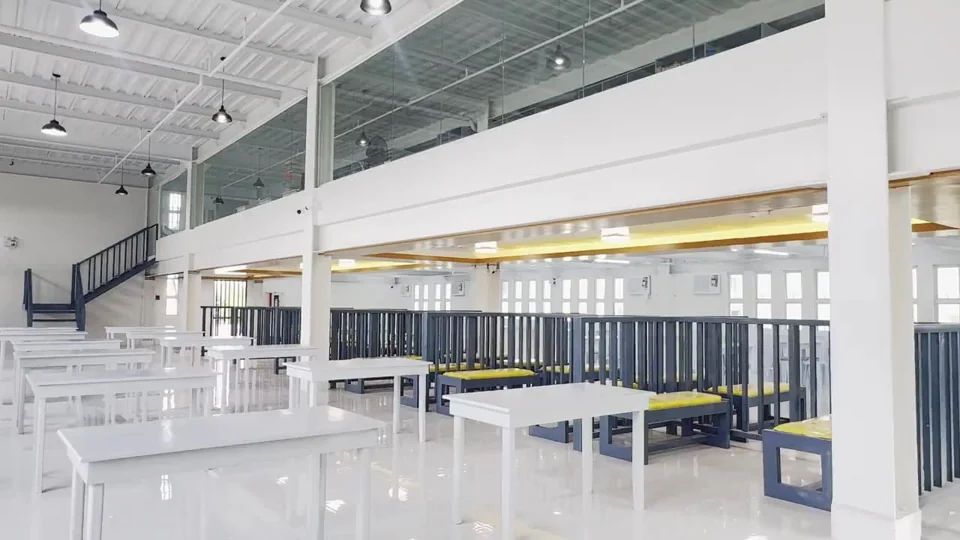
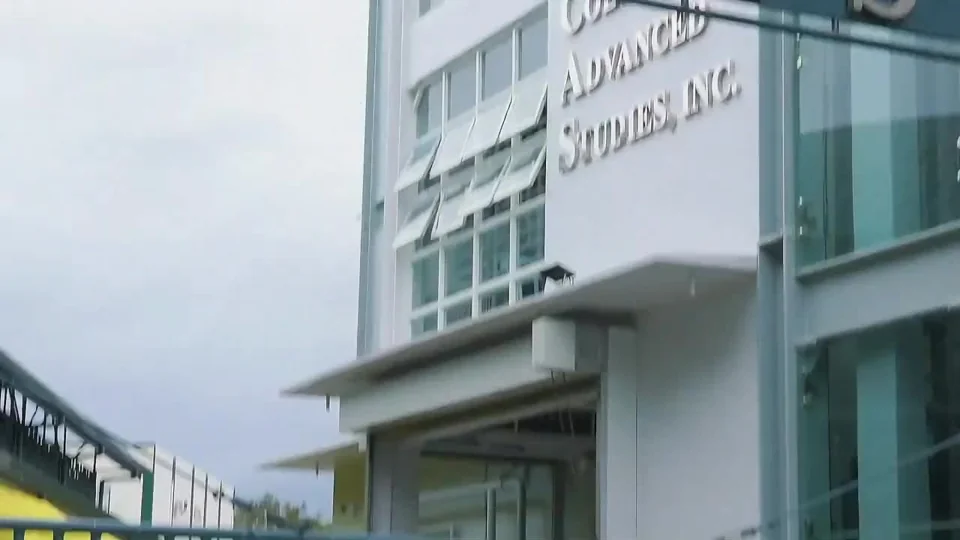
Asia Pacific College of Advanced Studies, Inc., commonly known as APCAS, is a basic and tertiary educational institution in Balanga City, Bataan, Philippines. Its history begins in February 1999 under the name Asia Pacific Academy of Bataan. Initially based in a rented building in San Jose, the academy began teaching secondary-school students in the 1999–2000 school year. On 3 August 2001 it moved to its own premises on A. H. Banzon Street in Ibayo, Balanga, and adopted the college name as its educational provision widened. Hotel and restaurant management was among its early college offerings, followed by communication and tourism in 2002–2003. A separate college building behind the high-school building added instructional space in September 2002. Secondary teacher education followed in 2005–2006. The institution introduced senior high school in 2016–2017. Its physical development included the Marcos Gonzalvo Estrella Sports Center in 2018 and the inauguration of the five-storey MGE Building in August 2024. The latter brought additional classrooms, science and civil-engineering laboratories, a student lounge, library space and a multipurpose hall.
Sources: Institutional history ↗
Mentoring and community participation
APCAS organises student development through its Five Heuristics of Learners’ Domain programme, connecting academic assistance with personal development and community participation. Mentoring gives students an individual point of contact for adjusting to college and discussing concerns. The Guidance Center implements this work with the Office of Academic Affairs. Consultation Hours and Tutorial, abbreviated CHAT, provides additional help with particular subjects when instructors are available. Individual academic advising assists transferees and students whose enrolment does not follow the regular sequence, including consideration of schedules for working students. Another component, Euthenics, includes seminars on social and personal development, career-related activities and preparation for the transition beyond college. Community service brings students and other stakeholders into activities such as tree planting and outreach, coordinated with relevant government agencies. Together, these programmes express an educational approach that gives experience, reflection and participation a place alongside classroom instruction.
Sources: Student services ↗
Nursing education
The Bachelor of Science in Nursing began at APCAS in 2003. The programme’s published history records its early development through classroom teaching and supervised exposure to healthcare settings. In 2005 the college established an affiliation with Bataan General Hospital. Its historical account then records student placements at the Philippine Orthopedic Center and the National Center for Mental Health in 2006, followed by further Manila affiliations in 2008. These milestones describe the development of the programme rather than a promise of any particular placement today. The current facilities description identifies microbiology and parasitology, anatomy, biochemistry and nursing-skills laboratories. Anatomical models support the study of body structure, while simulation equipment provides a setting for practising decision-making, communication and teamwork. The programme history records the acquisition of a high-fidelity mannequin in 2025. These resources are presented as parts of nursing education, alongside the academic and practical components of the course.
Sources: Nursing programme and history ↗
Computing and applied projects
The Bachelor of Science in Information Technology focuses on the hardware and software used to meet organisational computing needs. Its description covers planning, installation, customisation, operation, administration and maintenance of information infrastructure. Practical work includes information systems, prototypes and technology projects connected with community needs. Software development, cybersecurity and digital systems appear among the areas integrated into instruction. The programme also identifies teamwork, communication, leadership and ethical values as educational priorities. Its emphasis on producing tangible project work gives students a way to connect computing concepts with the design and operation of useful systems.
Sources: Information Technology ↗
Civil engineering
APCAS offers a four-year Bachelor of Science in Civil Engineering with a specialisation in Structural Engineering. The programme description connects mathematical and scientific study with engineering principles and practical technical work. It identifies structural design, construction management and infrastructure development as areas toward which the course is directed. The emphasis is on understanding the physical and built environment through both theoretical foundations and applied learning. The specialisation gives this engineering offering a distinct focus within the college’s wider academic catalogue.
Sources: Civil Engineering ↗
A broad academic catalogue
The college programme catalogue brings together professional, technical, creative and social-science subjects. Alongside nursing, computing and engineering, it lists accountancy, business administration, customs administration and criminology. Hospitality Management and Tourism Management provide separate routes within the visitor and service sectors. Education offerings include Elementary Education, Secondary Education with an English major, and Physical Education. Psychology and Communication add further subject choices. An Associate in Computer Technology is also listed, giving the catalogue a shorter computing qualification alongside bachelor-level study. Junior and senior high school provision is presented separately from these college programmes.
Sources: College programmes ↗
Sport and the Asianista community
APCAS uses the name Asianista for members of its educational community. A report published on 27 October 2026 illustrates student participation beyond the classroom: two senior-high-school students competed in a karate event held in Kuala Lumpur from 9 to 11 October. The college reported medals in individual kata and kumite. The account places international sporting participation within the wider life of the school without treating those individual results as an academic outcome or a promise for other students.
Sources: Student athletics, October 2026 ↗