Visa
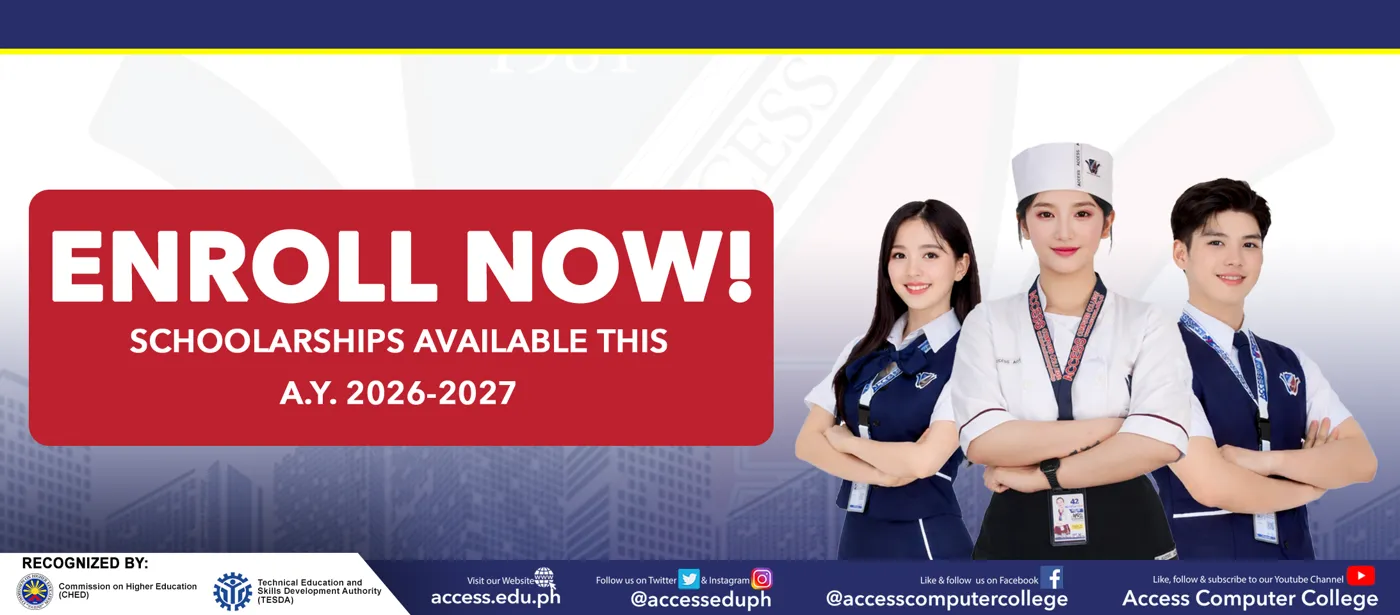

About Access Computer College
A college focused on applied learning
ACCESS Computer College is a Philippine educational institution whose official account dates its involvement in technology education to 1981. Its stated mission combines access to education with the development of practical industry knowledge. The college describes itself as non-sectarian and coeducational, with a teaching approach that connects theory and practical application.
The institutional mission names wisdom, competence, morality and love as its core values. Wisdom concerns judgement informed by knowledge and skills; competence concerns performing work well; morality addresses choosing appropriate and responsible actions; and love concerns relationships with oneself and others in family, work and society. These values frame the school’s account of education as both professional preparation and personal development.
The About page emphasises small classes, laboratory exercises, hands-on practice, audiovisual teaching aids and scheduled on-the-job training. It also identifies academic, co-curricular and extracurricular activity as parts of the student experience. The practical emphasis is intended to connect subject knowledge with situations encountered beyond the classroom.
Sources: About ACCESS ↗
The collegiate offer and entry documentation
The current collegiate programmes page lists Bachelor of Science degrees in Hospitality Management, Information Technology, Business Administration with a major in Marketing Management, and Office Administration. The combination places computing alongside business, office practice and hospitality, giving the institution a broader academic scope than its name alone might suggest.
The same page provides an admissions checklist for new and transferring college and senior high school students. It asks applicants to prepare both digital and physical copies for the online enrolment portal and Registrar’s Office. The basic list includes the school report card, permanent school record, good moral certificate, a copy of the Philippine Statistics Authority birth certificate and identification photographs. Additional documentation is identified for Alternative Learning System passers and transferees; transferring students are asked for their transcript and honourable dismissal. These published requirements distinguish the application documents from the academic content of each degree.
Sources: Collegiate programmes and admission requirements ↗
A Metro Manila campus network
The campus page identifies three locations: C. M. Recto in the City of Manila, and Lagro and Kaunlaran in Quezon City. The Recto location is in the ACCESS Main Building at the corner of C. M. Recto Avenue and Quezon Boulevard. Lagro is based in the Altan Building at 1056 Quirino Highway, while Kaunlaran is at 22 Manga Road, at the corner of Aurora Boulevard.
Each location has its own published campus email address. The page also supplies map links, placing campus contact and location information alongside the college’s academic and application resources. These three named locations are repeated in the website’s campus directory footer.
Sources: Campuses ↗
How the published study plans are organised
The collegiate programme design page provides separate curriculum charts for the four degree areas. Its published versions distinguish academic-year cohorts, including Hospitality Management designs marked from 2023–2024 onwards and from 2025–2026 onwards. This makes the relevant version of a study plan an identifiable part of the college’s programme information.
The Information Technology chart marked for 2023–2024 onwards lays out ten terms across four labelled years. It gives subjects, lecture and laboratory units, total units and prerequisites for individual terms. The summary records 49 subjects and 146 programme units, with twelve weeks per term. The chart includes laboratory-unit allocations in several terms, making the practical component visible within the curriculum structure.
The published sequence starts with introductory computing and programming alongside general subjects, then advances through further technical study. Later terms include a two-stage capstone sequence and a final on-the-job training entry. The prerequisite column shows that progression is organised around earlier subjects rather than presenting the curriculum as a collection of interchangeable classes.
Sources: Collegiate programme designs ↗ · BSIT programme design, AY2023–2024 onwards ↗
Technical training alongside degree study
The college separately lists TESDA training programmes in Computer Systems Servicing NC II, Electronic Products Assembly and Servicing NC II, and Bookkeeping NC III. These are presented through the school’s training and assessment centres, distinct from the collegiate bachelor’s programmes.
The published training application checklist requests identification photographs in specified formats, a copy of a PSA-issued birth certificate, a government-issued identity document and an academic record such as a transcript or school form. A marriage certificate is included where applicable. The page provides a dedicated enquiry email and telephone contacts for prospective trainees, so the technical training route has its own practical application information rather than relying solely on the college degree admissions checklist.
Sources: TESDA training programmes ↗
Scholarship information and alumni connections
The website’s anniversary scholarship page describes an institutional scheme also called the Presidential Scholarship Program. It presents the scheme as part of the college’s continuing educational commitment and directs applicants to a form and to campus enquiries about availability. The published page refers to the forty-third founding anniversary; it therefore provides context for that particular institutional initiative rather than a current award calendar.
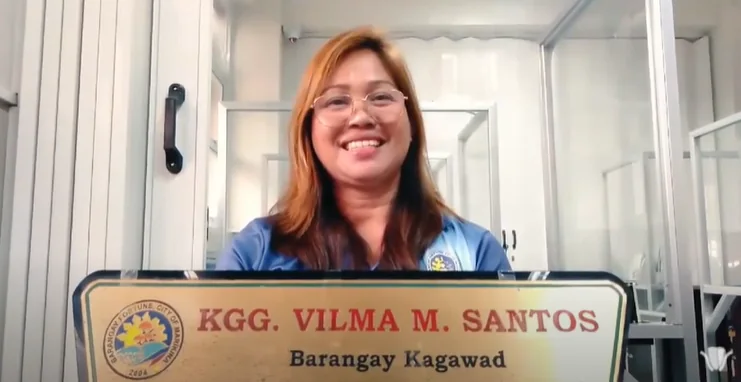
The college also maintains an alumni testimonial page, identifying contributors by name and degree background. Among the featured contributors are Vilma M. Santos, identified with Business Administration, and Fernandez F. Eser, identified with Information Technology and the 2018 graduating batch. Their portraits accompany the college’s presentation of former students, adding named alumni perspectives to the institutional account.
Sources: Institutional scholarship programme ↗ · Alumni testimonials ↗