Visa
About Abuyog Community College
A community college in Leyte
Abuyog Community College, commonly called ACC, is located in Barangay Guintagbucan, Abuyog, Leyte, in the Philippines. Its published vision and mission place accessible, inclusive and sustainable education at the centre of its purpose. Research, innovation, service and partnerships are identified as ways to strengthen both individual opportunity and the wider community. The college’s core values include excellence, competence, accountability, resilience, environmental responsibility and service.
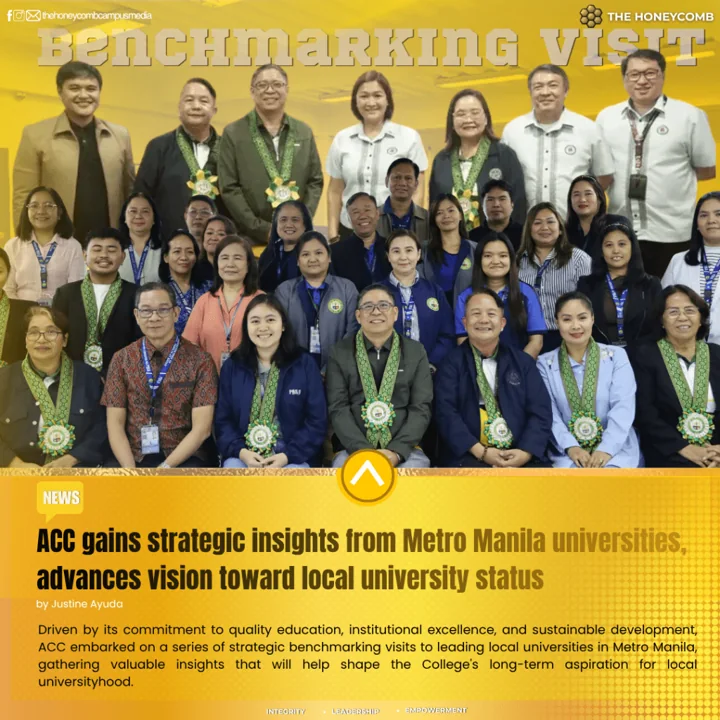
The institutional goals link educational quality with technological development, social inclusion, community resilience and good governance. ACC also describes building human capital and strengthening collaborative relationships as priorities. An August 2026 report records benchmarking visits to local universities in Metro Manila as part of institutional development. The report presents becoming a local university as an aspiration requiring preparation and higher standards, rather than an already completed change in the college’s status.
Sources: Vision, mission, core values and goals ↗ · Institutional benchmarking, August 2026 ↗
Undergraduate study across several fields
ACC’s undergraduate programme list spans teacher education, business, hospitality, criminology and information technology. The Bachelor of Secondary Education offers majors in mathematics, science, English and social studies. A Bachelor of Elementary Education provides a separate route within teacher preparation. The list also identifies degrees in entrepreneurship, hospitality management, criminology and information technology. These subjects place education and service professions alongside business and digital study within the college.
The College of Information Technology Education describes objectives involving technical competence, innovation and collaboration with government, industry and professional organisations. The College of Hospitality Management and Entrepreneurship similarly emphasises accessible programmes, leadership, teamwork and research that can contribute to community development. These are published educational aims, connecting disciplinary study with the skills and responsibilities expected in professional and community settings.
Sources: Undergraduate programmes ↗ · Information Technology Education ↗ · Hospitality Management and Entrepreneurship ↗
Student affairs and participation
The Office of Student Affairs and Services addresses the non-academic parts of the student experience. Its description distinguishes welfare services from development activities while treating both as important to student growth. The office connects the administration and the student body, providing guidance on student life, activities and discipline. Its goals include protecting welfare and creating opportunities to develop leadership, responsibility and personal capacity.
Student representation is organised through the Supreme Student Council. The college describes it as an elected body concerned with student rights, welfare and participation in educational, social and cultural life. Faculty advisers support the council in an advisory capacity. Alongside representation, the office’s developmental approach encourages students to participate in activities that support intellectual, social, physical and moral growth. This gives student affairs a role beyond administering regulations, linking participation in college life with preparation for wider responsibilities.
Sources: Office of Student Affairs ↗
Research and extension with community purpose
ACC’s research development and extension office connects investigation with the needs of communities. Its stated goals include strengthening research capabilities, encouraging students to take an interest in inquiry and increasing faculty participation in research and extension. The office also identifies generating new information and technological innovation, maintaining research facilities and working with local government and other organisations as parts of its agenda.
The published research philosophy stresses ethical, reliable and results oriented work. It also highlights the needs of the people who may use research findings or technologies. Faculty development, student research quality and the publication of scholarly outputs appear among the office’s objectives. Its approach places research within regional and national development concerns, including countryside development and poverty reduction. These are institutional priorities for building a research community rather than claims that every proposed project or facility is already complete.
Sources: Research development and extension ↗
A documented digital learning initiative
In July 2026, ACC reported completing its AI Ready ASEAN rollout with a virtual culminating activity. The programme involved faculty and staff learning through colloquia, online modules, mentoring and collaborative activities. Its focus included responsible and ethical uses of artificial intelligence in education. The event recognised participants who had completed programme requirements and encouraged continued engagement with the learning platform and readiness assessments.
The report describes cooperation involving ACC, Leyte Normal University and the ASEAN Foundation. Participants discussed how the training related to teaching strategies and digital citizenship. The college leadership connected the activity with adaptation, continued learning and collaboration. As a dated example of professional development, the rollout shows the institution exploring how emerging technologies can be understood and used in education. It does not imply that all courses have been replaced by AI systems or that every student follows the same training.
Student journalism and responsible communication
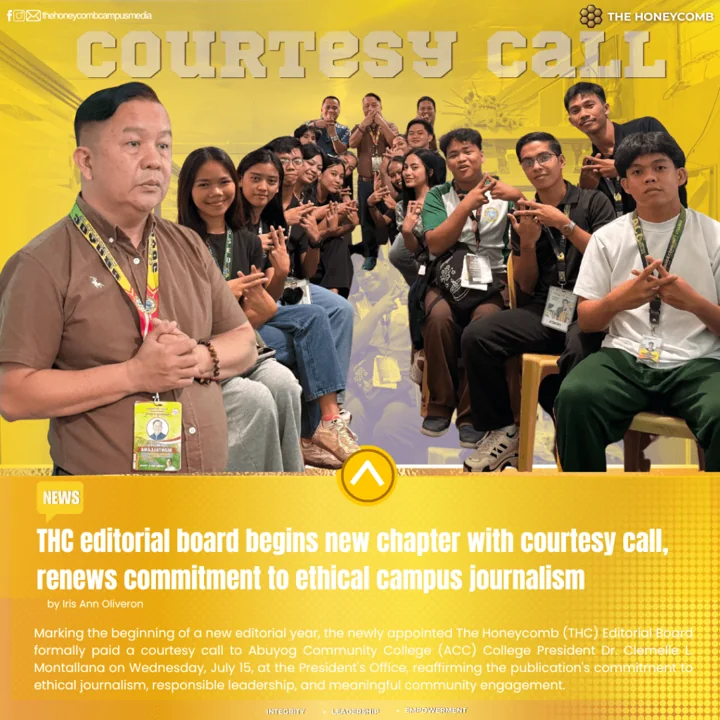
The Honeycomb is ACC’s campus publication. A July 2026 report describes its new editorial board meeting with the college president to discuss ethical journalism, student voice and the publication’s development. The delegation included editorial, writing, layout, photography, multimedia and social media roles. The meeting therefore reflected both traditional reporting and the practical work involved in producing material across digital formats.
The students also discussed equipment limitations and production resources, while the report records support through a desktop computer and printer. Plans included strengthening collaboration and preparing publication activities for the academic year. The emphasis on responsible reporting and community service connects the publication with the college’s broader values of accountability and participation. It gives students a setting in which communication, creative work, organisation and public responsibility can be practised alongside their degree studies.
Sources: The Honeycomb editorial board, July 2026 ↗