Visa

About Asansol Engineering College
An engineering college in Asansol
Asansol Engineering College is a self-financing institution established in 1998 under the society of The Academy of Engineers (India). It is located on Vivekananda Sarani in Kanyapur, Asansol, West Bengal. Its institutional introduction describes teaching in engineering and computer applications, including Bachelor of Technology, Master of Technology and Master of Computer Application programmes.
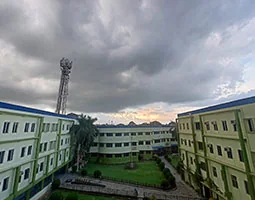
The college's account places undergraduate study alongside postgraduate education, research and development. Its stated mission includes creating an environment for advanced teaching and learning, developing new ideas through research and encouraging collaboration between industry and academia. It also connects education with service to society at regional, national and wider levels. The institution describes classrooms, laboratories, departmental seminar rooms and residential accommodation within its campus infrastructure. These different settings support its combination of subject teaching, practical work and activities intended to connect academic study with professional and societal questions.
Sources: About Asansol Engineering College ↗
Library resources and learning spaces
The college's library provision combines a central library with departmental collections supporting teaching and learning. Its published description identifies Libsys as the library-management software and an online public access catalogue as the route for searching the book database. The catalogue provides a way to locate material within the collection before borrowing or consulting it.
The library distinguishes semester-long book-bank lending from its circulation and reference services. Reference books and reference copies of textbooks are intended for consultation in the reading room and return before leaving it. Its floor-by-floor facilities description places the book bank, engineering circulation, acquisitions and the librarian's office on the ground floor. The first floor includes reference resources, a digital library and a reading room, while the second floor accommodates computer-applications circulation, printed journals and further reading space. This arrangement brings lending, reference study and digital resources into complementary parts of the library.
Sources: Library collections and services ↗
Mechanical engineering and industrial exchange
The Mechanical Engineering department dates its beginning to 2003. Its published account emphasises the development and dissemination of technical knowledge and interaction between students and industry. It describes an academic approach in which exchanges with industry help students encounter specialised technological work alongside their studies.
The department reports organising vocational training for rural and urban sectors and seminars and workshops in collaboration with Kalyani Government Engineering College and the National Institute of Technology Durgapur. Consultancy work is another activity identified in its departmental history. The account describes student projects in automobile engineering, robotics, air conditioning and refrigeration. It also records participation in technical and wider activities such as model making, robotics and public speaking. Together, these examples show the range of practical and extracurricular work included in the department's published account, connecting mechanical subject study with opportunities to test ideas and communicate them to others.
Sources: Mechanical Engineering department ↗
Civil engineering teaching and testing
The Civil Engineering department traces its establishment to 2010 and describes its work in undergraduate education. Its facilities account identifies a projector-equipped classroom, a language laboratory and laboratories used for research and testing. The department presents these resources as supporting different forms of technical and communication-related learning.
Industrial visits, seminars and workshops appear within its approach to helping students encounter developments in industry. The department also describes material testing and consultancy activity involving students. Its account includes preparation sessions and mock tests for competitive examinations, alongside assistance with training and placement. These are activities reported by the department as part of its educational support. They place classroom and laboratory study within a wider set of opportunities to observe practical engineering work and prepare for further professional or academic steps.
Sources: Civil Engineering department ↗
Computer applications and interactive learning
The Department of Computer Application was established in 2001. It dates the start of its Bachelor of Computer Applications programme to that year and its Master of Computer Applications programme to 2002. Its stated aims combine professional subject learning with ethical conduct and leadership qualities, connecting technical competencies with human values.
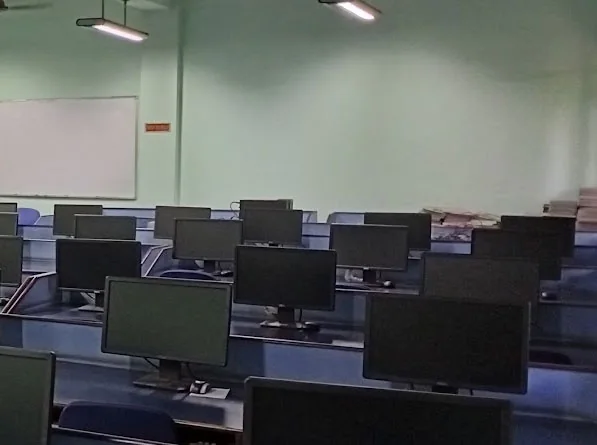
The department describes classroom teaching and practical learning as complementary parts of its approach. Focused discussions, interactive study sessions, role plays, presentations, case studies and strategy-implementation sessions are among the methods it identifies. Its facilities account refers to technology tools and collaboration with other departments, including communication and language laboratories. The department's published infrastructure section also illustrates computer laboratories. This combination places software and computing study alongside communication, collaborative activity and discussion of applied situations. Its account presents both undergraduate and postgraduate education as settings in which students develop subject knowledge and the ability to work with others.
Sources: Computer Application department ↗
A framework for research and development
The college's published Research and Development policy, introduced for the 2016–17 session and accompanied by later amendments, sets out an institutional framework for research. It records the establishment of an R&D Cell in 2012 and describes responsibilities including developing research capacity, promoting interdisciplinary work and monitoring research activity. The policy identifies knowledge sharing, collaboration and research ethics as objectives.
For undergraduate study, it describes minor and major projects undertaken with faculty guidance. Its framework also addresses postgraduate research, collaborative projects and training in research and publication. The policy discusses patent applications and intellectual-property processes alongside journal and conference work. Later amendments address industry-sponsored and interdisciplinary research. These provisions show how the college has formally organised expectations about projects, publication and collaboration. The document also emphasises original work, accurate research information, acknowledgement and citation, placing the conduct of research alongside the development of technical results.
Sources: Research and Development Policy, 2016–17 and amendments ↗