Visa
About A. R. College of Pharmacy & G. H. Patel Institute of Pharmacy
Pharmacy education in Vallabh Vidyanagar
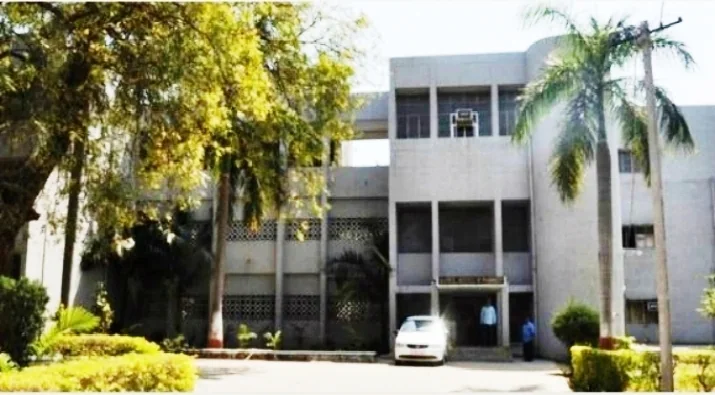
A. R. College of Pharmacy & G. H. Patel Institute of Pharmacy is a specialist pharmacy institution in Vallabh Vidyanagar, Anand, Gujarat, India. Commonly abbreviated ARGH, it was established in 1981 by Charutar Vidya Mandal to meet educational needs connected with the pharmaceutical industry in Gujarat and beyond. Its official introduction acknowledges the support of Anjanaben Ashokbhai Shah and Gordhanbhai Hathibhai Patel in its foundation.
The college describes provision at diploma, undergraduate, postgraduate, and doctoral levels. Its About page identifies the development of research-oriented professional education as a central aim and dates the introduction of the Master of Pharmacy course to 1999. The listed postgraduate specializations include quality assurance, pharmaceutics, pharmacology, and pharmaceutical chemistry. This combination of levels and subjects gives the institution a focus that extends from initial pharmacy qualifications to advanced specialization and research within the pharmaceutical sciences.
Sources: College introduction ↗ · About College ↗
Formulation and the design of medicines
The Pharmaceutics Department introduces its subject through the process of turning a chemical substance into a usable medicine. Its academic focus includes dosage form design and formulation, connecting the properties of a drug substance with the form in which it can be administered. The department states that pharmaceutics is included across all four years of the Bachelor of Pharmacy curriculum, making it a continuing component of undergraduate study.
The subjects assigned to the department include pharmaceutical formulation, pharmaceutical manufacturing, dispensing pharmacy, pharmaceutical technology, physical pharmacy, and pharmaceutical jurisprudence. Taken together, these areas connect the scientific characteristics of medicines with their preparation, production, and professional context. The department also publishes a faculty directory with pharmacy qualifications and academic roles. Its description illustrates the place of formulation and manufacturing knowledge within the college’s wider education in drugs and their use.
Sources: Pharmaceutics Department ↗
Drug action and medicines from natural sources
Pharmacology and pharmacognosy provide complementary perspectives within the college’s departmental structure. The Pharmacology Department describes the study of how chemical substances interact with living systems. Its introduction includes the relationship between drug molecules and receptors and the biological effects produced by those interactions. This places the action of medicines, and the mechanisms behind that action, within the institution’s scientific teaching.
The Pharmacognosy Department focuses on drugs and potential medicines originating from plants, microorganisms, animals, and other natural sources. Its account combines botanical knowledge with chemical and biological investigation. Examples include classifying and naming plants, understanding cultivation, isolating and identifying active constituents, measuring those constituents, and evaluating their biological properties. The department’s emphasis therefore spans the recognition of natural materials and the investigation of their composition and effects. Both departments publish faculty information, allowing readers to see how these distinct subject areas are represented within the college.
Sources: Pharmacology Department ↗ · Pharmacognosy Department ↗
Chemical development and pharmaceutical quality
The Pharmaceutical Chemistry Department presents its field at the intersection of chemistry, pharmacology, and biological sciences. Its subject description includes the design, chemical synthesis, and development of pharmaceutical agents and biologically active molecules. This establishes a connection between understanding chemical structures and developing substances with potential medicinal applications, complementing the college’s teaching in formulation and drug action.
Pharmaceutical analysis is another part of the department’s published scope. The description identifies assessment of drug product quality through analytical chemistry, including method validation and the handling of raw materials and finished products. Documentation and inspections are also included in its account of the development environment. These topics demonstrate that the department addresses both the creation of pharmaceutical compounds and the evidence used to evaluate their quality. Its faculty directory identifies teaching staff with pharmaceutical chemistry backgrounds and postgraduate pharmacy qualifications.
Laboratories supporting practical study
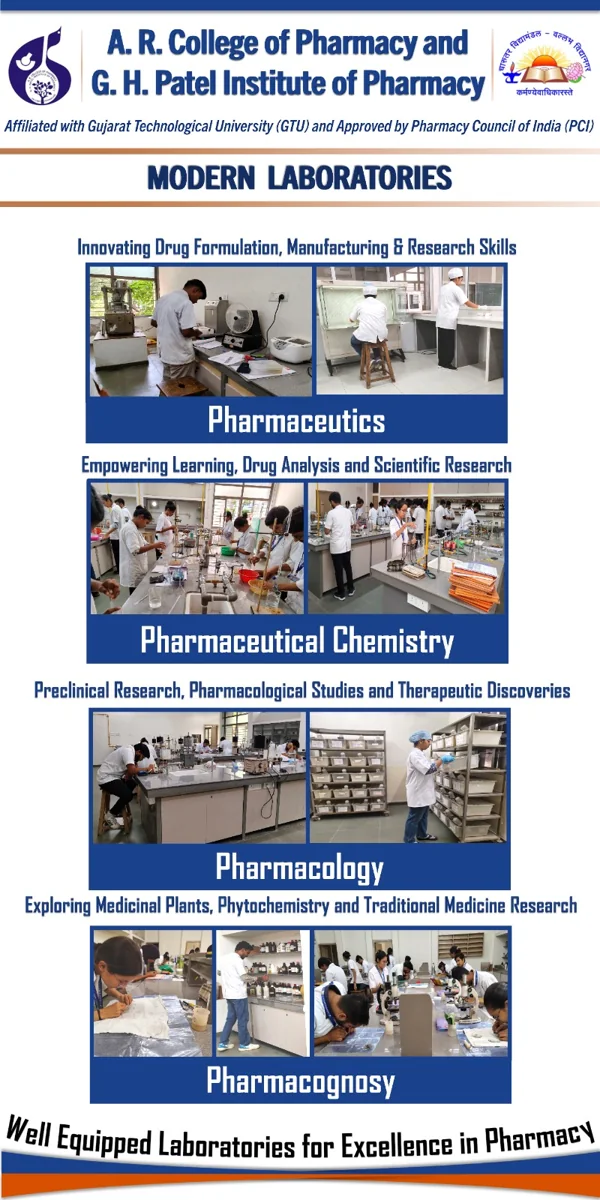
The college’s facilities account describes an industrial pharmacy machine room and a central instrumentation facility. The machine room includes equipment for tablet production, capsule filling, filling and sealing containers, blending, drying, and related operations. The instrumentation facility lists analytical resources including infrared spectroscopy, high-performance liquid chromatography, ultraviolet-visible spectrophotometry, and tablet dissolution equipment. These published facilities connect practical learning with pharmaceutical production and analysis.
The same account identifies laboratories for pharmaceutics and pharmaceutical technology, microbiology and aseptic processing, chemistry, quality assurance, anatomy and physiology, pharmacology, and natural products. It describes activities ranging from formulation and evaluation of dosage forms to synthesis and characterization of compounds. The natural product laboratory includes microscopic examination of plant materials and the identification, extraction, isolation, and analysis of constituents. The overall laboratory structure follows the college’s main academic subjects and provides practical settings for examining the materials, processes, and measurements discussed in pharmaceutical coursework.
Sources: Laboratory facilities ↗
Library resources and the medicinal garden
The library provides books covering the institution’s subjects alongside national and international journals and electronic journals. Its facilities description also identifies periodicals, newspapers, and compact discs as information resources. Computers with broadband internet and wireless connectivity, printing, scanning, and copying facilities support access to and use of these materials. The college lists SOUL library software and participation in DELNET-AICTE among its information services.
A medicinal garden adds a separate resource for learning about plant materials. The college describes a collection of more than fifty herbal plants labeled with scientific names, intended to help students recognize plants associated with medicinal use. Its published examples include Vitex negundo, Cassia fistula, Gymnema sylvestre, and Hibiscus rosa-sinensis. This garden complements the pharmacognosy subject area through direct observation of plants, while the library supports study across the institution’s disciplines. Together, these resources extend learning beyond scheduled classroom and laboratory sessions.
Sources: Library facilities ↗ · Medicinal Garden ↗