Visa

About Arya Vidyapeeth College
A college rooted in Guwahati
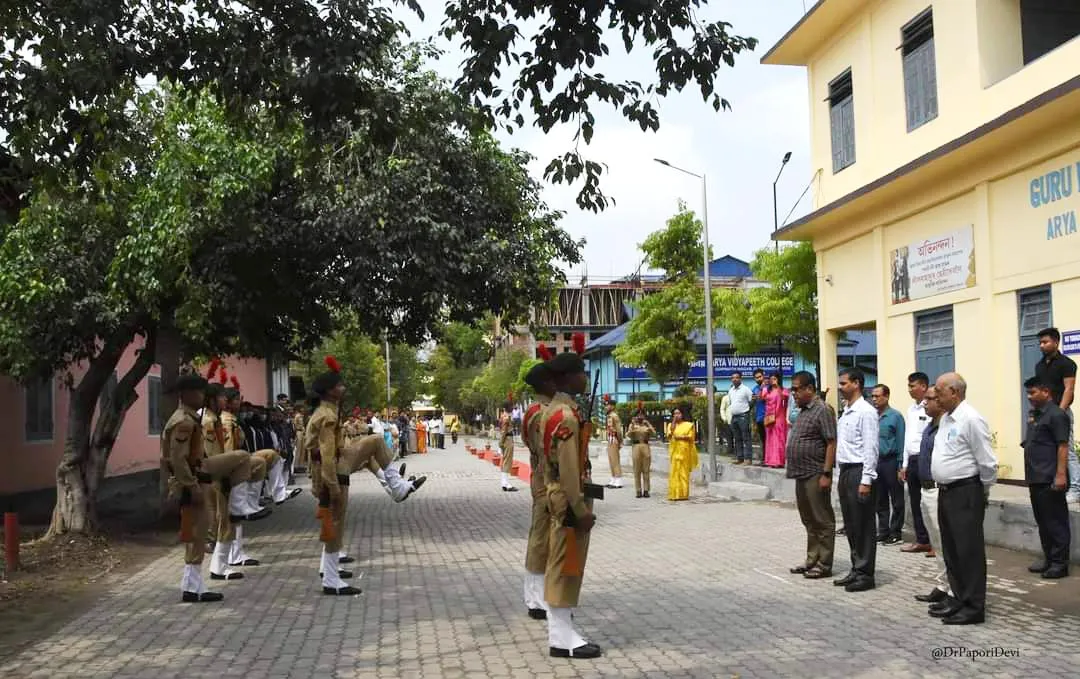
Arya Vidyapeeth College is an autonomous college in Gopinath Nagar, Guwahati, Assam. Established on 29 July 1958, it developed through the efforts of a group led by its founder principal, Giridhar Sarma. The college’s account of its beginnings also identifies educationists and public figures who helped establish an institution intended to serve young people from Assam and the wider Northeast.
Its academic development has included expansion from undergraduate teaching into postgraduate study and additional learning opportunities. Chemistry postgraduate teaching and undergraduate commerce were introduced in 2015, while the college’s biotechnology hub, launched in 2009, was upgraded in 2015. The institution celebrated its diamond jubilee in 2018. Its wider activities have included community engagement, departmental publications, cultural programmes and opportunities for students to participate in college committees, connecting academic life with social responsibility.
Sources: Institutional history ↗ · Official institutional homepage ↗
An inclusive educational mission
The college’s vision places higher education within the needs of Assam and Northeast India, with particular attention to students from underprivileged backgrounds. Inclusiveness, integrity, innovation, creativity and quality are identified as guiding principles. Its stated purpose includes creating an environment responsive to students and society, rather than treating academic study as an isolated activity.
The mission combines teaching with research, higher study and student development. It calls for educational and career guidance, improved teaching methods and opportunities in literary, cultural, sporting and extension activities. Social awareness is another explicit element, covering gender, environmental questions, human rights and ethical values. The college’s published goals include recognising students’ abilities, supporting academically disadvantaged learners and encouraging research among faculty. These priorities provide a framework for both formal courses and the wider activities organised on campus.
Sources: Mission, vision and goals ↗
Undergraduate and postgraduate pathways
The college’s course portfolio spans arts, science and commerce. Its Four Year Undergraduate Programme uses a semester-based credit structure, combining a major subject with other areas of learning. The published framework includes minor subjects, interdisciplinary or multidisciplinary courses, skill enhancement, ability enhancement, value-added study and an internship component.
The structure provides different awards at successive stages: an undergraduate certificate after one year, a diploma after two, a bachelor’s degree with a major after three, and honours or honours with research after four. The research pathway includes a separate research-credit component. Postgraduate teaching is offered in mathematics and chemistry under Gauhati University, with chemistry described as self-financed. The college also lists higher-secondary provision in arts, science and commerce. Its broader educational portfolio includes add-on learning and study centres supporting distance education, extending participation beyond a single undergraduate route.
Sources: Courses offered ↗
Library collections and access
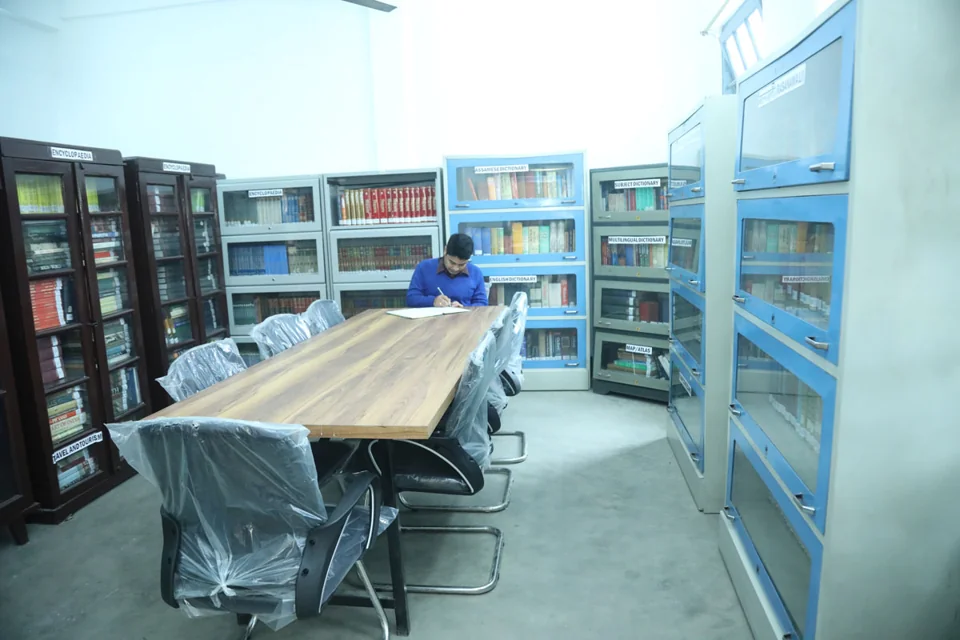
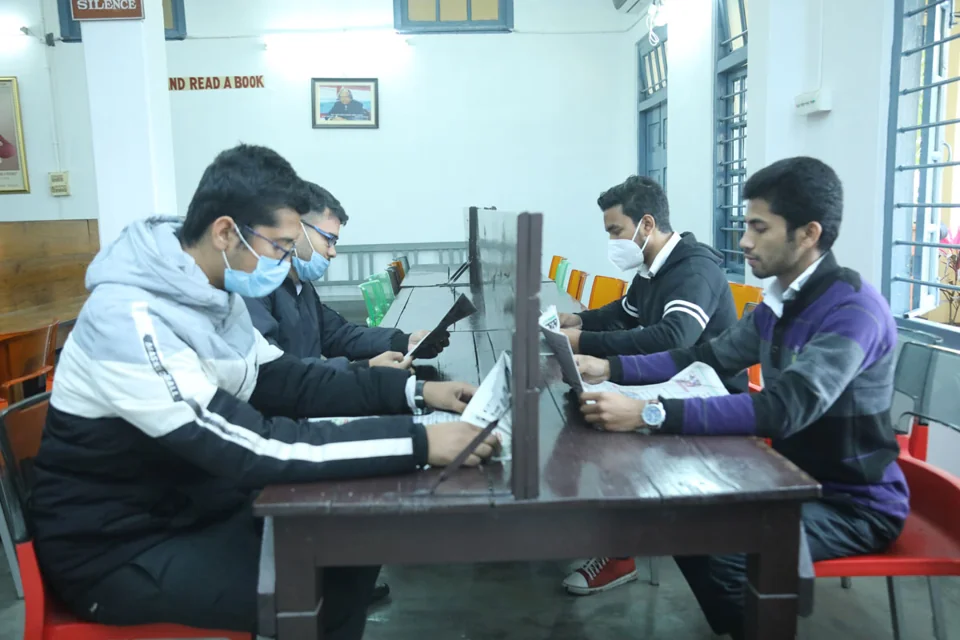
The college library began in 1958, alongside the institution itself. Its collections include textbooks, reference books, journals, magazines and newspapers. A reading room supports consultation, while departmental libraries provide additional subject-based reference materials. The central library uses Koha for computerised operations and provides an online catalogue through which users can check availability.
Digital provision includes an institutional repository, electronic resources and access through N-LIST. The library’s services also include internet use, inter-library loans, reprography, orientation and displays of new books. Separate areas support circulation, reference, periodicals, general books and electronic-resource browsing. A book-bank section serves students below the poverty line. User feedback is collected, and a Best Library User award encourages reading. These services connect access to printed collections with research tools, study space and assistance in locating materials.
Sources: Library ↗
Student life and welfare
Student welfare includes separate hostels for boys and girls, supervised through a hostel committee and resident superintendents. Their activities extend beyond accommodation into sports, cultural programmes and student publications. Hostel magazines provide opportunities for writing and editing, while the college’s Students’ Aid Fund supports eligible students from economically disadvantaged backgrounds.
The Students’ Union organises activities such as the college festival, sports, debates, literary events and social-service programmes. It publishes the annual magazine Aryan, with contributions from students and teachers. Departments also prepare wall magazines. Community participation is supported through the National Service Scheme, whose work includes activities in Pamohi village near Guwahati. The college’s language laboratory, established in 2010, provides spoken and written English learning using interactive software. A campus health centre, canteen and coffee house form further parts of the student-service environment described by the college.
The college’s welfare framework also includes a Yoga Centre, established in 2015 with institutional partners providing technical and advisory support. Its published activities include camps for students, teachers and staff. Student representation and elected union activities provide further opportunities to participate in the organisation of campus life.
Sources: Student welfare services ↗
Chemistry teaching and research
The Chemistry department was established in 1962, with Prabin Sarma as its founder head. Its postgraduate Master of Science teaching began in the 2015–2016 academic session, adding advanced study to the department’s earlier educational work. The department’s account describes faculty involvement in research projects and supervision of doctoral research, linking teaching with continued scientific inquiry.
The department also records its selection under the Department of Biotechnology’s Star College initiative in 2018. Its published history presents undergraduate teaching, postgraduate learning and research as connected elements of its development. This disciplinary example illustrates how the college’s academic provision has expanded over time while retaining departments with long institutional histories.
Sources: Science departments: Chemistry ↗